









Here is the comprehensive technical article based on your instructions.
Abstract
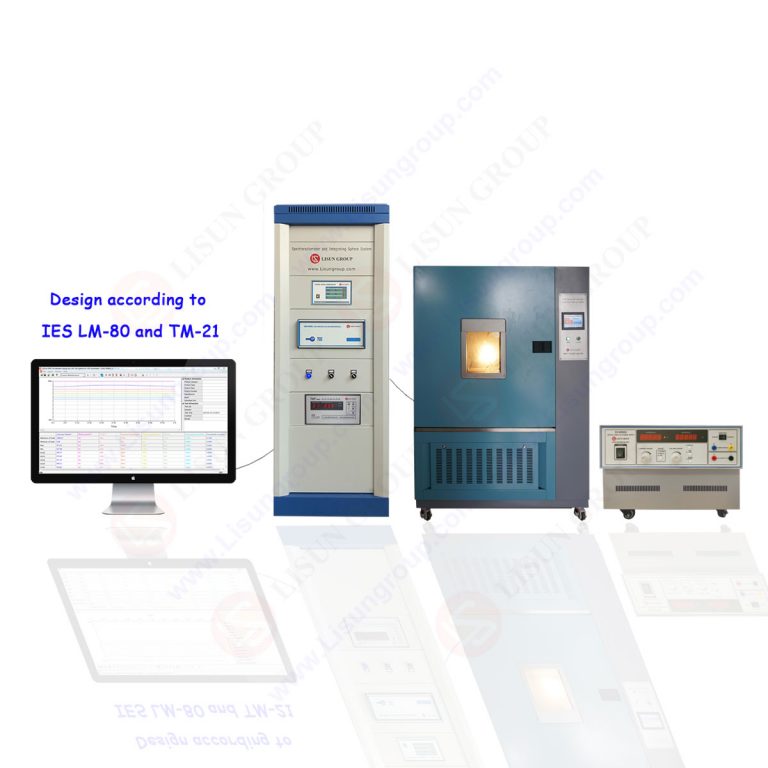
This technical article provides an in-depth analysis of the LISUN LED Thermal Aging Chamber: Automated LM-80 Lumen Maintenance Test, a critical tool for validating LED reliability and lifespan. Focusing on the LEDLM-80PL and LEDLM-84PL system variants, we explore how these instruments leverage the Arrhenius Model for accelerated aging and TM-21 extrapolation to predict L70/L50 metrics. The article details the dual testing modes (constant current/constant voltage), hardware customization options, and seamless integration with the LISUN LSR-III Spectral Flux Measurement System. For R&D engineers and lab technicians, this resource clarifies how to achieve IES LM-80 compliance, reduce testing time from 6,000+ hours, and ensure data integrity through automated, multi-channel data logging.
1.1 Defining Lumen Depreciation and Lifespan Metrics
The primary failure mechanism for solid-state lighting (SSL) is lumen depreciation, a gradual reduction in light output over time. Unlike traditional light sources which often experience catastrophic failure, LEDs fade. Industry standards like IES LM-80 define the methodology for measuring this depreciation. The LISUN LEDLM-80PL system is designed to rigorously test samples under controlled thermal conditions, typically for a minimum of 6,000 hours. Key performance indicators (KPIs) derived from this data include L70 (time to 70% initial lumens) and L50 (time to 50% initial lumens), which are essential for warranty validation and product specification sheets.
1.2 The Economic Impact of Accurate Life Prediction
Inaccurate life prediction leads to premature product failures, brand damage, or excessively conservative warranties. The LISUN LED Thermal Aging Chamber mitigates this risk by providing precise, repeatable data. By utilizing a three-temperature chamber setup (e.g., 55°C, 85°C, and a user-defined third point as per LM-80), the automated system accelerates the aging process. The integrated Arrhenius Model software then analyzes the degradation curves to extrapolate useful life. This capability allows manufacturers to confidently market their products with verified lifespan claims, reducing liability and increasing market trust.
2.1 Dual System Variants: LM-80 vs. LM-84
LISUN offers two primary configurations to cover the full spectrum of industry standards. The LEDLM-80PL is purpose-built for IES LM-80 testing, focusing on the LED package, array, or module level, and generating data suitable for TM-21 extrapolation. In contrast, the LEDLM-84PL addresses the need for LM-84 testing of integrated LED lamps and luminaires, with data analysis aligned to TM-28. Both systems share a common robust thermal platform but differ in their software algorithms and fixture configuration capabilities. This dual-system approach ensures compliance whether testing bare LED components or complete lighting products.
2.2 Configurable Thermal Chambers and Sensor Integration
A key feature of the LISUN design is its scalability. The base unit can be configured to support up to 3 connected temperature chambers, allowing simultaneous aging at different case temperatures (Tc). Each chamber utilizes a forced-air circulation system to maintain temperature uniformity within ±2°C. The system includes built-in data acquisition for up to 192 channels, capturing current, voltage, and temperature data in real-time. This multi-channel capability is crucial for establishing the statistical significance required by IES LM-79-19 for photometric measurements.
Table 1: Comparative Specifications of LISUN LED Thermal Aging Chamber Variants
| Feature | LEDLM-80PL (LM-80/TM-21) | LEDLM-84PL (LM-84/TM-28) |
|---|---|---|
| Primary Standard | IES LM-80 | IES LM-84 |
| Extrapolation Model | TM-21 | TM-28 |
| Typical Test Object | LED Packages, Modules, Arrays | Integrated LED Lamps, Luminaires |
| Temperature Accuracy | ±2°C (Case Temp Control) | ±2°C (Ambient Temp Control) |
| Max Chambers Supported | Up to 3 | Up to 3 |
| Test Duration | 6,000+ Hours (Minimum) | 6,000+ Hours |
| Data Output | Relative Luminous Flux vs. Time | Relative Luminous Flux vs. Time |
| Failure Metrics | L70, L50, L90 | L70, L50 |
3.1 The Arrhenius Model in Accelerated Life Testing
The core scientific principle behind the LISUN LED Thermal Aging Chamber is the Arrhenius Model, which describes the relationship between temperature and reaction rate (degradation rate). The software uses data collected at multiple temperatures to calculate the activation energy (Ea) of the LED’s failure mechanism. This allows the system to project lifespan at a use-case temperature (e.g., 25°C or 55°C) without waiting for 50,000+ hours. The automated software performs a non-linear regression analysis, providing a statistically robust prediction of lumen maintenance, directly supporting the industry’s benchmark of 60,000+ hour lifetimes.
3.2 TM-21 and TM-28 Extrapolation Protocols
While the Arrhenius model provides the acceleration factor, TM-21 defines the specific mathematical procedure for extrapolating LM-80 data. The LISUN software strictly adheres to this standard, applying the recommended restriction of 6x the test duration. For example, a 6,000-hour test in the LISUN chamber can project up to 36,000 hours. The LEDLM-84PL variant uses TM-28, which accounts for the different failure kinetics of integrated lamps. The software automatically calculates the appropriate exponential decay fit, whether it is a single or double exponential, ensuring that users produce compliant, defensible projections for their LED lighting products.
4.1 Mode Selection for Different LED Topologies
The LISUN system offers flexibility through two distinct testing modes, a feature critical for handling diverse device under test (DUT) types. Constant Current (CC) mode is the standard for testing bare LED packages and arrays, as it isolates the light source from the driver. Constant Voltage (CV) mode is essential for testing integrated LED lamps (per LM-84), where the internal driver is part of the test. The automated LISUN software manages the switching between these modes, logging data appropriately for each standard. This dual-mode capability eliminates the need for separate test benches for discrete LEDs versus lamp products.
4.2 Impact on Lumen Depreciation Curves
Choosing the correct mode is vital for accurate results. In CC mode, the system monitors voltage drift as an indicator of junction degradation. In CV mode, it monitors current draw. The LISUN LED Thermal Aging Chamber’s data acquisition system records these subtle changes, which inform the Arrhenius analysis. Misapplication of mode can yield misleading L70/L50 values. The software includes a pre-test validation routine to verify DUT type and recommended mode, referencing standards like CIE 084 for measurement protocols. This ensures that the resulting depreciation curve truly represents the physics of failure for the specific test object.
5.1 Synchronized Testing with the LSR-III System
Reliable lumen maintenance data requires precise photometric measurements at the beginning and end of the test. The LISUN LED Thermal Aging Chamber is designed to work in tandem with the LISUN LSR-III High Precision Spectral Flux Measurement System. The aging software can trigger the LSR-III to take baseline measurements (0-hour) and intermediate measurements (e.g., every 1,000 hours). This integration, compliant with IES LM-79-19, eliminates manual handling of DUTs, reducing measurement errors and improving repeatability. The spectral data, including CCT and CRI drift, is logged alongside lumen values.
5.2 Temperature Sensing at the Test Point
Accurate temperature measurement is the cornerstone of valid LM-80 data. The LISUN chamber uses thermocouples attached to the “case temperature” (Tc) point of the LED, as defined by CIE 127:2007. This point is critical for the Arrhenius Model calculation. The system can monitor up to 192 Tc points simultaneously, ensuring each DUT is at the correct thermal stress. Deviations beyond ±2°C are logged as anomalies, which is essential for data integrity. This granular thermal control is a key differentiator for the LISUN LED Thermal Aging Chamber, ensuring that test conditions are reproducible across different laboratories.
6.1 Modular Chamber Design for Lab Flexibility
LISUN recognizes that testing needs vary. The LED Thermal Aging Chamber features a modular design. Laboratories can start with a single chamber and expand to the maximum of three as their product portfolio grows. Each chamber can be programmed for a separate temperature set-point, allowing a single system to run a full LM-80 test matrix simultaneously. The system can accommodate various DUT board sizes, with customizable fixtures available for SMD, COB, and high-power LEDs. This scalability protects capital investment while ensuring compliance with standards requiring multiple temperature testing.
6.2 Automated Data Management and Reporting
The true value of an automated system lies in its data management. The LISUN software automatically generates compliance-ready reports in accordance with IES standards. These reports include: raw data tables, relative flux curves, exponential fit parameters, and L70/L50 projections. Engineers no longer need to manually compile data from external loggers. The software also supports CIE 070 data format for international collaboration. This level of automation reduces the risk of human error and accelerates the time-to-market for new lighting products by providing clear, actionable reliability data.
7.1 Meeting IES and CIE Requirements
Aging chambers must meet strict performance standards to produce valid data. The LISUN system is engineered to meet or exceed the requirements of IES LM-80, IES LM-84, TM-21, and TM-28. The chamber design ensures minimal temperature gradients, and the data logger meets the sampling frequency required by the standards. Furthermore, the system’s optical alignment guidelines align with CIE 084 for the measurement of luminous flux. This comprehensive compliance ensures that test data from the LISUN chamber is accepted by global regulatory bodies, including ENERGY STAR and DLC (DesignLights Consortium).
7.2 Case Study: A 6,000-Hour Test Verification
Consider a test sequence for a 2835 SMD LED. The LISUN LED Thermal Aging Chamber would be set to three Tc points: 55°C, 85°C, and 105°C. After 6,000 hours of automated cycling and data collection, the software performed a TM-21 projection. The calculated L70 value exceeded 50,000 hours, with a high correlation coefficient (R² > 0.98). The system’s ability to maintain stable temperature and power across the entire duration validated the results. This level of reliability is why LISUN is a preferred partner for Tier-1 LED manufacturers.
The LISUN LED Thermal Aging Chamber represents a state-of-the-art solution for automated LM-80 and LM-84 lumen maintenance tests. By integrating precise thermal control, versatile dual testing modes, and powerful Arrhenius/TM-21 software, it provides engineers with the data needed to make critical life-cycle decisions. The system’s scalability from 1 to 3 chambers, combined with seamless photometric integration via the LSR-III, creates a comprehensive reliability testing workstation. Adherence to standards like IES LM-79-19, CIE 127, and TM-28 ensures global acceptance of test results. For any manufacturer seeking to validate long-term LED performance, this automated system reduces testing time, minimizes errors, and delivers the high-confidence data required in today’s competitive lighting market. It is not just a testing instrument; it is a comprehensive validation platform that bridges the gap between accelerated testing and real-world product longevity.
Q1: What is the minimum test duration required by the IES LM-80 standard, and how does the LISUN chamber ensure compliance?
A: The IES LM-80 standard requires a minimum of 6,000 hours of testing, with data collected at intervals no greater than 1,000 hours. The LISUN LED Thermal Aging Chamber is designed for continuous, unattended operation for this duration and beyond. The system’s software schedules automatic photometric measurements (e.g., using an integrating sphere) at the prescribed intervals. It also monitors case temperature (Tc) per CIE 127, logging any excursions. The chamber can be configured with up to 3 units to run tests at three different temperatures simultaneously (e.g., 55°C, 85°C, and a third point), fulfilling the multi-temperature requirement of LM-80. Data recording is uninterrupted, ensuring a valid 6,000-hour dataset for TM-21 extrapolation.
Q2: How does the LISUN system handle the difference between LM-80 for LED packages and LM-84 for integrated lamps?
A: The LISUN system addresses this through two distinct hardware and software variants: the LEDLM-80PL and the LEDLM-84PL. The LEDLM-80PL is optimized for testing bare LEDs, arrays, and modules. It uses a forced-air thermal chamber that controls the case temperature of the individual component. The software tracks current and voltage to calculate junction temperature. Conversely, the LEDLM-84PL is designed for testing complete LED lamps or luminaires. It controls the ambient temperature inside the chamber. This variant uses Constant Voltage (CV) mode to power the lamp under test, allowing the internal driver to function normally. The software applies the TM-28 extrapolation model, which accounts for the different failure kinetics of integrated lamp systems, providing a compliant analysis for both component and product-level tests.
Q3: What is the Arrhenius Model, and how does the LISUN software use it to predict L70 values?
A: The Arrhenius Model is a physical chemistry equation that describes how the rate of a chemical reaction (like LED lumen degradation) increases with temperature. The LISUN LED Thermal Aging Chamber software collects lumen maintenance data at two or three different case temperatures. It then plots the degradation rate (K) against the inverse of the absolute temperature (1/T). The slope of this line reveals the activation energy (Ea) of the LED’s degradation mechanism. With Ea known, the software can extrapolate the degradation rate at the user’s target operating temperature (e.g., 25°C or 55°C). This calculation is then used to project the L70 lifetime (time to 70% lumen maintenance). The system automatically applies this model to provide a scientifically robust prediction, often exceeding 50,000 hours, from a relatively short 6,000-hour test.