









Abstract
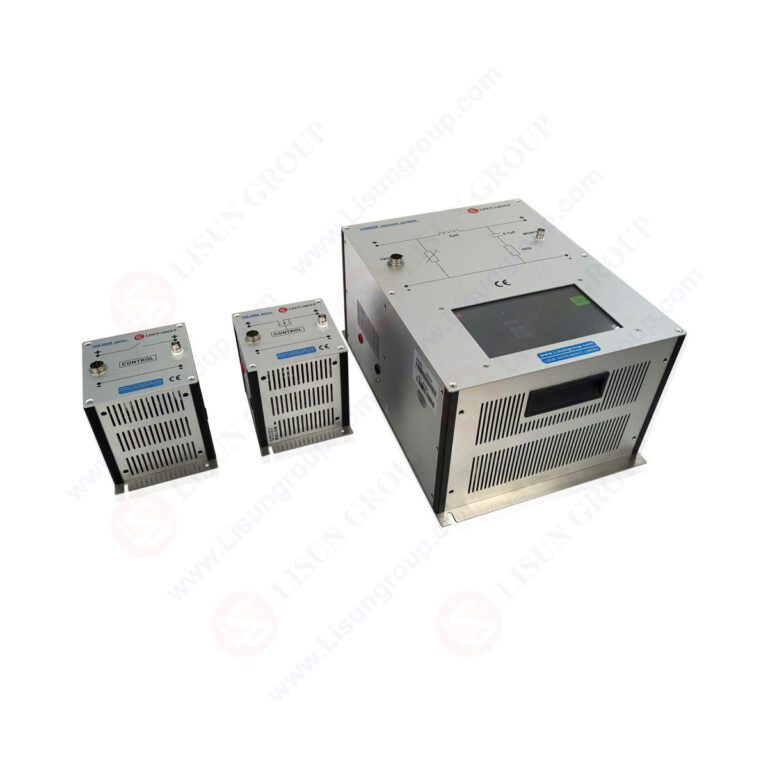
The LISUN RFCI61000-6 series RF Conducted Immunity Test System represents a critical solution for third-party lab EMC pre-certification testing for compliance with international electromagnetic compatibility standards. This integrated test platform combines a signal source, power amplifier, and power meter into a single chassis, offering 35W and 85W power variants to accommodate diverse equipment under test (EUT) requirements. Designed specifically for conducted immunity testing per IEC 61000-4-6 and EN 61000-4-6, the system enables precise RF interference injection across the 150 kHz to 230 MHz frequency range. The RFCI61000-6 series provides comprehensive coupling-decoupling network (CDN) compatibility, multi-mode modulation capabilities including amplitude and pulse modulation, and a touchscreen interface for streamlined operation. This article examines the system’s technical architecture, compliance validation capabilities, and practical applications across LED manufacturing, medical devices, power equipment, industrial control, new energy charging stations, and communications sectors.
1.1 Integrated Signal Generation Module
The RFCI61000-6 series employs a digitally synthesized signal generator capable of producing continuous wave (CW) signals from 150 kHz to 230 MHz with frequency resolution of 1 Hz. The signal source module supports amplitude modulation at 1 kHz with 80% modulation depth as specified in IEC 61000-4-6 Clause 6.2 for conducted immunity testing. Additionally, pulse modulation capabilities enable testing per product-specific requirements where intermittent interference patterns are necessary. The integrated design eliminates external signal generator connections, reducing cable losses and impedance mismatch issues that could compromise test reproducibility. The frequency sweep function allows automated testing across the entire frequency range with programmable step sizes, dwell times, and level sequences.
1.2 Power Amplifier Specifications and Performance
The system offers two power amplifier configurations: the RFCI61000-6-35W with 35 watts output power and the RFCI61000-6-85W with 85 watts output power. Both variants maintain low voltage standing wave ratio (VSWR) characteristics below 1.5:1 across the operating frequency band, ensuring efficient power transfer to the EUT through the selected coupling network. The amplifier module incorporates automatic level control (ALC) circuitry that maintains stable output levels within ±0.5 dB accuracy, critical for reproducible test results per EN 61000-4-6 Clause 7.1 performance requirements. Harmonic distortion is suppressed to better than -20 dBc, preventing unwanted spectral components from influencing test outcomes.
1.3 Power Meter and Calibration Integration
The embedded power meter provides real-time forward and reflected power measurement with measurement uncertainty of ±0.2 dB. This integration enables closed-loop power leveling during calibration and testing phases, significantly reducing setup time compared to benchtop configurations. The power meter module supports both CW and modulated signal measurements, with automatic range selection from -20 dBm to +50 dBm. Included calibration routines follow the substitution method described in IEC 61000-4-6 Clause 6.3, where the test level is established using a 50-ohm calibration jig before EUT connection. The system stores calibration data for each CDN type, allowing rapid test configuration changes without recalibration delays.
2.1 Comprehensive Coupling-Decoupling Network Support
The RFCI61000-6 series supports a full range of CDN types required for conducted immunity testing per GB/T 17626.6 and IEC 61000-4-6. Compatible networks include CDN-M1, CDN-M2, CDN-M3 for mains power lines, CDN-AF2 and CDN-AF3 for signal and control lines, and CDN-T2 and CDN-T4 for telecommunication ports. The system automatically detects connected CDN types through identification resistors, loading appropriate calibration factors and frequency response compensation curves. Each CDN provides defined decoupling of at least 40 dB from 150 kHz to 230 MHz, preventing interference from coupling back into the mains supply or affecting other test equipment.
2.2 Electromagnetic Clamp and Injection Probe Alternatives
Beyond direct CDN injection, the system supports electromagnetic (EM) clamp injection for cables where direct CDN connection is impractical. The EM clamp method, referenced in IEC 61000-4-6 Clause 7.2.2, provides a non-contact injection mechanism suitable for multi-conductor cables or pre-assembled harnesses. For specific applications, the system also accommodates current injection probes (CIP) per the standard’s alternative methods. The software interface includes pre-configured test profiles for each injection method, ensuring consistent application of test levels and modulation parameters across different EUT configurations.
2.3 Multi-Port Switching Capabilities
The RFCI61000-6 series incorporates an internal RF switching matrix supporting up to 12 test ports, enabling automated sequential testing of multiple CDNs or injection points without manual cable reconnection. Each port maintains impedance matching within ±2 ohms of 50 ohms to minimize VSWR variations during automated test sequences. The switching matrix supports hot-switching with rated power handling of 100 watts continuous, preventing damage during level transitions. Test sequences can define port-specific dwell times, frequency steps, and level ramps, enabling comprehensive immunity characterization of EUTs with multiple interface ports.
3.1 Operating Frequency Band and Level Accuracy
The system covers the full frequency range specified in IEC 61000-4-6 from 150 kHz to 230 MHz with output level accuracy of ±0.5 dB after calibration. Frequency accuracy is maintained at ±10 ppm through temperature-compensated crystal oscillator (TCXO) reference. The output level range spans from 0 dBm to the maximum rated power, adjustable in 0.1 dB steps for fine-grained control. Level settling time after frequency change is less than 5 milliseconds, enabling rapid frequency sweep rates while maintaining amplitude stability. The system provides frequency response flatness within ±1.0 dB after normalization, meeting the performance criteria established in EN 61000-4-6 Annex A for calibration procedures.
3.2 Amplitude Modulation Parameters
Amplitude modulation is implemented per IEC 61000-4-6 Clause 6.2 using a 1 kHz sinusoidal modulating signal with 80% modulation depth. The modulation circuitry achieves modulation distortion below 2% total harmonic distortion (THD) to prevent spectral spreading that could invalidate test results. The system supports external modulation inputs for custom modulation waveforms when required by product-specific standards. Modulation depth accuracy is maintained within ±2% across the full frequency range, ensuring reproducible test conditions. The modulation bandwidth extends from DC to 100 kHz for specialized applications requiring swept modulation frequencies.
3.3 Pulse Modulation and Specialized Waveforms
For automotive and military standard testing, the RFCI61000-6 series provides pulse modulation with programmable pulse width from 1 microsecond to 10 milliseconds and duty cycles from 0.1% to 99.9%. Pulse repetition frequency ranges from 1 Hz to 1 MHz with rise and fall times below 50 nanoseconds. The system stores up to 100 custom modulation profiles, enabling rapid switching between test requirements without manual reconfiguration. Specialized waveforms including frequency hopping, chirp, and arbitrary waveforms can be loaded via the USB interface for research applications or for testing against non-standard interference patterns.
4.1 Model Comparison Table
| Parameter | RFCI61000-6-35W | RFCI61000-6-85W | Standard Requirement (IEC 61000-4-6) |
|---|---|---|---|
| Maximum Output Power | 35 W (45.4 dBm) | 85 W (49.3 dBm) | Sufficient for test level 3 (10 V) |
| Frequency Range | 150 kHz – 230 MHz | 150 kHz – 230 MHz | 150 kHz – 80 MHz (extended to 230 MHz optional) |
| Output Level Accuracy | ±0.5 dB | ±0.5 dB | ±1.0 dB (per Clause 6.4.2) |
| VSWR (Maximum) | 1.5:1 | 1.5:1 | < 2.0:1 recommended |
| Harmonic Distortion | < -20 dBc | < -20 dBc | < -15 dBc recommended |
| Amplitude Modulation | 1 kHz, 80% depth | 1 kHz, 80% depth | Required per Clause 6.2 |
| Supported CDN Types | All IEC 61000-4-6 CDNs | All IEC 61000-4-6 CDNs | As required for EUT ports |
| Calibration Method | Substitution method | Substitution method | Per Clause 6.3 |
4.2 Performance Across Frequency Bands
The 85W variant provides approximately 4 dB additional headroom compared to the 35W model, enabling testing at level 4 (10 V/m equivalent) with higher insertion loss CDNs or with multiple EUT ports simultaneously. Both models maintain output power flatness within ±1.5 dB across the 150 kHz to 230 MHz band after normalization. At frequencies below 1 MHz, the systems demonstrate enhanced output capability due to reduced amplifier losses, enabling testing at levels exceeding standard requirements. The 35W model is typically sufficient for test level 3 (10 V) applications with standard CDN configurations, while the 85W variant supports level 4 testing and applications requiring simultaneous multi-port injection.
4.3 Comparison with Standalone Component Systems
Integrated systems like the RFCI61000-6 series demonstrate measurable advantages over discrete component configurations. The integrated architecture eliminates impedance mismatch errors between separate signal generators, amplifiers, and power meters, typically reducing measurement uncertainty by 0.3 dB to 0.5 dB. Setup time decreases from approximately 30 minutes for benchtop configurations to less than 5 minutes for the integrated system due to pre-connected RF paths and automated calibration routines. The single-chassis design reduces cable length by 70% compared to component systems, minimizing RF losses and improving signal integrity at higher frequencies above 80 MHz.
5.1 IEC 61000-4-6 and EN 61000-4-6 Compliance
The RFCI61000-6 series is designed to meet all requirements of IEC 61000-4-6 Edition 4 for conducted immunity testing. The system supports the standard’s test level definitions from level 1 (1 V) through level 4 (10 V) with appropriate margin for calibration drift. Clause 6.1 requirements for frequency range coverage are satisfied with the 150 kHz to 230 MHz band, while Clause 6.2 modulation requirements are met through the integrated AM modulation module. The substitution method calibration per Clause 6.3 is implemented through automated software routines that guide operators through the calibration process. Clause 7.2 injection method selection is supported through the system’s CDN library and switching matrix.
5.2 GB/T 17626.6 Alignment for Chinese Market
For manufacturers targeting Chinese market certification, the RFCI61000-6 series fully supports GB/T 17626.6-2017 requirements. The Chinese national standard aligns with IEC 61000-4-6 for conducted immunity testing, with additional requirements for test report documentation and uncertainty analysis. The system’s software includes GB/T 17626.6-specific test templates that incorporate the standard’s frequency step recommendations and dwell time requirements. Test reports generated by the system include all data fields required by GB/T 17626.6 Clause 9 for test results documentation, including calibration traceability to national metrology institutes.
5.3 Additional Standard Support and Cross-Compliance
Beyond the core IEC/EN/GB standards, the RFCI61000-6 series supports testing per CISPR 35 requirements for multimedia equipment immunity, CISPR 24 for information technology equipment, and various product-family standards referencing IEC 61000-4-6. The system’s extended frequency range to 230 MHz accommodates automotive standards including ISO 11452-4 for conducted immunity testing in vehicles. Medical device testing per IEC 60601-1-2 is supported through the system’s ability to generate the specific modulation patterns required for medical equipment immunity qualification. The software platform allows creation of custom standard profiles, enabling testing against evolving regulatory requirements without hardware modifications.
6.1 LED Lighting and Power Electronics Manufacturing
In LED manufacturing, the RFCI61000-6 series enables comprehensive conducted immunity testing of LED drivers and control systems per EN 61547 requirements. The system’s 35W variant is typically sufficient for testing individual drivers, while the 85W model supports simultaneous testing of multiple drivers in production environments. Power electronics applications, including switch-mode power supplies and inverters, benefit from the system’s ability to test at level 4 (10 V) across the full frequency range to assess performance under severe interference conditions. The system’s CDN compatibility with mains power lines up to 32A accommodates high-power industrial equipment.
6.2 Medical Device and Healthcare Equipment Testing
Medical device manufacturers utilize the RFCI61000-6 series for pre-compliance testing per IEC 60601-1-2 Edition 4, which requires conducted immunity testing from 150 kHz to 80 MHz for life-supporting and critical care equipment. The system’s automated test sequencing allows efficient characterization of multiple device ports, including mains input, patient leads, and communication interfaces. The ability to generate modulated interference patterns per the standard’s requirements ensures that medical devices maintain essential performance under electromagnetic stress. The 85W variant supports testing of larger medical systems with multiple cable interfaces where higher injection levels are necessary.
6.3 New Energy Infrastructure and Communications Equipment
For new energy charging stations, the RFCI61000-6 series supports testing per GB/T 18487 series standards for electric vehicle conductive charging systems. The system’s multi-port switching capability enables efficient testing of charging station communication interfaces, control pilot signals, and power line connections. In telecommunications applications, testing per EN 300 386 and ETSI standards requires conducted immunity testing up to 230 MHz, which the system’s extended frequency range supports directly. Communications equipment with Ethernet, USB, and serial interfaces benefit from the system’s comprehensive CDN library covering all relevant port types.
7.1 Touchscreen Control and Test Configuration
The RFCI61000-6 series features a 10-inch capacitive touchscreen interface with intuitive menu navigation for test configuration, execution, and data review. The software provides pre-loaded test templates for major standards including IEC 61000-4-6, EN 61000-4-6, and GB/T 17626.6, with user-configurable parameters for frequency range, step size, dwell time, and test level. The interface displays real-time forward and reflected power readings, frequency progression, and test status indicators. Operators can save up to 500 test configurations with names and descriptions for rapid recall in production testing environments.
7.2 Automated Test Sequences and Data Logging
The system supports fully automated test sequences with conditional branching based on EUT performance monitoring criteria. Test sequences can include pause points for EUT status verification, operator intervention steps, and automatic continuation after manual checks. Data logging captures forward power, reflected power, calculated injected current, frequency, and time stamps at each test point with resolution better than 100 milliseconds. Export capabilities include CSV files for spreadsheet analysis, PDF reports for certification documentation, and XML formats for lab information management system (LIMS) integration.
7.3 Remote Operation and Network Integration
Ethernet and USB interfaces enable remote control and monitoring of the RFCI61000-6 series from laboratory control rooms or distributed testing facilities. The system supports SCPI (Standard Commands for Programmable Instruments) command sets for custom programming and integration with automated test equipment (ATE) systems. Remote operation capabilities include full test configuration, execution control, and real-time data streaming for remote monitoring during long-duration testing. Multi-user access controls with password protection and audit trail logging support regulated environment requirements for test data integrity and traceability.
The LISUN RFCI61000-6 series RF Conducted Immunity Test System delivers comprehensive capabilities for third-party lab EMC pre-certification testing for compliance with international conducted immunity standards. The integrated architecture combining signal source, power amplifier, and power meter eliminates common error sources found in discrete component systems while reducing setup time and improving measurement reproducibility. The dual power variants at 35W and 85W provide flexibility for testing applications ranging from small electronics to large industrial equipment, with the higher power model supporting level 4 testing and multi-port injection scenarios. Full support for IEC 61000-4-6, EN 61000-4-6, GB/T 17626.6, and derived product-family standards ensures applicability across LED manufacturing, medical devices, power equipment, industrial control, new energy charging infrastructure, and communications sectors. The system’s low VSWR characteristics, comprehensive CDN compatibility, and automated test sequencing capabilities make it a valuable investment for laboratories seeking efficient, accurate, and standards-compliant conducted immunity testing.
Q1: What is the difference between the RFCI61000-6-35W and RFCI61000-6-85W models for standard IEC 61000-4-6 testing?
A: The primary difference is output power capability, with the 35W model providing sufficient headroom for test level 3 (10 V) applications using standard CDN configurations, while the 85W model supports level 4 testing and scenarios with high insertion loss CDNs or multiple EUT ports simultaneously. Both models cover the full 150 kHz to 230 MHz frequency range with identical modulation capabilities and CDN compatibility. The 85W variant offers approximately 4 dB additional margin above level 3 requirements, which becomes critical when testing EUTs with long cable assemblies or when using current injection probes that have higher insertion losses than direct CDN connections. For most commercial electronics testing, the 35W model is adequate, while the 85W variant is recommended for medical devices, automotive components, and industrial equipment requiring compliance with multiple standards simultaneously.
Q2: How does the RFCI61000-6 series ensure compliance with the substitution method calibration per IEC 61000-4-6 Clause 6.3?
A: The system incorporates an automated calibration routine that performs the substitution method as described in IEC 61000-4-6 Clause 6.3 without requiring external calibration equipment. During calibration, the system connects to a 50-ohm calibration jig and measures the forward power required to achieve the target test level at each frequency point. These calibration factors are stored in memory with CDN type identification, frequency resolution of 1 Hz, and level resolution of 0.1 dB. When the EUT is connected to the CDN, the system applies the stored calibration factors to maintain the correct interference level at the EUT port, compensating for any frequency-dependent variations in the amplifier output or CDN insertion loss. The calibration routine includes verification steps that compare measured forward and reflected power to ensure proper CDN connection and impedance matching, with automated alerts for conditions exceeding acceptable VSWR limits.
Q3: What CDN types are supported by the RFCI61000-6 series, and how many ports can be tested automatically?
A: The RFCI61000-6 series supports all standard CDN types defined in IEC 61000-4-6 including CDN-M1, M2, and M3 for single, two, and three-phase mains power lines; CDN-AF2 and AF3 for signal and control lines; CDN-T2 and T4 for telecommunication ports; and specialized CDNs for Ethernet, USB, and other communication interfaces. The internal RF switching matrix supports up to 12 test ports with automatic CDN type detection through identification resistors. The system allows programming of comprehensive test sequences that can automatically switch between CDN types and port configurations without operator intervention. For facilities requiring testing of more than 12 ports in a single test session, external switching expansion units can be integrated via the system’s control interface. The system stores calibration data for each CDN type independently, enabling seamless transitions between different port configurations during automated test sequences.
Q4: Can the RFCI61000-6 series be used for testing beyond standard IEC 61000-4-6 requirements, such as automotive or military standards?
A: Yes, the RFCI61000-6 series is designed with frequency extension to 230 MHz and modulation capabilities that support testing beyond basic IEC 61000-4-6 requirements. For automotive testing per ISO 11452-4, the system supports pulse modulation with programmable parameters including pulse width down to 1 microsecond and duty cycles from 0.1% to 99.9%, required for transient immunity testing. Military standard testing per MIL-STD-461 CS114 and CS115 is supported through custom test profiles that can be created and stored in the system’s library. The extended frequency range to 230 MHz accommodates requirements for communications equipment testing per ETSI standards and for avionics testing per RTCA DO-160 section 20. The system’s arbitrary waveform generation capability allows creation of customized interference patterns for research applications or for testing against non-standard interference environments. Users should verify specific standard requirements against system specifications for their particular application.