Abstract
This article presents a comprehensive technical overview of high-precision electrical component manufacturing testing solutions, with a primary focus on the LISUN CZKS-3 series automated test systems. These systems are designed to evaluate the durability, breaking capacity, and operational reliability of plugs, sockets, switches, and automotive electrical connectors under controlled laboratory conditions. The article examines the engineering principles behind electromechanical fatigue testing, compliance with international safety standards such as IEC 60884-1 and IEC 60669-1, and the integration of programmable logic control (PLC) with pneumatic actuation for repeatable test cycles. Core application scenarios include plug/socket endurance verification, switch life cycle assessment, and breaking capacity validation for household and automotive electronics. Technical specifications, comparative performance data, and standard compliance metrics are provided to guide quality control engineers and testing laboratory professionals in selecting appropriate testing equipment for their manufacturing verification processes.
1.1 The Importance of Fatigue Life Verification
Electrical component testing serves as the critical gatekeeper between manufacturing and market deployment. Plugs, sockets, and switches must withstand thousands of mechanical insertion and rotation cycles without degradation in electrical contact performance. The LISUN CZKS-3 series addresses this requirement by providing automated, repeatable test sequences that simulate years of operational wear within compressed timeframes. Electrical fatigue failure manifests through contact resistance increase, mechanical loosening, and material transfer between conductive surfaces.
1.2 Regulatory Framework and Industry Standards
Manufacturers must demonstrate compliance with multiple international standards to access global markets. The LISUN CZKS-3 series is designed to test according to IEC 60884-1 clauses 20 and 21 for plug and socket endurance, IEC 60669-1 clause 19 for switch mechanical durability, and IEC 61058-1 for switch electrical endurance testing. These standards specify minimum cycle counts, insertion force ranges, and acceptable contact resistance thresholds. Automotive component testing adds additional requirements from ISO 7637 and LV 124 for electrical load cycling and environmental stress.
1.3 Overview of Automated Test Systems
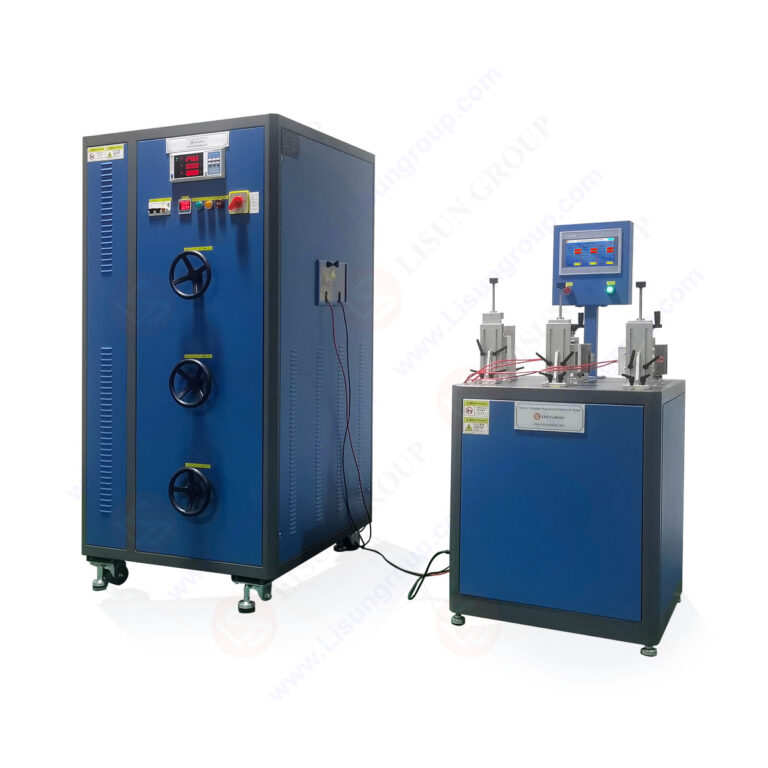
The CZKS-3 series represents a modular approach to electrical component testing, with models tailored for specific applications. The base CZKS-3 unit performs standard plug/socket insertion and withdrawal testing. The CZKS-3P variant adds programmable force profiling for automotive connectors. The CZKS-3S focuses on switch rotational and toggle testing, while the CZKS-3A integrates automated sample handling for high-throughput laboratory environments. All models share a common PLC control architecture and pneumatic actuation system.
2.1 PLC Control and Data Acquisition Systems
The core control system utilizes a programmable logic controller with 24-bit resolution for position feedback and force sensing. Test parameters—including insertion speed, dwell time, withdrawal velocity, and cycle count—are configurable through a touchscreen interface. The system records real-time insertion force curves, contact resistance measurements at user-defined intervals, and cumulative cycle data. Data acquisition sampling rates reach 1000 Hz for force transient analysis and 100 Hz for electrical parameter monitoring.
2.2 Pneumatic Actuation and Mechanical Design
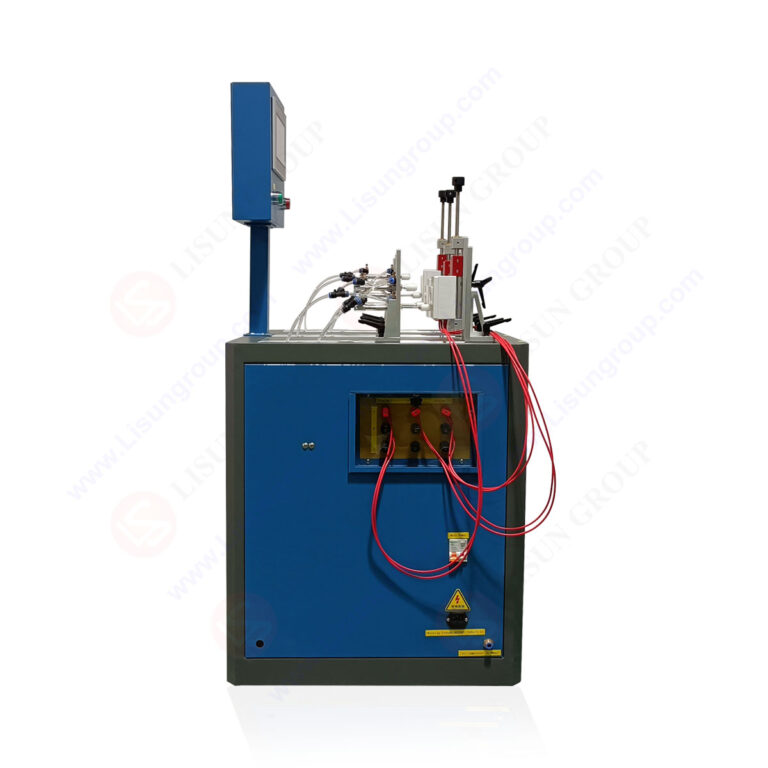
Cylinder-driven actuation provides consistent linear motion with positional accuracy of ±0.1 mm and force repeatability within ±2% of setpoint. The mechanical frame uses hardened stainless steel guide rails and self-lubricating bushings to minimize wear over extended test durations. Pneumatic circuit design incorporates proportional pressure regulators for smooth acceleration and deceleration profiles, reducing mechanical shock that could distort test results. The test head accommodates interchangeable gripping fixtures for different plug and connector geometries.
2.3 Electrical Load and Measurement Circuits
The test system integrates programmable electrical loads rated from resistive to inductive and capacitive configurations. Current ranges from 1 A to 30 A AC/DC with voltage up to 250 V AC and 60 V DC. Contact resistance measurement uses four-wire Kelvin sensing with resolution down to 0.1 mΩ. The system automatically detects contact welding, excessive resistance rise, or mechanical jamming and records failure events with precise cycle timestamps.
3.1 Technical Parameter Comparison
The following table provides a side-by-side comparison of the four CZKS-3 series models, enabling engineers to select the appropriate configuration for their testing requirements.
| Parameter | CZKS-3 | CZKS-3P | CZKS-3S | CZKS-3A |
|---|---|---|---|---|
| Max Test Cycles | 200,000 | 500,000 | 300,000 | 1,000,000 |
| Insertion Force Range (N) | 5–150 | 5–300 | 2–100 | 5–150 |
| Force Measurement Accuracy | ±1% | ±0.5% | ±1% | ±1% |
| Max Test Speed (cycles/min) | 15 | 10 | 20 | 25 |
| Electrical Load Current (A) | 1–20 | 1–30 | 0.5–16 | 1–20 |
| Positional Repeatability (mm) | ±0.2 | ±0.1 | ±0.15 | ±0.2 |
| Sample Capacity (units) | 2 | 1 | 4 | 8 |
| Supported Connector Types | Plugs, sockets | Automotive connectors | Switches, toggles | Mixed configuration |
3.2 Application-Specific Configuration Guidance
The CZKS-3P variant includes high-resolution force profiling capability essential for automotive connector insertion force analysis according to USCAR-2 and LV 214 standards. Its 300 N maximum force range accommodates heavy-duty sealed connectors with multiple locking features. The CZKS-3S includes rotational actuation for rotary switch testing per IEC 60669-1 clause 20, with programmable angular displacement from 0° to 360° in 0.5° increments. The CZKS-3A automates sample loading and unloading through a six-axis robotic arm, reducing operator intervention for high-volume production verification.
3.3 Data Management and Reporting Features
All models generate comprehensive test reports in PDF and CSV formats, including cycle count distributions, force decay curves, and contact resistance trends. The software supports Statistical Process Control (SPC) analysis with Cpk and Ppk calculations, enabling manufacturers to monitor production consistency. Network connectivity allows remote monitoring through standard TCP/IP protocols, integrating with laboratory information management systems (LIMS) for traceable quality documentation.
4.1 Testing Methodology per IEC 60884-1
Breaking capacity testing evaluates the ability of plugs and sockets to safely interrupt electrical current during insertion and withdrawal operations. The LISUN CZKS-3 series performs these tests according to IEC 60884-1 clause 21, which requires 5000 insertion/withdrawal cycles under rated current and voltage conditions. The system applies a resistive-inductive load with a power factor of 0.6 ± 0.05, simulating worst-case household appliance operating conditions. Contact resistance is measured at intervals specified by the standard, with failure criteria defined as a resistance increase exceeding 100% of initial value.
4.2 Mechanical Endurance and Wear Analysis
Mechanical endurance testing focuses on the structural integrity of plug blades and socket contacts. The CZKS-3 series performs 10,000 unloaded insertion cycles per IEC 60884-1 clause 20, monitoring insertion force changes over the test duration. Normal force degradation of more than 30% indicates contact material fatigue or permanent deformation. The system records force-displacement hysteresis curves for each cycle, enabling detailed analysis of contact spring behavior and lubrication degradation.
4.3 Anomaly Detection and Failure Mode Identification
The integrated monitoring system identifies contact welding events through instantaneous current surge detection and voltage drop analysis. Contact arcing during disconnection is characterized by high-frequency current transients recorded at 10 MHz sampling rate. The system distinguishes between mechanical failures (jamming, cracking) and electrical failures (welding, excessive resistance) through pattern recognition algorithms. Each failure event triggers automated test pause and detailed logging of pre-failure parameters.
5.1 Mechanical Life Cycle Verification
Switch durability testing according to IEC 60669-1 clause 19 requires 40,000 mechanical cycles for standard switches and 100,000 cycles for high-reliability applications. The LISUN CZKS-3S model performs these tests with programmable actuation profiles that replicate human operation characteristics, including variable speed and over-travel. The system applies a 10 N to 50 N actuation force range with 0.1 N resolution, accommodating membrane switches, push-button switches, and rocker switches. Mechanical life testing operates without electrical load to isolate mechanical wear mechanisms.
5.2 Electrical Endurance Under Load Conditions
Electrical endurance testing per IEC 61058-1 adds resistive, inductive, and capacitive loads to the switching cycle. The CZKS-3S integrates programmable load banks that switch between load types according to test standards. For inductive loads, the system maintains a power factor of 0.6 to 0.75, while capacitive loads simulate inrush current conditions up to 30 times the rated current. Contact erosion is monitored through cumulative arc energy calculation, and the test terminates automatically when contact material loss exceeds standard limits.
5.3 Automotive Switch Qualification Testing
Automotive switch testing follows LV 124 and ISO 16750-2 specifications, requiring combined mechanical and environmental stress. The CZKS-3P variant includes temperature-controlled test chambers with -40°C to +125°C range, enabling thermal cycling during mechanical operation. Humidity exposure at 95% relative humidity is programmable for corrosion resistance evaluation. The system performs 100,000 cycles under each environmental condition, with electrical load applied per the relevant automotive standard clause.
6.1 Testing According to GB/T 2099.1 and GB/T 1002
Chinese national standards GB/T 2099.1 for plugs and sockets and GB/T 1002 for appliance couplers require specific test parameters that differ from IEC standards. The LISUN CZKS-3 series includes programmable test profiles compliant with these standards, including the 5000-cycle breaking capacity test at 250 V/10 A for Type A plugs. The system supports the distinctive Chinese plug geometry with specially designed gripping fixtures that accommodate angled blade configurations without introducing measurement artifacts.
6.2 Appliance Coupler Performance Verification
Appliance couplers per IEC 60320 require testing at elevated temperatures up to 70°C for thermal stability assessment. The CZKS-3 series incorporates heated test fixtures that maintain specified temperature conditions throughout the test duration. Contact resistance measurements are temperature-compensated using copper constantan thermocouples embedded in the test fixture. The system automatically rejects samples where contact resistance exceeds 0.1 Ω at room temperature or 0.15 Ω at elevated temperature conditions.
6.3 Interlaboratory Reproducibility and Calibration
The CZKS-3 series includes built-in calibration verification using certified reference resistors and force transducers traceable to national metrology institutes. Monthly calibration verification ensures measurement accuracy within 0.5% for force and 0.1% for electrical parameters. The system generates calibration certificates compliant with ISO 17025 format, supporting interlaboratory comparison programs. Force measurement uncertainty analysis follows GUM (Guide to the Expression of Uncertainty in Measurement) methodology.
7.1 Production Line Integration Capabilities
The CZKS-3A model interfaces directly with automated production lines through standard industrial communication protocols including Profinet, EtherCAT, and OPC-UA. Test results are transmitted in real-time to the manufacturing execution system (MES) for immediate process feedback. Failed samples are automatically rejected with barcode tracking for traceability. The system supports batch testing with parametric variation, enabling design of experiments (DOE) for process optimization.
7.2 Data Analytics and Predictive Maintenance
Historical test data analysis identifies trends in connector wear rates, enabling predictive maintenance scheduling for production tooling. The software performs Weibull distribution analysis on failure data to estimate product reliability metrics including B10 life and warranty failure rates. Correlation analysis between production parameters and test results identifies root causes of manufacturing variability. The system generates automated alerts when process capability indices fall below user-defined thresholds.
7.3 Documentation and Audit Trail Management
All test configurations, calibration records, and raw measurement data are stored in encrypted databases with full audit trail functionality. The system supports electronic signatures per 21 CFR Part 11 for regulated industries. Test reports include parametric test conditions, environmental parameters, and uncertainty budgets. Documentation generation is automated with customizable templates that satisfy ISO 9001 and IATF 16949 quality management system requirements.
The LISUN CZKS-3 series provides a comprehensive solution for high-precision electrical component manufacturing testing, addressing the full spectrum of durability, breaking capacity, and compliance verification requirements. From plug and socket testing per IEC 60884-1 to switch endurance verification per IEC 60669-1 and automotive component qualification, these systems deliver the accuracy, repeatability, and data integrity essential for quality-driven manufacturing operations. The modular architecture—spanning the base CZKS-3, force-profiling CZKS-3P, switch-testing CZKS-3S, and automated CZKS-3A—enables laboratories to scale their testing capabilities according to production volume and component complexity. Integrated PLC control, pneumatic actuation, and real-time monitoring ensure that each test cycle contributes meaningful data for process improvement and regulatory compliance. The systems support both international and national standards, including IEC 61058-1, GB/T 2099.1, and automotive-specific LV 124 requirements. For quality control engineers and testing laboratory professionals seeking reliable, standards-compliant testing equipment, the CZKS-3 series represents a technically validated investment in product safety and market acceptance. The combination of automated operation, comprehensive data management, and robust mechanical design positions these systems as essential tools for electrical component manufacturers committed to delivering reliable, compliant products to global markets.
Q1: What is the difference between the CZKS-3 and CZKS-3P models for automotive connector testing?
A: The primary difference lies in force measurement range and resolution. The CZKS-3 offers 5–150 N force range with ±1% accuracy, suitable for standard household plugs and sockets. The CZKS-3P extends this to 5–300 N with ±0.5% accuracy, accommodating heavy-duty automotive connectors with multiple locking features and larger contact surfaces. The CZKS-3P also includes higher-resolution force profiling at 2000 Hz sampling rate, enabling detailed analysis of insertion force curves per USCAR-2 standards. Additionally, the CZKS-3P supports programmable force hold segments for connector latch verification, a critical requirement for automotive terminal position assurance (TPA) testing. For environments requiring combined mechanical and environmental stress, the CZKS-3P integrates temperature control from -40°C to +125°C, while the base CZKS-3 operates at ambient conditions only.
Q2: How does the CZKS-3 series ensure compliance with IEC 60884-1 breaking capacity test requirements?
A: The CZKS-3 series is designed with specific hardware and software features to meet IEC 60884-1 clause 21 breaking capacity requirements. The system uses programmable resistive-inductive loads with power factor adjustment from 0.5 to 1.0, precisely matching the 0.6 ± 0.05 power factor specified by the standard. Current monitoring at 10 kHz sampling rate captures arc duration and extinction characteristics during contact separation. The test sequence automatically pauses at user-defined intervals (typically every 500 cycles) for contact resistance measurement per clause 21.4. The four-wire Kelvin measurement circuit provides 0.1 mΩ resolution, enabling detection of resistance increases exceeding the 100% failure threshold. The system also records insertion force trends, with automatic test termination if forces exceed the ±30% deviation limit specified in clause 20.3. All test parameters are locked after configuration to prevent unauthorized changes during certification testing.
Q3: Can the CZKS-3 series test multiple switch types simultaneously, and what is the maximum throughput?
A: The CZKS-3S model supports simultaneous testing of up to four switches, each with independent actuation profiles and load configurations. This parallel testing capability is achieved through four independent pneumatic actuators with individual force sensors and position encoders. The system can accommodate rocker switches, toggle switches, push-button switches, and rotary switches in a single test run, provided the actuation profiles are compatible with the mechanical fixtures. Maximum throughput at 20 cycles per minute with four samples yields 4800 cycles per hour for mechanical endurance testing. For electrical endurance testing with load switching, the rate reduces to 10 cycles per minute due to arc extinction requirements, yielding 2400 cycles per hour. The CZKS-3A automated version increases throughput through robotic sample handling, achieving 25 cycles per minute with an eight-position rotary turntable, resulting in 12000 cycles per hour for mechanical testing. The system automatically logs results per individual sample, maintaining separate cycle counts and failure data for each unit under test.
Q4: What maintenance procedures are recommended for the CZKS-3 series to ensure long-term accuracy?
A: Regular maintenance is essential for preserving measurement accuracy and mechanical reliability. Daily inspection includes verification of pneumatic pressure at 0.5–0.8 MPa, checking air filter moisture traps, and confirming no leaks in pneumatic lines. Weekly calibration verification uses the supplied certified force reference (100 N ± 0.1 N) and precision resistor (0.1 Ω ± 0.01%) to confirm sensor accuracy remains within specification. Monthly maintenance involves lubrication of guide rails with ISO VG 32 oil, inspection of gripping fixture wear surfaces, and cleaning of contact resistance measurement probes with isopropyl alcohol. Quarterly calibration adjustment uses the internal reference standards traceable to national metrology institutes, with adjustment factors recorded in the calibration log. Annual comprehensive calibration by the manufacturer or accredited laboratory includes full system verification across all measurement ranges, replacement of pneumatic seals, and firmware updates. The system records operating hours and automatically alerts users when preventive maintenance is due based on cumulative cycle count.
Q5: How does the CZKS-3 series handle data export for integration with existing quality management systems?
A: The CZKS-3 series provides multiple data export options compatible with standard quality management systems. Test results are stored in SQL database format locally, with real-time streaming available through OPC-UA and Modbus TCP protocols for MES integration. File export supports CSV format for spreadsheet analysis, XML and JSON for custom database integration, and PDF for report generation. The software includes an API for custom script development in Python and C#, enabling automated data processing workflows. For compliance with 21 CFR Part 21 regulations, the system generates audit trails in encrypted format with timestamp verification. Network integration supports LDAP authentication for user access control and Active Directory synchronization for enterprise environments. The system can be configured to automatically upload test results to cloud storage or local network drives after each test completion, with file naming conventions that include batch numbers, test dates, and sample identifiers for traceability.