Abstract
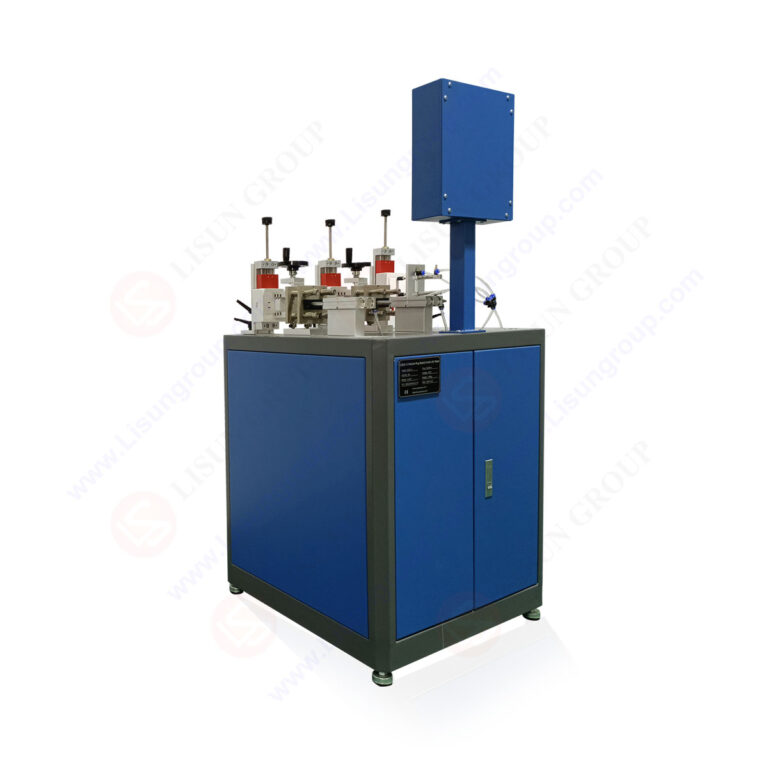
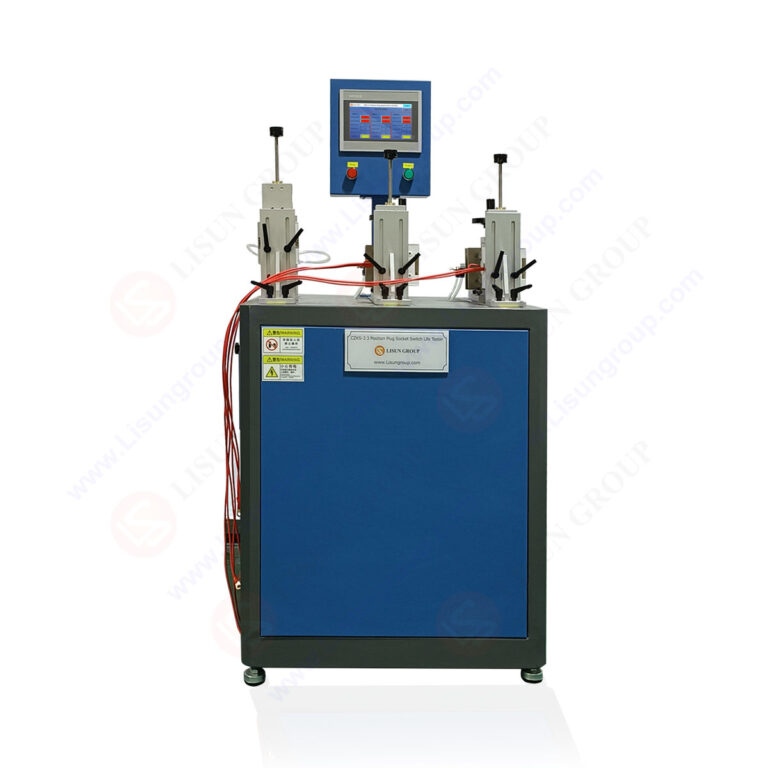
Precision testing for household appliance components demands rigorous methodologies to ensure electrical safety and operational reliability. This article examines the critical role of automated durability testing systems in verifying plug, socket, and switch performance under repeated mechanical and electrical stress conditions. The LISUN CZKS-3 series, including the CZKS-3, CZKS-3P, CZKS-3S, and CZKS-3A variants, provides comprehensive solutions for precision testing of household appliance components. These systems enable manufacturers to conduct breaking capacity tests, endurance evaluations, and contact adhesion analysis in compliance with international standards. The discussion covers test parameter configurations, standard compliance frameworks, application scenarios across domestic and automotive sectors, and operational guidelines for achieving reproducible results. Engineers and quality control professionals will gain insights into optimizing testing protocols for component certification.
1.1 Mechanical Endurance and Electrical Fatigue Failure
Electrical components in household appliances undergo repeated insertion, withdrawal, and switching cycles throughout their operational lifespan. Mechanical endurance testing evaluates the physical degradation of contact surfaces, spring mechanisms, and insulating materials under cyclic loading. The LISUN CZKS-3 series employs cylinder-driven actuation systems to apply controlled forces during plug insertion and switch toggling operations. Electrical fatigue failure manifests as contact resistance increase, arcing damage, or insulation breakdown after thousands of cycles. Testing protocols must replicate real-world usage patterns while accelerating failure mechanisms within laboratory timeframes. The CZKS-3A variant incorporates programmable logic controller (PLC) systems to simulate variable load conditions and timing sequences.
1.2 Contact Adhesion and Welding Phenomena
Contact adhesion represents a critical failure mode in switches and connectors carrying high inrush currents. When contacts separate under load, electrical arcs can cause localized melting and material transfer between mating surfaces. The CZKS-3P model integrates high-precision current measurement to detect adhesion events during breaking capacity tests. Welding phenomena occur when contact materials fuse due to excessive temperature rise during prolonged arcing. Precision testing of household appliance components requires monitoring of contact voltage drop, temperature gradients, and mechanical separation forces throughout the test sequence. The CZKS-3S variant provides automated data logging for each test cycle, enabling statistical analysis of failure distribution patterns.
1.3 Standard Compliance Frameworks for Component Testing
International standards define specific test parameters, sample quantities, and acceptance criteria for component certification. IEC 60884-1 clause 20 specifies mechanical endurance requirements for plugs and socket-outlets with 10000 insertion cycles for ordinary applications. IEC 60669-1 clause 18 governs switch durability testing with 20000 operational cycles for general-purpose switches. IEC 61058-1 provides the framework for switch lifecycle verification under resistive and inductive load conditions. GB/T 2099.1 establishes comparable test methods adapted for Chinese market compliance. The CZKS-3 series supports simultaneous testing of multiple standard configurations through interchangeable fixturing systems.
| Parameter | CZKS-3 | CZKS-3P | CZKS-3S | CZKS-3A |
|---|---|---|---|---|
| Test Stations | 3 | 3 | 3 | 3 |
| Max Current Rating | 20A | 32A | 20A | 32A |
| Insertion Speed Range | 1-15 mm/s | 1-20 mm/s | 1-15 mm/s | 1-25 mm/s |
| Timing Resolution | 0.1s | 0.01s | 0.01s | 0.001s |
| Data Channel Count | 6 | 12 | 18 | 24 |
| Load Type Compatibility | Resistive | Resistive/Inductive | All Types | All Types + Capacitive |
2.1 Electromechanical Actuation and Control Systems
The CZKS-3 series employs pneumatic cylinder actuators with servo-controlled position feedback for precise movement profiles. Actuation force ranges from 5N to 150N, adjustable according to plug insertion force requirements specified in IEC 60884-1 clause 22. The PLC-based control system manages test sequences, safety interlocks, and emergency stop functions while logging operational parameters. Each test station operates independently, allowing simultaneous execution of different test protocols on multiple sample types. The CZKS-3P variant includes dedicated current sources for fault current simulation up to 1500A for breaking capacity verification.
2.2 Data Acquisition and Analysis Capabilities
Precision testing of household appliance components requires high-resolution data capture across multiple measurement domains. The CZKS-3S model provides 18 analog input channels sampling at 1000Hz for contact resistance, voltage drop, and temperature monitoring. Thermocouple inputs allow continuous tracking of component temperature rise during endurance testing per IEC 60884-1 clause 19. The integrated software platform generates statistical process control charts, failure mode analysis reports, and compliance certificates aligned with laboratory accreditation requirements. Automated pass/fail criteria evaluation reduces operator variability and accelerates certification workflows.
3.1 Plug and Socket Breaking Capacity Verification
Breaking capacity tests evaluate a connector’s ability to interrupt electrical circuits without sustaining damage or creating safety hazards. The CZKS-3A variant applies controlled withdrawal speeds while simultaneously breaking specified load currents. Test parameters include peak breaking current, power factor correction for inductive loads, and recovery voltage monitoring per IEC 60884-1 annex A. The system measures arc duration and energy dissipation during contact separation, providing quantitative data for design validation. Precision testing ensures that connectors withstand fault conditions without welding, excessive erosion, or insulation tracking.
3.2 Switch Durability Under Load Conditions
Switch durability testing subjects devices to repeated operation while carrying rated currents under specified load types. The CZKS-3 model supports resistive loads up to 20A at 250VAC, while the CZKS-3P extends capability to 32A with inductive load correction factors. Test sequences alternate between make and break operations at defined intervals, typically 10-30 cycles per minute. Contact resistance measurements are recorded at predetermined inspection points, such as every 1000 cycles for 20000-cycle test protocols. The system automatically pauses testing when predefined failure thresholds are exceeded, preserving evidence for failure analysis.
3.3 Automotive Connector Compliance Testing
Automotive electrical components face unique challenges including vibration exposure, temperature extremes, and high current densities. The CZKS-3S variant includes programmable temperature chambers for environmental conditioning during endurance testing. Connector testing follows ISO 8092-1 and SAE/USCAR-2 standards for unsealed and sealed connector systems. The modular fixturing accommodates various connector geometries including blade, pin, and multi-contact configurations. Precision testing of household appliance components also extends to automotive applications where similar reliability requirements exist for infotainment systems and auxiliary power outlets.
4.1 IEC 60884-1 Implementation Strategy
IEC 60884-1 clause 20 requires plugs and socket-outlets to withstand 10000 insertion and withdrawal cycles without mechanical failure or electrical discontinuity. The CZKS-3 series executes this protocol with programmable insertion depth, angle, and dwell time parameters. Clause 22 mandates measurement of insertion and withdrawal forces using calibrated force sensors integrated into the test fixture. The system records force-displacement curves for each cycle, enabling identification of lubrication degradation or spring fatigue trends. Precision testing of household appliance components ensures compliance with national deviations specified in GB/T 2099.1 for Chinese market access.
4.2 IEC 60669-1 and IEC 61058-1 Test Protocols
Switch testing under IEC 60669-1 clause 18 requires 20000 operational cycles with resistive loads at rated voltage and current. The CZKS-3P model executes this protocol with automated load switching between make and break operations. Inductive load testing per IEC 61058-1 clause 17 introduces power factor correction to simulate motor or transformer loads. The CZKS-3A variant includes programmable load banks for testing under mixed load conditions representative of modern appliance circuits. Compliance reports generated by the system include cycle-by-cycle data tables, statistical summaries, and failure analysis documentation.
4.3 Automotive Standard Integration
Automotive connector standards such as LV 214 and USCAR-2 require 5000-10000 mating cycles with controlled force application and electrical monitoring. The CZKS-3S model supports these protocols through configurable test profiles and high-resolution force measurement. Temperature cycling between -40C and +125C during endurance testing is possible with optional environmental chambers. The system’s 24-channel data acquisition capability allows simultaneous monitoring of multiple signal pins in multi-way connectors. Precision testing of household appliance components in automotive contexts ensures compliance with industry-specific reliability requirements.
5.1 Appliance Manufacturing Quality Assurance
Major appliance manufacturers integrate the CZKS-3 series into production quality control workflows for incoming component inspection and finished product validation. Refrigerator door switches, washing machine timer contacts, and oven thermostat switches undergo batch sampling testing per AQL sampling plans. The system’s rapid test cycle time of 3-5 seconds per operation enables high-throughput screening of 1000+ samples per shift. Precision testing ensures that components meet specified durability ratings before assembly into finished products, reducing field failure rates and warranty claims.
5.2 Testing Laboratory Certification Services
Independent testing laboratories utilize the CZKS-3 series for certification testing services supporting product safety marks including CE, UL, and CCC. The system’s standardized test protocols reduce inter-laboratory variability and improve accreditation audit outcomes. Multi-station operation allows simultaneous testing of multiple product families, increasing laboratory throughput capacity. Data integrity features including operator authentication, test protocol traceability, and tamper-evident data storage support ISO 17025 accreditation requirements. Precision testing of household appliance components in laboratory settings provides manufacturers with compliance evidence for global market access.
5.3 Automotive Electronics Component Validation
Automotive electronics suppliers deploy the CZKS-3S variant for connector and switch validation programs targeting infotainment, body control, and power distribution applications. The system’s programmable environmental conditioning supports testing under simulated underhood and passenger compartment conditions. Connector insertion force testing per USCAR-2 includes measurement of insertion force gradients, peak forces, and force relaxation over extended dwell periods. The CZKS-3A model’s capacitive load capability proves essential for testing components interfacing with modern electronic control units featuring input capacitance.
6.1 Test Fixture Design and Calibration
Proper fixture design ensures repeatable alignment between test actuators and component mounting surfaces. Fixtures should accommodate sample dimensional tolerances while maintaining consistent insertion angles within 0.5 degrees of perpendicular. Force sensors require annual calibration traceable to national standards with calibration intervals determined by usage frequency. The CZKS-3 series automated calibration routine verifies sensor accuracy across the full measurement range using certified dead weights. Precision testing of household appliance components depends on maintaining fixture cleanliness to prevent contamination-induced measurement errors.
6.2 Test Parameter Optimization
Test parameter selection requires balancing acceleration factors against failure mode relevance. Insertion speed should replicate typical user operation rates of 50-100mm/s for handheld plugs versus machine-operated connectors. Dwell time between cycles allows contact temperature to stabilize before subsequent operations, preventing thermal runaway conditions. The CZKS-3A model’s timing resolution of 0.001s enables precise control of high-speed test sequences for component lifecycle characterization. Parameter optimization studies using design of experiments (DOE) methodologies identify critical factors affecting test reproducibility.
7.1 Arc Analysis and Contact Erosion Measurement
High-speed data acquisition during contact separation captures arc voltage and current waveforms for energy calculation. The CZKS-3P model’s 12-channel simultaneous sampling enables correlation between arc parameters and contact erosion patterns. Cumulative arc energy correlates with contact mass loss measured through periodic micro-weighing procedures. The system generates arc energy distribution histograms showing the statistical spread across multiple test cycles. Precision testing of household appliance components includes arc fault detection algorithms that identify abnormal arcing events requiring immediate test suspension.
7.2 Life Cycle Prediction Modeling
Accelerated test data from the CZKS-3 series supports life cycle prediction modeling using Weibull analysis and Arrhenius acceleration factors. Temperature rise measurements during endurance testing provide input for thermal aging models predicting insulation degradation rates. The system’s comprehensive data logging enables creation of degradation curves for contact resistance, insertion force, and insulation resistance parameters. Statistical process control charts identify emerging failure modes before they exceed acceptance criteria, enabling proactive design improvements. Life cycle predictions inform warranty period determination and maintenance interval recommendations for field-installed components.
Precision testing for household appliance components requires integrated solutions combining mechanical actuation, electrical measurement, and data analysis capabilities. The LISUN CZKS-3 series meets these demands through configurable test stations, high-resolution data acquisition, and comprehensive standard compliance support. Breaking capacity testing verifies connector interruption capability under fault conditions while switch durability testing assesses long-term reliability under normal operating loads. Standard compliance with IEC 60884-1, IEC 60669-1, IEC 61058-1, and GB/T 2099.1 ensures certification readiness for global market access. The CZKS-3, CZKS-3P, CZKS-3S, and CZKS-3A variants address specific application requirements from basic endurance testing to advanced diagnostics including arc analysis and life cycle prediction. Manufacturers and testing laboratories benefit from reduced test cycle times, improved data integrity, and reproducible results across multiple test stations. Precision testing of household appliance components with the CZKS-3 series enables manufacturers to deliver products meeting stringent safety and reliability expectations. The system’s modular architecture accommodates evolving testing requirements as standards update and new component technologies emerge.
Q1: What are the key differences between the CZKS-3, CZKS-3P, CZKS-3S, and CZKS-3A models for precision testing of household appliance components?
A: The CZKS-3 base model provides three test stations with 20A current capacity and resistive load compatibility suitable for standard plug and socket testing per IEC 60884-1. The CZKS-3P extends current rating to 32A with inductive load capability for switch durability testing under motor loads specified in IEC 61058-1. The CZKS-3S introduces 18-channel data acquisition with 0.01s timing resolution, making it ideal for multi-pin connector testing in automotive applications. The CZKS-3A represents the highest capability variant with 24 channels, 0.001s timing resolution, and all load type compatibility including capacitive loads for modern electronic component testing. Model selection depends on specific test standards, current requirements, and data acquisition needs.
Q2: How does the CZKS-3 series ensure compliance with IEC 60884-1 clause 20 mechanical endurance requirements?
A: The CZKS-3 series implements clause 20 requirements through programmable test profiles that control insertion depth to 95% of full engagement, withdrawal rates between 10-50mm/s, and dwell times of 1-3 seconds at full insertion. Force sensors record insertion and withdrawal forces continuously, comparing against the 50N maximum specified in clause 22. The system counts completed cycles and automatically pauses testing at inspection intervals for contact resistance measurement per clause 19. For plug extraction force testing, the system measures peak pull-out force during the first 5mm of withdrawal and verifies values remain above 1.5N minimum throughout the 10000-cycle test. All data is logged with timestamp and cycle number for complete test traceability.
Q3: What maintenance procedures are recommended for maintaining accuracy in precision testing of household appliance components?
A: Daily maintenance includes cleaning test fixture contact surfaces with isopropyl alcohol to remove oxide films and debris accumulated during testing. Weekly verification of force sensor zero offset and calibration check using certified test weights is recommended. Monthly inspection of pneumatic cylinder seals and lubrication levels prevents stick-slip motion artifacts in insertion force measurements. Annual calibration of all measurement channels should be performed by accredited laboratories with calibration certificates traceable to national standards. The data acquisition system requires firmware updates when available to maintain compatibility with evolving standard test protocols. Fixture alignment verification using optical alignment tools should be performed after any fixture replacement to maintain insertion angle accuracy within 0.5 degrees.
Q4: Can the CZKS-3 series test components under environmental stress conditions?
A: The base CZKS-3 model operates at ambient laboratory conditions typically between 15C and 35C. For environmental stress testing, the CZKS-3S and CZKS-3A variants can integrate with optional thermal chambers providing temperature ranges from -40C to +150C with humidity control from 10% to 95% RH. The specialized chambers feature feed-through ports for test actuator connections and measurement cables while maintaining environmental isolation. Temperature cycling profiles can be programmed to follow standard requirements such as 10 cycles between -10C and +40C for household component testing or 100 cycles between -40C and +125C for automotive applications. The system logs temperature and humidity values alongside test data, enabling correlation between environmental conditions and failure occurrence patterns.
Q5: How does the CZKS-3 series handle testing of components with different plug and connector geometries?
A: The CZKS-3 series employs a modular fixturing system with interchangeable mounting plates and alignment guides accommodating various connector types. European Schuko plugs, UK BS 1363 plugs, US NEMA configurations, and automotive blade connectors each require specific fixture inserts that maintain proper orientation and insertion angle. The system’s PLC control allows operators to store fixture-specific parameters including insertion depth limits, force thresholds, and cycle counts. For multi-way connectors, the CZKS-3S and CZKS-3A models can sequentially test individual contact pins or simultaneously monitor all pins through dedicated measurement channels. Fixture changeover typically requires 10-15 minutes including software profile loading and calibration verification, enabling efficient testing of mixed product families in laboratory environments.