Abstract
This technical article provides a comprehensive guide for engineers on socket normal operation life testing, with a primary focus on the LISUN CZKS-3 series automated test systems. The article examines the methodologies, standards compliance, and practical applications of durability testing for electrical plugs, sockets, and switches. Socket normal operation life testing verifies mechanical endurance and electrical performance under repeated insertion and withdrawal cycles. The LISUN CZKS-3 system, along with its variants CZKS-3P, CZKS-3S, and CZKS-3A, offers precision-controlled testing capabilities that align with international standards such as IEC 60884-1 and IEC 60669-1. This guide covers technical specifications, test parameter configurations, failure mode analysis, and data interpretation strategies essential for quality control engineers in household and automotive electrical component manufacturing.
1.1 Defining Normal Operation Life in Electrical Connectors
Socket normal operation life refers to the number of complete insertion and withdrawal cycles a socket can withstand while maintaining electrical continuity and mechanical integrity. This parameter directly influences product reliability and user safety. Electrical connectors experience progressive wear mechanisms including contact spring relaxation, plating abrasion, and insulating material degradation. The normal operation life test simulates real-world usage patterns under controlled laboratory conditions. Engineers must distinguish between mechanical endurance, measured without electrical load, and electrical endurance, which involves live circuit breaking during testing. The LISUN CZKS-3 series addresses both scenarios through programmable load configurations.
1.2 Critical Failure Mechanisms in Socket Durability
Contact adhesion represents a primary failure mode where metallic transfer between pin and socket surfaces creates micro-welding points. This phenomenon intensifies under higher current loads and elevated temperatures. Contact resistance increases progressively as plating layers wear, leading to localized heating and accelerated degradation. Insulation breakdown occurs when repeated mechanical stress causes micro-cracks in thermoplastic housings. Spring fatigue reduces contact force over cycles, ultimately causing intermittent electrical connections. The LISUN CZKS-3P variant incorporates real-time resistance monitoring to detect these failure precursors before complete breakdown occurs.
1.3 Standards Framework for Life Testing
International standards establish baseline requirements for socket normal operation life testing. IEC 60884-1, clause 20, specifies 5000 cycles for non-rewirable plugs and sockets at a rate of 15 cycles per minute. IEC 60669-1, clause 17, defines 10000 cycles for switches with mechanical endurance. GB/T 2099.1 provides the Chinese equivalent testing framework. These standards mandate specific test parameters including insertion force ranges, dwell times, and acceptable contact resistance thresholds. Compliance verification requires traceable calibration of test equipment and documented test procedures.
2.1 System Overview and Model Differentiation
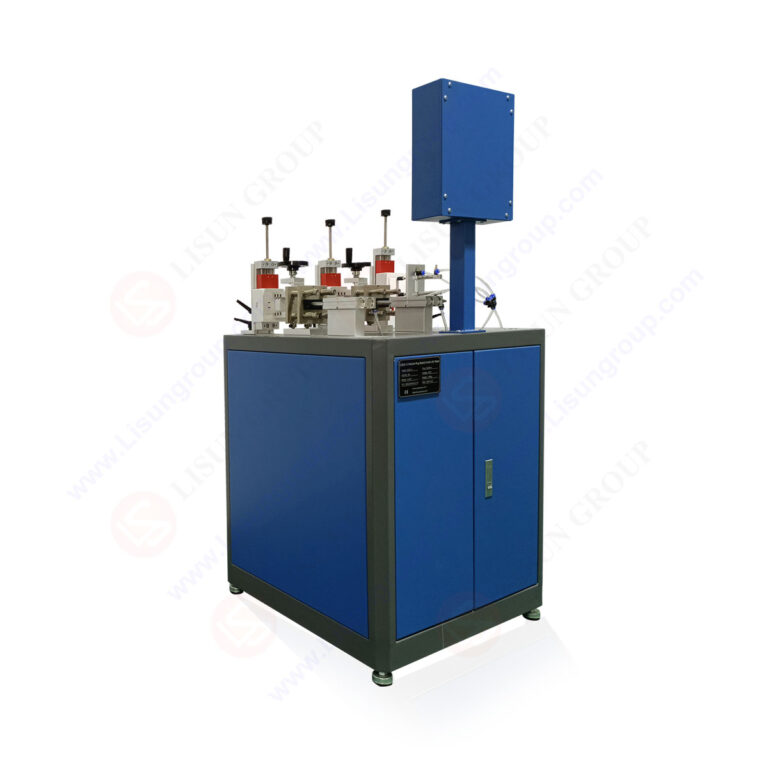
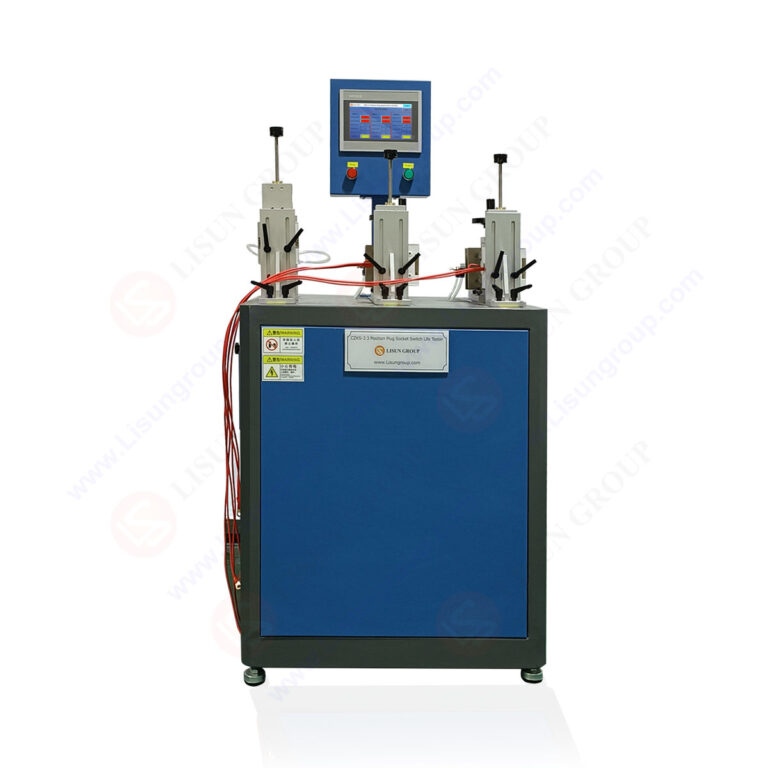
The LISUN CZKS-3 series comprises four configurable models designed for different testing scenarios. The base CZKS-3 model supports standard plug and socket durability testing with adjustable cycle counts and speeds. The CZKS-3P variant adds pneumatic cylinder-driven actuation for higher force applications and consistent insertion depth control. The CZKS-3S model specializes in switch durability testing with integrated mechanical actuation arms and programmable operation angles. The CZKS-3A variant incorporates automatic sample loading and unloading for high-throughput production testing environments.
| Parameter | CZKS-3 | CZKS-3P | CZKS-3S | CZKS-3A |
|---|---|---|---|---|
| Max Cycles per Test | 999999 | 999999 | 999999 | 999999 |
| Insertion Speed (cycles/min) | 5-30 | 5-20 | 5-60 | 5-30 |
| Max Load Current (A) | 20 | 20 | 16 | 20 |
| Contact Resistance Range (mΩ) | 0-100 | 0-100 | 0-200 | 0-100 |
| Actuation Force Range (N) | 1-50 | 10-200 | 1-30 | 1-50 |
| Temperature Monitoring | Optional | Standard | Optional | Standard |
2.2 PLC Control and Data Acquisition Architecture
The CZKS-3 series employs programmable logic controller (PLC) architecture for precise cycle control and data logging. The PLC manages stepper motor positioning for insertion depth accuracy within 0.1mm. Real-time contact resistance measurement occurs at each cycle, with data stored in internal memory for post-test analysis. The system detects failures including electrical discontinuity, excessive temperature rise, and mechanical jamming. The LISUN CZKS-3P variant includes pneumatic pressure sensors that verify consistent cylinder force application throughout the test duration. Engineers can program conditional stop parameters that halt testing when predefined thresholds are exceeded.
2.3 Load Configuration and Application Modes
Electrical load application follows standard-defined resistive and inductive profiles. For socket normal operation life testing under load, the CZKS-3 series connects external resistive load banks configurable from 0.5A to 20A. Inductive loads simulate motor and transformer connections with power factor correction. The system supports both make-and-break testing, where the circuit energizes during insertion and de-energizes during withdrawal, and continuous load testing where current flows throughout the cycle. The CZKS-3A variant includes automatic load switching for multi-sample parallel testing without manual intervention.
3.1 Sample Preparation and Mounting Requirements
Proper sample preparation ensures test results reflect actual product performance rather than setup artifacts. Sockets must be mounted on rigid test fixtures that replicate intended installation conditions. The insertion axis must align perpendicular to the socket face within 1 degree tolerance. For the LISUN CZKS-3 series, engineers should verify that the mating plug matches the socket type and classification being tested. Replacement plugs should be used for each new socket sample to eliminate wear pattern interference. Cleaning contacts with isopropyl alcohol removes manufacturing residues that could artificially reduce contact resistance.
3.2 Parameter Programming and Test Sequence Definition
The PLC interface allows engineers to define comprehensive test sequences. Key parameters include cycle count, insertion speed, dwell time at fully inserted position, and dwell time at fully withdrawn position. For socket normal operation life testing per IEC 60884-1, standard settings include 5000 cycles at 15 cycles per minute with 1-second dwell times. The LISUN CZKS-3S variant requires additional switch actuation parameters including actuation angle, actuation force, and contact separation timing. Engineers should configure failure detection thresholds for contact resistance increase exceeding 10mΩ above baseline or temperature rise exceeding 30K above ambient.
3.3 Environmental Conditioning and Test Execution
Temperature and humidity conditions during testing significantly affect results. Standard testing occurs at 23°C ± 5°C with relative humidity below 70%. The LISUN CZKS-3 series can interface with environmental chambers for accelerated aging tests combining thermal cycling with mechanical cycling. Test execution begins with a 10-cycle preconditioning phase to seat contacts and verify setup integrity. Data recording starts after preconditioning, with measurements taken at intervals defined by the test standard or custom requirements. Continuous monitoring ensures early detection of anomalous behavior.
4.1 Primary Measurement Parameters
Contact resistance serves as the primary electrical performance metric during socket normal operation life testing. Measurements should be taken using four-wire Kelvin configuration to eliminate lead resistance effects. The LISUN CZKS-3P variant provides dedicated four-wire measurement terminals with 1mΩ resolution. Temperature measurement at critical points including contact interfaces and housing surfaces identifies thermal stress accumulation. Insertion and withdrawal force measurements, captured by load cells in the CZKS-3P and CZKS-3A variants, reveal mechanical degradation trends. Cumulative failure count and failure type classification enable statistical analysis of reliability.
4.2 Failure Criteria Definition and Classification
Establishing clear failure criteria before testing ensures objective pass/fail determination. Common failure criteria include:
- Contact resistance exceeding 100mΩ for more than 1 second during continuous monitoring
- Temperature rise exceeding 45K above ambient at any measurement point
- Visible mechanical damage including cracking, deformation, or contact separation
- Intermittent electrical continuity lasting more than 10ms
- Insertion or withdrawal force falling outside specified range by more than 20%
Each failure event should be time-stamped and correlated with cycle count for root cause analysis.
4.3 Statistical Analysis and Weibull Reliability Modeling
Engineers can apply Weibull distribution analysis to socket normal operation life test data for reliability predictions. The shape parameter indicates failure mode characteristics, with values below 1 suggesting infant mortality and values above 3 indicating wear-out failures. The scale parameter represents characteristic life at 63.2% failure probability. The LISUN CZKS-3 series data export functionality provides cycle-count-to-failure datasets suitable for statistical software import. Sample sizes should follow IEC 60884-1 recommendations with minimum 3 samples for qualification testing and 10 samples for reliability characterization.
5.1 Household Electrical Component Verification
Household socket manufacturers require socket normal operation life testing for product certification and quality assurance. Standard wall sockets rated 10A or 16A must demonstrate 5000 cycles without failure for compliance with IEC 60884-1. The LISUN CZKS-3 system supports multiple socket form factors including single, double, and switched socket configurations. Testing laboratories use the CZKS-3S variant for switch-incorporated socket testing where actuation sequencing must coordinate with load application. Manufacturers achieving cycle counts exceeding 15000 cycles can market enhanced durability products for commercial applications.
5.2 Automotive Connector Durability Assessment
Automotive electrical connectors face more demanding environments including vibration, temperature extremes, and higher current densities. Socket normal operation life testing for automotive applications often requires 10000 to 20000 cycles with simultaneous thermal cycling from -40°C to 125°C. The LISUN CZKS-3A variant’s automatic loading capability supports high-volume testing of connector families used in infotainment systems, power distribution units, and sensor interfaces. Connector manufacturers use force-displacement curves generated during testing to validate design changes in contact geometry and plating materials.
5.3 Switch Durability Testing for Industrial Controls
Industrial switches including pushbuttons, toggle switches, and rotary selectors require extended durability testing up to 100000 cycles. The LISUN CZKS-3S variant provides programmable actuation profiles that replicate operator usage patterns including variable actuation speeds and hold times. Testing under electrical load verifies arc extinction capability and contact erosion resistance. Standards such as IEC 61058-1 define specific test circuits for resistive, inductive, and motor loads. Industrial control manufacturers use test results to assign lifecycle ratings and maintenance intervals for critical applications.
6.1 Standards Conformance Documentation
Comprehensive documentation supports certification audits and regulatory submissions. Test reports must include equipment identification, calibration certificates, test parameters, environmental conditions, and raw data files. The LISUN CZKS-3 series generates standardized reports compatible with ISO 17025 requirements. Engineers should maintain records of sample identification, test duration, cycle count at any failures, and photographic evidence of observed damage. Cross-referencing test results with specific clauses of IEC 60884-1, IEC 60669-1, and GB/T 2099.1 demonstrates systematic compliance.
6.2 Interlaboratory Correlation and Round-Robin Testing
Ensuring consistent results across different testing facilities requires standardized procedures and calibrated equipment. Round-robin testing programs where identical samples are tested at multiple laboratories help identify systematic measurement differences. The LISUN CZKS-3 series’ consistent actuation mechanics and measurement circuitry reduce inter-unit variability. Engineers should participate in proficiency testing programs specific to electrical connector durability. Correlation studies between the LISUN CZKS-3P pneumatic system and alternative actuation methods confirm force application accuracy within 5%.
6.3 Preventive Maintenance and Calibration Schedule
Regular maintenance ensures sustained testing accuracy and equipment longevity. Calibration intervals for the LISUN CZKS-3 series should follow manufacturer recommendations, typically every 12 months for electrical measurements and 6 months for force measurements. Critical calibration parameters include contact resistance measurement accuracy, insertion depth positioning, and cycle timing. Preventive maintenance includes pneumatic system inspections for the CZKS-3P variant, stepper motor bearing lubrication, and electrical contact cleaning. Maintaining calibration standards traceable to national metrology institutes supports audit compliance.
7.1 Multi-Station Parallel Testing Protocols
High-throughput production environments benefit from simultaneous testing of multiple socket samples. The LISUN CZKS-3A variant supports up to 4 independent testing stations with individual load configurations. Each station operates with independent cycle counts and failure detection, allowing mixed-lot testing without cross-contamination of data. Engineers can configure staggered start times to reduce peak power demand while maintaining throughput. Parallel testing reduces total test time proportionally to the number of stations, enabling 20000-cycle qualification in days rather than weeks.
7.2 Combined Environmental and Mechanical Stress Testing
Accelerated life testing combines socket normal operation life testing with environmental stress factors. Thermal cycling between -10°C and 85°C concurrent with mechanical cycling reveals material incompatibilities not apparent under standard conditions. Humidity exposure at 95% relative humidity accelerates corrosion mechanisms. The LISUN CZKS-3 series can interface with programmable environmental chambers through remote communication protocols. Engineers must account for thermal expansion differences between plug and socket materials when interpreting results from combined stress testing.
7.3 Custom Actuation Profile Programming
Non-standard usage patterns require custom actuation profiles beyond simple insertion-withdrawal cycles. The CZKS-3 series PLC supports multi-segment profiles including partial insertion, angled insertion, and oscillatory motion. Engineers programming socket normal operation life testing for specific applications such as USB charging connectors or industrial power connectors can define unique motion trajectories. The CZKS-3S variant includes switch actuation profile libraries for common switch types including momentary, latching, and multi-pole configurations.
Socket normal operation life testing represents a critical quality assurance process for electrical connector manufacturers, testing laboratories, and regulatory bodies. The LISUN CZKS-3 series provides engineers with comprehensive testing capabilities covering mechanical endurance, electrical performance, and environmental stress simulation across a range of product categories. The system’s PLC-controlled architecture ensures repeatable test conditions, while the model variants CZKS-3P, CZKS-3S, and CZKS-3A address specific requirements for pneumatic actuation, switch testing, and automated production environments respectively. Compliance with international standards including IEC 60884-1, IEC 60669-1, IEC 61058-1, and GB/T 2099.1 is systematically achievable through proper test configuration and documentation. The data acquisition and analysis capabilities enable engineers to perform detailed failure mode analysis, reliability modeling, and performance optimization. Manufacturers implementing rigorous socket normal operation life testing programs benefit from reduced field failures, enhanced product reliability, and streamlined certification processes. The technical comparison table provided in this guide assists engineers in selecting the appropriate CZKS-3 variant for their specific testing requirements. As electrical connector technology evolves with higher power densities and miniaturized form factors, the need for precise, standards-compliant durability testing continues to grow. The LISUN CZKS-3 series positions engineers to meet these challenges with confidence.
Q1: What is the recommended sample size for socket normal operation life testing per IEC 60884-1?
A: IEC 60884-1, clause 20.2, recommends a minimum of three samples for type testing of plugs and sockets. For statistical reliability characterization, laboratories typically test between 5 and 10 samples to enable Weibull distribution analysis. The LISUN CZKS-3A variant with automatic loading supports simultaneous testing of up to 4 samples per test run, allowing efficient data collection. Engineers should consider the desired confidence level and acceptable failure rate when determining sample size. For certified compliance testing, the specific product standard or certification body requirements should be consulted, as some jurisdictions mandate larger sample sizes for initial type approval.
Q2: How does contact resistance measurement frequency affect socket normal operation life test results?
A: Measurement frequency significantly impacts the detection of intermittent failures and the overall test duration. Continuous monitoring at each cycle provides the highest sensitivity to transient resistance increases but generates large datasets that require careful analysis. The LISUN CZKS-3 series supports configurable measurement intervals from every cycle to every 100 cycles. For standards compliance testing per IEC 60884-1, measurements every 500 cycles are typically sufficient for trend analysis, with continuous monitoring recommended during the final 10% of the test to capture end-of-life behavior. Intermittent faults lasting less than 10ms may be missed with periodic sampling, so applications with high reliability requirements should use the continuous monitoring option.
Q3: What maintenance procedures are critical for maintaining accuracy in the CZKS-3P pneumatic system?
A: The CZKS-3P pneumatic system requires regular inspections to maintain force application accuracy and consistent cycle performance. Compressed air quality is critical, requiring filtration to remove moisture and particulates that could affect cylinder seals. The pneumatic pressure transducer should be calibrated every 6 months against a traceable reference standard. Cylinder rod seals should be inspected for leakage every 50000 cycles and replaced when friction force exceeds 10% above baseline. The air preparation unit, including regulator and lubricator, requires quarterly maintenance to ensure consistent oil mist delivery. Engineers should document force measurements at each calibration interval to track drift trends and schedule proactive maintenance before accuracy limits are exceeded.
Q4: Can the LISUN CZKS-3 series be used for testing socket-outlets with integrated USB charging ports?
A: Yes, the CZKS-3 series can accommodate socket-outlets with integrated USB charging ports by configuring appropriate electrical loading. USB ports typically require DC load banks rather than the standard AC resistive loads. The CZKS-3 series provides auxiliary control outputs that can switch external DC loads synchronously with mechanical cycles. Testing should verify both the AC mains socket function and the USB port function independently and simultaneously. Contact resistance measurements on USB data lines may require specialized four-wire adapters. The mechanical insertion profile for USB connectors differs from standard power connectors, so the custom actuation profile programming feature should be used to define appropriate insertion depth and force parameters.
Q5: How should engineers interpret force-displacement curves from socket normal operation life testing?
A: Force-displacement curves provide critical insights into mechanical degradation mechanisms during socket normal operation life testing. Initial cycles typically show smooth force profiles with a distinct peak insertion force corresponding to contact spring compression. As testing progresses, changes in the curve shape indicate wear modes: decreasing peak force suggests spring relaxation or contact wear, while increasing peak force indicates debris accumulation or plating galling. The LISUN CZKS-3P variant records force profiles at user-defined intervals for trend analysis. A standard deviation increase exceeding 20% across samples from the same production lot indicates process inconsistency. Engineers should compare force profiles at 10% intervals of total test life to establish baseline degradation rates for specific product designs.