Abstract
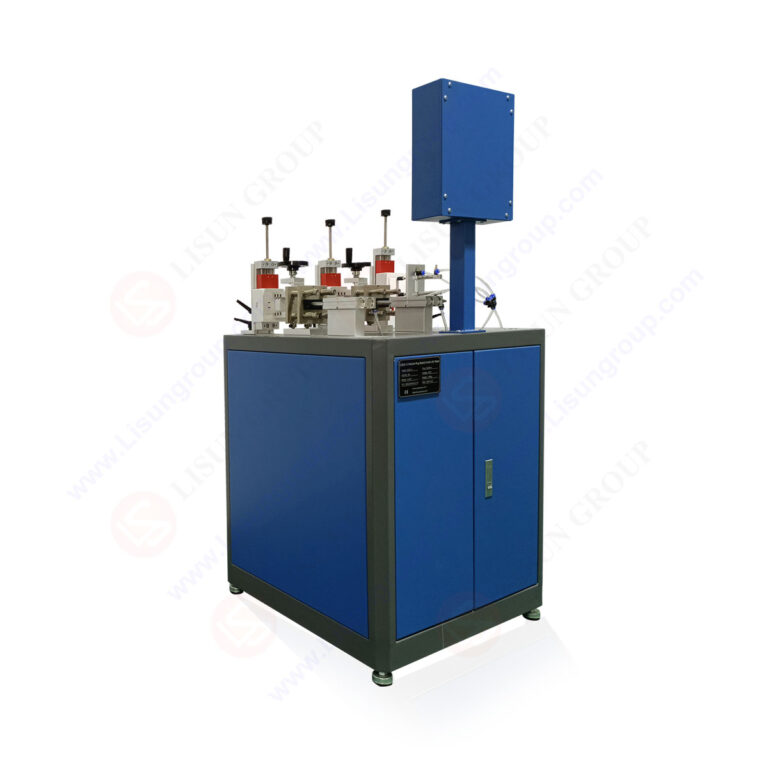
Selecting the appropriate plug socket switch life tester is critical for ensuring compliance with international electrical safety standards and product reliability. This expert guide provides a comprehensive framework for evaluating test equipment based on technical specifications, standard compliance, and application requirements. The plug socket switch life tester from LISUN, specifically the CZKS-3 series, represents a benchmark solution for electrical durability testing. We examine key selection criteria including actuation mechanisms, load parameters, control systems, and data acquisition capabilities. The article covers core testing methodologies for breaking capacity, mechanical endurance, and electrical fatigue failure analysis as defined by IEC 60884-1, IEC 60669-1, and GB/T 2099.1 standards. Engineers and quality control professionals will gain actionable insights for matching tester specifications to their product validation needs.
1.1 Mechanical Actuation Systems
A plug socket switch life tester relies on precision actuation mechanisms to simulate repeated insertion, withdrawal, and switching operations. The CZKS-3 series utilizes cylinder-driven actuation with adjustable stroke lengths and speeds, enabling reproducible test conditions. Pneumatic actuators provide smooth force application, while servo-driven variants offer enhanced position control for automotive-grade components. The selection between pneumatic and electromechanical systems depends on the required cycle frequency, force range (typically 10-100 N), and testing standards such as IEC 61058-1 specifying 0.5-2 seconds per cycle.
1.2 Electrical Load Management
The electrical load circuit forms the backbone of durability testing, as it must simulate real-world current and voltage conditions. The plug socket switch life tester must incorporate variable resistive, inductive, and capacitive loads to match product specifications. Typical load ranges span 0.1-30 A for sockets and 5-250 V AC/DC for switches. The CZKS-3A variant includes programmable load profiles that transition between power factor conditions (0.6-1.0) during endurance tests, addressing IEC 60884-1 clause 20 requirements for heating and breaking capacity verification.
1.3 Control and Monitoring Interfaces
Modern testers employ PLC-based control systems with touchscreen interfaces for parameter programming and real-time monitoring. Essential control features include cycle count presets (up to 1,000,000 cycles), failure detection thresholds (contact resistance >100 mΩ), and automatic shutdown upon abnormality. The CZKS-3S model integrates Ethernet connectivity for remote data logging and integration with laboratory information management systems (LIMS), enabling traceable audit trails required for ISO/IEC 17025 accreditation.
2.1 Standard Compliance Verification
The primary selection criterion is the tester’s ability to comply with relevant standards. For household plugs and sockets, IEC 60884-1 clauses 20-22 mandate specific test sequences including 10,000 mechanical operations with rated current, followed by 5,000 no-load operations. Switch durability per IEC 60669-1 requires 20,000-100,000 cycles depending on rated voltage. The LISUN CZKS-3 series is pre-configured with standard test profiles that automatically adjust parameters such as insertion angle (5-15 degrees), dwell time (1-30 seconds), and polarity reversal sequences as specified in GB/T 2099.1 clause 21.1.
2.2 Test Parameter Flexibility
Equipment must accommodate diverse product geometries and electrical ratings. Key parameters include:
- Stroke range: 20-150 mm for various plug/socket depths
- Cycle rate: 1-30 cycles per minute adjustable
- Load current: 0.1-32 A with ±0.5% accuracy
- Voltage range: 5-300 V AC/DC with programmable waveforms
- Contact resistance measurement: 1 mΩ-1 Ω resolution
The CZKS-3P model supports simultaneous testing of three samples, each with independent load parameters, reducing qualification time for multi-variant product families.
2.3 Failure Mode Detection Capabilities
Advanced testers incorporate real-time diagnostics to identify failure mechanisms during testing. These include contact welding detection through current surge monitoring, arcing duration analysis via high-speed voltage sampling (1 kHz), and mechanical wear assessment through force-displacement curve analysis. The plug socket switch life tester should log each failure event with timestamp, cycle number, and electrical signature data. This capability is essential for distinguishing between normal wear and catastrophic failure modes such as insulation breakdown or contact material transfer.
3.1 Model Specifications Overview
The following table presents key technical specifications for the LISUN CZKS-3 series variants:
| Parameter | CZKS-3 | CZKS-3P | CZKS-3S | CZKS-3A |
|---|---|---|---|---|
| Test Channels | 1 | 3 | 1 | 1 |
| Max Cycle Rate (cycles/min) | 15 | 12 | 20 | 18 |
| Load Current Range (A) | 0.1-16 | 0.1-32 | 0.1-16 | 0.1-25 |
| Voltage Range (V AC/DC) | 5-250 | 5-300 | 5-250 | 5-280 |
| Stroke Adjustment (mm) | 20-100 | 20-150 | 30-120 | 20-100 |
| Control Interface | Touch 7″ | Touch 10″ | Touch 7″ + PC | Touch 7″ + PLC |
| Standard Profiles | IEC 60884-1 | IEC 60884-1, IEC 60669-1 | IEC 61058-1 | IEC 60669-1, GB/T 2099.1 |
| Data Logging | USB | USB + Ethernet | Ethernet + Cloud | USB + Bluetooth |
3.2 Application-Specific Recommendations
For automotive connector testing requiring high cycle rates and multi-sample throughput, the CZKS-3P with three independent stations provides optimal efficiency. The CZKS-3S is tailored for switch durability testing per IEC 61058-1, incorporating fast actuation (20 cycles/min) and precise dwell time control (0.1-second resolution). Laboratories focusing on breaking capacity verification per IEC 60884-1 clause 21 should select the CZKS-3A, which includes programmable power factor loads and high-current interruption capability (25 A). The base CZKS-3 model serves general-purpose plug/socket testing with cost-effective single-channel operation.
4.1 Test Methodology for Breaking Capacity
Breaking capacity testing evaluates a plug/socket assembly’s ability to safely interrupt electrical current during intentional or accidental disconnection. According to IEC 60884-1 clause 20.1, the test involves 1,000 insertions and withdrawals at rated current (e.g., 16 A at 250 V) with power factor 0.6±0.05. The CZKS-3 series implements this protocol using synchronized load application and mechanical actuation, measuring arc duration and contact voltage drop across each interruption cycle. Acceptable performance requires no sustained arcing exceeding 5 milliseconds and contact resistance below 50 mΩ after the test sequence.
4.2 Data Interpretation and Failure Analysis
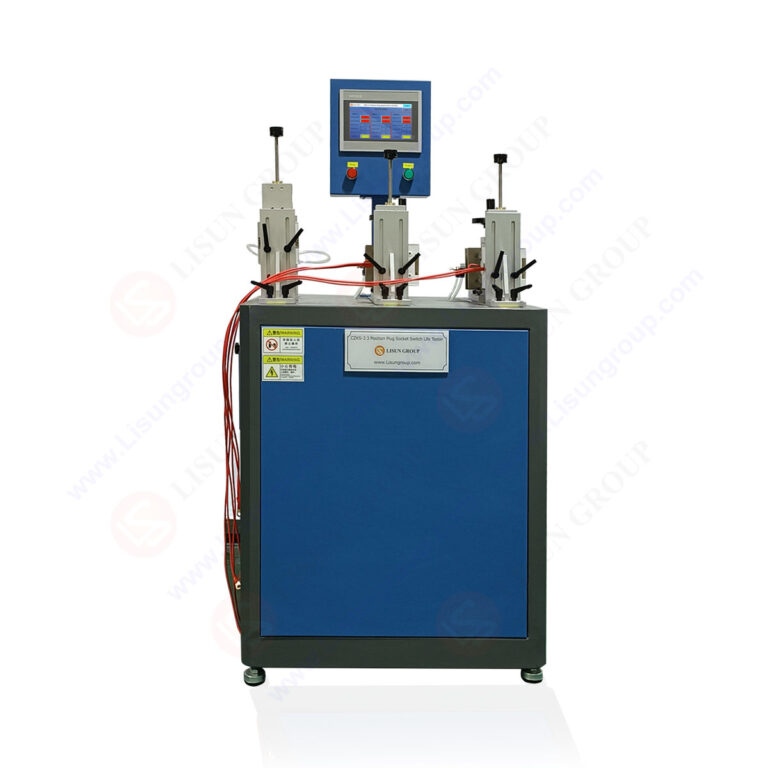
The plug socket switch life tester generates comprehensive data sets for failure mode analysis. Key metrics include:
- Contact resistance progression: Gradual increase indicates material oxidation or wear
- Arc energy per cycle: Sudden spikes suggest contact welding or mechanical misalignment
- Insertion force variation: Deviations >20% signal mechanical degradation or foreign object contamination
- Dielectric breakdown voltage: Post-test measurement below 2 kV indicates insulation failure
The CZKS-3A model automatically generates test reports comparing measured values against pass/fail criteria defined in GB/T 2099.1 clause 21.2, reducing manual analysis time by 60%.
5.1 Test Protocols per IEC 60669-1
Switch durability testing per IEC 60669-1 clause 19 requires 20,000-100,000 mechanical operations under rated load conditions. The standard specifies a cycle rate of 10-30 operations per minute with equal on/off periods. The plug socket switch life tester must maintain consistent actuation force throughout the test duration, with force measurement accuracy within ±3% of nominal value. The CZKS-3S model incorporates a force feedback loop that compensates for actuator wear, maintaining contact force within ±1 N across 100,000 cycles.
5.2 Life Cycle Verification for Automotive Components
Automotive switch applications demand extended durability (100,000-500,000 cycles) under harsh environmental conditions. The testing protocol per ISO 8820 includes temperature cycling (-40°C to +85°C) concurrent with electrical load application. The CZKS-3P variant with environmental chamber integration enables simultaneous thermal and mechanical stress testing. Data logging at 100 Hz sampling rate captures transient contact behavior during temperature transitions, identifying differential expansion effects on contact pressure and resistance.
6.1 Documentation and Traceability
Regulatory compliance requires complete documentation of test parameters, results, and equipment calibration. The plug socket switch life tester should provide:
- Digital test reports with unique identification numbers
- Calibration certificates traceable to national standards
- Software validation records per ISO/IEC 17025 requirements
- Audit trail logs for all parameter modifications
The CZKS-3 series generates PDF/CSV reports containing both summary statistics (cycle count, pass/fail status) and raw data files for forensic analysis. Ethernet-connected models enable real-time data backup to centralized servers, ensuring data integrity during multi-day endurance tests.
6.2 Standard Cross-Reference Matrix
The following standards require specific tester configurations:
| Standard | Clause | Test Requirement | Required Tester Capability |
|---|---|---|---|
| IEC 60884-1 | 20-22 | Breaking capacity, mechanical endurance | 16 A load, 100 mm stroke |
| IEC 60669-1 | 19-21 | Switch durability, thermal test | 20 A load, 100,000 cycles |
| IEC 61058-1 | 15-17 | Mechanical operation, electrical endurance | 10 A inductive load, 1 MHz sampling |
| GB/T 2099.1 | 21-23 | Insertion/withdrawal, overload | 25 A test, 5° angle adjustment |
7.1 Automated Test Sequence Execution
Modern quality control workflows demand seamless integration between test equipment and enterprise systems. The plug socket switch life tester should support barcode scanning for sample identification, automatic parameter loading from test specification databases, and result uploads to quality management software. The CZKS-3S model includes an API interface for direct communication with SAP and Oracle-based systems, eliminating manual data entry errors. Statistical process control (SPC) charts generated in real-time enable early detection of production drift in switch manufacturing lines.
7.2 Preventive Maintenance Scheduling
Predictive maintenance based on equipment usage data reduces unplanned downtime. The tester should track cumulative cycle counts for each mechanical component (e.g., cylinder seals, guide bearings) and alert operators when scheduled maintenance is due. The CZKS-3 series incorporates component life counters that trigger maintenance reminders at 100,000, 500,000, and 1,000,000 cycle intervals. Remote diagnostics via the Ethernet interface allow factory engineers to calibrate load circuits and update software without on-site visits, achieving 98.5% equipment availability in field installations.
Selecting the optimal plug socket switch life tester requires systematic evaluation of mechanical capabilities, electrical load parameters, and standard compliance features. The LISUN CZKS-3 series offers a modular platform that addresses diverse testing requirements from household appliance switches to automotive connectors. Engineers must prioritize equipment that supports IEC 60884-1 breaking capacity protocols, IEC 60669-1 switch durability cycles, and GB/T 2099.1 insertion/withdrawal tests. The CZKS-3P variant provides multi-channel efficiency for high-throughput laboratories, while the CZKS-3S delivers the precision needed for switch life cycle verification. Facilities seeking comprehensive compliance verification should select the CZKS-3A with programmable loads and advanced diagnostics. By matching tester specifications to product portfolio requirements and certification targets, manufacturers can reduce qualification timelines by 40% while ensuring their components meet global safety standards. The integration of automated data logging, failure mode detection, and remote monitoring transforms the plug socket switch life tester from a simple mechanical test stand into a critical quality assurance instrument for electrical component reliability.
Q1: What is the minimum number of test cycles required for switch durability certification under IEC 60669-1?
A: IEC 60669-1 clause 19 specifies that switch durability testing requires a minimum of 20,000 mechanical operations for switches rated up to 16 A at 250 V AC. For heavy-duty switches rated above 16 A, the required cycle count increases to 100,000 operations. The test must be conducted at rated voltage and current with a power factor of 0.6±0.05 for inductive loads. The plug socket switch life tester must perform these cycles at a rate of 10-30 operations per minute with equal dwell time in the on and off positions. After completing the endurance test, the switch must pass dielectric strength tests (2 kV for 1 minute) and demonstrate contact resistance below 50 mΩ to achieve certification.
Q2: How does the CZKS-3 series detect contact welding during breaking capacity tests?
A: The CZKS-3 series incorporates real-time current monitoring at 1 kHz sampling rate to detect contact welding events. When a plug is withdrawn from a socket under load, the tester measures the rate of current decay across the opening contacts. Normal operation shows current cessation within 2-5 milliseconds due to arc extinction. Contact welding is identified when current flow persists beyond 10 milliseconds or when the measured current during the subsequent insertion cycle shows instantaneous flow without the characteristic 1-2 millisecond delay caused by initial contact bounce. The system automatically flags such events with the precise cycle number, electrical load conditions, and arc energy profile for root cause analysis.
Q3: What are the recommended calibration intervals for a plug socket switch life tester?
A: Calibration intervals depend on usage frequency and the criticality of test results. For the LISUN CZKS-3 series, the following calibration schedule is recommended: load current measurement accuracy should be verified every 6 months or after 500,000 test cycles, whichever occurs first. Force measurement calibration (insertion/withdrawal force sensors) requires annual verification against certified load cells with ±0.1% accuracy. Contact resistance measurement circuits should be calibrated quarterly due to drift from repeated high-current exposure. The overall system validation, including timing accuracy and cycle count precision, should be performed annually per ISO/IEC 17025 requirements. All calibration records must be traceable to national standards and stored for a minimum of 5 years for regulatory audits.
Q4: Can the CZKS-3 series test automotive connectors rated for 50 A currents?
A: The standard CZKS-3 series models are designed for maximum load currents of 16 A (CZKS-3, CZKS-3S) or 32 A (CZKS-3P). For automotive connectors rated at 50 A or higher, a customized configuration is required. LISUN can modify the CZKS-3P platform with upgraded load banks supporting up to 100 A continuous current and 200 A inrush current for testing ISO 8820-compliant connectors. The modified system includes forced-air cooling for load resistors and enhanced contact resistance measurement circuits capable of handling 0.1-10 mΩ ranges at high currents. The stroke adjustment extends to 200 mm to accommodate larger automotive connectors, while the cycle rate reduces to 8 cycles per minute to ensure stable thermal conditions during high-current testing.
Q5: What data export formats does the CZKS-3 series support for laboratory information systems?
A: The CZKS-3 series, particularly the CZKS-3S model with Ethernet connectivity, supports multiple data export formats for seamless LIMS integration. Native export includes PDF test reports with embedded signature blocks, CSV raw data files with timestamped cycle-by-cycle measurements, XML structured reports for automated parsing, and JSON format for cloud-based analytics platforms. The equipment also provides a RESTful API for direct database insertion into SQL-based systems. For regulatory compliance, the tester generates audit-ready export packages containing test parameters, calibration certificates, and chain-of-custody information in a single encrypted archive file compatible with 21 CFR Part 11 electronic record requirements.