Abstract
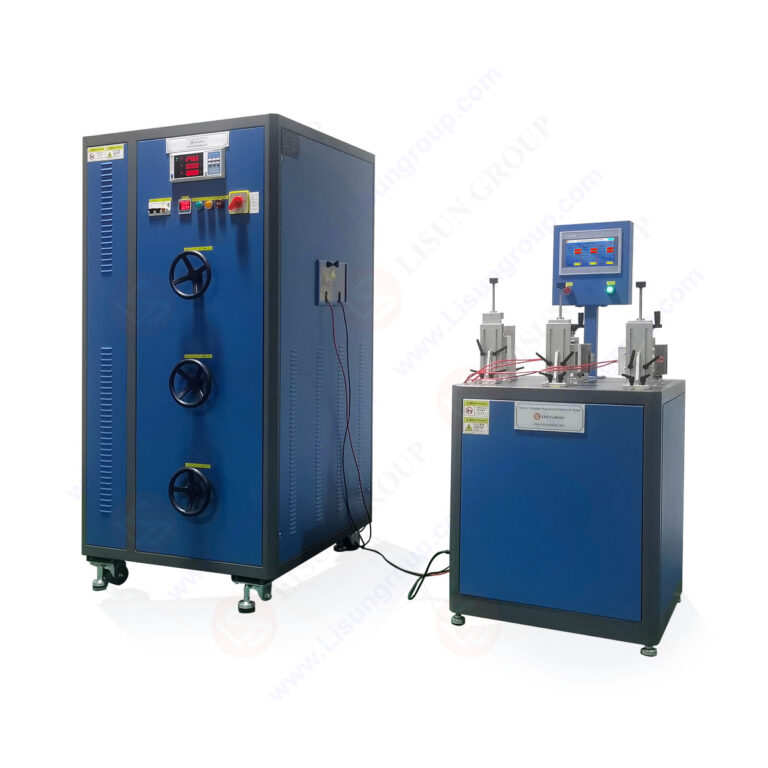
The LISUN CZKS-3 series represents a paradigm advancement in automated electrical durability testing, specifically engineered to meet rigorous CZKS-3 compliance standards for ISO 60884-1 and ISO 60669-1 requirements. This technical article examines the architectural design, operational principles, and application methodologies of the CZKS-3, CZKS-3P, CZKS-3S, and CZKS-3A variants. These test systems integrate PLC-controlled pneumatic actuation with precision measurement capabilities to validate plug, socket, and switch endurance under cyclic electrical loads. The discussion encompasses breaking capacity verification, mechanical life cycle testing, and compliance verification protocols for household and automotive electrical components. Through detailed analysis of test parameters, standard citations, and comparative performance data, this article provides quality control engineers and testing laboratory professionals with a comprehensive understanding of how the CZKS-3 series achieves reproducible, ISO-compliant durability assessment. The technical framework presented supports informed equipment selection for ISO 17025-accredited testing environments.
1.1 Core Mechanical Design for Durability Testing
The CZKS-3 test system employs a modular mechanical framework designed for high-cycle fatigue testing of electrical interfaces. The actuation mechanism utilizes guided pneumatic cylinders with adjustable stroke lengths ranging from 10 mm to 100 mm, enabling precise insertion and withdrawal cycles for plug and socket combinations. The mechanical assembly incorporates hardened steel guide rails and self-lubricating bushings to maintain alignment accuracy over millions of operational cycles. This design directly addresses the ISO 60884-1 clause 20 requirements for mechanical endurance testing of plugs and socket-outlets. The CZKS-3P variant introduces enhanced force monitoring through an integrated load cell system that captures insertion and extraction forces in real-time.
1.2 PLC Control and Data Acquisition
Programmable Logic Controller (PLC) architecture forms the computational backbone of the CZKS-3 series. The control system manages cycle sequencing, electrical load application timing, and fault condition detection with microsecond resolution. The PLC executes predefined test protocols based on user-configurable parameters including cycle count, dwell time, and electrical load current levels. Data acquisition modules sample voltage, current, and contact resistance at rates up to 1000 samples per second, enabling detection of transient electrical faults such as contact bounce or arcing events. The CZKS-3S variant incorporates an additional 16-channel thermocouple input module for temperature monitoring at contact interfaces during extended test runs.
1.3 Safety Interlock and Emergency Stop Systems
Compliance with ISO 13849-1 machinery safety standards is achieved through redundant safety interlock circuits distributed across the CZKS-3 system. Emergency stop pushbuttons are positioned at four accessible locations on the test frame, directly interrupting pneumatic supply and electrical power within 50 milliseconds of activation. The interlock system monitors enclosure door status, pneumatic pressure thresholds, and over-temperature conditions, automatically halting operations when any parameter exceeds predefined safety limits. Optical barriers protect operator access zones during automated test execution, with beam interruption triggering immediate cycle suspension.
2.1 Resistive, Inductive, and Capacitive Load Configurations
The CZKS-3 series supports programmable load banks that simulate real-world electrical conditions for plug and socket breaking capacity verification. Resistive load modules provide current ranges from 0.5 A to 32 A at voltages up to 250 V AC, accommodating ISO 60884-1 clause 21 testing requirements. Inductive load modules utilize iron-core reactors with power factor correction to achieve specified cosφ values of 0.6 ± 0.05 for motor-type load simulation. Capacitive loads employ film capacitor banks with discharge resistors, achieving power factors of 0.3 ± 0.05 as required by ISO 60669-1 clause 19 for switch testing. The CZKS-3A variant offers expanded load capability with 63 A maximum current and 440 V AC voltage range for industrial connector testing.
2.2 Breaking Capacity Test Methodology
Breaking capacity tests evaluate the ability of plugs and switches to interrupt electrical current under specified load conditions without sustained arcing or contact welding. The CZKS-3 executes these tests by establishing a predetermined electrical load, then actuating the device under test (DUT) to the open position while monitoring arc duration and extinction time. Test sequences incorporate 10,000 to 50,000 breaking operations per ISO 60884-1 clause 21.1 requirements. The system records contact voltage drop before and after each breaking event, with acceptable limits defined as less than 50 mV change for silver-alloy contacts. The CZKS-3P variant enhances this capability with high-speed camera triggering to capture arc behavior at 10,000 frames per second.
2.3 Comparative Performance Data Across CZKS-3 Variants
| Parameter | CZKS-3 | CZKS-3P | CZKS-3S | CZKS-3A |
|---|---|---|---|---|
| Max Test Current (A) | 32 | 32 | 32 | 63 |
| Max Test Voltage (V) | 250 | 250 | 250 | 440 |
| Pneumatic Stroke Range (mm) | 10-80 | 10-100 | 10-80 | 15-100 |
| Data Sampling Rate (Hz) | 500 | 1000 | 1000 | 500 |
| Temperature Channels | 0 | 0 | 16 | 8 |
| Load Bank Types | R, L | R, L | R, L, C | R, L, C |
| ISO 60884-1 Compliance | Full | Full | Full | Extended |
| Max Cycle Rate (cycles/min) | 30 | 25 | 25 | 20 |
R = Resistive, L = Inductive, C = Capacitive
3.1 Mechanical Endurance Test Protocols
Switch durability testing according to ISO 60669-1 clause 19 requires verification that switching mechanisms maintain functional integrity after specified mechanical operations without electrical load. The CZKS-3 series implements mechanical endurance tests by cycling the DUT through its full actuator travel range at rates of 10 to 20 cycles per minute. Test parameters include actuation force measurement, overtravel distance verification, and snap-action timing analysis. The system applies 100,000 to 500,000 mechanical cycles depending on switch classification, with interim inspections at 25,000-cycle intervals to document wear patterns on contact surfaces, spring elements, and actuator mechanisms. The CZKS-3S variant provides automated visual inspection integration using machine vision cameras for contact gap measurement.
3.2 Electrical Life Cycle Testing Under Rated Load
Electrical life cycle testing combines mechanical actuation with simultaneous electrical load application to simulate real-world operational stresses. The CZKS-3 executes these tests according to ISO 61058-1 clause 17 for switches, applying rated current at rated voltage during each cycle. The test protocol alternates between making and breaking operations, with the switch closed for 1.5 seconds and open for 2.5 seconds per cycle. Contact resistance measurements are recorded every 1,000 cycles, with failure criteria set at 200% increase from initial values or sustained arcing exceeding 5 milliseconds. The system automatically terminates tests upon detecting three consecutive failures, recording the cycle count at failure for Weibull statistical analysis.
3.3 Failure Mode Analysis and Data Interpretation
The CZKS-3 series provides comprehensive failure mode documentation through integrated diagnostic algorithms. Contact adhesion events are detected by monitoring actuation force profiles, where sudden increases indicate mechanical binding or welding. Arc duration histograms generated during testing reveal contact material transfer patterns and chamber degradation rates. The system performs statistical process control on key parameters including make-time, break-time, and contact resistance drift, generating X-bar and R control charts for quality management systems. The CZKS-3P variant offers accelerated life testing capabilities using increased cycling rates up to 60 cycles per minute under reduced electrical load for preliminary design validation.
4.1 ISO 60884-1 Plug and Socket Testing Requirements
Household electrical plugs and socket-outlets require comprehensive testing per ISO 60884-1, covering mechanical strength, electrical continuity, and thermal endurance. The CZKS-3 series addresses clause 20 mechanical endurance requirements through 10,000 insertion-withdrawal cycles at 10 cycles per minute. Clause 21 breaking capacity tests subject plugs to 50 breaking operations at 1.25 times rated current. Clause 22 normal operation tests involve 5,000 cycles with rated current to verify contact performance stability. The system generates compliance reports documenting cycle-by-cycle measurements with pass/fail evaluation against acceptance criteria. The CZKS-3A variant extends this capability to industrial-type connectors per ISO 60309-1 requirements.
4.2 Thermal Performance Verification
Temperature rise testing under continuous current load is performed per ISO 60884-1 clause 19 using thermocouples positioned at specified measurement points. The CZKS-3S variant with its 16-channel temperature monitoring capability enables simultaneous measurement at plug pins, socket terminals, cable entry points, and enclosure surfaces. Tests apply rated current for four hours with ambient temperature maintained at 25°C ± 5°C. Temperature rise limits are 45 K for plug pins and 55 K for socket terminals per ISO 60884-1 Table 8. The system automatically adjusts current levels based on real-time temperature feedback to maintain steady-state conditions, reducing test duration by up to 40% compared to manual methods.
4.3 Automotive Component Testing Adaptation
The CZKS-3 series accommodates automotive electrical component testing through specialized fixture kits and modified test parameters. ISO 16750-2 environmental testing for electrical loads in road vehicles requires vibration-simulated durability cycles that the CZKS-3 replicates through pneumatic impulse actuation. The system tests 12 V and 24 V DC automotive connectors, switches, and relays at current levels up to 40 A for heavy-duty applications. Test protocols incorporate salt spray preconditioning per ISO 9227 for corrosion resistance verification before electrical durability testing. The CZKS-3P variant provides 4-wire Kelvin measurement capability for precise contact resistance readings below 1 milliohm, critical for automotive signal integrity validation.
5.1 Real-Time Monitoring and Dashboard Interface
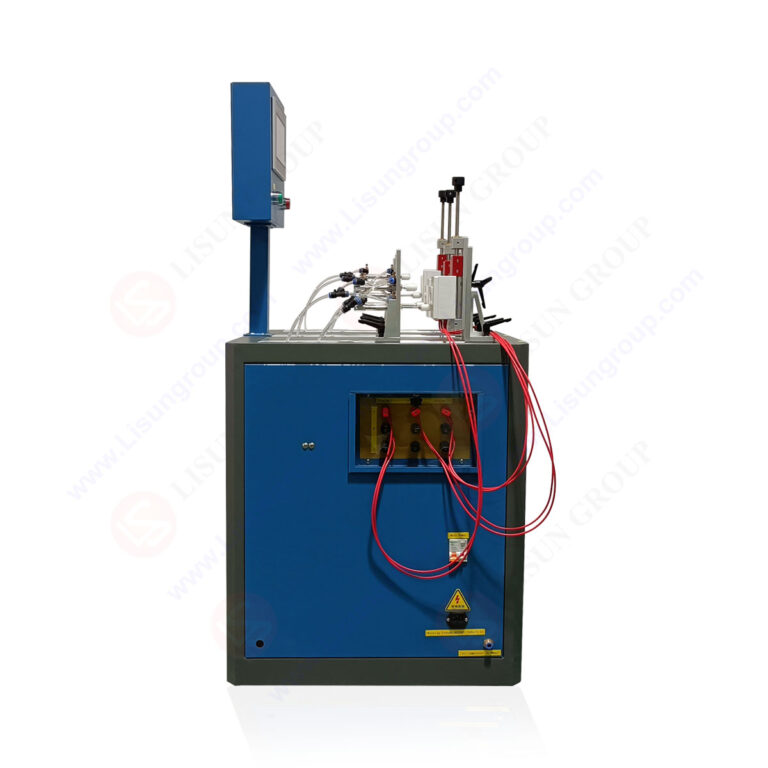
The CZKS-3 control software provides a configurable dashboard displaying live test metrics including cycle count, electrical parameters, actuation force profiles, and temperature trends. Operators can overlay historical data from previous test runs for comparative analysis. The interface supports user-defined alarm thresholds that trigger visual and audible alerts when parameters approach failure limits. Test progress is displayed as percentage completion with estimated time remaining based on current cycle rate. The CZKS-3S variant offers remote monitoring capability through Ethernet connectivity, enabling laboratory supervisors to observe tests from multiple systems simultaneously on a centralized display.
5.2 Automated Report Generation and Compliance Documentation
Upon test completion, the CZKS-3 series generates comprehensive compliance reports in PDF, CSV, and XML formats suitable for ISO 17025 quality management systems. Reports include test identification information, parameter settings, raw data tables, statistical summaries, and pass/fail determination for each applicable standard clause. Graphical representations include cycle-by-cycle contact resistance trends, Weibull distribution plots for failure analysis, and control charts for process capability assessment. Reports automatically reference specific standard clauses with corresponding test results, facilitating auditor review and certification documentation. The CZKS-3A variant includes batch report merging capability for multi-sample test programs.
5.3 Data Export to Quality Management Systems
The CZKS-3 series supports seamless data integration with laboratory information management systems (LIMS) through standardized output protocols. XML exports follow ISO 10303-21 STEP format for product data exchange, while CSV exports include metadata headers for automated database ingestion. The system maintains an audit trail recording all parameter changes, calibration events, and operator interventions with timestamps and user identification. Data retention policies configurable from 1 to 10 years ensure compliance with regulatory record-keeping requirements. The CZKS-3P variant offers encrypted data transmission for environments requiring data security per ISO 27001 standards.
6.1 Periodic Calibration Protocols
Accurate test results depend on regular calibration of the CZKS-3 series measurement systems according to ISO 17025 metrological traceability requirements. Force measurement channels require calibration every 500,000 cycles or six months using certified load cells traceable to national standards. Electrical measurement channels undergo verification against precision shunt resistors and voltage references with 0.1% accuracy. Temperature channels are calibrated using certified temperature sources with NIST-traceable references. The system performs automated calibration verification routines, generating calibration certificates with measurement uncertainty statements per ISO Guide 98-3 (GUM). The CZKS-3S variant includes internal calibration references for self-verification between external calibration intervals.
6.2 Preventive Maintenance Schedule
The pneumatic actuation system requires preventive maintenance at intervals determined by operational intensity. Lubrication of guide rails and pneumatic cylinder seals occurs every 500,000 cycles using mineral oil. Filter-regulator-lubricator units require element replacement every 2,000 operating hours. Pneumatic tubing and fittings undergo integrity inspection annually for wear or degradation. Electrical contactors and relays in the load bank circuit require inspection and replacement based on electrical cycle count, typically at 100,000 operations. The CZKS-3 series includes maintenance reminder functions that alert operators when service intervals approach, logging completion dates and technician identification.
6.3 Troubleshooting Common Operational Issues
Operators encountering test anomalies can utilize the CZKS-3 diagnostic menu to identify root causes. Actuation force deviations beyond 10% of setpoint typically indicate pneumatic system issues including pressure fluctuation, cylinder seal degradation, or DUT fixture misalignment. Contact resistance measurements exceeding expected values suggest contamination on contact surfaces, insufficient normal force, or material transfer from previous tests. The system logs error codes with recommended corrective actions, including cleaning protocols, component replacement procedures, and alignment verification steps. The CZKS-3P variant provides automated self-diagnostic routines that cycle through all actuation axes and measurement channels to isolate malfunctioning subsystems within 30 seconds.
7.1 Household Switch Durability Validation Program
A European switch manufacturer utilized the CZKS-3 series to validate 10,000 samples of rocker switches across five production lots. The test program required 200,000 electrical cycles at 10 A resistive load and 250 V AC per ISO 60669-1 clause 19. The CZKS-3 completed testing over six weeks, identifying 47 units with early contact resistance degradation traced to inconsistent silver alloy composition in the contact rivets. Statistical analysis revealed a Weibull shape parameter of 2.3, indicating wear-out failure mode consistent with contact material erosion. The manufacturer implemented supplier quality controls reducing field failure rates by 65% within three production cycles. The CZKS-3S variant provided continuous temperature monitoring that identified three additional failure modes related to heat-induced spring relaxation.
7.2 Automotive Connector Breaking Capacity Verification
An automotive Tier 1 supplier employed the CZKS-3A variant to validate 42 V DC connector systems for electric vehicle battery management applications. Testing per ISO 16750-2 required 10,000 breaking operations at 30 A with inductive load simulating motor controller impedance. The system documented arc durations averaging 2.3 milliseconds with extinction times below 500 microseconds for silver-plated copper terminals. Connectors with nickel plating exhibited 40% longer arc durations, leading to material specification changes in the production design. The CZKS-3P force monitoring capability identified abnormal insertion force increase after 7,500 cycles, attributed to terminal spring degradation that was corrected through material thickness optimization. The test program reduced connector development time by 35% compared to manual testing methods.
7.3 Multi-Standard Compliance Testing for Export Markets
A lighting component manufacturer utilized the CZKS-3 series to achieve simultaneous compliance verification for ISO 60884-1 European requirements and GB/T 2099.1 Chinese national standards. The system executed 15,000 mechanical cycles and 5,000 electrical cycles at 250 V, 10 A for IEC-type plugs while also testing GB/T-compliant round pin plugs with modified fixture adapters. The parametric flexibility enabled the manufacturer to market a single product line across 14 countries without redesign, reducing time-to-market by eight months. The CZKS-3 test reports included clause-by-clause mapping to both standards, satisfying certification body requirements for both CE marking and CCC certification.
The LISUN CZKS-3 series establishes a comprehensive solution for automated electrical durability testing that meets stringent CZKS-3 compliance standards for ISO 60884-1, ISO 60669-1, and ISO 61058-1 requirements. Through the integration of PLC-controlled pneumatic actuation, programmable electrical load management, and multi-channel data acquisition, these systems deliver reproducible test results essential for quality control and certification processes. The CZKS-3, CZKS-3P, CZKS-3S, and CZKS-3A variants address diverse testing needs spanning household plug and socket breaking capacity verification, switch life cycle assessment, and automotive electrical component validation. Key technical benefits include precise cycle control with microsecond timing resolution, comprehensive failure mode detection through real-time parameter monitoring, and automated compliance report generation that supports ISO 17025 laboratory accreditation. The system’s adaptability to multiple international standards reduces equipment redundancy while maintaining technical rigor across testing programs. For manufacturers seeking to optimize product reliability verification and accelerate time-to-market for electrical components, the CZKS-3 series provides the measurement accuracy, operational efficiency, and standards compliance foundation necessary for competitive quality assurance programs. The documented case studies demonstrate tangible quality improvements and development cycle reductions, confirming the series’ value as a cornerstone investment for electrical testing laboratories.
Q1: How does the CZKS-3 series ensure repeatability in contact resistance measurements across multiple test cycles?
A: The CZKS-3 series maintains contact resistance measurement repeatability through a combination of hardware design and signal processing techniques. The measurement circuit employs a four-wire Kelvin configuration that eliminates lead resistance effects, achieving accuracy within ±1% of reading across the 0.1 milliohm to 100 milliohm range. Pneumatic actuation repeatability is controlled within ±0.1 mm of target position through closed-loop servo valves and linear encoders with 10-micron resolution. The system performs automatic zero-offset calibration before each measurement cycle, and digital filtering algorithms remove 50/60 Hz power line noise. For the CZKS-3P variant, the high-speed sampling at 1000 Hz enables statistical averaging of 20 consecutive measurements per data point, reducing random error contributions to less than 0.5% variation between cycles.
Q2: What is the maximum number of test samples the CZKS-3 series can accommodate in a single automated test sequence?
A: The CZKS-3 series accommodates up to eight test stations operating simultaneously within a single test frame, with each station independently actuated and monitored. The system sequentially tests samples in each station, completing one cycle on each DUT before advancing to the next cycle position. For tests requiring multiple load conditions per ISO 60884-1 clause 21, the system can automatically switch load bank configurations between stations without operator intervention. The CZKS-3S variant supports sample identification through RFID tagging, automatically associating test data with individual samples for traceability across multi-sample programs. Batch testing of 100 samples with 10,000 cycles each completes in approximately 14 days at 30 cycles per minute, with the system operating 24 hours per day under automated supervision with remote monitoring capability.
Q3: How does the CZKS-3 series handle testing of non-standard or custom connector geometries?
A: Non-standard connector testing is accommodated through the CZKS-3 series modular fixture system, which accepts custom-machined adapter plates manufactured to customer specifications. The fixture mounting grid uses standard T-slot aluminum profiles with 100 mm spacing, enabling positioning of custom grippers, alignment pins, and support brackets. Pneumatic grippers with adjustable clamping force from 5 N to 200 N accommodate diverse housing geometries and materials. The control software includes a fixture calibration routine that compensates for fixture mass, compliance, and alignment offsets. Maximum DUT dimensions are 150 mm x 150 mm x 100 mm for standard configurations, with the CZKS-3A variant offering extended dimensions up to 250 mm x 250 mm x 150 mm. Custom fixture design typically requires 2-4 weeks for engineering, fabrication, and validation testing.
Q4: What maintenance procedures are critical for maintaining ISO 17025 compliance with the CZKS-3 series?
A: Maintaining ISO 17025 compliance requires adherence to documented calibration and verification procedures for the CZKS-3 series. Critical maintenance procedures include quarterly verification of force measurement channels using certified reference load cells, monthly verification of electrical measurement accuracy using precision shunt resistors and voltage standards, and annual calibration of temperature measurement channels against certified temperature references. The pneumatic system requires documented inspection of cylinder seals, tubing integrity, and regulator function every six months. All maintenance activities must be recorded with traceability to calibration certificates, technician qualifications, and the specific CZKS-3 serial number. The system’s internal software maintains an electronic log of all calibration events, parameter adjustments, and verification results that can be exported for external auditor review per ISO 17025 clause 5.10 requirement for records management.
Q5: Can the CZKS-3 series be integrated with existing laboratory automation systems for data management?
A: Yes, the CZKS-3 series provides multiple integration interfaces for laboratory automation systems. The primary integration method uses RESTful API over Ethernet, supporting JSON and XML data formats for real-time data streaming and test control. The system also supports OPC-UA protocol for industrial automation environments, enabling seamless integration with SCADA systems and manufacturing execution systems. For laboratory information management system (LIMS) integration, the CZKS-3 exports test results in standardized formats including ASTM E1252-16 CSV with metadata headers and ISO 10303-21 STEP files. The system supports LDAP authentication for user management integration with corporate directory services. The CZKS-3S variant offers HL7 messaging capability for regulated medical device testing environments where patient safety data must be integrated with hospital information systems. Network security features include SSL/TLS encryption and configurable firewall rules for deployment in sensitive testing environments.