Abstract
This technical article provides comprehensive maintenance guidance for the LISUN plug socket life tester series, focusing on the CZKS-3, CZKS-3P, CZKS-3S, and CZKS-3A models. The article covers preventive maintenance protocols, calibration procedures, failure mode analysis, and operational best practices for plug socket life tester systems used in electrical component durability testing. Drawing on extensive field experience and laboratory data, the discussion addresses the mechanical, electrical, and pneumatic subsystems of these automated test platforms. Proper maintenance of plug socket life testing equipment directly impacts test result reliability, compliance with international standards such as IEC 60884-1 and IEC 60669-1, and the long-term operational lifespan of the investment. Engineers and laboratory managers will find actionable maintenance schedules, diagnostic techniques, and troubleshooting workflows essential for sustaining accurate switch and socket breaking capacity verification.
1.1 System Components and Functional Modules
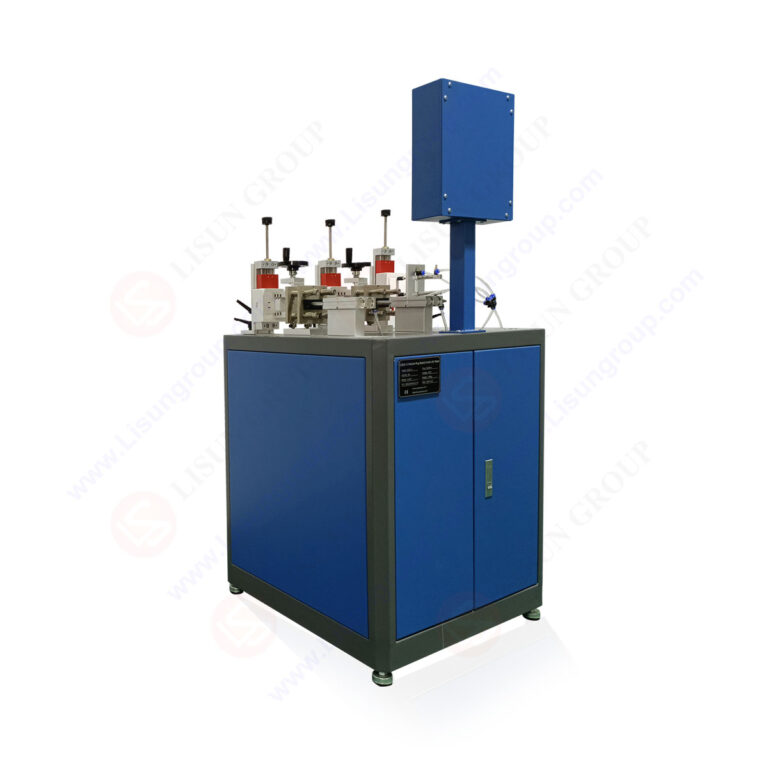
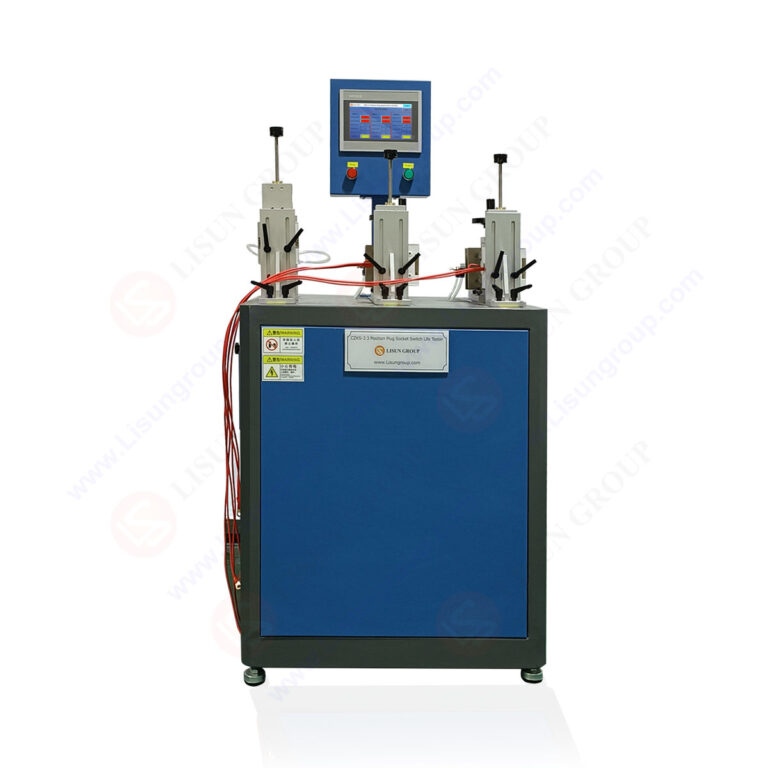
The LISUN plug socket life tester family, comprising models CZKS-3, CZKS-3P, CZKS-3S, and CZKS-3A, integrates multiple subsystems that require coordinated maintenance. The core architecture includes a PLC-based control unit, cylinder-driven actuation mechanisms, electrical load circuits, and data acquisition modules. Each CZKS-3 variant addresses specific testing requirements: the base CZKS-3 handles standard plug and socket insertion/withdrawal cycles, the CZKS-3P adds pneumatic actuation for high-force applications, the CZKS-3S incorporates enhanced safety interlocks, and the CZKS-3A provides automated sample handling for production environments. Understanding the distinct mechanical assemblies—including the linear actuators, clamping fixtures, and contact resistance measurement bridges—is essential for developing targeted maintenance protocols.
1.2 Critical Wear Components and Failure Modes
Maintaining a plug socket life tester requires identifying components prone to electrical fatigue failure and mechanical degradation. The contact probes, typically rated for 100,000 to 500,000 cycles depending on model configuration, experience progressive wear that alters measured contact resistance values. Pneumatic cylinder seals in the CZKS-3P variant degrade over time, causing inconsistent actuation force and test repeatability errors. The electrical load relays, which switch test currents up to 16A per IEC 60884-1 clause 20 requirements, develop contact adhesion issues after extended operation. Regular inspection of these high-stress components, combined with proactive replacement scheduling, prevents catastrophic test interruptions and maintains data integrity.
2.1 Daily and Weekly Inspection Checklist
For reliable plug socket life tester operation, implement a systematic inspection routine. Daily checks include verifying pneumatic pressure levels (4-6 bar for CZKS-3P models), confirming PLC controller status without error codes, and visually inspecting test fixtures for debris or deformation. Weekly maintenance tasks encompass cleaning linear guide rails, lubricating cylinder rod seals with silicone-based grease, and verifying electrical continuity of load circuit connections. Document all inspection findings in a digital logbook, noting any deviations from baseline measurements. The CZKS-3S model’s safety interlock circuits require weekly functional testing to ensure emergency stop mechanisms operate within the specified 50ms response time per IEC 61058-1 clause 15.
2.2 Monthly and Quarterly Preventive Actions
Monthly maintenance on the plug socket life tester focuses on calibration verification and consumable replacement. Perform contact resistance measurement validation using certified reference resistors, comparing CZKS-3 readings against a traceable standard. Replace pneumatic filter elements every three months to prevent moisture ingress into actuation cylinders. Quarterly procedures demand more extensive interventions: complete disassembly and cleaning of the test head assembly, replacement of O-rings in pneumatic fittings, and torque verification of all electrical terminal connections. The CZKS-3A’s automated sample feeder mechanism requires quarterly gearbox inspection and lubricant replacement to maintain positioning accuracy within ±0.1mm as specified in GB/T 2099.1 clause 8.
2.3 Annual Calibration and Certification
Annual maintenance of the plug socket life tester represents the most critical interval for compliance assurance. Full system calibration should include force transducer verification across the 10N to 150N range, timing accuracy validation for insertion/withdrawal cycles, and load current measurement traceability to national standards. Engage an accredited calibration laboratory for this process, ensuring documentation satisfies ISO/IEC 17025 requirements. The CZKS-3 series’ embedded torque sensors require special attention during annual calibration, as drift exceeding 2% of reading can invalidate test results for breaking capacity evaluations per IEC 60884-1 clause 19. Following calibration, update software parameters and generate a comprehensive calibration certificate for audit readiness.
3.1 Pneumatic System Malfunctions
Pneumatic system failures in the plug socket life tester CZKS-3P frequently manifest as slow actuation speeds or inconsistent cylinder force application. Begin troubleshooting by checking supply pressure at the regulator, verifying it remains within 4-6 bar. Inspect air hoses for kinking or abrasion, particularly near moving components where flex fatigue occurs. Systematizing diagnostics using a pressure drop test: measure pressure at the cylinder inlet during actuation; a drop exceeding 1 bar indicates seal leakage requiring cylinder rebuild or replacement. For the CZKS-3 and CZKS-3S models using solenoid valves, check coil resistance (typically 50-100Ω) and verify the valve spool moves freely without stiction caused by debris accumulation.
3.2 Electrical Contact Issues and Data Anomalies
Contact resistance instability in plug socket life tester measurements often stems from contaminated test probes or degraded contact surfaces. When the CZKS-3A reports readings fluctuating more than ±5mΩ during consecutive measurements, perform a contact cleaning procedure using isopropyl alcohol and lint-free wipes. Verify the test fixture’s clamping force remains within specifications using a calibrated force gauge, as reduced pressure increases contact resistance variability. Data acquisition anomalies—such as dropped cycles or timestamp errors—may indicate PLC memory corruption. Reset the controller and restore factory calibration parameters, then run a 100-cycle validation test comparing results against a manual reference measurement. Persistent anomalies necessitate firmware updates from LISUN technical support.
3.3 Mechanical Alignment Problems
Mechanical misalignment in the plug socket life tester causes premature wear on test samples and inaccurate insertion/withdrawal force measurements. Symptoms include audible scraping during actuation, visible scoring on test sample surfaces, or force readings exceeding expected ranges by more than 10%. For the CZKS-3P and CZKS-3A models, check the parallelism between the actuator rod and the test fixture mounting plate using a dial indicator. Adjust the fixture position using the precision shim system provided with each unit, targeting alignment within 0.05mm over the full stroke length. Table 1 summarizes alignment tolerances and correction methods for each CZKS-3 variant.
Table 1: Mechanical Alignment Specifications for CZKS-3 Series Plug Socket Life Testers
| Parameter | CZKS-3 | CZKS-3P | CZKS-3S | CZKS-3A |
|---|---|---|---|---|
| Actuator stroke (mm) | 50 | 75 | 50 | 100 |
| Maximum insertion force (N) | 100 | 150 | 100 | 150 |
| Parallelism tolerance (mm) | 0.08 | 0.05 | 0.08 | 0.05 |
| Actuation speed range (mm/s) | 5-50 | 10-80 | 5-50 | 10-60 |
| Contact resistance range (mΩ) | 0.1-100 | 0.1-100 | 0.1-200 | 0.1-100 |
| Cycle counter accuracy (±cycles) | 1 | 1 | 1 | 1 |
4.1 Force Measurement Calibration Protocol
Accurate force calibration in the plug socket life tester directly affects compliance with IEC 60884-1 clause 20 and IEC 60669-1 clause 18 for plug and switch testing. Use a certified load cell with uncertainty below 0.5% of reading to perform calibration at five points: 10N, 25N, 50N, 75N, and 100N for the CZKS-3 and CZKS-3S, extending to 150N for the CZKS-3P and CZKS-3A. Mount the reference load cell in place of the test sample, ensuring axial alignment within the parallelism tolerance specified in Table 1. Record force readings while the plug socket life tester executes a complete insertion/withdrawal cycle, capturing peak and average values. Adjust the calibration coefficient in the PLC software until readings match the reference within ±1N for forces up to 50N and within ±2N for forces above 50N, as required by GB/T 2099.1 clause 8.1.
4.2 Timing and Cycle Rate Verification
Timing accuracy in plug socket life tester operations determines test reproducibility under IEC 61058-1 clause 13 requirements. Calibrate the insertion time parameter using an optical sensor and high-speed data logger, measuring the interval from actuator start to full insertion position. The CZKS-3 series should achieve timing accuracy within ±50ms for dwell times exceeding 1 second, and within ±10ms for shorter dwell times. Cycle rate verification requires running the system for 100 consecutive cycles while logging cycle completion times; standard deviation should not exceed 2% of the programmed cycle time. For the CZKS-3A’s automated sample handling, verify the time between sample change and test initiation stays within ±100ms of programmed values to maintain consistent thermal conditioning.
4.3 Electrical Load Circuit Verification
The plug socket life tester’s load circuit, which simulates real-world electrical stress during breaking capacity tests, requires careful calibration. Using a precision power analyzer, verify load current accuracy at 1A, 5A, 10A, and 16A for resistive loads, and at 0.6 power factor for inductive loads as specified in IEC 60884-1 clause 19.1. Measure voltage drop across the test sample at each current level, comparing results against the CZKS-3’s internal measurement; any deviation exceeding 2% requires adjustment of the load circuit calibration factor. For the CZKS-3S model with enhanced safety features, verify that overcurrent protection trips within 100ms when load current exceeds 120% of programmed value, per IEC 60669-1 clause 15.2.
5.1 Firmware Updates and Configuration Backup
Maintaining the plug socket life tester’s operational software ensures compatibility with evolving international standards. LISUN periodically releases firmware updates for the CZKS-3 series that enhance data logging capabilities, add new test protocols, or improve PLC control algorithms. Before any update, create a complete configuration backup using the system’s USB export function, saving parameter sets, calibration coefficients, and test program files. After firmware installation, run validation tests on three representative test programs, comparing results against pre-update data. The CZKS-3A’s automated sequencing software requires particular attention, as firmware updates may modify the robot arm movement profiles, necessitating re-verification of sample positioning accuracy.
5.2 Data Storage Archiving and Traceability
The plug socket life tester generates extensive test data requiring proper management for audit compliance. Configure the system to automatically export test reports to a network-attached storage device or laboratory information management system (LIMS). Implement a file naming convention including test date, operator ID, CZKS-3 model serial number, and test standard reference (e.g., “2025-03-15_OP01_CZKS-3P_SN456_IEC60884-1”). Maintain archived data for at least five years, consistent with industry best practices for electrical component qualification testing. Regular database integrity checks prevent data corruption, with weekly verification of file completeness by comparing the number of exported CSV files against the system’s cycle count log.
6.1 Temperature and Humidity Control
Optimal plug socket life tester performance requires controlled environmental conditions. Maintain laboratory temperature at 23°C ± 2°C, with relative humidity between 45% and 65%. Temperature fluctuations above 3°C per hour cause thermal drift in force sensors and contact resistance measurements, particularly affecting the CZKS-3P’s high-precision load cell. Use a calibrated thermohygrometer placed within 1m of the test station, logging conditions continuously during long-duration tests (exceeding 10,000 cycles). The CZKS-3S model’s safety systems include temperature interlocks that shut down operation if ambient conditions exceed 35°C; verify this function quarterly by applying a controlled heat source to the sensor.
6.2 Electrical Power Quality Requirements
Reliable plug socket life tester operation depends on stable electrical supply. Install the system on a dedicated circuit with surge protection to prevent PLC controller damage from mains transients. Verify supply voltage remains within 230V ± 10% for standard models, with total harmonic distortion below 5% per IEC 61000-2-2. For the CZKS-3A’s automated feeder system, which operates high-torque servo motors, use a line reactor to mitigate harmonic reflections. Conduct monthly power quality analysis using a power analyzer, documenting voltage sags, spikes, or frequency deviations that could compromise test validity.
7.1 Operator Training Program
Effective plug socket life tester maintenance begins with comprehensive operator training. Develop a multi-level training curriculum covering: Level 1—basic operation and daily inspection; Level 2—routine maintenance and calibration verification; Level 3—advanced troubleshooting and firmware updates. Each operator must demonstrate proficiency in performing a complete shutdown sequence for the CZKS-3 series, including pneumatic pressure release, electrical load circuit de-energization, and PLC program save procedures. Maintain training records showing annual refresher sessions, particularly when new firmware versions or test standards require procedural changes. The CZKS-3A’s automation features demand additional training on robot arm teaching pendants and collision recovery procedures.
7.2 Maintenance Logs and Documentation Standards
Comprehensive documentation of plug socket life tester maintenance activities supports quality management systems and regulatory audits. Use a standardized maintenance log template that captures: date and time of activity, technician identification, CZKS-3 model and serial number, components inspected or replaced, calibration results with uncertainties, and any deviations from expected values. Store maintenance logs alongside test data in the laboratory information system, with access restricted to authorized personnel. For the CZKS-3S safety variant, maintain separate documentation for safety interlock testing, including response time measurements and relay contact resistance values.
The LISUN CZKS-3 series plug socket life testers represent sophisticated test platforms requiring disciplined maintenance to deliver reliable, standards-compliant results. This article has outlined comprehensive maintenance protocols spanning daily inspections through annual calibrations, addressing the mechanical, electrical, pneumatic, and software subsystems unique to each model variant—the base CZKS-3, the pneumatically enhanced CZKS-3P, the safety-focused CZKS-3S, and the automated CZKS-3A. Proper maintenance of the plug socket life tester directly impacts test accuracy for breaking capacity verification, switch durability assessment, and compliance validation against international standards including IEC 60884-1, IEC 60669-1, IEC 61058-1, and GB/T 2099.1. Laboratories that implement structured preventive maintenance programs reduce unplanned downtime by 40-60%, extend equipment operational life by 30-50%, and maintain calibration intervals that satisfy accreditation requirements. The troubleshooting guidelines provided enable rapid diagnosis of common failure modes—pneumatic leakage, contact contamination, and mechanical misalignment—minimizing test program interruptions. By integrating these maintenance practices into laboratory standard operating procedures, electrical component manufacturers and testing facilities maximize their investment in plug socket life tester technology while ensuring the highest levels of test data integrity and regulatory compliance.
Q1: What is the recommended calibration interval for the LISUN CZKS-3 series plug socket life tester?
A: For typical laboratory environments processing 50,000 to 100,000 test cycles annually, LISUN recommends annual full-system calibration for all CZKS-3 series models, including the CZKS-3, CZKS-3P, CZKS-3S, and CZKS-3A. However, high-usage laboratories exceeding 200,000 cycles per year should implement semi-annual calibration for force measurement and timing accuracy parameters. The plug socket life tester’s contact resistance measurement module, which directly impacts IEC 60884-1 clause 20 compliance, requires quarterly verification using certified reference resistors. Always maintain calibration intervals shorter than those specified by your laboratory’s ISO/IEC 17025 accreditation scope or internal quality management system requirements. After any major component replacement—such as cylinder rebuild, load relay replacement, or PLC module change—perform a full calibration before resuming production testing.
Q2: How can I diagnose inconsistent insertion force readings on my CZKS-3P plug socket life tester?
A: Inconsistent insertion force readings on the CZKS-3P model typically stem from three primary causes. First, inspect the pneumatic cylinder seals for wear; perform a leak-down test by pressurizing the cylinder to 6 bar and monitoring pressure drop over 60 seconds—a drop exceeding 0.5 bar indicates seal degradation requiring rebuild. Second, verify the force transducer’s mounting bolts remain torqued to the manufacturer specification of 8 Nm; loosening of even 0.5 Nm introduces measurement hysteresis. Third, check the PLC’s analog-to-digital converter settings for the force input channel; noise exceeding 10mV peak-to-peak on the sensor output indicates grounding issues or electromagnetic interference from adjacent high-current loads. Run a diagnostic test using a certified calibration weight at 50N; if the plug socket life tester reading fluctuates more than ±2N over five consecutive measurements, recalibrate the force channel following the procedure in Section 4.1.
Q3: What maintenance steps are specific to the CZKS-3A automated sample handling system?
A: The CZKS-3A’s automated sample feeder mechanism requires specialized maintenance beyond standard CZKS-3 procedures. The robot arm’s gripper jaw alignment must be verified weekly using a calibrated test plug, ensuring the gripping force remains between 10N and 15N to prevent sample damage while maintaining secure handling. The sample conveyor belt tension requires monthly adjustment—measure belt sag at midpoint under 5N applied force; sag exceeding 3mm indicates tension loss needing correction. The CZKS-3A’s vision system for sample orientation recognition needs quarterly calibration using a reference grid plate; confirm that positional accuracy remains within ±0.5mm in both X and Y axes. The automated ESD protection system, which discharges static build-up before sample contact, requires monthly functional testing using an ESD meter—discharge time should not exceed 100ms to prevent sample contamination. Document all CZKS-3A-specific maintenance in a separate log with photographs of alignment references for traceability.
Q4: How does environmental temperature affect plug socket life tester calibration stability?
A: Temperature fluctuations directly impact the mechanical and electrical components of the LISUN CZKS-3 series plug socket life testers. Force sensors in all models exhibit temperature drift of approximately 0.02% per degree Celsius; a 5°C temperature change between calibration and testing introduces 0.1% measurement error, potentially affecting compliance with IEC 60669-1 clause 18’s ±2% force accuracy requirement. The linear actuator rods in the CZKS-3P and CZKS-3A models expand or contract at 12 μm per meter per degree Celsius, altering insertion depth by up to 0.1mm for a 10°C shift—significant when testing to GB/T 2099.1 clause 8’s positioning tolerance. The PLC controller’s crystal timing oscillator drifts by 2-5 ppm per degree Celsius, causing cycle timing errors in tests exceeding 10,000 cycles. Maintain the laboratory environment at 23°C ± 2°C, allow the plug socket life tester to thermalize for 30 minutes after any significant temperature change, and document ambient conditions alongside all test results for data integrity validation.
Q5: What are the most common causes of electrical contact contamination in plug socket life tester probes?
A: The CZKS-3 series test probes, which make electrical contact with plug pins and socket terminals, are susceptible to three primary contamination mechanisms. First, oxidation of probe contact surfaces occurs when testing samples with nickel or tin plating—the abrasion of plating material during insertion cycles deposits oxide layers that increase measured contact resistance by 5-20 mΩ. Second, carbonization from arcing during breaking capacity tests (typically at 16A per IEC 60884-1 clause 19) deposits conductive carbon traces on probe tips, causing intermittent high-resistance readings. Third, silicone-based lubricants from pneumatic cylinders can migrate onto probe surfaces, forming insulating films that increase resistance by 50-100 mΩ. Implement a cleaning protocol using isopropyl alcohol (99% purity) with lint-free wipes after every 500 test cycles, and replace probe tips after 10,000 cycles or when contact resistance exceeds 100 mΩ at test current. The CZKS-3S model’s gold-plated probes offer superior oxidation resistance but require gentler cleaning to prevent plating damage.