Abstract
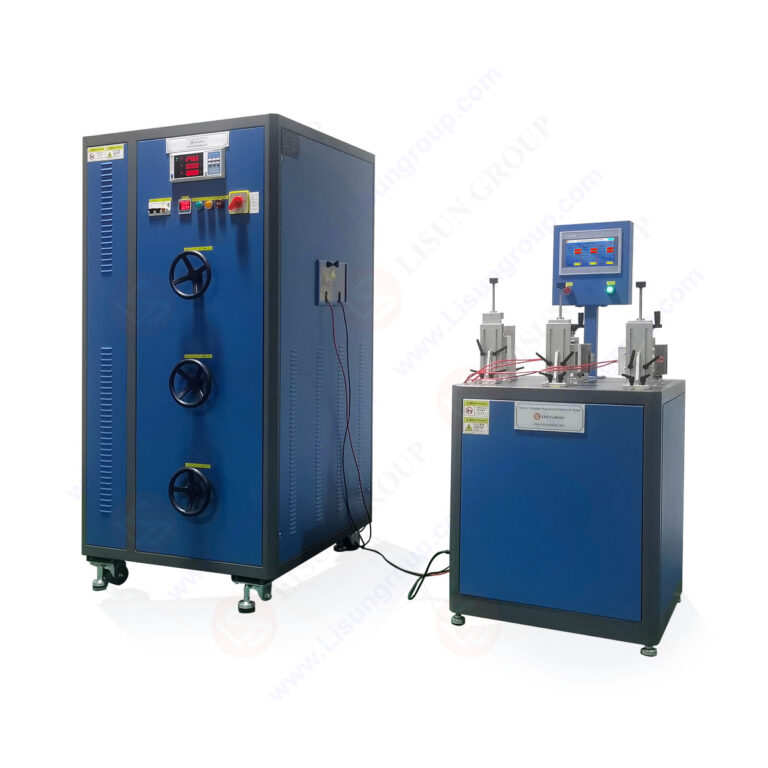
The LISUN plug socket tester, specifically the CZKS-3 series, represents a critical advancement in electrical safety compliance testing for plugs, sockets, and switches. This article examines the technical capabilities of the CZKS-3, CZKS-3P, CZKS-3S, and CZKS-3A models, focusing on their role in verifying breaking capacity, mechanical endurance, and electrical fatigue resistance under international standards. As global regulatory requirements for household and automotive electrical components become increasingly stringent, the need for precise, automated test solutions has grown. The LISUN plug socket tester addresses these demands through cylinder-driven actuation, PLC-controlled sequencing, and comprehensive data logging. This article provides engineers and quality control professionals with a detailed technical analysis of how these instruments support compliance with IEC 60884-1, IEC 60669-1, and related standards, ensuring product safety and reliability in high-stakes applications.
1.1 The Regulatory Landscape for Plugs and Sockets
Electrical safety compliance for plugs, sockets, and switches is governed by a suite of international standards that define performance thresholds for mechanical durability, electrical continuity, and thermal stability. IEC 60884-1 outlines the general requirements for plugs and socket-outlets for household and similar purposes, specifying test parameters for normal operation, breaking capacity, and mechanical endurance. Similarly, IEC 60669-1 covers switches for household appliances, while IEC 61058-1 addresses switches for electrical appliances. Compliance with these standards is mandatory for manufacturers seeking market access in Europe, Asia, and other regulated regions. The LISUN plug socket tester is engineered to replicate the exact test conditions described in these standards, providing reproducible results that withstand regulatory scrutiny.
1.2 Key Failure Modes in Electrical Connectors
Electrical connectors experience multiple failure modes during their operational lifecycle. Contact adhesion occurs when welding or material transfer bonds the plug pins to socket contacts, preventing separation. Arcing and pitting degrade contact surfaces, increasing resistance and generating heat. Mechanical fatigue leads to loosening of gripping forces, reducing contact pressure. The LISUN CZKS-3 series is designed to detect and characterize these failure modes through controlled actuation cycles and real-time electrical monitoring. By applying precise insertion forces, rotational torques, and withdrawal speeds, the tester simulates worst-case scenarios that accelerate the onset of failure, enabling engineers to identify design weaknesses before production.
1.3 The Role of Automated Testing in Quality Assurance
Manual testing of plugs and sockets introduces variability in actuation speed, force application, and cycle counting, compromising data reliability. Automated test systems like the LISUN plug socket tester eliminate these variables through PLC-controlled pneumatic actuation and programmable test sequences. The CZKS-3 series can execute thousands of uninterrupted cycles while recording electrical continuity, voltage drop, and mechanical displacement at each operation. This data stream supports statistical process control and root cause analysis, allowing manufacturers to optimize contact geometry, material selection, and assembly tolerances. For laboratories accredited to ISO/IEC 17025, the repeatability of automated testing is essential for maintaining certification.
2.1 Model Overview and Variant Specifications
The LISUN CZKS-3 series comprises four models tailored to different testing requirements. The base CZKS-3 is a universal plug and socket tester for standard household configurations. The CZKS-3P variant incorporates enhanced pneumatic actuation for higher force applications, suitable for industrial connectors. The CZKS-3S model is optimized for switch durability testing with extended cycle counts and specialized contact monitoring. The CZKS-3A variant is designed for automotive electrical components, featuring additional environmental conditioning options. The following table summarizes key technical parameters across the series:
| Parameter | CZKS-3 | CZKS-3P | CZKS-3S | CZKS-3A |
|---|---|---|---|---|
| Maximum Test Voltage | 250 V AC | 250 V AC | 250 V AC | 48 V DC / 250 V AC |
| Maximum Test Current | 16 A | 32 A | 10 A | 20 A |
| Actuation Force Range | 10-100 N | 20-200 N | 5-80 N | 10-150 N |
| Cycle Rate (cycles/min) | 10-30 | 5-20 | 15-40 | 10-25 |
| Electrical Contact Monitoring | Voltage drop, continuity | Voltage drop, arcing detection | Voltage drop, resistance | Voltage drop, current leakage |
| Supported Standards | IEC 60884-1 | IEC 60884-1, IEC 60947 | IEC 60669-1, IEC 61058-1 | ISO 8820, SAE J563 |
2.2 Cylinder-Driven Actuation and PLC Control
The mechanical actuation system in the LISUN plug socket tester employs double-acting pneumatic cylinders with proportional pressure control, enabling precise force modulation throughout the insertion and withdrawal stroke. The PLC controller manages cylinder sequencing, dwell times, and emergency stop conditions, while a dedicated force sensor provides real-time feedback for closed-loop adjustment. This architecture ensures that the tester applies the specified force within ±2% tolerance as required by IEC 60884-1 Clause 21. The CZKS-3P model adds a secondary cylinder for rotational torque testing, simulating plug insertion and removal with twisting motions common in real-world use.
2.3 Electrical Measurement and Data Acquisition
The CZKS-3 series integrates a four-wire Kelvin measurement system for accurate voltage drop detection across the plug-socket interface. The system samples voltage drop at 1 kHz during each cycle, capturing transient events such as contact bounce or partial insertion that indicate impending failure. An optional arc detection module (standard on CZKS-3P, available on others) uses high-frequency current sensing to identify micro-arcing events that degrade contact surfaces. All data is logged to internal memory or exported via USB/RS-232 to external analysis software. The CZKS-3S variant includes extended data storage for switch durability tests exceeding 100,000 cycles.
3.1 Test Protocols Under IEC 60884-1
Breaking capacity testing verifies that a plug-socket combination can safely interrupt rated current under fault conditions. According to IEC 60884-1 Clause 20, test samples must undergo 50 insertion and withdrawal cycles at rated voltage and 1.25 times rated current, followed by 50 cycles at rated current with a resistive-inductive load. The LISUN plug socket tester executes these protocols automatically, programming the load bank settings and cycle sequence through the PLC interface. The CZKS-3 and CZKS-3P models include built-in variable load banks that can simulate resistive, inductive, or capacitive loads up to 32 A, eliminating the need for external equipment.
3.2 Monitoring Contact Integrity During Breaking
During breaking capacity tests, the LISUN plug socket tester monitors contact integrity through continuous voltage drop measurement. A voltage drop exceeding 20 mV at rated current indicates excessive resistance caused by contact degradation or arcing damage (IEC 60884-1 Clause 21.2). The system automatically flags any cycle where the threshold is exceeded and logs the waveform for post-test analysis. The CZKS-3P variant further detects the presence of sustained arcs during the break operation, a critical parameter for assessing safety in inductive load circuits. This data enables engineers to correlate contact material performance with breaking conditions.
3.3 Interpreting Breaking Capacity Results
Results from the LISUN plug socket tester are presented as a cycle-by-cycle record of voltage drop, arc duration, and mechanical force profiles. Engineers can identify failure progression by analyzing trends across the full test sequence. A gradual increase in voltage drop suggests contact surface wear, while sudden spikes indicate arcing events that may cause contact welding. The CZKS-3 series software generates compliance reports that directly map results to IEC 60884-1 acceptance criteria, including the requirement that no continuous arc lasts longer than 4 ms. For manufacturers developing new connector designs, these reports provide actionable feedback for material selection and geometric optimization.
4.1 Test Parameters for Mechanical Endurance
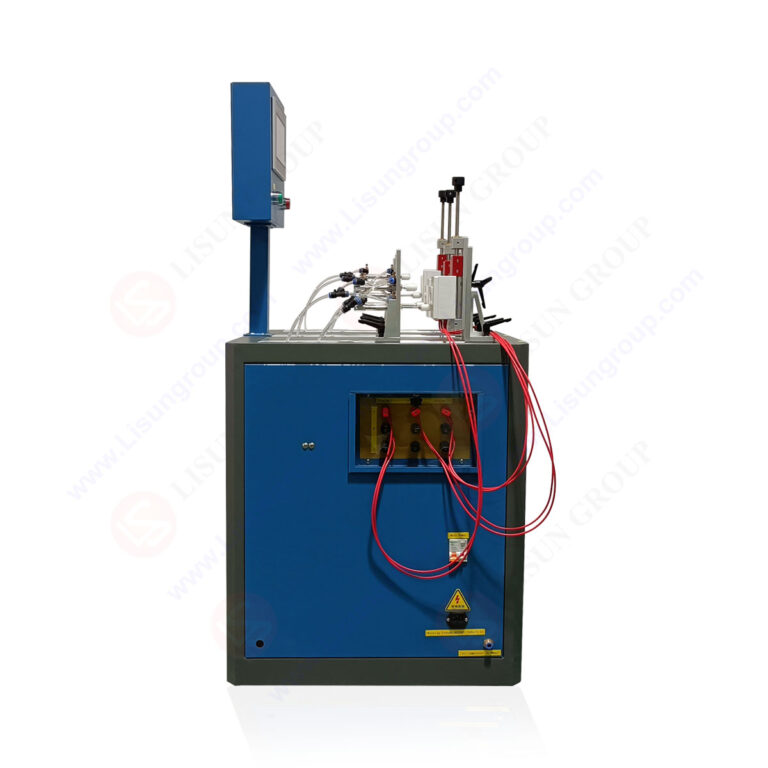
Switch durability testing under IEC 60669-1 and IEC 61058-1 requires the device to withstand a specified number of mechanical operations while maintaining electrical continuity. For household switches, the standard typically mandates 10,000 to 40,000 cycles depending on the switch rating. The LISUN CZKS-3S model is specifically optimized for this application, with a maximum cycle rate of 40 cycles per minute and a cycle counter accurate to ±1 operation. The tester applies a predetermined actuation force, angle, and speed, replicating the kinematics of human finger operation. The CZKS-3S can store up to 50 test programs, each with unique force profiles for different switch designs.
4.2 Electrical Stress Testing During Cycling
Beyond mechanical endurance, switch durability testing must verify that the switch can interrupt its rated current without excessive arcing or contact welding. The LISUN plug socket tester applies electrical load during each actuation cycle, monitoring current waveform and contact voltage drop. For switches intended for inductive loads (e.g., motor starters), the tester simulates the back-EMF conditions that cause extended arcing. The CZKS-3S variant includes a programmable load profile that can switch between resistive, inductive, and capacitive loads at preset intervals, reflecting the diverse operating conditions encountered in real applications. All electrical parameters are sampled at 10 kHz to capture fast transient events.
4.3 Failure Analysis and Statistical Modeling
The data collected by the LISUN plug socket tester supports statistical analysis of switch reliability. Engineers can apply Weibull distribution modeling to estimate the mean time between failures (MTBF) and identify early-life failures versus wear-out mechanisms. The CZKS-3S software includes built-in statistical functions that calculate cumulative failure rates and generate probability plots. For switches that fail before reaching the specified cycle count, the tester provides a detailed breakdown of the failure mode: contact welding, spring fatigue, or housing deformation. This diagnostic capability accelerates design iteration and reduces time-to-market for new switch products.
5.1 Adapting Test Protocols for Automotive Standards
Automotive electrical connectors and switches operate under more demanding conditions than household components, including exposure to vibration, temperature extremes, and high current densities. The LISUN CZKS-3A variant addresses these requirements by incorporating environmental conditioning options such as temperature chambers and vibration tables. Testing follows automotive standards including ISO 8820 for fuse holders and SAE J563 for trailer connectors. The CZKS-3A can execute combined tests that apply mechanical cycling while maintaining temperature at -40°C or +125°C, simulating real-world automotive environments. The actuator system uses corrosion-resistant materials and sealed bearings to withstand these harsh conditions.
5.2 High-Current and Low-Voltage Testing
Automotive electrical systems operate at 12 V or 48 V DC with currents up to 20 A for auxiliary circuits and higher for main power distribution. The LISUN plug socket tester CZKS-3A is configured for low-voltage, high-current testing with a dedicated DC power supply that maintains stable output despite variable load conditions. The tester measures contact resistance using the four-wire method at currents from 1 A to 20 A, providing resolution down to 0.1 mΩ. For connectors that must carry continuous current for extended periods, the tester includes a temperature monitoring channel that tracks contact temperature rise, a critical safety parameter for preventing thermal runaway in automotive wiring systems.
5.3 Vibration and Mechanical Shock Integration
The CZKS-3A model can be integrated with external vibration tables to perform combined mechanical and electrical testing per ISO 16750-3. During vibration testing, the LISUN plug socket tester continues to monitor electrical continuity and voltage drop, detecting intermittent contact failures that occur only under dynamic loading. The system can synchronize the actuation cycles with vibration frequency to simulate worst-case resonant conditions. This combined testing capability is essential for verifying connector reliability in engine compartments, door harnesses, and dashboard assemblies where vibration-induced fretting corrosion is a known failure mechanism.
6.1 Real-Time Monitoring and Alarms
The LISUN plug socket tester provides real-time display of test parameters including cycle count, voltage drop, actuation force, and contact resistance. Engineers can define alarm thresholds for each parameter, and the system automatically pauses the test when values exceed limits, preventing damage to the test sample or equipment. The CZKS-3 series supports remote monitoring via Ethernet, allowing laboratory managers to oversee multiple test stations from a central console. Historical trend data is displayed as graphical overlays, enabling rapid visual identification of performance degradation across test cycles.
6.2 Automated Report Generation
At the completion of a test sequence, the LISUN plug socket tester generates a compliance report that includes summary statistics, cycle-by-cycle data, and pass/fail determination against selected standards. The report format complies with ISO/IEC 17025 documentation requirements, including sample identification, test conditions, measurement uncertainty estimates, and operator details. Users can customize report templates to include company logos, additional test notes, or specific standard clauses. The CZKS-3S variant includes an extended report feature that generates Weibull analysis charts and MTBF confidence intervals for reliability engineering applications.
6.3 Data Export and Integration
All test data can be exported in CSV, XML, or PDF formats for integration with laboratory information management systems (LIMS) or enterprise quality management platforms. The LISUN plug socket tester supports OPC-UA protocol for industrial IoT connectivity, enabling real-time data streaming to cloud-based analytics platforms. For manufacturers with multiple test stations, the data management software aggregates results across all CZKS-3 series units for global quality trend analysis. This capability supports Six Sigma initiatives and continuous improvement programs by providing actionable data on connector reliability across different production batches and design iterations.
7.1 Matching Test Capabilities to Product Portfolio
When selecting a LISUN plug socket tester, manufacturers must consider the breadth of their product portfolio and the standards they must comply with. The base CZKS-3 is suitable for general-purpose testing of household plugs and sockets under IEC 60884-1. The CZKS-3P extends capability to industrial connectors and higher current ratings up to 32 A, making it appropriate for commercial and light industrial applications. The CZKS-3S is specialized for switch manufacturers who require high cycle counts and detailed electrical monitoring. The CZKS-3A serves automotive suppliers who need environmental conditioning and combined vibration testing. A single laboratory may require multiple models to cover the full range of testing needs.
7.2 Budget Considerations and Return on Investment
The initial investment in a LISUN plug socket tester must be weighed against the cost of manual testing, non-compliance penalties, and product failure liabilities. Automated testing reduces labor costs by a factor of 10 to 20 compared to manual operation, as one technician can manage multiple test stations simultaneously. The CZKS-3 series offers a modular upgrade path, allowing users to add features such as arc detection, environmental chambers, or extended data storage as budget permits. The robust construction of these testers ensures a service life exceeding 10 years with regular calibration, providing a strong return on investment for manufacturing and testing facilities.
7.3 Calibration and Maintenance Requirements
To maintain compliance with ISO/IEC 17025 and ensure test result validity, the LISUN plug socket tester requires periodic calibration of force sensors, voltage measurement circuits, and cycle counters. LISUN provides calibration services with traceability to national standards, and the CZKS-3 series includes self-diagnostic routines that verify sensor accuracy before each test. Routine maintenance involves cleaning pneumatic components, checking seal integrity, and lubricating actuator guides. The modular design simplifies component replacement, minimizing downtime. LISUN offers service contracts that include annual calibration, preventive maintenance, and software updates to ensure the tester remains compliant with evolving standards.
The LISUN plug socket tester, particularly the CZKS-3 series, provides a comprehensive solution for electrical safety compliance testing across household, industrial, and automotive applications. Through precise cylinder-driven actuation, PLC-controlled sequencing, and high-resolution electrical monitoring, these instruments deliver reproducible test results that meet the strict requirements of IEC 60884-1, IEC 60669-1, IEC 61058-1, and automotive standards. The series offers four specialized variants—CZKS-3, CZKS-3P, CZKS-3S, and CZKS-3A—each tailored to specific testing domains while sharing a common architecture for ease of operation and data integration. The ability to detect failure modes such as contact adhesion, arcing, and voltage drop progression enables engineers to make data-driven decisions for product improvement and compliance certification. For manufacturers navigating the increasingly complex regulatory landscape, the CZKS-3 series reduces testing cycle times, enhances data reliability, and provides documented evidence of compliance. Investing in these testers directly supports quality assurance objectives, reduces liability risks, and accelerates time-to-market for new electrical products. The combination of technical rigor, modular flexibility, and comprehensive reporting makes the LISUN plug socket tester an essential tool for any organization committed to electrical safety and reliability.
Q1: What is the primary difference between the CZKS-3 and CZKS-3P models for plug testing?
A: The primary difference lies in force capacity and current rating. The CZKS-3 is designed for standard household plugs and sockets with a maximum actuation force range of 10-100 N and a current rating of 16 A. The CZKS-3P extends these capabilities to 20-200 N force and 32 A current, making it suitable for industrial connectors and heavy-duty applications. Additionally, the CZKS-3P includes built-in arc detection as standard, while this is optional on the base CZKS-3. For manufacturers testing both household and industrial connectors, the CZKS-3P offers greater flexibility, though it operates at a lower maximum cycle rate (20 cycles/min versus 30 cycles/min) due to the higher forces involved.
Q2: How does the LISUN plug socket tester ensure compliance with IEC 60884-1 Clause 21 regarding voltage drop measurement?
A: The CZKS-3 series uses a four-wire Kelvin measurement system that eliminates lead resistance errors, achieving voltage drop measurements accurate to ±0.1 mV. The system samples voltage drop at 1 kHz during each insertion and withdrawal cycle, capturing the peak value as well as the steady-state reading after contact settling. IEC 60884-1 Clause 21.2 specifies that the voltage drop across the plug-socket interface shall not exceed 20 mV at rated current after 50 cycles of breaking capacity testing. The tester automatically compares measured values against this threshold and flags any cycle where the limit is exceeded. The data logging system time-stamps each event, enabling traceable compliance documentation.
Q3: Can the CZKS-3S model handle switch durability testing for both toggle and rocker switch designs?
A: Yes, the CZKS-3S is specifically engineered to accommodate both toggle and rocker switch designs through interchangeable actuator heads. The pneumatic cylinder is mounted on a linear rail system that allows adjustment of actuation angle from 0 to 45 degrees, while the actuator head itself can be swapped between flat, curved, or pin-type configurations to match the switch geometry. The PLC controller stores up to 50 test programs, each with unique force profiles that simulate finger contact dynamics. The CZKS-3S can apply both linear and rotational forces as required by IEC 60669-1, which specifies different actuation modes for rocker and toggle switches.
Q4: What maintenance schedule is recommended for the LISUN plug socket tester to ensure long-term reliability?
A: LISUN recommends the following maintenance schedule: Daily—inspect pneumatic hoses for leaks, verify force sensor zero reading, and clean actuation surfaces. Weekly—lubricate cylinder guides with specified grease, check electrical connections for tightness, and run the self-diagnostic routine. Monthly—replace pneumatic filter elements, verify cycle counter accuracy against an external counter, and calibrate voltage measurement circuits using a certified reference. Annually—full calibration of all sensors by LISUN-certified technicians, replacement of seal kits in pneumatic cylinders, and software update verification. Properly maintained CZKS-3 series testers consistently achieve service lives exceeding 10 years with measurement accuracy within specification.
Q5: How does the CZKS-3A variant handle environmental testing for automotive connectors?
A: The CZKS-3A variant integrates with optional environmental chambers that maintain temperature from -40°C to +150°C and relative humidity from 10% to 98%. The pneumatic actuator and measurement electronics are thermally isolated from the test chamber, allowing accurate force application and electrical measurement across the full temperature range. The PLC controller can execute temperature ramping profiles synchronized with mechanical cycling, enabling combined thermal and mechanical stress tests per ISO 16750-4. For vibration testing, the CZKS-3A provides a synchronization interface that coordinates actuation cycles with external vibration table controllers, allowing combined vibration, temperature, and electrical testing in a single sequence.