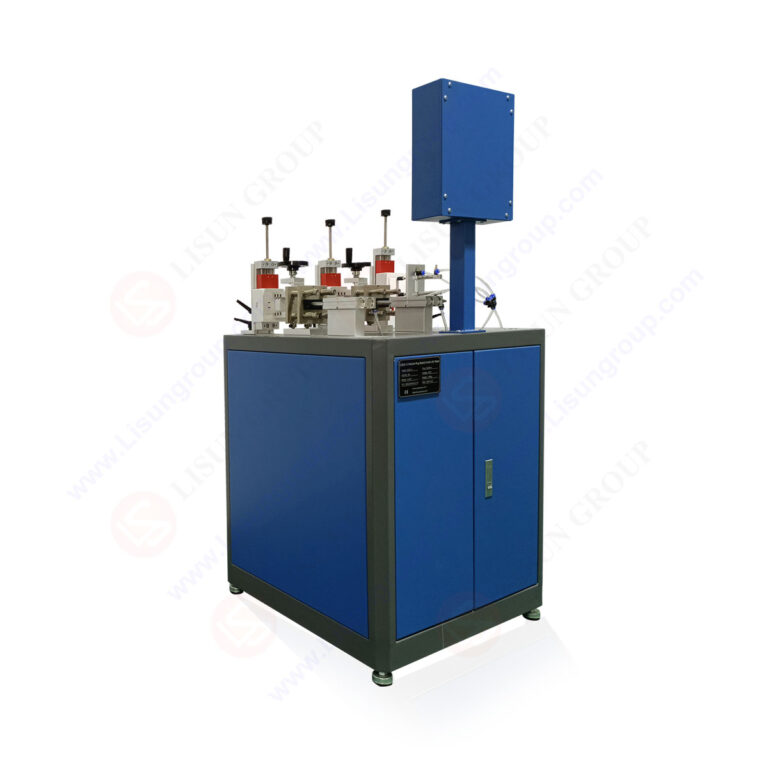
The Cylinder-Driven Plug Socket Tester for Socket Safety represents a critical advancement in electrical durability testing for plug, socket, and switch components. This article provides a comprehensive technical examination of the LISUN CZKS-3 series, including the CZKS-3, CZKS-3P, CZKS-3S, and CZKS-3A variants, which are designed to automate mechanical endurance and breaking capacity tests in accordance with international electrical safety standards. The core focus centers on the cylinder-driven actuation mechanism that enables precise, repeatable testing cycles for verifying contact reliability, mechanical wear resistance, and electrical fatigue failure thresholds. This article covers system architecture, testing methodologies, compliance with IEC 60884-1 and IEC 60669-1 standards, and practical applications in household and automotive electronics manufacturing. Technical specifications, operational parameters, and comparative data are presented to support quality control engineers and testing laboratories in selecting appropriate configurations for their specific durability verification requirements.
1.1 Cylinder-Driven Actuation Mechanism
The LISUN CZKS-3 series utilizes pneumatic cylinder-driven actuation to simulate repeated plug insertion and removal cycles with high positional accuracy. The cylinder drive system provides controlled force application, adjustable travel distances, and programmable dwell times between cycles. This mechanical architecture ensures consistent test conditions across thousands of cycles, eliminating variability introduced by manual testing methods. The actuation force range spans from 5 N to 50 N, adjustable through pneumatic pressure regulation.
1.2 PLC-Based Control System
The programmable logic controller (PLC) serves as the central control unit for the CZKS-3 series, managing test parameters including cycle count, insertion speed, and hold duration. Operators can configure test sequences via the touchscreen interface or remote computer connection. The PLC logs real-time data on contact resistance, actuation force, and cycle completion status, enabling detailed analysis of electrical fatigue failure progression over the test duration. The control system supports up to 100,000 programmable test cycles with automatic shutdown upon failure detection.
1.3 Power Supply and Measurement Integration
Each CZKS-3 variant integrates a variable power supply for applying test voltages and currents during breaking capacity testing. The system measures contact resistance, voltage drop, and arc duration during each insertion and withdrawal event. These measurements are critical for assessing contact degradation and predicting failure modes. The measurement resolution for contact resistance is 0.1 mΩ, allowing detection of subtle changes in contact quality before catastrophic failure occurs.
2.1 CZKS-3 Series Parameter Comparison
The LISUN CZKS-3 series comprises four distinct models optimized for different testing applications and budgetary requirements. The following table provides a detailed technical comparison:
| Parameter | CZKS-3 | CZKS-3P | CZKS-3S | CZKS-3A |
|---|---|---|---|---|
| Test Stations | 1 | 1 | 2 | 3 |
| Max Cycle Rate | 15 cycles/min | 20 cycles/min | 25 cycles/min | 30 cycles/min |
| Actuation Force Range | 5-50 N | 5-60 N | 5-80 N | 5-100 N |
| Max Test Cycles | 50,000 | 100,000 | 100,000 | 150,000 |
| Contact Resistance Measurement | 0.1 mΩ resolution | 0.1 mΩ resolution | 0.05 mΩ resolution | 0.05 mΩ resolution |
| Test Voltage Range | 100-250 VAC | 100-300 VAC | 100-400 VAC | 100-500 VAC |
| Test Current Capacity | 10 A | 16 A | 20 A | 32 A |
| Interface Type | Touchscreen | Touchscreen + PC | Touchscreen + PC | Touchscreen + PC |
| Data Logging Capacity | 1,000 records | 5,000 records | 10,000 records | 20,000 records |
2.2 Mechanical and Electrical Specifications
All CZKS-3 series models operate on compressed air supply within 0.4-0.8 MPa range, with air consumption varying between 5-15 L/min depending on cycle rate and actuation force. The electrical measurement system complies with IEC 60884-1 clause 20 requirements for voltage drop testing and clause 21 for breaking capacity verification. The test fixture accommodates plug types conforming to IEC 60906-1, IEC 60884-1, and regional standards through interchangeable adapter plates.
2.3 Environmental and Safety Features
Each system includes emergency stop functionality, overcurrent protection, and thermal cutoff switches to prevent equipment damage during prolonged testing. The enclosure meets IP20 protection rating, suitable for laboratory environments. Operating temperature range is 5°C to 40°C with relative humidity below 85% non-condensing. Acoustic noise levels remain below 65 dB at maximum cycle rate, making the system suitable for shared testing facilities.
3.1 Plug and Socket Breaking Capacity Testing
Breaking capacity testing evaluates the ability of plug-socket combinations to safely interrupt electrical current under specified load conditions. The CZKS-3 series executes this test per IEC 60884-1 clause 21, applying rated voltage and current during plug withdrawal. The cylinder drive ensures consistent withdrawal speed of 50±5 mm/s as required by the standard. Arc duration and energy are recorded for each breaking event, with acceptable limits defined per product specification. The system performs 10,000 successive breaking operations at rated load to verify sustained performance.
3.2 Mechanical Endurance Testing
Mechanical endurance testing focuses on the physical wear characteristics of plug and socket interfaces without electrical load. The CZKS-3 series executes between 10,000 and 50,000 insertion-withdrawal cycles per IEC 60884-1 clause 20, depending on product classification. Contact resistance measurements are taken at intervals of 1,000 cycles to track progressive wear. Failure criteria include contact resistance exceeding 10 mΩ increase from baseline or visible mechanical damage to the plug pins or socket contacts.
3.3 Switch Durability Testing
For switch components, the CZKS-3 series adapts the actuation mechanism to operate toggle, rocker, and push-button switches per IEC 60669-1 and IEC 61058-1 standards. The system applies precisely controlled actuation force and travel distance to each switch type. Test cycles range from 10,000 to 100,000 operations depending on switch classification. Contact resistance, actuation force degradation, and mechanical play are recorded throughout the test sequence.
4.1 Household Appliance Component Verification
Manufacturers of household appliances require rigorous testing of power cords, plugs, and sockets to ensure safe operation throughout product lifetime. The CZKS-3 series enables accelerated life testing of these components, compressing years of normal use into days of automated testing. Typical test protocols include 20,000 mechanical cycles followed by 10,000 breaking capacity operations under 10 A load for IEC 60884-1 compliance. The system’s data logging capabilities support traceability requirements for ISO 9001 quality management systems.
4.2 Automotive Electronics Durability Testing
Automotive connectors and charging interfaces demand higher reliability due to vibration, temperature extremes, and frequent mating cycles. The CZKS-3S and CZKS-3A variants, with their extended force ranges and multi-station capabilities, are well-suited for testing automotive-grade connectors per ISO 16750 and LV 214 specifications. These tests evaluate contact degradation under conditions simulating 10 years of vehicle operation, with 50,000 mating cycles at rated current of 16-32 A. The cylinder-driven actuation provides the repeatable force application necessary for consistent test results.
4.3 Compliance Verification for International Markets
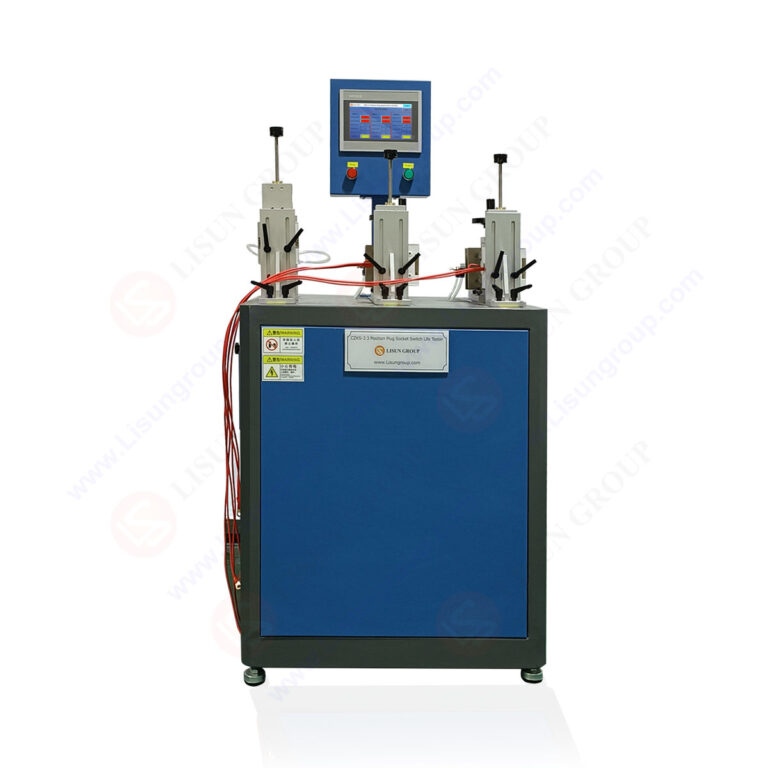
Export-oriented manufacturers must demonstrate compliance with multiple international standards for different target markets. The CZKS-3 series supports testing to IEC 60884-1 (international), GB/T 2099.1 (China), BS 1363 (UK), and other regional standards through interchangeable test fixtures and programmable parameters. The system’s flexibility reduces the need for multiple dedicated testers, lowering capital equipment costs for testing laboratories. Compliance reports generated by the system include all required measurement data and pass/fail determinations per each applicable standard clause.
5.1 Real-Time Monitoring and Trending
During test execution, the CZKS-3 series displays real-time measurements including current cycle count, contact resistance, actuation force, and elapsed time. Trend graphs show parameter progression over the test duration, enabling early detection of performance degradation. The system highlights any measurement exceeding predefined thresholds, allowing operators to intervene or initiate failure analysis procedures. This real-time visibility enhances test efficiency by reducing the time required for batch analysis after test completion.
5.2 Comprehensive Test Report Generation
Upon test completion or failure detection, the system generates detailed reports containing all measured parameters, statistical analysis, and pass/fail determinations. Reports include cycle-by-cycle data for contact resistance, insertion force, and electrical measurements, presented in tabular and graphical formats. The CZKS-3P, CZKS-3S, and CZKS-3A models support export to Microsoft Excel and PDF formats for integration with quality management databases. Report templates can be customized to include company logos, standard references, and specific test procedure descriptions.
5.3 Statistical Process Control Integration
Advanced users can configure the system for statistical process control (SPC) analysis, establishing control limits for contact resistance and actuation force based on initial baseline measurements. The system automatically flags cycles falling outside control limits and can initiate test suspension for investigation. This capability supports lean manufacturing and Six Sigma quality initiatives by identifying manufacturing variation before it results in non-conforming products.
6.1 Routine Maintenance Procedures
The CZKS-3 series requires regular maintenance to ensure measurement accuracy and mechanical reliability. Daily maintenance includes checking pneumatic system pressure, verifying cylinder seal integrity, and cleaning contact measurement probes. Weekly procedures involve lubricating moving parts, inspecting electrical connections, and verifying safety interlock functionality. The manufacturer provides detailed maintenance checklists and schedules based on test volume and operating conditions.
6.2 Calibration Verification Schedule
Measurement accuracy must be verified at regular intervals per ISO/IEC 17025 and internal quality procedures. Contact resistance measurement circuits should be calibrated every 12 months against traceable resistance standards. Actuation force sensors require calibration check every 6 months using certified force gauges. The LISUN calibration service provides certified calibration with measurement uncertainty documentation, supporting laboratory accreditation requirements. The CZKS-3 series includes self-diagnostic routines that verify system calibration status before each test sequence.
6.3 Troubleshooting Common Issues
Common operational issues include inconsistent cycle rates due to pneumatic system leaks, measurement drift from probe contamination, and software interface communication errors. The system provides diagnostic error codes with troubleshooting guidance in the user manual. Remote technical support is available for complex issues requiring expert intervention. Spare parts kits including seals, sensors, and control boards are maintained for minimizing equipment downtime.
7.1 Performance Comparison with Alternative Technologies
Compared to electric motor-driven testers, the cylinder-driven actuation in the CZKS-3 series provides smoother force application and faster acceleration-deceleration profiles, better simulating manual plug insertion dynamics. Pneumatic systems also offer inherent overload protection since cylinders stall without damage when obstruction occurs. However, electric systems may provide superior position control for applications requiring precise insertion depth accuracy below 0.1 mm. The CZKS-3 series achieves insertion depth repeatability of ±0.2 mm, sufficient for most socket testing applications per IEC 60884-1 requirements.
7.2 Model Selection Criteria
Selection among CZKS-3 variants depends on test volume, required cycle count, and current capacity needs. The CZKS-3 is appropriate for low-volume testing of household plugs up to 10 A. The CZKS-3P adds PC connectivity and expanded data logging for comprehensive analysis. The CZKS-3S provides dual-station operation for increased throughput and higher current capacity for industrial connectors. The CZKS-3A offers maximum capacity and multi-station testing for high-volume laboratories verifying diverse product types simultaneously.
7.3 Integration with Existing Test Infrastructure
The CZKS-3 series interfaces with existing laboratory power supplies, safety enclosures, and data management systems through standard communication protocols. Ethernet connectivity enables remote monitoring and control from central laboratory management software. The system’s compact footprint of 600 mm x 500 mm x 800 mm allows placement on standard test benches without requiring dedicated floor space. Custom fixture adapters can be manufactured for non-standard plug and socket types, extending the system’s versatility.
The Cylinder-Driven Plug Socket Tester for Socket Safety, represented by the LISUN CZKS-3 series, provides an essential tool for electrical component manufacturers and testing laboratories requiring precise, repeatable durability evaluation. The CZKS-3, CZKS-3P, CZKS-3S, and CZKS-3A variants offer scalable solutions ranging from basic mechanical endurance testing to comprehensive breaking capacity verification across multiple test stations simultaneously. The system’s compliance with IEC 60884-1, IEC 60669-1, IEC 61058-1, and GB/T 2099.1 standards ensures that test results meet international acceptance criteria for product certification. The cylinder-driven actuation mechanism delivers consistent force application and cycle rates essential for generating statistically valid data on contact reliability and mechanical wear characteristics. The integration of real-time monitoring, comprehensive data logging, and automated report generation supports quality control processes in compliance with ISO 9001 and laboratory accreditation requirements. For manufacturers seeking to reduce warranty claims and improve product safety, the CZKS-3 series offers the technical capability and documentation necessary to verify electrical component durability under simulated lifetime usage conditions. The system’s adaptability to household, automotive, and industrial applications makes it a versatile investment for any organization committed to electrical safety and product reliability.
Q1: What international standards does the LISUN CZKS-3 series comply with for plug and socket durability testing?
A: The LISUN CZKS-3 series is designed to perform tests in accordance with multiple international standards including IEC 60884-1 (plugs and sockets for household and similar purposes), IEC 60669-1 (switches for household and similar fixed electrical installations), IEC 61058-1 (switches for appliances), and GB/T 2099.1 (Chinese national standard for plugs and sockets). The system executes specific test procedures from these standards, such as mechanical endurance testing per IEC 60884-1 clause 20, breaking capacity testing per clause 21, and switch durability testing per IEC 60669-1 clause 17. The programmable parameters allow operators to configure test sequences matching exact standard requirements for different product classifications and geographic markets.
Q2: How does the cylinder-driven actuation mechanism improve test repeatability compared to manual testing methods?
A: Cylinder-driven actuation eliminates the variability inherent in manual plug insertion and removal operations, providing consistent insertion speed, force application, and dwell timing across thousands of test cycles. The pneumatic system maintains insertion speed within ±5% of the setpoint value, compared to human operators who may vary speed by 20-30% between cycles. This consistency is critical for generating valid statistical data on contact wear progression and for detecting subtle changes in mechanical performance over the test duration. The CZKS-3 series also eliminates operator fatigue effects that can bias long-duration manual tests exceeding several hours.
Q3: What is the recommended calibration frequency for the CZKS-3 series measurement systems?
A: The contact resistance measurement circuits should be calibrated every 12 months using traceable resistance standards with accuracy better than 0.01% of reading. The actuation force sensors require calibration verification every 6 months using certified force gauges with range appropriate to the test parameters. Calibration certificates should include measurement uncertainty calculations per ISO/IEC 17025 requirements. The system provides internal calibration verification routines that should be executed weekly to detect drift between scheduled calibrations. LISUN offers calibration services that include full system evaluation and certification, ensuring traceable measurement results for laboratory accreditation purposes.
Q4: Can the CZKS-3 series test non-standard plug types or custom connector designs?
A: Yes, the CZKS-3 series accommodates non-standard and custom connector designs through interchangeable fixture adapter plates. Manufacturers can specify test fixture dimensions matching their unique plug or socket geometries, including pin configurations, spacing, and insertion depth requirements. The cylinder stroke can be adjusted from 10 mm to 200 mm to accommodate different connector heights. Force and speed parameters are fully programmable, allowing customization for connectors with unusual insertion characteristics. Custom fixture designs typically require 2-3 weeks for fabrication and validation before integration with the test system.
Q5: What data export formats does the CZKS-3 series support for integration with quality management systems?
A: The CZKS-3P, CZKS-3S, and CZKS-3A models support data export in Microsoft Excel (.xlsx), PDF, and CSV formats, enabling seamless integration with laboratory information management systems (LIMS), quality management software, and enterprise resource planning (ERP) platforms. The system can also export raw measurement data in XML format for custom database import routines. Real-time data streaming via Ethernet using Modbus TCP protocol is available for integration with supervisory control and data acquisition (SCADA) systems. Report templates can be customized to include company-specific headers, standard references, and sign-off sections for quality documentation requirements.