Abstract
This article provides a comprehensive technical analysis of the Plug Socket Switch Durability Tester and its critical role in ensuring compliance with international electrical safety standards. As a senior electrical component testing engineer at LISUN, I examine how the LISUN CZKS-3 series durability testers address the rigorous demands of plug, socket, and switch life cycle verification. The article covers fundamental compliance frameworks, mechanical and electrical testing methodologies, and application scenarios for household and automotive electronics. Key standards including IEC 60884-1, IEC 60669-1, and IEC 61058-1 are referenced with specific clause requirements. Technical comparisons across the CZKS-3, CZKS-3P, CZKS-3S, and CZKS-3A models are presented in tabular form, highlighting test parameter ranges and automation capabilities. The content is designed for quality control engineers, test laboratory managers, and manufacturers seeking robust durability testing solutions.
1.1 The Importance of Mechanical and Electrical Endurance
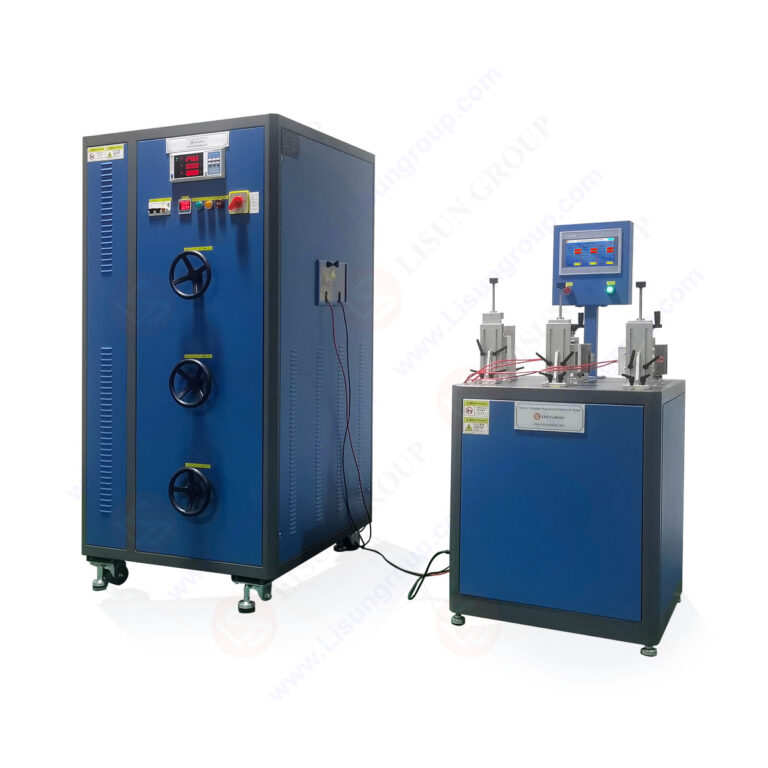
Plug, socket, and switch components undergo repeated insertion, withdrawal, and actuation cycles during their operational lifetime. Mechanical wear, contact degradation, and electrical arcing contribute to fatigue failure modes such as contact adhesion, increased contact resistance, and insulation breakdown. The Plug Socket Switch Durability Tester simulates these real-world conditions under controlled laboratory parameters. LISUN’s CZKS-3 series is engineered to replicate thousands to hundreds of thousands of operational cycles, enabling manufacturers to validate product lifespan before market release. Without standardized durability testing, components may fail prematurely, leading to safety hazards including overheating, short circuits, or fire risks.
1.2 Overview of Core Compliance Frameworks
Compliance with international standards such as IEC 60884-1 (plugs and sockets for household use), IEC 60669-1 (switches for household fixed installations), and IEC 61058-1 (switches for appliances) requires demonstrable evidence of mechanical and electrical endurance. These standards specify minimum cycle counts, test currents, voltage levels, and environmental conditions. The LISUN CZKS series durability testers are designed to meet these specifications, with programmable PLC control systems and cylinder-driven actuation mechanisms providing precise force and speed control. This ensures repeatable test conditions essential for certification audits.
2.1 IEC 60884-1: Plugs and Socket-Outlets for Household Use
IEC 60884-1 Clauses 20 and 21 outline requirements for mechanical strength and endurance testing of plugs and socket-outlets. Clause 21 specifically addresses the normal operation test, where plugs must withstand 5,000 to 10,000 insertion and withdrawal cycles without electrical or mechanical failure. The Plug Socket Switch Durability Tester from LISUN, particularly the CZKS-3 model, automates these cycles with adjustable insertion force ranging from 1 N to 100 N and speeds from 5 to 30 cycles per minute. The test system monitors contact resistance in real time, triggering alerts when thresholds exceed 100 mΩ, as specified in Clause 21.3.
2.2 IEC 60669-1: Switches for Household Fixed Installations
IEC 60669-1 Clause 19 governs the mechanical endurance of switches, requiring 10,000 to 40,000 operating cycles depending on the switch rating. The standard also mandates electrical endurance tests under resistive and inductive loads. The LISUN CZKS-3S variant is optimized for switch testing, featuring dual-channel actuation for single-pole and multi-pole configurations. Clause 19.2 specifies a test voltage of 1.1 times the rated voltage and a current of 0.95 times the rated current. The tester’s built-in power supply and load bank simulate these conditions accurately, with automated shutdown upon failure detection to protect both the device under test and the test equipment.
2.3 GB/T 2099.1: Chinese National Standard Equivalent
GB/T 2099.1 mirrors IEC 60884-1 with additional requirements for local market compliance. Clause 21.1 specifies a minimum of 10,000 insertion cycles for socket-outlets rated up to 16 A. The LISUN CZKS-3A model includes enhanced data logging capabilities to meet Chinese National Standard reporting formats. This variant supports 24/7 unmanned operation, a requirement for high-volume production testing in Asian manufacturing facilities.
3.1 Mechanical Endurance Cycle Requirements
Mechanical endurance testing focuses on the structural integrity of the switch mechanism, including spring force, contact alignment, and housing durability. For rocker switches, IEC 61058-1 Clause 17 requires 10,000 cycles at a rate of 15 operations per minute. The Plug Socket Switch Durability Tester CZKS-3P variant provides pneumatic actuation with adjustable stroke length from 5 mm to 30 mm and a force range of 2 N to 50 N. This ensures compatibility with diverse switch form factors, from miniature toggle switches to heavy-duty industrial units.
3.2 Electrical Load Testing and Contact Resistance Monitoring
Electrical endurance testing applies rated voltage and current during each actuation cycle to simulate real-world arcing and contact wear. IEC 61058-1 Clause 18 specifies test loads ranging from resistive (power factor 1.0) to inductive (power factor 0.6). The LISUN CZKS-3 series integrates a programmable load bank capable of delivering up to 16 A at 250 V AC for single-phase tests and 32 A for three-phase configurations. Real-time contact resistance measurement, with a resolution of 0.1 mΩ, allows engineers to track degradation trends across the test duration.
| Parameter | CZKS-3 | CZKS-3P | CZKS-3S | CZKS-3A |
|---|---|---|---|---|
| Max Test Cycles | 1,000,000 | 1,000,000 | 2,000,000 | 500,000 |
| Insertion/Actuation Force Range | 1–100 N | 2–50 N | 1–80 N | 1–100 N |
| Test Speed Range | 5–30 cycles/min | 5–25 cycles/min | 5–40 cycles/min | 5–30 cycles/min |
| Load Current (Max) | 16 A AC | 16 A AC | 32 A AC | 16 A AC |
| Contact Resistance Threshold | Programmable | Programmable | Programmable | Programmable |
| Data Logging Channels | 4 | 6 | 8 | 12 |
| Compliance Standards | IEC 60884-1 | IEC 61058-1 | IEC 60669-1 | GB/T 2099.1 |
4.1 Breaking Capacity Under Fault Conditions
Breaking capacity testing evaluates the ability of a plug-socket combination to interrupt current flow without sustaining damage that could compromise safety. IEC 60884-1 Clause 21.4 requires a breaking capacity test where the plug is withdrawn while carrying 1.25 times the rated current at 1.1 times the rated voltage. The Plug Socket Switch Durability Tester CZKS-3 model performs this test automatically, coordinating timing between load application and actuation. The system measures arc duration, peak current, and voltage drop across contacts to assess performance.
4.2 Failure Mode Analysis and Data Interpretation
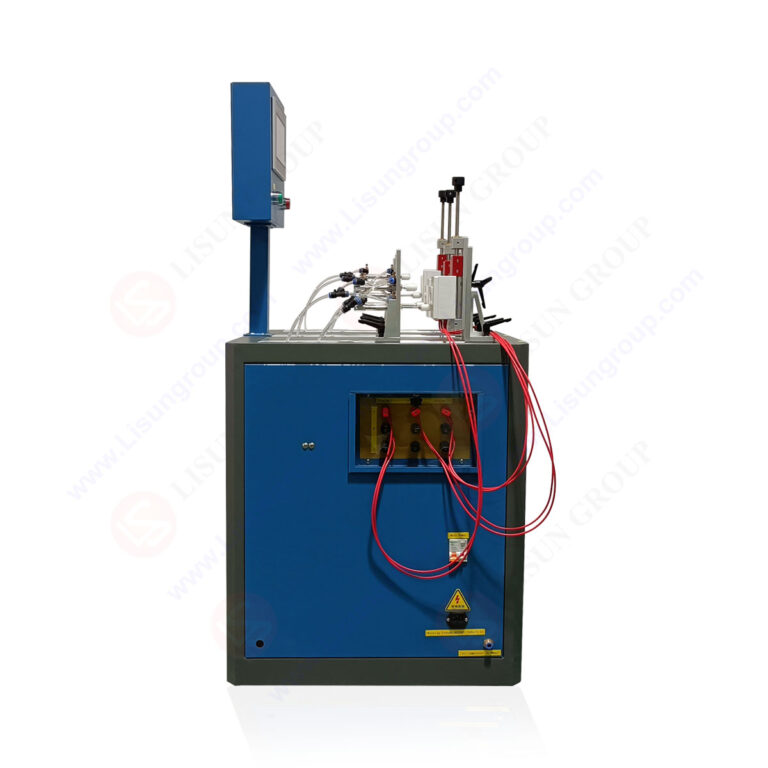
During breaking capacity tests, common failure modes include contact welding, excessive pitting, and insulator carbonization. The LISUN CZKS-3 series records waveform data via integrated oscilloscope interfaces, enabling post-test analysis of arc characteristics. IEC 60884-1 specifies that after 50 breaking operations, the device must show no cracks, deformation, or electrical continuity failure. The tester’s software generates pass/fail reports automatically, highlighting any parameter deviations from Clause 21.4 limits.
5.1 Durability Requirements for Vehicle Connectors
Automotive electrical connectors and switches are subject to more stringent durability requirements due to vibration, temperature extremes, and high current loads. ISO 16750-3 and SAE J1455 outline test protocols for mechanical endurance ranging from 10,000 to 100,000 cycles, depending on the component location and function. The Plug Socket Switch Durability Tester CZKS-3P variant, with its enhanced force control and environmental chamber integration capability, addresses these automotive-specific needs. Pneumatic actuation ensures consistent insertion force even at reduced speeds required for fragile terminal contacts.
5.2 Integration with Environmental Stress Testing
Automotive components often require combined durability-environmental tests, such as thermal cycling during mechanical actuation. The LISUN CZKS-3S model includes an optional temperature control interface, allowing chamber temperatures from -40°C to +85°C. IEC 61058-1 Clause 19.3 permits such combined tests for switch reliability verification. Real-time monitoring of contact resistance at high temperatures reveals potential failure modes like contact spring relaxation or insulating material softening.
6.1 PLC-Controlled Test Sequence Programming
Modern durability testing demands flexibility in sequence programming to accommodate standards variations. The LISUN CZKS-3 series utilizes PLC control with touch-screen HMI for parameter entry. Engineers can define test profiles with up to 20 steps, each specifying actuation speed, force, dwell time, and load condition. This programmability is crucial for standards like IEC 60669-1, which requires alternating between mechanical and electrical cycles. The Plug Socket Switch Durability Tester automates these transitions, reducing operator intervention and improving test consistency.
6.2 Data Logging and Traceability for Certification Audits
Compliance testing requires complete traceability from raw data to final reports. The CZKS-3A variant includes 12-channel data logging with CSV and PDF export formats. Each test record captures cycle count, force measurements, contact resistance at specified intervals, and failure event timestamps. IEC 60884-1 Clause 22.2 mandates documentation of test conditions and results. The LISUN system’s software generates reports aligned with these requirements, including graphical plots of resistance versus cycle count for trend analysis.
7.1 Laboratory Testing for Certification Bodies
Third-party testing laboratories use the Plug Socket Switch Durability Tester to validate compliance for IECEE CB scheme certification. The CZKS-3 model’s ability to run 1,000,000 continuous cycles with minimal maintenance makes it suitable for high-throughput environments. Laboratories conducting type testing for multiple clients benefit from the quick-change fixture system, which accommodates various plug and socket geometries within minutes.
7.2 In-Process Quality Control for Manufacturing
Manufacturers producing switches, sockets, and connectors integrate durability testing into production lines to catch defects early. The CZKS-3S variant supports batch testing with automatic product identification via barcode scanning. Statistical process control (SPC) features allow engineers to monitor test result trends across production lots, identifying tooling wear or material inconsistencies before they result in non-conformance.
7.3 R&D Validation for New Product Development
Research and development teams use the CZKS-3P model to evaluate new contact materials, housing geometries, and actuator mechanisms. The tester’s adjustable parameters—force, speed, load current, and temperature—enable rapid prototyping of test conditions. For instance, engineers can simulate accelerated aging by increasing test speed and load current beyond standard requirements, identifying potential failure modes early in the design phase.
The Plug Socket Switch Durability Tester stands as an essential instrument for verifying the mechanical and electrical endurance of electrical components under international compliance frameworks. The LISUN CZKS-3 series, with its four variants—CZKS-3, CZKS-3P, CZKS-3S, and CZKS-3A—offers tailored solutions for testing plugs, sockets, switches, and automotive connectors against standards including IEC 60884-1, IEC 60669-1, IEC 61058-1, and GB/T 2099.1. The integrated PLC control, pneumatic actuation, and real-time contact resistance monitoring provide the precision and repeatability required for certification-grade testing. Technical data demonstrates the series’ capability to handle up to 2,000,000 cycles with programmable force and speed ranges suitable for diverse component types. From breaking capacity verification to combined environmental-durability testing, the CZKS-3 series supports the full spectrum of application scenarios faced by manufacturers, laboratories, and R&D teams. Accurate, automated, and standards-compliant, these testers reduce time-to-market while ensuring product safety and reliability.
Q1: What is the difference between the CZKS-3 and CZKS-3S models regarding switch testing capability?
A: The primary difference lies in actuation precision and load capacity. The CZKS-3 model is optimized for general plug and socket testing with a maximum of 1,000,000 cycles and 16 A load current. The CZKS-3S variant doubles the cycle capacity to 2,000,000 cycles and supports up to 32 A AC loads, making it suitable for high-current switch testing per IEC 60669-1. Additionally, the CZKS-3S features dual-channel actuation for single-pole and multi-pole switches, whereas the CZKS-3 supports single-channel actuation. For laboratories focusing exclusively on switch durability, the CZKS-3S provides expanded data logging with 8 channels versus the CZKS-3’s 4 channels.
Q2: How does the Plug Socket Switch Durability Tester ensure compliance with IEC 60884-1 Clause 21.3 contact resistance limits?
A: The tester integrates a contact resistance measurement module with 0.1 mΩ resolution and programmable threshold settings. During each insertion cycle, the system measures the resistance across the plug-socket interface under the specified load current (typically 1 A DC per Clause 21.3). If resistance exceeds the preset limit—commonly 100 mΩ for household applications—the software triggers an alarm and records the cycle number and resistance value. The system can also be configured to pause the test and mark the specimen as failed. This real-time monitoring ensures that every cycle’s data is captured for audit trail compliance.
Q3: Can the CZKS-3 series test both single-phase and three-phase switches and sockets?
A: Yes, with the appropriate model selection. The CZKS-3 and CZKS-3A models support single-phase testing up to 16 A at 250 V AC. For three-phase applications, the CZKS-3S variant can handle up to 32 A per phase with programmable load banks for each phase independently. The CZKS-3P model, designed for automotive and industrial switches, includes a four-quadrant power supply capable of simulating both AC and DC loads up to 32 A. When testing three-phase socket-outlets per IEC 60309, the CZKS-3S can be configured with a multi-channel actuation fixture to simultaneously test all three poles.
Q4: What maintenance is required to ensure long-term accuracy of the Plug Socket Switch Durability Tester?
A: Regular maintenance includes pneumatic system checks—lubricating cylinders and valves every 500,000 cycles—and calibration of force sensors every six months or 1,000,000 cycles. The contact resistance measurement module should be verified using precision resistors (e.g., 10 mΩ, 100 mΩ) monthly. Load bank calibration is recommended annually to ensure current and voltage accuracy within ±1%. The LISUN CZKS-3 series includes self-diagnostic routines that check actuator alignment, pressure sensor drift, and data logging integrity at startup. For high-usage laboratories, replacing pneumatic seals every 2,000,000 cycles is standard practice.