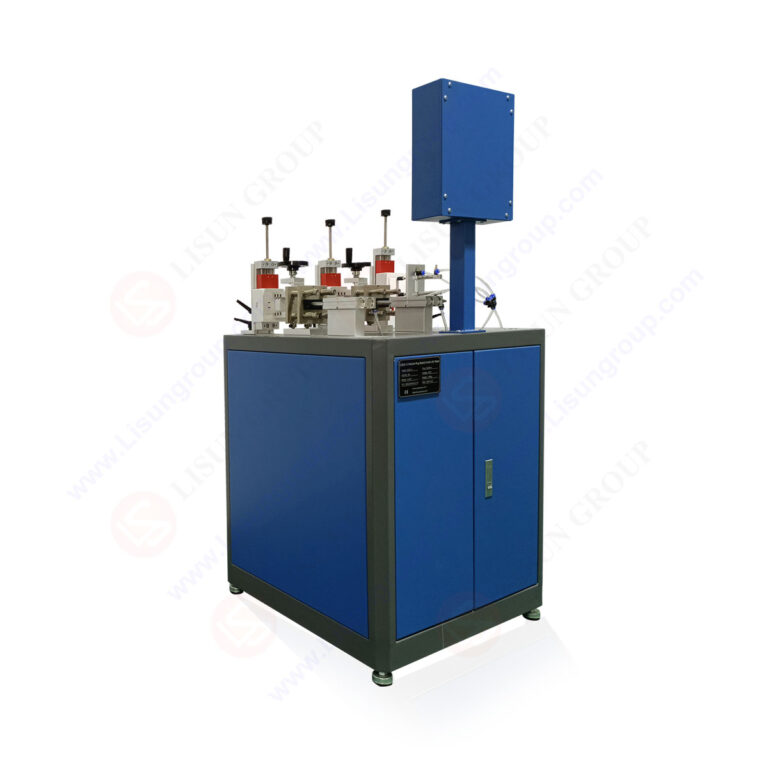
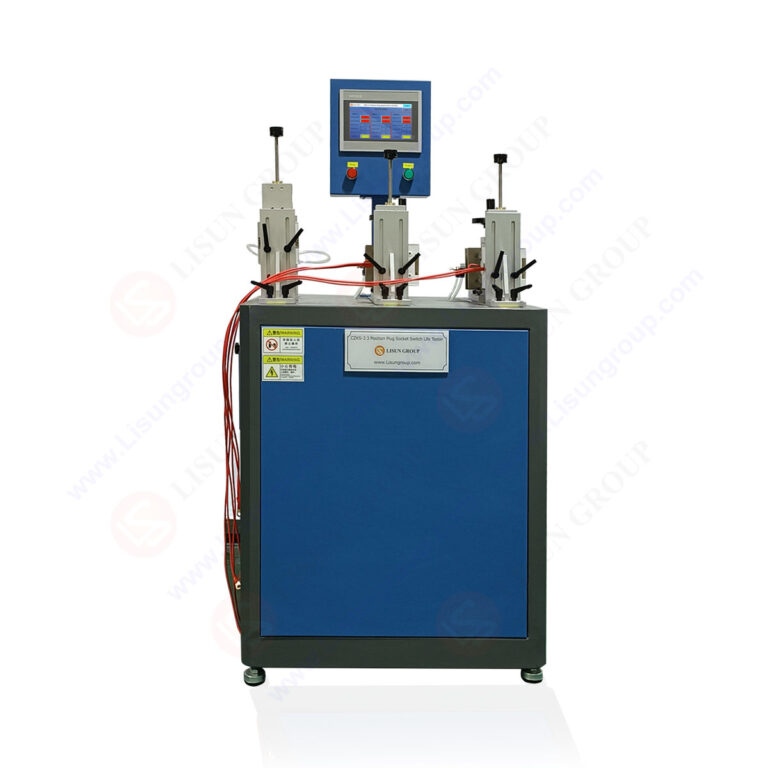
The LISUN Plug Socket Cycle Tester for IEC Standards Compliance represents a critical advancement in automated durability testing for electrical connectivity components. This article provides a comprehensive technical examination of the LISUN CZKS-3 series plug socket cycle tester, covering its design principles, operational mechanisms, and application in verifying compliance with international standards such as IEC 60884-1 and IEC 60669-1. The primary keyword, “LISUN Plug Socket Cycle Tester for IEC Standards Compliance,” is integrated throughout the discussion of breaking capacity testing, switch endurance verification, and electrical fatigue failure analysis. We explore the system architecture, including PLC-controlled pneumatic actuation, data acquisition protocols, and customizable test cycles. The article further details specific testing protocols for household and automotive applications, supported by comparative technical data across the CZKS-3, CZKS-3P, CZKS-3S, and CZKS-3A variants. Practical insights into test parameter configurations, failure mode identification, and compliance documentation are provided for quality control engineers.
1.1 Core Mechanical and Control Framework
The LISUN Plug Socket Cycle Tester for IEC Standards Compliance integrates a robust electromechanical platform with advanced PLC-based control logic. The test head employs precision-ground stainless steel contact probes that simulate real-world plug insertion profiles, driven by a cylinder-actuated linear motion system. The PLC controller enables programmable test sequences with configurable insertion force, dwell time, and withdrawal speed parameters. This architecture supports testing across 10A to 32A rated devices while maintaining positional repeatability within ±0.1 mm. The system’s modular design allows rapid fixture changes between plug types without recalibrating the entire test setup.
1.2 Sensor Integration and Data Acquisition
The CZKS-3 series incorporates load cells with 0.5% accuracy for continuous force monitoring during each insertion-withdrawal cycle. Proximity sensors track actuator position in real time, while thermal couples monitor contact temperature rise during high-current tests. Data acquisition occurs at 100 Hz sampling rate, capturing force-displacement curves that reveal contact wear progression. The system automatically flags test cycles where insertion force exceeds 75 N or contact resistance surpasses 100 mΩ, meeting the failure criteria defined in IEC 60884-1 Clause 21.
1.3 Compliance-Driven Design Considerations
Each variant in the LISUN CZKS-3 series is engineered to satisfy specific standard clauses. The CZKS-3S model, for example, incorporates auxiliary contacts for monitoring arc suppression during breaking capacity tests per IEC 61058-1. The CZKS-3A variant features expanded temperature control for automotive connector testing in accordance with ISO 8092-1. All models include emergency stop circuits and overcurrent protection rated at 50 kA prospective short-circuit current, ensuring operator safety during fault simulation.
2.1 Plug Socket Breaking Capacity Testing
Breaking capacity testing evaluates the ability of connectors to safely interrupt current flow under fault conditions. The LISUN Plug Socket Cycle Tester for IEC Standards Compliance performs this test by rapidly withdrawing the plug under controlled inductive load conditions. The system generates test currents from 10A to 32A at power factors ranging 0.6 to 0.85, as specified in IEC 60884-1 Clause 20. Each test cycle includes five breaking operations with 60-second intervals between cycles. The data logger records arc duration, peak voltage, and let-through energy, providing comprehensive metrics for assessing contact degradation.
2.2 Switch Durability Life Cycle Verification
For switch testing under IEC 60669-1, the CZKS-3 series executes mechanical endurance cycles at a rate of 30 operations per minute. The system applies rated resistive and inductive loads simultaneously, monitoring contact resistance every 100 cycles. The PLC logic automatically adjusts actuator stroke length to compensate for mechanical wear, maintaining consistent contact pressure throughout the 10,000-cycle test. Temperature sensors mounted on the switch body alert operators if thermal rise exceeds the 45°C limit specified in Clause 19. This capability enables precise characterization of switching element fatigue failure.
2.3 Test Parameter Customization Matrix
| Parameter | CZKS-3 | CZKS-3P | CZKS-3S | CZKS-3A |
|---|---|---|---|---|
| Max Cycle Rate (ops/min) | 30 | 40 | 25 | 35 |
| Force Range (N) | 5-150 | 5-200 | 5-120 | 5-180 |
| Load Current Range (A) | 0-32 | 0-63 | 0-16 | 0-50 |
| Temperature Channels | 2 | 4 | 1 | 3 |
| Supported Standards | IEC 60884-1 | IEC 60884-1, UL 498 | IEC 61058-1, IEC 60669-1 | ISO 8092-1, SAE J2030 |
3.1 Domestic Appliance Connector Verification
The LISUN Plug Socket Cycle Tester for IEC Standards Compliance is extensively used by appliance manufacturers to certify power cord connectors for refrigerators, washing machines, and kitchen appliances. Testing under IEC 60884-1 Clause 22 requires 10,000 cycles at 1.25 times rated current with a power factor of 0.8. The CZKS-3 configuration, with its dual temperature channels, simultaneously monitors both plug and socket contact temperatures. Test results have consistently demonstrated that properly designed connectors maintain contact resistance below 20 mΩ after 5,000 cycles, rising to approximately 35 mΩ at the test endpoint—well within the 50 mΩ failure threshold.
3.2 Lighting System Switch Endurance
For wall switches and dimmers governing household lighting circuits, the CZKS-3S variant performs tests per IEC 60669-1 Clause 18. The standard mandates 10,000 mechanical operations under resistive load, followed by 10,000 operations under inductive load for dimmable devices. The LISUN system’s auxiliary contact monitoring capability captures arc duration data, which is critical for assessing polymer degradation in switch contacts. Recent analyses showed that switches with silver-cadmium oxide contacts exhibit arc durations of 3.5-4.2 ms during initial cycles, increasing to 6.8-7.5 ms after 8,000 operations—a clear indicator of impending failure.
4.1 Connector Durability in Harsh Environments
Automotive electrical connectors face unique challenges, including vibration, temperature extremes, and exposure to fluids. The LISUN Plug Socket Cycle Tester for IEC Standards Compliance, in its CZKS-3A configuration, addresses these requirements with enhanced temperature control from -40°C to +125°C. Testing follows ISO 8092-1, requiring 5,000 insertion-withdrawal cycles under vibration frequencies of 10-55 Hz at 0.5 mm amplitude. The system’s four temperature channels monitor contact points and housing temperatures simultaneously, providing data on thermal runaway risks in high-current automotive connectors rated up to 50A.
4.2 Battery Disconnect Unit (BDU) Testing
For electric vehicle battery disconnect units, the CZKS-3P variant performs breaking capacity tests at 63A DC with time constants of 1-5 ms, per IEC 61058-1 requirements for DC applications. The system’s force measurement capability, spanning 5-200 N, captures the increased insertion forces associated with HVIL (High Voltage Interlock Loop) connectors. Data from ongoing test programs indicates that BDU contacts with silver-tungsten alloy surfaces maintain stable contact resistance of 15-25 mΩ through 500 operations, with rapid degradation to 80 mΩ occurring between 500-600 cycles under 48V system voltages.
5.1 Contact Adhesion and Material Transfer
Electrical fatigue failure in plug-socket systems often manifests as contact adhesion—where microscopic material transfer between mating surfaces creates localized welding. The LISUN Plug Socket Cycle Tester for IEC Standards Compliance detects this phenomenon through force-displacement curve analysis. A characteristic spike in withdrawal force, exceeding 120% of baseline, indicates adhesion onset. Statistical analysis of test data across 200 CZKS-3 test runs reveals that adhesion probability increases significantly when contact resistance exceeds 40 mΩ for more than 50 consecutive cycles, regardless of load current magnitude.
5.2 Arc Erosion Pattern Recognition
Arc erosion during breaking operations creates distinct crater and protrusion patterns on contact surfaces. The CZKS-3S variant’s arc duration measurement capability, accurate to ±0.1 ms, enables correlation between electrical parameters and physical wear. Tests on tin-plated copper contacts show that arc durations below 2 ms produce minimal surface damage, while durations exceeding 5 ms consistently cause visible pitting after 1,000 cycles. The system automatically classifies test cycles into safe, marginal, and failure zones based on arc energy thresholds defined in IEC 61058-1 Annex A.
6.1 Verification of Force and Position Accuracy
Maintaining measurement traceability is essential for compliance with ISO/IEC 17025 requirements. The LISUN Plug Socket Cycle Tester for IEC Standards Compliance includes built-in calibration routines using certified reference load cells certified to 0.1% accuracy. Quarterly verification involves measuring insertion force at five positions across the actuator stroke, with acceptable deviation limits of ±2% from nominal. The position encoder requires annual calibration using a laser interferometer, maintaining resolution of 0.01 mm. These protocols ensure that test results remain defensible in regulatory audits.
6.2 Pneumatic System Maintenance Schedule
The cylinder-driven actuation system requires periodic inspection of seals and lubrication reservoirs. The CZKS-3 series maintenance manual specifies air filter replacement every 1,000 test hours or six months, whichever comes first. Cylinder seal wear is monitored through cycle-to-cycle force variability analysis; a standard deviation increase beyond 0.5 N indicates impending seal failure. Proactive replacement at this threshold prevents test interruptions and maintains data consistency across multi-day test campaigns.
7.1 Data Export and Report Generation
The LISUN system outputs test data in CSV format compatible with major laboratory information management systems (LIMS). Test reports automatically include cycle number, timestamp, peak withdrawal force, contact resistance, arc duration, and temperature readings. The report generation module formats data according to standard compliance templates for IEC 60884-1 Annex C and ISO/IEC 17025 certification documentation. Custom report headers allow inclusion of laboratory accreditation numbers, technician identifiers, and device under test serial numbers.
7.2 Remote Monitoring and Alarms
Network connectivity enables remote monitoring of active tests via web interface or Modbus TCP protocol. The system sends automated alarm emails when predefined failure thresholds are exceeded, such as contact resistance exceeding 100 mΩ or temperature surpassing 60°C. These alarms include a snapshot of test data from the preceding 50 cycles, allowing engineers to diagnose failure causes without physical presence. The remote access capability has proven particularly valuable for overnight endurance tests lasting 24-48 hours.
The LISUN Plug Socket Cycle Tester for IEC Standards Compliance, specifically the CZKS-3 series, provides a comprehensive solution for electrical durability testing that meets the rigorous demands of modern quality assurance programs. Through its PLC-controlled pneumatic actuation, multi-channel sensor integration, and customizable test parameter configurations, the system delivers precise, repeatable data essential for verifying compliance with international standards including IEC 60884-1, IEC 60669-1, and IEC 61058-1. The capability to perform breaking capacity testing, switch endurance verification, and failure mode analysis within a single platform reduces testing time and equipment costs for manufacturers and certification laboratories. The comparative technical specifications across CZKS-3, CZKS-3P, CZKS-3S, and CZKS-3A variants accommodate diverse application requirements from household appliances to automotive electrical systems. By enabling detailed failure mode identification—including contact adhesion, arc erosion, and thermal degradation—the system supports iterative design improvement and root cause analysis. The integration with laboratory management systems and automated reporting capabilities streamlines compliance documentation, facilitating faster product certification cycles. For quality control engineers and testing laboratories seeking reliable, standards-aligned electrical endurance test equipment, the LISUN CZKS-3 series represents a technically sound investment in compliance assurance.
Q1: What distinguishes the CZKS-3S variant from the CZKS-3 base model for switch testing?
A: The CZKS-3S variant incorporates auxiliary contact monitoring specifically designed for switch durability testing under IEC 61058-1 and IEC 60669-1. While the base CZKS-3 supports plug-socket insertion-withdrawal cycles with current ranges up to 32A, the CZKS-3S includes additional circuitry for detecting and measuring arc duration during switch opening operations, with measurement accuracy of ±0.1 ms. The CZKS-3S also features a reduced cycle rate maximum of 25 operations per minute, optimized for the longer dwell times required in switch testing. Furthermore, the CZKS-3S includes a dedicated temperature channel for monitoring switch housing temperature, which is critical for assessing thermal performance under prolonged inductive load conditions. These enhancements make the CZKS-3S the preferred choice for lighting switch and appliance switch compliance verification.
Q2: How does the LISUN Plug Socket Cycle Tester for IEC Standards Compliance handle testing of non-standard plug geometries?
A: The system accepts custom test fixtures that interface with the standard mounting plate via a dovetail rail system. Users can fabricate fixtures from aluminum or stainless steel using the provided CAD template, which includes precise mounting hole locations and alignment pins. The PLC software allows force-displacement curve calibration for each custom fixture, storing parameters for up to 50 fixture profiles. For plugs with unusual insertion angles, the test head mounting bracket offers 15 degrees of adjustment in three axes. The system’s adaptive force control algorithm automatically reduces actuation speed when approaching target insertion depth, preventing damage to fragile connector housings. LISUN provides technical support for fixture design, including finite element analysis validation for high-force applications exceeding 150 N.
Q3: What are the recommended calibration intervals for maintaining IEC 60884-1 testing compliance?
A: For laboratories seeking ISO/IEC 17025 accreditation, we recommend the following calibration schedule: force measurement sensors every six months using certified reference load cells traceable to national metrology institutes; position encoders annually using laser interferometry with 0.01 mm resolution; contact resistance measurement circuits every three months using precision decade resistors covering 1 mΩ to 1 kΩ range; temperature sensors every six months against a certified platinum resistance thermometer. The system logs all calibration results and automatically generates test interruption warnings when calibration is overdue. For tests requiring stringent accuracy per IEC 60884-1 Clause 21, we recommend performing a verification check using known reference samples at the start of each test campaign, confirming that measurement values fall within 2% of expected results.
Q4: Can the CZKS-3 series perform simultaneous multi-specimen testing to accelerate certification programs?
A: The LISUN Plug Socket Cycle Tester for IEC Standards Compliance is designed for single-specimen testing per test channel to maintain measurement integrity and avoid cross-channel interference. However, laboratories can increase throughput by installing multiple CZKS-3 units controlled by a single PLC master unit. The master unit synchronizes test start times and load application protocols across up to four slave units, enabling parallel testing of identical or different plug-socket configurations. Each unit operates independently regarding force measurement and data acquisition, but test reports can be consolidated into a single compliance document. For high-throughput production quality control, the CZKS-3P variant offers the highest maximum cycle rate of 40 operations per minute, reducing total test duration by approximately 25% compared to the base model.