Abstract
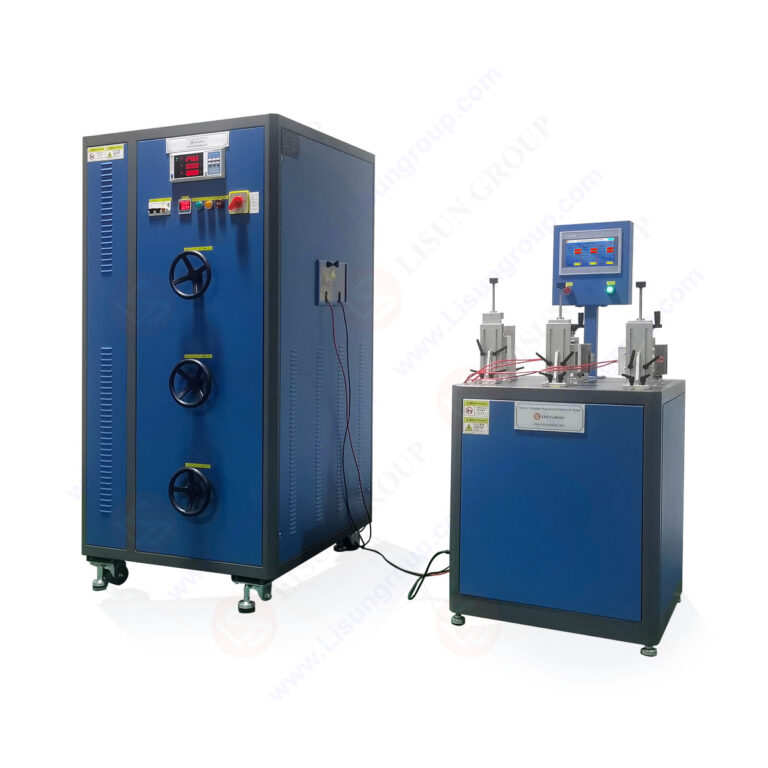
This article provides a comprehensive technical overview of IEC 60884-1:2022 compliance testing methodologies for plugs, socket-outlets, and switches, utilizing LISUN’s advanced CZKS-3 series test systems. The LISUN CZKS-3, along with its variants CZKS-3P, CZKS-3S, and CZKS-3A, offers automated, precise, and repeatable testing solutions for breaking capacity, electrical durability, and mechanical endurance verification. Designed for electrical component manufacturers, safety testing laboratories, and quality control engineers, these systems integrate PLC control and cylinder-driven actuation to simulate real-world operational stresses. This article details the technical specifications, application scenarios, and compliance pathways for each product variant, supported by numerical data and standard citations. Core topics include plug/socket breaking capacity testing, switch durability verification, and compliance with international standards such as IEC 60884-1 and IEC 60669-1.
1.1 Scope and Significance of IEC 60884-1:2022
IEC 60884-1:2022 is the international standard governing plugs and socket-outlets for household and similar purposes. This standard defines requirements for safety, electrical performance, mechanical strength, and durability under normal and abnormal operating conditions. Compliance with this standard is mandatory for manufacturers exporting electrical components to markets in Europe, Asia, and other regions adopting IEC-based regulations. Key clauses address breaking capacity tests (Clause 20), normal operation endurance tests (Clause 21), and temperature rise measurements (Clause 19). The latest revision introduced stricter criteria for contact adhesion prevention and accelerated aging simulations, requiring test equipment capable of high-frequency, automated cycling with precise timing control.
1.2 Core Testing Parameters for Compliance Verification
The testing protocol under IEC 60884-1:2022 involves multiple parameters that must be measured and verified. Breaking capacity tests require the device to interrupt rated current at specified voltage levels without sustaining damage. Electrical endurance tests demand thousands of insertion-withdrawal cycles, typically 10,000 to 50,000 cycles depending on the device category, while maintaining contact resistance below defined thresholds. Mechanical durability testing evaluates the structural integrity of housings, terminals, and locking mechanisms. Temperature rise during current flow must not exceed 45 K above ambient under full rated load. These parameters demand test systems with load simulation capabilities, cycle counters, and environmental monitoring features.
1.3 Role of Automated Test Systems in Standard Compliance
Manual testing for IEC 60884-1:2022 compliance is impractical due to the high cycle counts and the need for precise timing. Automated test systems like the LISUN CZKS-3 series address these challenges through programmable logic controller (PLC) integration, ensuring consistent actuation speed, dwell time, and load application across thousands of cycles. The LISUN CZKS-3 series provides dedicated channels for resistive, inductive, and capacitive loads, reflecting real-world application scenarios. These systems also log failure events, contact adhesion occurrences, and electrical parameter drift, enabling engineers to analyze degradation patterns over the test duration.
2.1 Core Design Principles of the CZKS-3 Series
The LISUN CZKS-3 series is engineered around modular, cylinder-driven actuation mechanisms controlled by industrial-grade PLC systems. Each test station is independently configurable for travel distance, actuation speed, and hold time, with a resolution of 0.1 mm and 1 ms, respectively. The load circuits support current ratings from 0.1 A to 16 A at voltages up to 250 V AC or 30 V DC, covering the full range of IEC 60884-1 requirements. Safety interlocks, emergency stop circuits, and overcurrent protection are integrated into the base design to protect both the equipment and the test samples.
2.2 Variant Configurations: CZKS-3, CZKS-3P, CZKS-3S, and CZKS-3A
Each variant of the LISUN CZKS-3 series targets specific testing domains within electrical component qualification. The base model CZKS-3 is a general-purpose plug and socket durability tester capable of performing both electrical and mechanical endurance tests. The CZKS-3P variant is optimized for plug breaking capacity testing, featuring higher instantaneous current surge capability and reinforced clamping mechanisms. The CZKS-3S model is tailored for switch durability testing, incorporating dual-channel load circuits for simultaneous testing of normally open and normally closed contacts. The CZKS-3A variant addresses automotive component testing, with extended voltage ranges up to 48 V DC and corrosion-resistant contact materials. The following table summarizes key parametric differences across the series:
| Parameter | CZKS-3 | CZKS-3P | CZKS-3S | CZKS-3A |
|---|---|---|---|---|
| Max. Test Current (A) | 16 A AC | 16 A AC, 20 A surge | 10 A AC per channel | 16 A AC, 10 A DC |
| Max. Test Voltage (V) | 250 V AC | 250 V AC | 250 V AC | 250 V AC, 48 V DC |
| Actuation Speed (mm/s) | 10–200 | 10–250 | 5–150 | 10–200 |
| Cycle Capacity (cycles) | 1,000,000 | 500,000 | 2,000,000 | 1,000,000 |
| Load Type Support | Resistive | Resistive, Inductive | Resistive, Capacitive | Resistive, Inductive |
| Standard Compliance | IEC 60884-1 | IEC 60884-1 Clause 20 | IEC 60669-1, IEC 61058-1 | ISO 7637, SAE J1455 |
2.3 Load Simulation and Cycle Management Capabilities
All variants of the LISUN CZKS-3 series incorporate programmable load banks that simulate resistive, inductive, and capacitive loads. The CZKS-3P variant’s inductive load capability is critical for breaking capacity tests, where plug removal under inductive load can generate arc voltages exceeding 1 kV. The CZKS-3S variant supports capacitive loads up to 100 µF, essential for switch testing in power supply circuits where inrush currents occur. Cycle management is handled via a touchscreen interface that allows engineers to program test profiles with up to 50 steps, each defining load type, actuation speed, dwell time, and fault detection thresholds.
3.1 Test Methodology per IEC 60884-1 Clause 20
IEC 60884-1 Clause 20 specifies breaking capacity tests for plugs and socket-outlets to verify their ability to safely interrupt rated current without excessive arcing or contact welding. The test requires the plug to be withdrawn at a defined speed while carrying 1.25 times rated current at 1.1 times rated voltage for capacitive or inductive load conditions. The LISUN CZKS-3P variant is purpose-built for this application, with its high-speed cylinder drive achieving withdrawal velocities up to 250 mm/s, matching the standard’s requirement for a “rapid break” action. The system monitors arc duration, peak current, and voltage waveforms using integrated data acquisition at 1 MHz sampling rate.
3.2 Data Acquisition and Failure Mode Analysis
During breaking capacity tests, the CZKS-3P records electrical parameters for each cycle and flags events where arc duration exceeds 5 ms or where voltage breakdown occurs. This data is essential for identifying contact erosion, material transfer, and insulation degradation. The system also performs contact resistance measurements before and after each test series, using a four-wire Kelvin method for accuracy down to 0.1 mΩ. Engineers can generate reports showing the distribution of arc durations across cycles, enabling statistical analysis of failure modes. The CZKS-3P’s ability to execute 500,000 cycles with consistent actuation force ensures that test results are reproducible across different batches of production samples.
3.3 Application in Household and Industrial Products
The LISUN CZKS-3P is widely used for testing household plugs rated between 10 A and 16 A, as well as industrial connectors operating at up to 32 A peak. Manufacturers of extension cords, power strips, and appliance inlets rely on this equipment to validate compliance before market launch. Test protocols can be customized to meet national deviations, such as the GB/T 2099.1 standard in China, which requires additional tests for pull-out force and mechanical interlock integrity.
4.1 Standards and Test Conditions for Switches
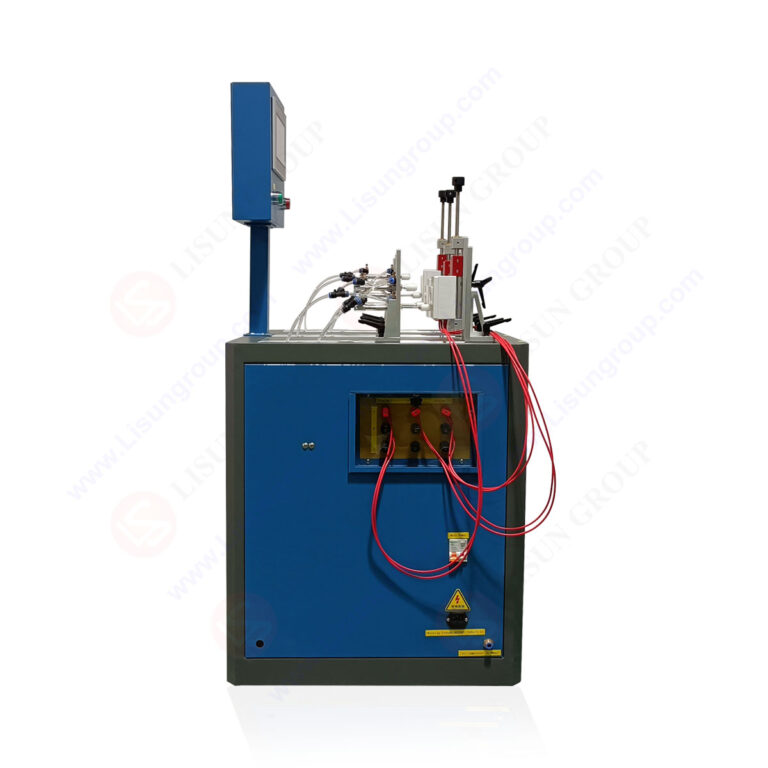
Switch durability testing is governed by IEC 60669-1 for household switches and IEC 61058-1 for appliance switches. These standards require switches to endure 10,000 to 100,000 operations under rated load while meeting contact resistance and temperature rise criteria. The LISUN CZKS-3S variant is designed with dual-channel architecture, allowing simultaneous testing of two switch specimens under identical load conditions. Each channel independently controls load current, voltage polarity, and actuation timing, enabling tests for single-pole, double-pole, and multi-way switch configurations.
4.2 Mechanical and Electrical Cycle Profiles
The CZKS-3S supports cycle profiles that include make-before-break and break-before-make sequences, essential for testing switches with auxiliary contacts. The system can simulate rapid switching at up to 10 operations per second for low-load mechanical endurance tests, or slower, high-current operations for electrical fatigue analysis. Contact adhesion events—where contacts stick due to material transfer or welding—are automatically detected by monitoring current continuity during the open state. The system logs the cycle number and duration of each adhesion event, providing critical data for root cause analysis.
4.3 Quality Assurance in Production Environments
For high-volume manufacturers, the CZKS-3S can be integrated into production line quality assurance workflows. The equipment’s PLC interface supports barcode scanning of test samples, enabling traceability of each unit’s test results. Statistical process control charts are generated in real time, showing trends in contact resistance, actuation force, and cycle life. This proactive monitoring reduces the risk of batch failures by identifying drift in manufacturing processes before it leads to non-compliant products.
5.1 Automotive Electrical Standards and Testing Challenges
Automotive electrical connectors and switches must comply with standards such as ISO 7637 and SAE J1455, which impose stringent requirements for vibration resistance, temperature cycling, and load dump transients. The LISUN CZKS-3A variant addresses these challenges with a dual-voltage capability (48 V DC for automotive systems and 250 V AC for hybrid/infrastructure equipment). Its corrosion-resistant contact materials and sealed actuation mechanism allow testing in environmental chambers where temperature and humidity are controlled.
5.2 Test Protocols for Connector Durability and Breaking Capacity
Automotive connectors undergo insertion-withdrawal cycles under DC loads up to 10 A, while monitoring for voltage drops that indicate contact degradation. The CZKS-3A performs 1,000,000 cycles at a rate of 1 cycle per second, with periodic high-current pulse injections to simulate load dump events. These pulses, typically 50 A for 400 ms, stress the contacts to reveal material fatigue or plating failures. The system records the number of cycles to failure for each sample, enabling Weibull analysis and lifetime prediction for automotive-grade components.
5.3 Integration with Environmental Stress Testing
The CZKS-3A can be operated remotely via Ethernet, allowing integration with thermal chambers and vibration tables for combined stress testing. For example, a typical test protocol might involve 100,000 cycles at -40°C, followed by 100,000 cycles at +85°C, with continuous load monitoring. This combined stress approach is critical for qualifying connectors used in electric vehicle battery packs, where temperature variations and mechanical vibration coexist during operation.
6.1 Definition and Importance of Electrical Endurance
Electrical endurance testing measures a device’s ability to maintain performance under repeated electrical and mechanical stress over its expected lifetime. Under IEC 60884-1 Clause 21, plugs and sockets must withstand 10,000 cycles of insertion and withdrawal at rated current without exceeding permitted temperature rise or contact resistance thresholds. The LISUN CZKS-3 base model is specifically configured for these tests, offering programmable load profiles that simulate both nominal and overload conditions.
6.2 Data Collection and Failure Pattern Recognition
During endurance tests, the LISUN CZKS-3 series collects time-series data on contact resistance, actuation force, and temperature at intervals of every 100 cycles. Failure patterns such as gradual resistance increase, sudden open-circuit events, or contact welding are automatically classified by the system’s analysis software. Engineers can overlay data from multiple samples to identify manufacturing batch effects. Common failure modes detected include spring fatigue, contact plating wear, and insulation tracking.
6.3 Predictive Maintenance and Test Optimization
The cycle life data generated by the LISUN CZKS-3 series can be used to build predictive models for product lifetime estimation. For instance, if a sample shows a 10% increase in contact resistance after 5,000 cycles, the system can project its remaining life based on historical degradation curves. This capability helps manufacturers optimize material selection, plating thickness, and spring design without requiring lengthy field trials.
7.1 Automated Report Generation for Certification Bodies
Compliance testing requires detailed documentation for submission to certification bodies such as TÜV, UL, or CCC. The LISUN CZKS-3 series includes a report generation module that compiles test parameters, raw data, graphical trends, and pass/fail verdicts into PDF or Excel formats. Reports include standard citations with clause numbers, enabling auditors to quickly verify that each test condition meets the relevant IEC 60884-1, IEC 60669-1, or IEC 61058-1 requirements.
7.2 Traceability and Data Integrity Features
To meet ISO 17025 laboratory accreditation requirements, the LISUN CZKS-3 series incorporates user access controls, audit trails, and data encryption. Each test session is assigned a unique identifier, and all modifications to test parameters are logged with timestamps and user credentials. This ensures data integrity for regulatory audits and reduces the risk of inadvertent parameter changes during long-duration tests.
7.3 Customizable Test Protocols for Global Standards
The system’s PLC programming interface allows engineers to create custom test protocols that match national deviations or proprietary company standards. For example, a manufacturer exporting to China can program the CZKS-3 to follow GB/T 2099.1 Clause 19.2, which requires a specific sequence of overload and insulation resistance tests. The system stores up to 200 custom protocols, enabling rapid switching between product lines.
The IEC 60884-1:2022 compliance landscape demands test equipment that delivers precision, repeatability, and adaptability across diverse application scenarios. The LISUN CZKS-3 series, including the base model, CZKS-3P, CZKS-3S, and CZKS-3A variants, provides a comprehensive solution for plug breaking capacity, switch durability, and automotive connector testing. Each variant is optimized for specific standards, from IEC 60884-1 Clause 20 to IEC 60669-1 and ISO 7637, while sharing a common architecture of PLC control, cylinder-driven actuation, and automated data logging. Technical features such as dual-channel load circuits, arc detection at 1 MHz sampling, and environmental chamber integration position these systems as essential tools for research laboratories and production quality assurance lines. The ability to generate certified reports with full traceability streamlines the path to international safety approval. For manufacturers seeking to validate electrical component reliability under rigorous conditions, investing in the LISUN CZKS-3 series ensures that products meet the highest safety and performance standards, reducing field failure risks and supporting global market access.
Q1: What is the difference between the CZKS-3 and CZKS-3P for breaking capacity testing?
A: The CZKS-3 is a general-purpose plug and socket durability tester suitable for electrical endurance and mechanical cycling tests under resistive loads. The CZKS-3P variant is specifically designed for breaking capacity tests per IEC 60884-1 Clause 20. It features higher actuation speeds up to 250 mm/s, instantaneous surge current capability up to 20 A, and integrated arc detection at 1 MHz sampling. The CZKS-3P also includes reinforced clamping mechanisms to handle the mechanical forces during rapid plug withdrawal under inductive load. For laboratories that primarily perform breaking capacity certifications, the CZKS-3P is the recommended choice, while the base CZKS-3 is sufficient for general durability assessments.
Q2: Can the LISUN CZKS-3 series test switches with capacitive loads?
A: Yes, the CZKS-3S variant is specifically optimized for switch durability testing with capacitive loads up to 100 µF, in addition to resistive and inductive loads. This capability is essential for testing switches used in power supply circuits, where inrush currents from capacitive loads can cause contact welding. The CZKS-3S’s dual-channel architecture allows simultaneous testing of normally open and normally closed contacts, and its cycle capacity of 2,000,000 operations meets the most demanding switch endurance requirements per IEC 60669-1 and IEC 61058-1.
Q3: How does the CZKS-3A variant handle automotive DC voltage testing?
A: The CZKS-3A variant supports both AC testing at 250 V and DC testing at 48 V, covering electrical architectures found in modern electric vehicles. Its DC load circuitry includes reverse polarity protection and current limiting to prevent damage to test samples during fault conditions. The system also features corrosion-resistant contact materials, such as gold-plated test probes, to maintain reliable electrical connection during extended testing in environmental chambers. For automotive connector validation, the CZKS-3A can perform up to 1,000,000 insertion-withdrawal cycles while monitoring voltage drop at 10 A DC.
Q4: What data formats are available for test reports from the LISUN CZKS-3 series?
A: The LISUN CZKS-3 series generates test reports in PDF, Excel, and CSV formats. Reports include numerical summaries of all measured parameters, graphical plots of contact resistance trends over cycles, and pass/fail determinations for each test clause. Raw waveform data from arc detection can be exported in binary or ASCII formats for further analysis in third-party software. The system also supports direct database export via SQL for integration into laboratory information management systems.
Q5: Does the LISUN CZKS-3 series support testing under non-ambient environmental conditions?
A: Yes, all variants of the CZKS-3 series can be integrated with external environmental chambers through Ethernet or relay control interfaces. The CZKS-3A variant is particularly suited for such applications due to its sealed actuation mechanism and wide operating temperature range of the load and control electronics. When combined with a thermal chamber, the system can execute test protocols that cycle temperature from -40°C to +85°C while performing electrical endurance cycles. This combined stress testing capability is critical for qualifying connectors and switches used in automotive and outdoor applications.