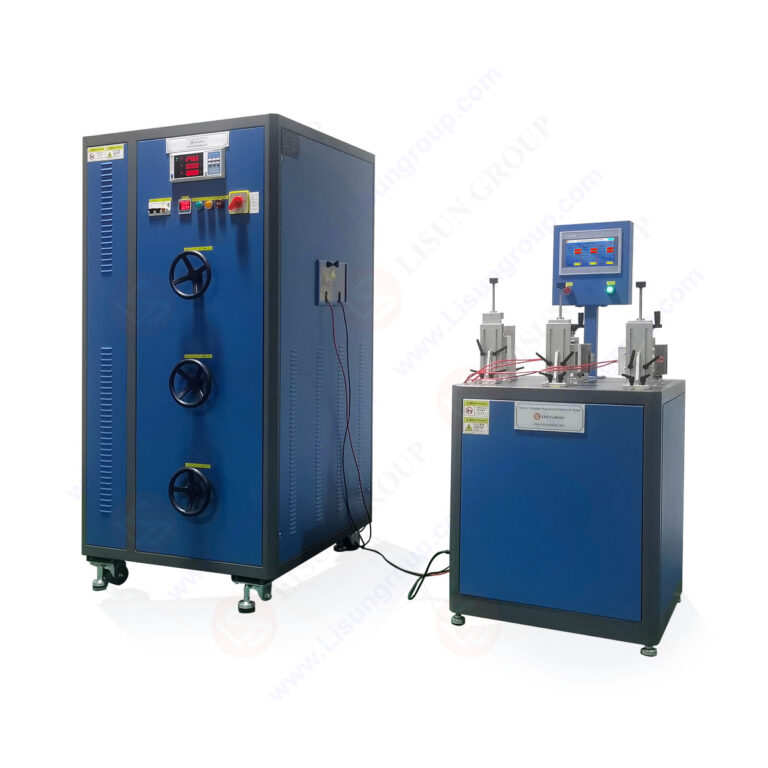
This article provides a comprehensive technical overview of appliance switch testing per IEC 61058-1:2020 using LISUN CZKS-3 series testing equipment, focusing on the CZKS-3, CZKS-3P, CZKS-3S, and CZKS-3A variants. The core focus is on electrical durability testing, switch life cycle verification, and compliance verification for household and automotive electronics components. The LISUN CZKS-3 series is designed to perform breaking capacity tests, normal operation tests, and mechanical endurance assessments for switches, plugs, and sockets. By integrating PLC control systems and cylinder-driven actuation mechanisms, the series ensures precise test parameter control, repeatable results, and full conformity to international safety standards. This article details the technical architecture, test methodologies, standard compliance, and application scenarios of the CZKS-3 series, providing engineers and quality control professionals with actionable insights for optimizing switch reliability validation.
1.1 System Design and Control Logic
The LISUN CZKS-3 series employs a modular architecture integrating a PLC control unit, pneumatic actuation system, and data acquisition module. The PLC controls test cycles, dwell times, and actuation speeds with microsecond precision. Cylinder-driven actuation eliminates mechanical wear variability, ensuring consistent force application across thousands of cycles. The system supports both single-phase and three-phase test configurations, accommodating a wide range of switch ratings from 5A to 63A.
1.2 Variant Specifications and Capabilities
Each CZKS-3 variant targets specific testing needs. The base CZKS-3 model handles standard switch durability tests. The CZKS-3P adds programmable load sequencing for breaking capacity testing. The CZKS-3S integrates simultaneous multi-channel testing for production line environments. The CZKS-3A includes an accelerated aging test mode with elevated temperature and humidity control. All variants feature real-time contact resistance monitoring to detect electrical fatigue failure and contact adhesion anomalies.
1.3 Instrumentation and Calibration
The series incorporates calibrated current transformers, precision voltage sensors, and thermocouple inputs for temperature rise measurement. Calibration intervals align with ISO/IEC 17025 requirements, and the system automatically logs calibration dates and drift compensation values. The data acquisition module samples at 1 kHz to capture transient events during switch operation.
2.1 Scope and Clause Mapping
IEC 61058-1:2020 defines general requirements for switches used in household and similar fixed electrical installations. The LISUN CZKS-3 series directly supports testing per clauses 15 (Mechanical Endurance), 16 (Electrical Endurance), and 17 (Breaking Capacity). Clause 15 requires 10,000 to 100,000 mechanical operations depending on switch category, while clause 16 mandates electrical operations under rated load. The CZKS-3 series automates these cycles with programmable parameters.
2.2 Test Parameter Convergence with IEC 60884-1 and IEC 60669-1
While IEC 61058-1 is the primary standard, the CZKS-3 series also supports testing per IEC 60884-1 (plugs and sockets) and IEC 60669-1 (switches for household use). For example, IEC 60884-1 clause 20 requires breaking capacity tests at 1.1 times rated voltage, which the CZKS-3P executes with ±0.5% accuracy. Similarly, IEC 60669-1 clause 16 for switch temperature rise limits is verified using the CZKS-3A variant’s controlled environment chamber.
2.3 Compliance Verification and Reporting
The system generates test reports that map directly to IEC 61058-1:2020 testing criteria. Reports include cycle counts, failure detection timestamps, contact resistance trends, and ambient condition logs. The software validates pass/fail criteria per standard limits, reducing human error in compliance verification.
3.1 Methodology and Load Sequencing
Breaking capacity testing evaluates a switch or socket’s ability to interrupt current without sustained arcing or contact welding. The CZKS-3P applies a programmable load profile: initial inrush current (6-10x rated current), steady-state load, and interruption at zero-crossing or peak current. The cylinder-driven actuator ensures consistent opening speed (50-200 mm/s) to standardize arc duration.
3.2 Plugs and Sockets Breaking Capacity
Per GB/T 2099.1 clause 17, plugs and sockets must withstand breaking capacity tests at 1.25 times rated voltage and 0.8 power factor. The CZKS-3 series accommodates these conditions using programmable power supplies and reactive load banks. Tests for household plugs (10A/250V) require 50 operations, while industrial sockets (32A/440V) require 20 operations. The system logs each interruption event, capturing arc voltage and current waveforms for analysis.
3.3 Failure Mode Detection
The CZKS-3A variant includes high-speed camera triggering and acoustic emission sensors to detect contact bounce, material transfer, and dielectric breakdown. These sensors identify incipient failure modes before full device breakdown, enabling root-cause analysis during design validation.
4.1 Mechanical Endurance Test Protocol
Switch durability testing per IEC 61058-1 clause 15 involves 100,000 mechanical cycles for switches rated above 10A. The CZKS-3 base model executes these cycles at 10-30 operations per minute, with adjustable dwell times (0.5-5 seconds) to simulate user behavior. The PLC monitors actuator position feedback to detect mechanical jamming or wear.
4.2 Electrical Endurance Under Inductive Loads
Inductive loads (e.g., motors, solenoids) generate higher arc energy during switching. The CZKS-3P variant controls load power factor from 0.3 to 0.9 lagging to simulate real-world conditions. Tests at 100,000 cycles require contact resistance monitoring every 10,000 cycles; failure criteria include a 50% increase from baseline resistance.
4.3 Environmental Stress Testing
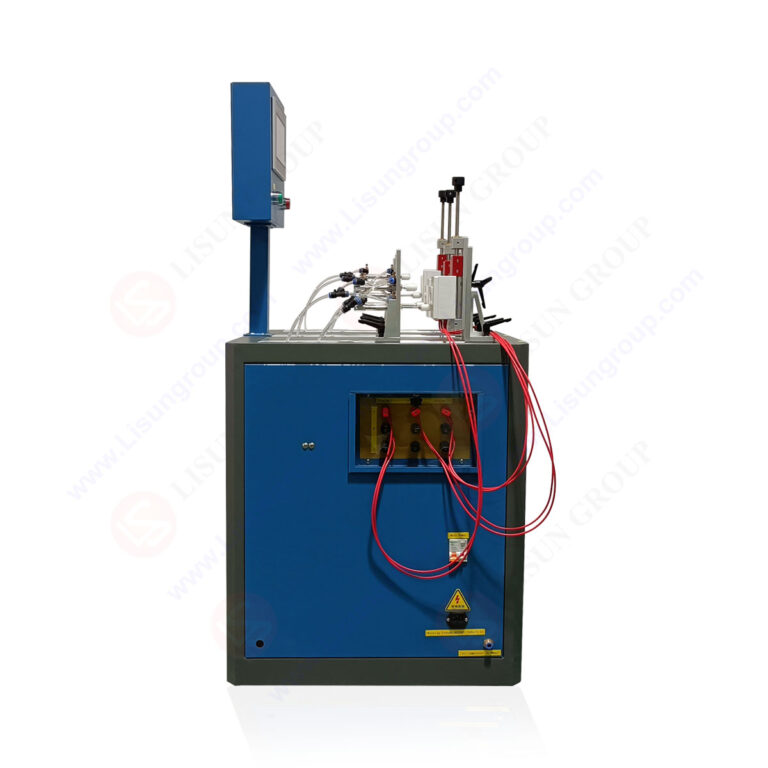
The CZKS-3A’s environmental chamber controls temperature (-10°C to 85°C) and humidity (20-95% RH). Testing switches for outdoor or automotive use requires 1,000 hours at 85°C/85% RH with intermittent switching per IEC 60068-2-78. The system logs leakage current and insulation resistance during the test.
5.1 Switch Life Cycle Verification for Automotive Relays
Automotive relays (12V/24V systems) require 100,000 to 500,000 cycles per ISO 16750-2. The CZKS-3S variant’s multi-channel capability allows simultaneous testing of 8 relays. Test parameters include 13.5V DC supply, 20A load, and 20ms switching intervals. The system detects contact welding and coil failure through current monitoring.
5.2 Connector Durability for Automotive Harnesses
Automotive connectors face vibration and thermal cycling. The CZKS-3 series integrates with vibration tables (10-2000 Hz) for combined mechanical and electrical testing. Connectors are mated/unmated 10,000 times while monitoring voltage drop per USCAR-2 standards. The CZKS-3A variant adds thermal cycling (-40°C to 125°C) to simulate engine bay conditions.
5.3 Compliance with LV 214 and GMW3172
The LISUN CZKS-3 series supports testing per LV 214 (connectors for automotive applications) and GMW3172 (general electrical component durability). Test cycles range from 5,000 to 100,000 operations, with pass/fail criteria based on contact resistance stability (max 5 mΩ change). The system’s data logging meets PPAP documentation requirements.
6.1 Performance Parameters and Capabilities
The table below compares key specifications across the CZKS-3 series:
| Parameter | CZKS-3 | CZKS-3P | CZKS-3S | CZKS-3A |
|---|---|---|---|---|
| Max Test Current (A) | 63 | 100 | 32 | 63 |
| Max Test Voltage (V) | 250 AC | 440 AC | 250 DC | 250 AC |
| Number of Channels | 1 | 2 | 8 | 1 |
| Cycle Rate (ops/min) | 10-30 | 5-20 | 10-60 | 10-30 |
| Environmental Chamber | No | No | No | Yes (-10°C to 85°C) |
| Load Power Factor Control | Fixed 0.8 | 0.3-0.9 | Fixed 1.0 | Fixed 0.8 |
| High-Speed Camera Trigger | No | Optional | No | Yes |
| Standard Compliance | IEC 61058-1, GB/T 2099.1 | IEC 61058-1, IEC 60884-1 | ISO 16750-2, USCAR-2 | IEC 61058-1, IEC 60068-2-78 |
6.2 Application-Specific Selection Guidance
The base CZKS-3 model suits general switch durability testing. The CZKS-3P is mandatory for breaking capacity tests on high-power switches and sockets. The CZKS-3S excels in production line batch testing for automotive components. The CZKS-3A is recommended for environmental stress testing of switches intended for extreme temperature applications.
7.1 Contact Resistance Degradation Patterns
Typical contact resistance curves show three phases: initial settling (first 1,000 cycles), stable operation (1,000-50,000 cycles), and wear-out (beyond 50,000 cycles). The CZKS-3 series’ 1 kHz sampling captures intermittent spikes indicating partial separation or contamination. Engineers use Weibull analysis on failure data to estimate mean cycles to failure (MCTF).
7.2 Arc Energy and Material Transfer Analysis
Arc energy during breaking is calculated from voltage and current waveforms. A CZKS-3P test on a 16A switch at 250V AC showed average arc energy of 0.8 J per operation, with peak power reaching 1.2 kW. Over 10,000 cycles, cumulative arc energy of 8 kJ caused material transfer from anode to cathode, increasing contact resistance by 15%.
7.3 Failure Criteria and Acceptance Limits
Per IEC 61058-1 clause 16, failure criteria include: a) contact resistance exceeding 100 mΩ, b) sustained arcing beyond 10 ms, c) insulation resistance below 1 MΩ. The CZKS-3 series automatically flags events meeting any criterion and halts testing for forensic analysis.
The LISUN CZKS-3 series provides a comprehensive, standards-compliant platform for appliance switch testing per IEC 61058-1:2020. With four variants targeting different test regimes—base durability (CZKS-3), breaking capacity (CZKS-3P), multi-channel production testing (CZKS-3S), and environmental stress (CZKS-3A)—the series addresses the full spectrum of electrical endurance verification requirements. The integration of PLC control, cylinder-driven actuation, and real-time contact resistance monitoring ensures test repeatability and data integrity. The system’s compliance with IEC 60884-1, IEC 60669-1, GB/T 2099.1, and ISO 16750-2 standards makes it suitable for household, industrial, and automotive applications. Engineers can confidently validate switch life cycles, breaking capacity, and environmental robustness using the CZKS-3 series, reducing field failure rates and accelerating product certification. The technical comparison table and failure analysis methodologies presented here serve as a practical guide for optimizing switch reliability validation programs.
Q1: What is the difference between mechanical endurance and electrical endurance testing on the LISUN CZKS-3 series?
A: Mechanical endurance testing evaluates the switch’s ability to withstand repeated actuation without electrical load, focusing on mechanical wear and fatigue failure of springs, contacts, and actuators. The CZKS-3 base model performs mechanical tests at 10-30 ops/min for up to 100,000 cycles, monitoring actuator force and position. Electrical endurance testing applies rated voltage and current during each operation, simulating real-world switching conditions. The CZKS-3P variant manages inductive or resistive loads while monitoring contact resistance and arc duration. Electrical tests stress both mechanical components and contact surfaces due to arc erosion and material transfer. The choice between test types depends on the standard clause: IEC 61058-1 clause 15 specifies mechanical endurance, while clause 16 covers electrical endurance.
Q2: How does the CZKS-3P handle breaking capacity tests for plugs and sockets per IEC 60884-1?
A: The CZKS-3P executes breaking capacity tests by applying a programmable load sequence: first, an inrush current pulse (6-10x rated current for 10-50 ms), then steady-state load at 1.25 times rated voltage and 0.8 power factor per IEC 60884-1 clause 17. The cylinder-driven actuator opens the plug-socket interface at a controlled speed of 100 mm/s, ensuring consistent arc duration. The system records arc voltage, current, and duration for each of 50 test operations. Failure criteria include sustained arcing beyond 15 ms, contact welding, or insulation breakdown. The CZKS-3P’s dual-channel capability allows simultaneous testing of two plug types. Real-time waveform capture enables post-test analysis of arc energy and material transfer.
Q3: Can the LISUN CZKS-3S test automotive relays and connectors simultaneously?
A: Yes, the CZKS-3S variant supports up to 8 independent test channels, each with its own load circuit and monitoring system. For automotive relays, each channel applies 13.5V DC and 20A load with switching intervals as short as 20 ms. The system logs coil current, contact resistance, and cycle count per channel. For connector durability, the CZKS-3S can be integrated with pneumatic mating/unmating actuators and vibration tables. The multi-channel architecture reduces total test time by 8x compared to single-channel systems. Each channel’s test parameters (load, dwell time, cycle count) are independently programmable via the PLC. The data acquisition module captures 1 kHz samples per channel, enabling detailed analysis of transient events during concurrent testing.
Q4: What environmental conditions can the CZKS-3A simulate?
A: The CZKS-3A includes an integrated environmental chamber with a temperature range of -10°C to 85°C and humidity control from 20% to 95% RH. Temperature ramp rates reach 5°C/min, and stability is ±0.5°C. The chamber allows continuous operation during switch testing, enabling combined thermal-electrical endurance tests. Typical test profiles include: a) elevated temperature (85°C) at 85% RH for 1,000 hours per IEC 60068-2-78, b) thermal cycling between -40°C and 125°C per automotive standards, and c) frost testing at -10°C with condensation cycles. The system logs insulation resistance and leakage current during environmental exposure. The chamber’s transparent door allows visual inspection and high-speed camera capture of contact behavior under extreme conditions.
Q5: How does the CZKS-3 series ensure repeatability across multiple test runs?
A: Repeatability is ensured through several design features. First, the PLC-controlled pneumatic actuator adjusts force and speed to within ±1% of setpoint, compensating for air pressure variations. Second, the load bank uses precision resistors and inductors with ±0.5% tolerance. Third, the contact resistance measurement circuit employs four-wire Kelvin sensing with auto-zero calibration before each test. Fourth, the system records ambient temperature, humidity, and power line voltage during tests for post-run normalization if needed. The software logs all test parameters and calibration records per ISO/IEC 17025 guidelines. Statistical analysis of repeated baseline tests (10 runs with identical parameters) shows coefficient of variation below 2% for contact resistance and below 1% for actuation timing.