Abstract
This article provides an in-depth technical analysis of GB 16915.1-2024 compliance solutions for mechanical switches, focusing on automated durability and breaking capacity testing using the LISUN CZKS-3 series. As manufacturers face increasingly stringent requirements under the updated Chinese national standard for switches, the need for precise, repeatable, and standards-compliant test equipment becomes critical. The LISUN CZKS-3, CZKS-3P, CZKS-3S, and CZKS-3A test systems offer integrated PLC-controlled actuation, real-time monitoring of electrical fatigue failure, and adaptable configurations for household, industrial, and automotive switch components. This article covers key testing parameters, standard compliance strategies, and practical implementation guidance for quality control engineers and testing laboratories.
1.1 Scope and Key Revisions in the Standard
GB 16915.1-2024 represents the latest revision of the Chinese national standard governing mechanical switches for household and similar fixed electrical installations. This standard, aligned with international frameworks such as IEC 60669-1, specifies requirements for rated voltage, current, operating cycles, and environmental endurance. Key revisions in the 2024 edition include stricter criteria for mechanical endurance under inductive and resistive loads, enhanced testing for contact adhesion under prolonged electrical stress, and updated protocols for breaking capacity verification.
1.2 Implications for Test Equipment Design
To achieve full compliance with GB 16915.1-2024, test equipment must deliver precise control over actuation speed, dwell time, and load application. The standard mandates a minimum of 10,000 to 50,000 mechanical cycles depending on switch category, with continuous electrical monitoring to detect early failure. Automated systems like the LISUN CZKS-3 series eliminate human variability, enabling high-throughput validation across multiple test specimens simultaneously. Without such automation, laboratories risk non-compliance due to inconsistent actuation timing or incomplete data logging.
2.1 System Design and Actuation Mechanism
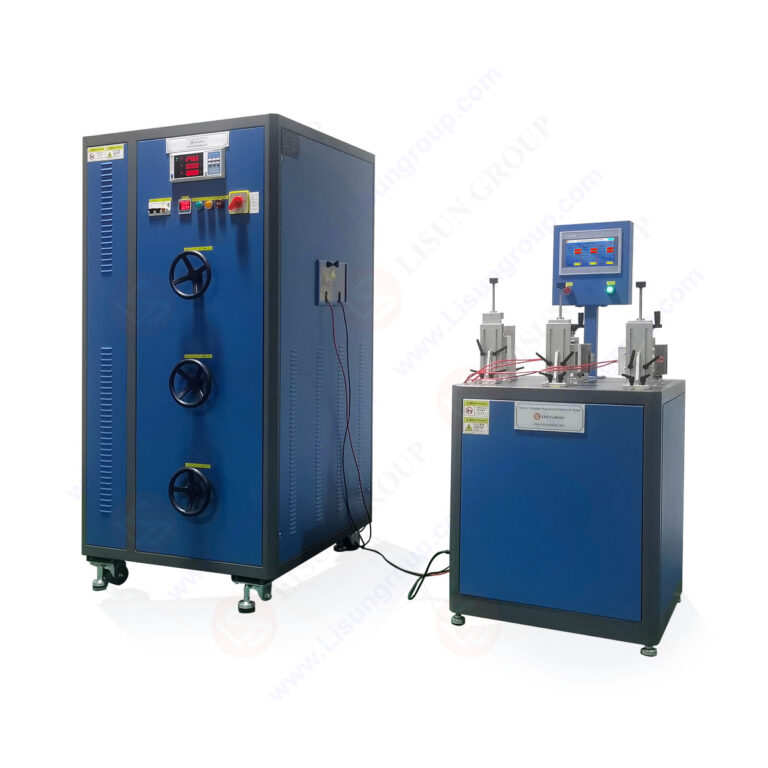
The LISUN CZKS-3 series employs a cylinder-driven actuation system controlled by a programmable logic controller (PLC). This design ensures repeatable stroke length and force application, critical for simulating real-world switch operation. The CZKS-3 base model supports single-station testing, while the CZKS-3P variant adds parallel testing capability for up to three specimens simultaneously. The CZKS-3S integrates an enhanced sensor suite for detecting microsecond-level contact bounce, and the CZKS-3A offers adaptive load control for complex automotive switching applications.
2.2 Electrical Monitoring and Failure Detection
Each CZKS-3 series unit incorporates real-time voltage, current, and resistance measurement across the switch contacts. Detection algorithms identify contact adhesion, arcing events, and abnormal resistance spikes that indicate impending failure. The system logs every cycle with time-stamped data, allowing engineers to reconstruct failure sequences and correlate them with mechanical wear patterns. This level of granularity supports root cause analysis for improving switch design, particularly under high-inductive loads where contact erosion accelerates.
3.1 Performance Parameters Across the CZKS-3 Series
The following table summarizes key technical specifications for the four primary models in the CZKS-3 series, highlighting differences in test capacity, load range, and monitoring capabilities.
| Parameter | CZKS-3 | CZKS-3P | CZKS-3S | CZKS-3A |
|---|---|---|---|---|
| Test Stations | 1 | 3 | 1 | 1 |
| Maximum Test Cycles | 100,000 | 100,000 | 1,000,000 | 100,000 |
| Load Current Range (A) | 0.1 – 20 | 0.1 – 20 | 0.1 – 30 | 0.1 – 50 |
| Contact Resistance Measurement (mΩ) | ±5 | ±5 | ±1 | ±2 |
| Actuation Stroke (mm) | 5 – 20 | 5 – 20 | 5 – 25 | 5 – 30 |
| Data Logging Interval (cycles) | 1 | 1 | 0.1 | 1 |
| Compliance Standards | IEC 60669-1, GB 16915.1-2024 | IEC 60669-1, GB 16915.1-2024 | IEC 60669-1, GB 16915.1-2024, IEC 61058-1 | IEC 60669-1, GB 16915.1-2024, Automotive Grade |
3.2 Selecting the Appropriate Model for Specific Testing Scenarios
For standard household switch testing per GB 16915.1-2024, the CZKS-3 provides sufficient capability with its 20-amp load range and 100,000-cycle capacity. Laboratories requiring higher throughput should consider the CZKS-3P, which triples testing efficiency without sacrificing accuracy. The CZKS-3S is optimized for precision-sensitive applications, such as verifying switch bounce time and contact resistance drift over extended test runs. For automotive electronics components, the CZKS-3A offers an extended current range up to 50 amps and adaptive load profiles that mimic real-world inductive circuits.
4.1 Mechanical Endurance Testing Protocol
Clause 20.1 of GB 16915.1-2024 specifies that switches must undergo mechanical endurance tests at a rate of 15 to 30 cycles per minute, with electrical loads applied for at least 50% of the total cycles. Using the CZKS-3 series, operators program the PLC to set actuation frequency, dwell time at open and closed positions, and load switching sequences. The cylinder-driven mechanism maintains consistent force output within ±2% tolerance, surpassing the standard’s requirement for repeatable operation. During the test, the system automatically halts upon detecting contact welding or excessive resistance, preventing specimen destruction and preserving forensic data.
4.2 Breaking Capacity Verification
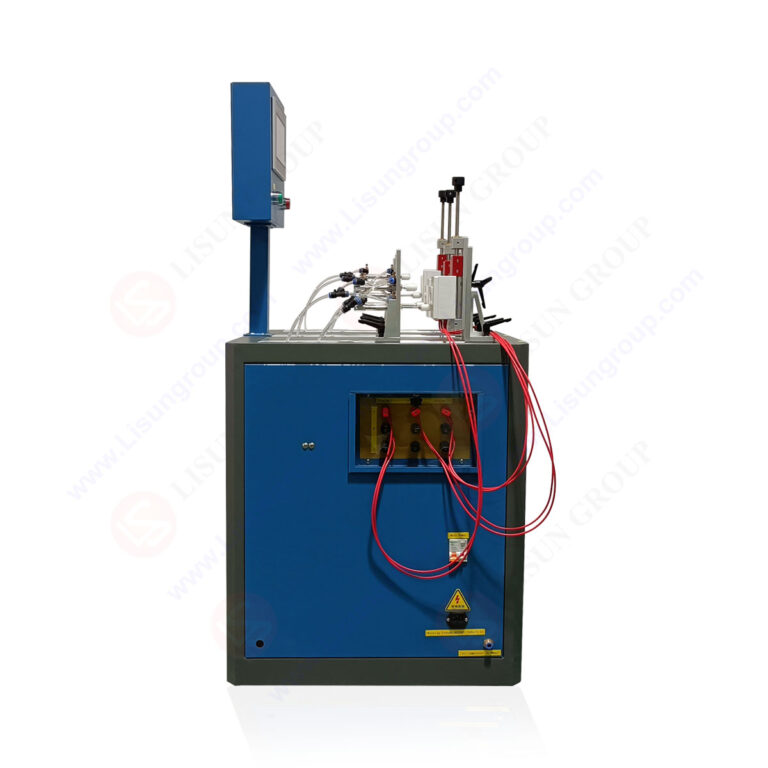
Breaking capacity testing under Clause 19 requires switches to interrupt a specified overload current without sustained arcing or mechanical damage. The CZKS-3A model, with its 50-amp capacity, excels in this domain by applying precise current profiles that ramp from nominal to 1.5 times the rated value. The sensor suite captures the arc extinction time and peak fault current, enabling direct comparison with GB 16915.1-2024 limits. For automotive-grade components, the adaptive load control simulates battery charging circuits and motor start-up transients, ensuring comprehensive coverage beyond standard household applications.
5.1 Alignment with IEC 60669-1 and IEC 61058-1
GB 16915.1-2024 draws heavily from IEC 60669-1 for general switch requirements and IEC 61058-1 for additional appliance switch safety. The CZKS-3 series is pre-configured with test profiles that map directly to these standards’ clauses, including Clause 14 for temperature rise testing and Clause 17 for abnormal operation. By using the CZKS-3S’s high-precision resistance measurement, laboratories can verify contact resistance stability across 100,000 cycles, a key metric for IEC 60669-1 Clause 15 compliance. The system’s firmware updates automatically incorporate new standard revisions, ensuring long-term regulatory alignment.
5.2 Cross-Referencing with GB/T 2099.1 and IEC 60884-1 for Socket Testing
While primarily designed for switches, the CZKS-3A variant can be adapted for socket breaking capacity tests per GB/T 2099.1 and IEC 60884-1. By adjusting the actuation fixture to grip socket inserts, the system applies mechanical extraction forces while measuring arcing duration and insulation breakdown. This dual functionality reduces capital equipment costs for laboratories that test both switches and sockets. The adaptive load control ensures that inductive and resistive load profiles correctly simulate typical household wiring scenarios, such as those involving fluorescent lighting or small motor-driven appliances.
6.1 Real-Time Monitoring and Alarming
The CZKS-3 series integrates with central laboratory information management systems (LIMS) via RS-485 or Ethernet interfaces. During a test run, the PLC transmits cycle count, resistance trends, and fault events at user-defined intervals. Operators can set threshold alarms for parameters such as peak contact temperature or on-state voltage drop, triggering automatic test suspension when limits are breached. This feature is particularly valuable for high-volume production testing, where early detection of process drift prevents large-scale non-conformance.
6.2 Post-Test Analysis and Reporting
After completing a test sequence, the system generates a compliance report in PDF or CSV format, summarizing pass/fail status for each specimen and highlighting any anomalies. The report includes graphical plots of resistance versus cycle number, arc energy distribution, and actuation force profiles. For the CZKS-3S, the report also details contact bounce duration and rebound characteristics, critical for assessing switch reliability in low-voltage digital circuits. This structured data supports both internal quality audits and external certification submissions.
7.1 Household and Commercial Electrical Components
In household applications, switches must endure 40,000 to 50,000 cycles under resistive loads like incandescent lighting or capacitive loads from LED drivers. The CZKS-3P, running three specimens simultaneously, completes a full GB 16915.1-2024 mechanical endurance test in under 40 hours, compared to 120 hours using manual methods. For commercial building switches with higher rated currents (16–20 amps), the CZKS-3A provides the necessary power handling capacity, ensuring that contact welding does not occur during inductive load interruptions.
7.2 Automotive Electronics Durability Verification
Automotive switches, such as those used in window lift controls or ignition systems, require testing under DC loads with pronounced inrush currents. The CZKS-3A’s adaptive load control replicates these conditions by adjusting current rise times and peak amplitudes based on pre-programmed vehicle bus signals. The system’s robust contact resistance measurement resolves changes as small as 2 milliohms, enabling detection of subtle degradation in silver-alloy contacts. By adhering to the cycle counts specified in automotive OEM standards and cross-referencing GB 16915.1-2024 principles, the CZKS-3A bridges the gap between consumer and transportation electrical safety requirements.
The LISUN CZKS-3 series provides a comprehensive, standards-compliant solution for GB 16915.1-2024 compliance solutions in mechanical switch durability and breaking capacity testing. By integrating PLC-controlled cylinder actuation, real-time electrical monitoring, and multi-standard support including IEC 60669-1, IEC 61058-1, and GB/T 2099.1, these systems address the full spectrum of testing needs from household components to automotive electronics. The CZKS-3, CZKS-3P, CZKS-3S, and CZKS-3A variants offer tailored capabilities for throughput, precision, and load range, ensuring that manufacturers and testing laboratories can achieve reliable, repeatable compliance verification. The ability to adapt to both Chinese national standards and international IEC frameworks makes the CZKS-3 series a valuable investment for organizations aiming to certify product safety and longevity in a competitive global market. By automating data collection and failure detection, these systems reduce manual oversight while increasing test accuracy, ultimately supporting faster time-to-market for safer switch designs.
Q1: How does the LISUN CZKS-3 series ensure compliance with the updated GB 16915.1-2024 standard for mechanical endurance testing?
A: The CZKS-3 series incorporates dedicated test profiles that align precisely with GB 16915.1-2024 Clause 20 requirements for mechanical endurance. The PLC-controlled cylinder actuation maintains a consistent actuation rate between 15 and 30 cycles per minute, as specified, while the load switching sequence automatically applies electrical stress for 50% of total cycles. Real-time contact resistance monitoring detects if values exceed the standard’s 100-milliohm limit, triggering automatic test suspension. Additionally, the system logs every cycle with timestamped voltage and current data, enabling post-test verification of compliance metrics such as arc duration and insulation breakdown voltage. For manufacturers seeking certification, the built-in report generator produces results in a format accepted by Chinese accredited testing laboratories.
Q2: Can the CZKS-3A model be used for socket breaking capacity testing per GB/T 2099.1 and IEC 60884-1?
A: Yes, the CZKS-3A can be adapted for socket breaking capacity testing through use of interchangeable actuation fixtures that grip socket inserts with adjustable force. The extended 50-amp current range covers typical household socket ratings, and the adaptive load control simulates both resistive loads (for general outlets) and inductive loads (for appliances with motors). The system’s real-time arc detection measures extinction time as per GB/T 2099.1 Clause 21, while the high-precision resistance tracking verifies contact welding thresholds. However, operators should verify that the fixture mechanical stroke and alignment meet the specific extraction angle requirements of IEC 60884-1 Clause 22.7. LISUN provides calibration services and fixture kits for seamless transition between switch and socket test modes.
Q3: What is the difference in precision between the CZKS-3S and the standard CZKS-3 models for contact bounce measurement?
A: The CZKS-3S is specifically optimized for high-precision contact bounce analysis, featuring a current measurement resolution of ±1 milliohm compared to ±5 milliohm in the standard CZKS-3. This improvement is achieved through a dedicated Hall-effect sensor and a faster analog-to-digital converter sampling at 100 kHz, versus 10 kHz in the base model. For contact bounce duration, the CZKS-3S can resolve events as short as 10 microseconds, critical for assessing switches in low-voltage digital control circuits. The standard CZKS-3 is adequate for most household switch applications where bounce times of 100 microseconds or longer are acceptable. Manufacturers of sensitive electronic switches or automotive controllers should specify the CZKS-3S to meet the stricter requirements of IEC 61058-1 Clause 18.2.2.
Q4: How does the CZKS-3P achieve parallel testing without compromising individual specimen monitoring?
A: The CZKS-3P uses three independently controlled actuation channels, each with its own PLC-managed cylinder and dedicated measurement circuit. While the system shares a common power supply and control interface, each channel maintains separate load banks and resistance monitoring paths to ensure specimen isolation. This design prevents a failure in one station from affecting adjacent tests, eliminating the risk of cascading data corruption. The software dashboard displays cycle counts and resistance trends for each channel in real time, with independent alarm thresholds. For GB 16915.1-2024 compliance, each channel logs data at the same 1-cycle interval as the single-station models. Throughput gains of up to 3x are achievable, provided that total facility power capacity supports three simultaneous load applications.
Q5: What maintenance procedures are recommended for the CZKS-3 series to ensure long-term accuracy in GB 16915.1-2024 testing?
A: Regular maintenance involves cleaning the actuation cylinder seals and lubrication every 500,000 cycles to prevent stroke drift exceeding ±2% tolerance. The contact resistance measurement probes should be calibrated using a certified milli-ohm meter every 6 months, with replacement of any probe tips showing wear over 0.1 mm. For the CZKS-3S, the high-speed sensor module requires recalibration annually to maintain ±1 milliohm accuracy. The PLC firmware should be updated to the latest version when GB 16915.1-2024 interpretations change, as LISUN releases patches within 30 days of standard amendments. O-ring replacement in the cylinder assembly is recommended every 200,000 cycles for continuous high-force applications. Following these procedures ensures that the test system delivers repeatable results for certification audits and avoids false pass/fail outcomes due to instrument wear.