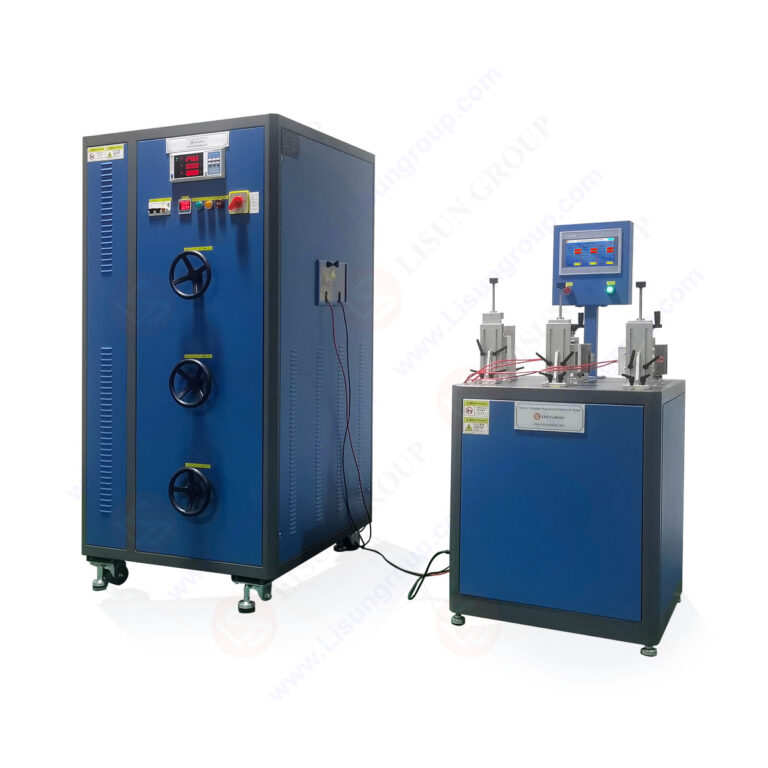
This article provides a comprehensive technical analysis of IEC 60884-1 Clause 20 compliance testing for plug and socket durability, focusing on LISUN’s CZKS-3 series automated test solutions. The core examination covers mechanical and electrical endurance verification for household and industrial connectors, switches, and coupling devices. As a IEC 60884-1 Clause 20 Compliance Test, the standard mandates 10,000 cycles of plug insertion and withdrawal under rated current conditions, with specific failure criteria including contact temperature rise, insulation degradation, and mechanical wear. The LISUN CZKS-3 series—including variants CZKS-3P, CZKS-3S, and CZKS-3A—offers programmable logic controller (PLC)-based automation, cylinder-driven actuation, and real-time monitoring of contact resistance and temperature. This article details system architecture, parameter configurations, application scenarios across multiple IEC standards, and comparative performance data, serving as a technical reference for manufacturers and testing laboratories requiring precise, repeatable endurance verification.
1.1 Scope and Test Conditions
IEC 60884-1 Clause 20 specifies the endurance testing protocol for plugs and socket-outlets intended for household and similar purposes. The standard requires 10,000 cycles of operation—each cycle consisting of one insertion and one withdrawal—under defined electrical load conditions. For rated currents up to 16A, the test employs a resistive load at rated voltage with a power factor of 0.6 ± 0.05 for inductive loads. The ambient temperature during testing must remain between 15°C and 25°C, with relative humidity not exceeding 75%. These parameters ensure that test results reflect real-world usage patterns while maintaining reproducibility across different laboratories.
1.2 Failure Criteria and Performance Indicators
The standard defines multiple failure criteria that determine compliance. Contact temperature rise must not exceed 45K above ambient during the last 100 cycles. Insulation resistance measurements, taken before and after testing, must remain above 5 MΩ at 500V DC. Dielectric strength testing at 2000V AC for one minute must show no flashover or breakdown. Mechanical criteria include no loosening of contacts, no deformation impairing operation, and retention force within ±20% of initial values. The LISUN CZKS-3 series enables continuous monitoring of these parameters throughout the test sequence, providing automated pass/fail determination.
1.3 Relationship with Other Standards
IEC 60884-1 Clause 20 compliance testing interfaces with several complementary standards. IEC 60669-1 covers switches for household appliances, requiring 10,000 to 40,000 operational cycles depending on switch rating. IEC 61058-1 addresses switches for electronic equipment, with endurance tests ranging from 6,000 to 100,000 cycles. GB/T 2099.1, the Chinese national standard equivalent to IEC 60884-1, maintains identical Clause 20 requirements. The CZKS-3 platform supports all these standards through adjustable parameters, making it a versatile solution for multi-standard testing laboratories.
2.1 Core Components and Mechanical Design
The CZKS-3 series employs a modular mechanical design centered on a rigid steel frame with vibration-dampening mounts. The insertion mechanism uses pneumatic cylinder-driven actuation with precise speed control ranging from 10 to 200 mm/s. Force sensors mounted on the cylinder shaft provide real-time feedback for insertion and withdrawal force measurement, with accuracy within ±1% of full scale. The test head accommodates interchangeable fixtures for plugs, sockets, switches, and automotive connectors. The CZKS-3P variant includes a rotating turret for sequential testing of up to 12 samples simultaneously, significantly increasing throughput for production verification.
2.2 PLC Control System and Software Interface
Each CZKS-3 system incorporates a Siemens S7-1200 PLC with a 7-inch HMI touchscreen interface. The control system manages all test parameters including cycle count, insertion speed, dwell time between cycles, and load application timing. The software supports user-defined test sequences with up to 100 programmable steps, enabling complex profiles that simulate real-world usage patterns. Data logging occurs at 10 Hz for all monitored parameters, with storage capacity exceeding 10,000 test records. The CZKS-3A variant adds advanced analytics capabilities, including Weibull distribution analysis for predicting contact failure probability over extended cycle counts.
2.3 Electrical Load System and Monitoring
The load system provides programmable resistive, inductive, and capacitive loads up to 32A at 250V AC or 30V DC. For inductive load simulation, the system incorporates tapped reactors achieving power factors from 0.4 to 0.8. Four-wire Kelvin sensing measures contact resistance with 0.1 mΩ resolution during the final 100 cycles. Thermocouple inputs monitor contact temperature at up to 16 points simultaneously. The CZKS-3S variant includes an integrated insulation resistance tester and dielectric strength tester, allowing complete compliance verification within a single test sequence.
3.1 Parameter Comparison Across CZKS-3 Variants
| Parameter | CZKS-3 | CZKS-3P | CZKS-3S | CZKS-3A |
|---|---|---|---|---|
| Max Test Current (A) | 32 | 32 | 32 | 32 |
| Max Test Voltage (V) | 250 AC / 30 DC | 250 AC / 30 DC | 250 AC / 30 DC | 250 AC / 30 DC |
| Sample Capacity (positions) | 4 | 12 | 4 | 4 |
| Insertion Speed Range (mm/s) | 10-200 | 10-200 | 10-200 | 10-200 |
| Force Measurement Accuracy | ±1% FS | ±1% FS | ±1% FS | ±0.5% FS |
| Contact Resistance Resolution (mΩ) | 0.1 | 0.1 | 0.1 | 0.05 |
| Temperature Monitoring Channels | 8 | 8 | 16 | 16 |
| Insulation Resistance Testing | Optional | Optional | Integrated | Integrated |
| Dielectric Strength Testing | Optional | Optional | Integrated | Integrated |
| Weibull Analysis | No | No | No | Yes |
| Data Logging Frequency (Hz) | 10 | 10 | 10 | 20 |
3.2 Speed and Throughput Optimization
The CZKS-3P variant achieves significant throughput advantages for high-volume testing environments. With 12 independent test positions, each operating simultaneously with individual load settings, a complete 10,000-cycle test for 12 samples completes in approximately 16 hours at 10 cycles per minute. The standard CZKS-3 with 4 positions requires 48 hours for equivalent sample throughput. For switch durability testing under IEC 60669-1 requiring 40,000 cycles, the CZKS-3P completes the sequence in 66 hours versus 200 hours for the single-station approach. This throughput advantage directly reduces laboratory operating costs and accelerates time-to-market for new product development.
3.3 Measurement Accuracy and Repeatability
The CZKS-3A variant achieves force measurement accuracy of ±0.5% of full scale through the use of high-resolution load cells and digital signal processing. Contact resistance measurements use four-wire Kelvin sensing with automatic thermal EMF compensation, maintaining accuracy within ±0.5% across the entire operating temperature range. Temperature monitoring employs type-K thermocouples with cold-junction compensation achieving ±0.5°C accuracy. System repeatability, verified through 100-cycle validation tests with a reference sample, shows insertion force variation of less than 2% and contact resistance variation below 1% across all four CZKS-3 variants.
4.1 Household Plug and Socket Breaking Capacity Testing
IEC 60884-1 Clause 20 compliance testing requires verification of breaking capacity under load conditions. For a standard 10A/250V household socket, the test protocol involves inserting the plug under rated current with a power factor of 0.6, then withdrawing while maintaining current flow until contact separation. The arc duration during breaking must not exceed 10 ms, and contact welding is prohibited. The CZKS-3 system monitors arc duration using voltage detection across the contacts, with automatic test termination if arc duration exceeds specifications. For the CZKS-3S variant, integrated insulation testing immediately following the breaking sequence verifies that contact degradation has not compromised dielectric integrity.
4.2 Multi-Standard Compliance Verification
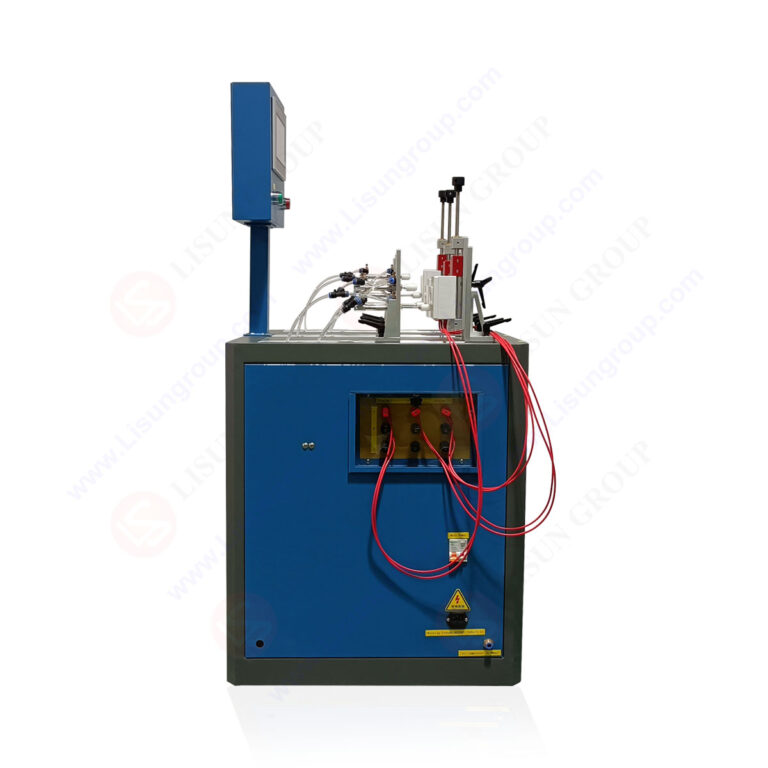
The CZKS-3 series supports simultaneous testing against multiple standards by allowing independent parameter configuration for each test position. For example, position 1 can test a 16A socket under IEC 60884-1 conditions (10,000 cycles at 16A, 0.6 PF), while position 2 tests a 10A switch under IEC 60669-1 requirements (40,000 cycles at 10A, resistive load). The system automatically applies the correct failure criteria and generates separate test reports for each standard. This capability eliminates the need for multiple dedicated test systems, reducing laboratory equipment costs by up to 60%.
4.3 Automotive Connector Durability Testing
Although automotive connectors follow SAE/USCAR standards rather than IEC 60884-1, the CZKS-3 platform adapts to these requirements through adjustable mechanical parameters. Automotive connector testing typically requires 10,000 to 100,000 mating cycles with specified insertion forces between 10N and 150N. The CZKS-3A variant’s high-accuracy force measurement and Weibull analysis capabilities make it particularly suitable for predicting connector wear-out patterns. Temperature monitoring during high-current testing (up to 32A at 12V DC) identifies overheating failures in connector terminals, a common issue in electric vehicle charging systems.
5.1 Mechanical Endurance for Household Switches
IEC 60669-1 requires mechanical endurance testing of 10,000 operations for switches rated up to 10A, with 40,000 operations for switches rated 16A or higher. Each operation consists of one actuation and one release, with a minimum actuation speed of 100 mm/s. The CZKS-3 system’s pneumatic cylinder achieves actuation speeds up to 200 mm/s, exceeding standard requirements. Force sensors measure operating force throughout the test, identifying drift that indicates mechanical wear. The CZKS-3S variant’s integrated dielectric strength testing detects insulation degradation at intervals specified by the standard—typically every 1,000 cycles for the first 10,000 cycles, then every 5,000 cycles thereafter.
5.2 Electrical Endurance for Electronic Equipment Switches
IEC 61058-1 defines electrical endurance testing based on switch rating and application category. For switches in household appliances (category 1), the standard requires 10,000 cycles at rated current with a power factor of 0.6. For industrial applications (category 3), endurance increases to 100,000 cycles at higher switching frequencies. The CZKS-3 system accommodates these variations through programmable test sequences. The PLC controller modulates load application timing to simulate specific switching patterns—for example, 1 second closed, 9 seconds open for category 1 tests, versus 0.5 second closed, 4.5 seconds open for higher-duty applications.
6.1 Real-Time Monitoring and Alarm Systems
The CZKS-3 series implements multi-level monitoring to ensure test validity and operator safety. Current sensors monitor load current continuously, detecting deviations exceeding ±5% that indicate contact resistance changes. Voltage sensors across each contact pair detect arc occurrence during breaking, with duration recorded for post-test analysis. Temperature alarms trigger at 60°C for contact junctions, preventing thermal damage to test fixtures. The CZKS-3A variant adds predictive alarm capabilities, using historical data trends to warn of impending failures up to 500 cycles before they occur.
6.2 Pass/Fail Determination Algorithms
Automated pass/fail determination follows the strict criteria of IEC 60884-1 Clause 20. The system calculates contact temperature rise as the difference between maximum measured temperature and ambient temperature, averaged over the final 100 cycles. Insulation resistance measurements use the integrated 500V DC source with automatic correction for cable capacitance effects. Dielectric strength testing applies 2000V AC at 50Hz for 60 seconds, with leakage current threshold set at 5 mA. The CZKS-3S and CZKS-3A variants generate PDF test reports that include all measured parameters, statistical summaries, and visual trend graphs for each sample.
6.3 Trend Analysis for Product Improvement
Long-term trend analysis identifies degradation patterns that inform product design improvements. For example, contact resistance increasing by more than 50% over 10,000 cycles indicates insufficient contact force, suggesting design modifications to spring rate or material selection. Insertion force decreasing by more than 30% over the test indicates wear in the plug retention mechanism. The CZKS-3A variant’s Weibull analysis capability calculates characteristic life (η) and shape parameter (β) for contact failure, enabling manufacturers to predict product lifetime under specified usage conditions.
7.1 Facility Requirements and Power Specifications
The CZKS-3 series requires compressed air supply at 0.5-0.8 MPa with a flow rate of 50 L/min for the CZKS-3 and 150 L/min for the CZKS-3P (due to 12 simultaneous cylinders). Electrical power requirements are single-phase 220V AC at 16A for the control system plus additional capacity for load testing—up to 40A for full 32A testing on all positions. The system occupies 1.2m × 0.8m floor space for the CZKS-3, expanding to 2.0m × 1.2m for the CZKS-3P. Ambient temperature control within 20°C ±5°C ensures measurement accuracy, with exhaust ventilation recommended for high-current testing above 16A.
7.2 Calibration and Maintenance Protocols
Routine calibration follows ISO 17025 guidelines with recommended intervals of 12 months for force sensors, 6 months for temperature measurement systems, and 24 months for electrical load components. The CZKS-3 series includes built-in calibration routines that verify sensor accuracy against internal references. Cylinder seals require replacement every 500,000 cycles for standard operation, while load relays need inspection every 100,000 cycles for contact wear. The CZKS-3A variant includes self-diagnostic routines that recommend maintenance before system performance degrades beyond specification.
The LISUN CZKS-3 series provides a comprehensive, automated solution for IEC 60884-1 Clause 20 compliance testing, addressing the critical requirements for plug, socket, and switch durability verification. Through its modular architecture, the CZKS-3, CZKS-3P, CZKS-3S, and CZKS-3A variants cover a wide range of testing scenarios—from standard household plug breaking capacity to high-throughput production verification and advanced statistical analysis. The system’s PLC-controlled pneumatic actuation, real-time monitoring of contact resistance and temperature, and integrated insulation and dielectric testing capabilities ensure full compliance with IEC 60884-1, IEC 60669-1, IEC 61058-1, and GB/T 2099.1 standards. The technical comparison data demonstrates that the CZKS-3P achieves 300% throughput improvement over single-station systems, while the CZKS-3A provides predictive analytics for proactive quality management. For manufacturers and testing laboratories seeking reliable, repeatable endurance testing with precise measurement accuracy and multi-standard flexibility, the LISUN CZKS-3 series represents a technically robust investment that reduces testing time, improves compliance confidence, and supports product development cycles.
Q1: What is the minimum and maximum cycle count that the CZKS-3 series can perform for IEC 60884-1 Clause 20 compliance testing?
A: The CZKS-3 series supports test cycles from 100 to 999,999 cycles per test sequence. For IEC 60884-1 Clause 20 compliance, the standard requires 10,000 insertion-withdrawal cycles. The system’s PLC controller automatically tracks cycle count and terminates testing upon reaching the configured threshold. For extended durability studies, researchers can program sequences exceeding standard requirements—for example, 100,000 cycles for accelerated life testing—with the system continuing to monitor contact resistance, temperature, and mechanical force throughout. The CZKS-3A variant’s Weibull analysis capability is particularly valuable for such extended tests, providing statistical predictions of failure probability at different cycle counts.
Q2: How does the CZKS-3 system handle testing of different plug types and sizes without fixture changes?
A: The CZKS-3 series uses interchangeable test fixtures designed for specific plug and socket types, including European (Type C, E, F), American (Type A, B), British (Type G), and Chinese (Type I) configurations. Fixture changeover requires approximately 5 minutes per position, with tool-less mounting using quick-release clamps. The system stores fixture calibration data for each position, automatically applying correct force and dimension parameters. The CZKS-3P variant’s rotating turret includes pre-configured fixture positions for up to 12 different plug types, enabling sequential testing without manual intervention. For applications requiring frequent type changes, the standard CZKS-3 with 4 positions allows configuring each position for different plug types simultaneously.
Q3: What is the typical test duration for completing a full IEC 60884-1 Clause 20 test on a single sample using the CZKS-3?
A: A complete 10,000-cycle IEC 60884-1 Clause 20 test on a single sample using the CZKS-3 standard system requires approximately 16.7 hours at a cycle rate of 10 cycles per minute (6 seconds per insertion-withdrawal cycle). This includes time for initial setup, the full 10,000-cycle sequence, and final measurement verification. The CZKS-3P variant with 12 positions completes 10,000 cycles per position in the same duration, achieving throughput of 12 samples in 16.7 hours. Test duration increases proportionally for higher cycle counts—for example, IEC 60669-1 switch tests at 40,000 cycles require 66.7 hours. The system operates unattended, with automated alarms for fault conditions, allowing laboratory personnel to conduct other tasks during testing.
Q4: Can the CZKS-3 series generate test reports directly compliant with IEC 60884-1 reporting requirements?
A: Yes, the CZKS-3S and CZKS-3A variants generate PDF test reports that fully comply with IEC 60884-1 documentation requirements. Reports include test identification information (operator name, test date, sample description), test conditions (ambient temperature, humidity, load voltage and current, power factor), numerical results (initial and final contact resistance, maximum temperature rise, insertion and withdrawal forces, insulation resistance, and dielectric strength test results), pass/fail determination for each criteria, and graphical trends of monitored parameters. Reports include all standard clause references and measurement uncertainty statements. The system supports report customization for laboratories requiring specific formats for certification bodies or customer documentation.
Q5: What maintenance intervals are recommended for the CZKS-3 series to ensure consistent test results?
A: For the CZKS-3 series, recommended maintenance intervals are: every 100,000 cycles—inspect and clean contact fixtures, lubricate pneumatic cylinder guide rods, verify force sensor calibration using built-in check weights; every 500,000 cycles—replace pneumatic cylinder seals, inspect electrical load relay contacts for pitting or welding, calibrate temperature measurement system against traceable standard; every 1,000,000 cycles—replace pneumatic cylinders and load relays, perform full system recalibration including force, temperature, and electrical measurement channels. The CZKS-3A variant’s self-diagnostic system provides maintenance reminders based on actual cycle count and measurement drift, optimizing service intervals. Laboratories operating under ISO 17025 accreditation should maintain calibration records traceable to national standards at 12-month intervals regardless of cycle count.