









Here is the comprehensive technical article on how to choose an RF Conducted Immunity Test System, focusing on the LISUN RFCI61000-6 series, structured according to your specifications.
Abstract
Selecting the appropriate RF conducted immunity test system is critical for achieving EMC compliance and ensuring product reliability. The LISUN RFCI61000-6 series provides a fully integrated solution for conducting immunity testing per IEC 61000-4-6, combining a signal source, power amplifier, and power meter into a single chassis. This expert guide details the system’s core capabilities, including its dual power variants (35W and 85W), multi-mode injection methods, and broad CDN compatibility. For EMC testing engineers and compliance specialists, understanding these technical parameters is essential for validating product immunity in industries ranging from medical devices and power equipment to LED manufacturing and new energy charging stations. This article provides the technical framework for making an informed investment in RF conducted immunity testing infrastructure.
1.1 Integrated Modular Design
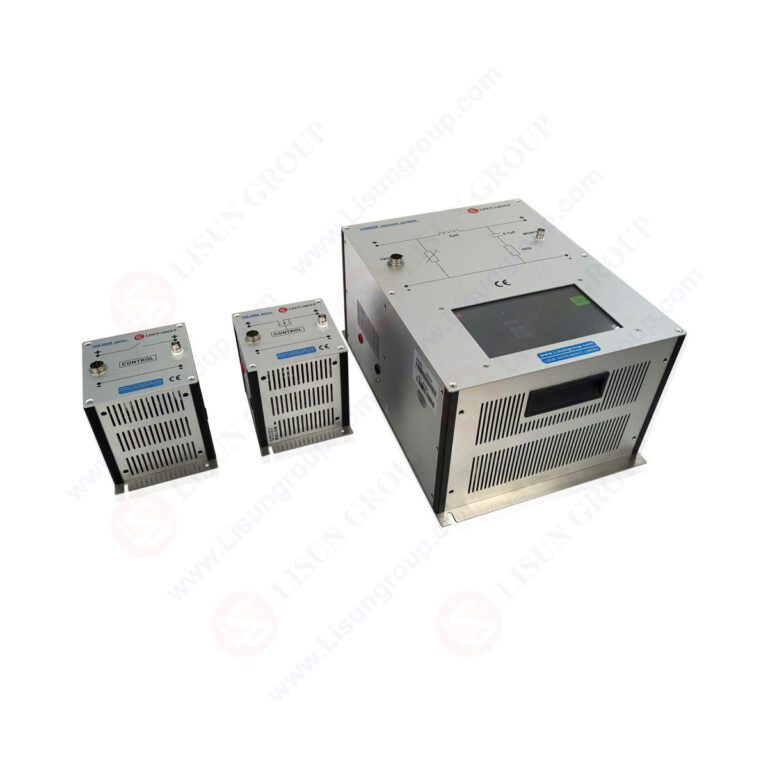
The LISUN RFCI61000-6 series distinguishes itself through a fully integrated architecture. Unlike traditional benchtop setups that require separate signal generators, power amplifiers, and power meters, this system consolidates all core functions into a single 4U chassis. This integration minimizes cable losses, reduces the potential for impedance mismatches, and simplifies the overall test setup. The system’s core includes a synthesized signal source covering the 150 kHz to 230 MHz frequency range, a high-linearity power amplifier, and a precision bidirectional power meter. This design ensures that the RF conducted immunity test system delivers a stable, calibrated disturbance signal directly to the EUT, meeting the stringent requirements of IEC 61000-4-6.
1.2 Dual Power Variants: 35W and 85W
A critical selection criterion is the required forward power. The LISUN RFCI61000-6-35W model provides a continuous output of 35W, sufficient for testing the majority of standard commercial products. For larger EUTs or those requiring higher test levels (e.g., Level 3 at 10V/m), the RFCI61000-6-85W variant offers the necessary headroom. The higher power model is particularly advantageous when using current injection clamps (CIC) or bulk current injection (BCI) probes, which have lower efficiency than direct CDN connections. The system’s automatic level control (ALC) maintains the set test level within a tolerance of ±1 dB, even when the EUT’s impedance varies during the test sequence.
1.3 Multi-Mode Injection and Modulation Capabilities
Compliance with IEC 61000-4-6 requires specific injection methods and modulation schemes. The LISUN RFCI61000-6 series supports all standard methods: direct coupling via CDNs, capacitive coupling (e.g., using EM clamps), and inductive coupling (BCI). The system integrates an internal AM modulator (80% depth at 1 kHz) and a pulse modulator necessary for certain application-specific standards. It also supports external modulation inputs for custom test profiles. The seamless switching between these modes without requiring hardware reconfiguration significantly reduces test time, a key benefit for high-throughput EMC laboratories.
2.1 Frequency Range and Output Power Validation
The system’s frequency range of 150 kHz to 230 MHz fully covers the standard conducted immunity band. For the lower portion (150 kHz to 80 MHz), CDNs provide efficient coupling. Above 80 MHz, the system relies on EM clamps or BCI probes. A key performance metric is the system’s voltage standing wave ratio (VSWR). The RFCI61000-6 series maintains a low VSWR of less than 1.5:1 across the entire frequency band. This low VSWR indicates an excellent impedance match between the amplifier and the load, minimizing reflected power and preventing damage to the amplifier, while ensuring that the required forward power is delivered to the EUT.
2.2 Technical Comparison Table
The following table provides a direct comparison between the two primary models against key performance and application metrics relevant to EMC immunity testing.
| Feature / Metric | LISUN RFCI61000-6-35W | LISUN RFCI61000-6-85W | Relevance to IEC 61000-4-6 |
|---|---|---|---|
| Output Power (CW) | 35 Watts | 85 Watts | Determines max test level for high-impedance EUTs. |
| Frequency Range | 150 kHz – 230 MHz | 150 kHz – 230 MHz | Covers full Clause 7.2 (IEC 61000-4-6) range. |
| Voltage Range (U0) | Up to 20V (less CDN loss) | Up to 40V (less CDN loss) | Ensures ability to reach Level 3 (10V) or Level 4. |
| Amplitude Modulation | 80% AM, 1 kHz Sine | 80% AM, 1 kHz Sine | Complies with Clause 7.3 (Modification of field). |
| VSWR (Typical) | < 1.5:1 | < 1.5:1 | Ensures low reflected power to amplifier. |
| CDN Compatibility | All LISUN CDNs (M1-M5) | All LISUN CDNs (M1-M5) | For direct injection per Table D.1 (Annex D). |
| Ideal Application | Consumer electronics, LED | Industrial control, Medical, EV | Higher power needed for complex EUTs. |
3.1 Coupling-Decoupling Network Selection
The selection of the coupling-decoupling network (CDN) is paramount for a valid test. The LISUN RFCI61000-6 series is designed to work seamlessly with a full suite of single and multi-phase CDNs (M1-M5 series). As per IEC 61000-4-6 Clause 7.2, the CDN must provide a defined common mode impedance (150 Ω) and sufficient decoupling between the RF port and the mains port. For a two-wire EUT, a CDN-M2 is required; for a single-phase product, a CDN-M1 or CDN-M3 is necessary. The integrated power meter in the RFCI61000-6 measures the forward and reflected power directly at the CDN input, allowing the software to automatically verify the calibration of the 6 dB attenuator required per the standard.
3.2 Injection Methods for Non-Standard Ports
When a EUT port lacks a dedicated CDN, alternative injection methods are required. The LISUN system supports the use of current injection clamps (CIC) and EM clamps. According to IEC 61000-4-6 Clause 7.1.2, these methods are preferred for testing cables that cannot be terminated with a standard CDN. The higher power capability of the 85W model is often critical when using these less efficient couplers. The system’s software guides the user through the calibration process, ensuring the injection probe is correctly set up and the forward power necessary to achieve the target disturbance voltage (e.g., 10V) is established prior to the formal test.
4.1 Core Standard: IEC 61000-4-6 and EN 61000-4-6
The primary design goal of the LISUN RFCI61000-6 series is full compliance with IEC 61000-4-6 and its European equivalent, EN 61000-4-6. This standard defines conducted immunity requirements for electrical and electronic equipment operating in the frequency range of 150 kHz to 80 MHz (extendable to 230 MHz). The system supports the standard’s required test levels (1, 3, 10V), modulation, and dwell times. The integrated power meter ensures the constant monitoring of the disturbance voltage U0 at the output of the CDN, fulfilling the requirement of Clause 4.2 regarding the calibration of the test setup.
4.2 Regional Compliance: GB/T 17626.6 and CISPR Specifics
For manufacturers targeting the Chinese market, compliance with GB/T 17626.6 is mandatory, which is technically identical to IEC 61000-4-6. The RFCI61000-6 series is fully compliant with this standard. Furthermore, the system is crucial for meeting the conducted immunity requirements of many CISPR (International Special Committee on Radio Interference) product family standards. For example, CISPR 14-1 and CISPR 15 for household appliances and lighting equipment require conducted disturbance immunity tests. The system’s modulation flexibility (e.g., AM, FM, Pulse) allows it to be adapted for these product-specific standards, ensuring a universal testing platform.
4.3 Application in Medical and Automotive Standards
Beyond generic EMC standards, the system supports testing for specific sectors. For medical devices, complying with IEC 60601-1-2 requires rigorous conducted immunity testing. The system’s ability to provide high test levels (10V in critical care) and precise level control is essential. For automotive components under CISPR 25, conducted immunity testing (BCI method) at various levels (100 mA or higher) is a critical test. The high current driving capability of the RFCI61000-6-85W model, combined with its pulse modulation mode, makes it suitable for replicating the complex electromagnetic environment of a vehicle’s power train and infotainment systems.
5.1 LED Manufacturing and Lighting Systems
In the LED lighting industry, compliance with EN 61547 (Immunity for lighting equipment) is mandatory. LEDs are particularly sensitive to RF interference, which can cause flicker or failure. The LISUN RF conducted immunity test system, paired with a CDN-M1 for mains connection, allows manufacturers to simulate conducted disturbances from nearby radio transmitters. The system’s ability to run automated dwell and frequency stepping routines ensures that all critical resonance points are accurately assessed, preventing field failures and warranty claims.
5.2 Power Equipment and New Energy Charging Stations
For power inverters, UPS systems, and Electric Vehicle (EV) charging stations, conducted immunity is a critical safety and performance requirement. These devices often operate at high power levels and are connected to long AC mains cables that act as effective antennas. The LISUN RFCI61000-6-85W variant provides the necessary power to test these large EUTs. Using a CDN-M3 or M4 for three-phase mains, engineers can verify that the control circuitry, communication ports, and charging interfaces remain operational under the severe conducted disturbances defined by IEC 61851 (Charging systems) and IEC 61000-6-4 (Immunity for industrial environments).
6.1 Automated Testing and Data Management
The LISUN RFCI61000-6 series features a robust software suite that automates test sequences per IEC 61000-4-6. The software controls the frequency stepping, dwell time, modulation, and level adjustments. It automatically logs forward and reflected power, calibration data, and EUT status. This automation is crucial for reducing human error and ensuring test repeatability. The system can generate comprehensive test reports that are acceptable for most regulatory bodies, saving significant time in the post-test documentation phase.
6.2 Human-Machine Interface and System Control
The user interface is built around a large, intuitive touchscreen display. It allows users to directly monitor system status, calibrate setups, and start standard pre-programmed tests. Key parameters like forward and reflected power are displayed in real-time, providing immediate feedback on the EUT’s response to the injected disturbance. The system also supports remote control via Ethernet or USB, allowing for integration into larger automated EMC test environments. This user-friendly design reduces the learning curve for new operators while retaining full manual control for complex, non-standard test scenarios.
7.1 Internal Power Measurement and Leveling
A key advantage of the integrated design is the built-in bidirectional power meter. This module provides continuous, real-time monitoring of the forward power (P_fwd) and reflected power (P_refl). The Automatic Level Control (ALC) process uses this data to adjust the signal generator output to keep the voltage at the CDN port constant across the entire frequency range. This internal calibration capability, when used with the external Leveling Procedure defined in IEC 61000-4-6, ensures that the disturbance voltage U0 is always maintained within the ±1 dB tolerance, a crucial requirement that many external, non-calibrated systems fail to meet.
7.2 Protecting the Investment
The LISUN RFCI61000-6 series is built for durability in a 19-inch rack-mountable chassis. Robust over-temperature, over-current, and high-VSWR protection circuits safeguard the power amplifier from damage during testing. The low VSWR design minimizes stress on the amplifier, extending its operational lifespan. Routine calibration is simplified by the system’s self-test and diagnostic features. For high-usage labs, this reliability translates to lower total cost of ownership and fewer downtime incidents, making it a dependable investment for long-term compliance testing.
The LISUN RFCI61000-6 series represents a significant advancement in integrated RF conducted immunity testing. By combining a signal source, power amplifier, and power meter into a single, automated platform, it addresses the critical need for efficiency, accuracy, and repeatability in EMC compliance validation. The availability of 35W and 85W models allows labs to scale their capability to match their testing portfolio, from simple LED drivers to complex medical power systems. Full compliance with international standards IEC 61000-4-6, EN 61000-4-6, and GB/T 17626.6, combined with robust CDN compatibility and multi-mode injection, ensures that the system can handle any conducted immunity test challenge. For technical professionals seeking a reliable, standards-compliant solution, this system provides the performance and long-term value necessary to ensure product success in today’s demanding electromagnetic environment.
Q1: What is the primary advantage of an integrated system like the LISUN RFCI61000-6 over a modular, component-based setup for RF conducted immunity testing?
A: The primary advantage is the elimination of manual interconnection and calibration. A modular system requires separate signal generators, amplifiers, and power meters, each with its own cables, power supplies, and calibration paths. The LISUN RFCI61000-6 integrates all these into a single chassis. This integration drastically reduces setup time and the risk of measurement errors caused by mismatched components or long, lossy cables. It also provides a single-point automatic leveling (ALC) loop that maintains the exact required disturbance level at the EUT interface, as per IEC 61000-4-6. For a high-throughput EMC lab, this translates to a 50-70% reduction in test cycle time compared to a traditional bench setup.
Q2: How does the RFCI61000-6 system handle the calibration required per IEC 61000-4-6, especially the 6 dB attenuator verification at the CDN port?
A: The calibration procedure is heavily automated. Per IEC 61000-4-6 Clause 4.2 and Annex B, the user must perform a leveling procedure to compensate for cable and CDN losses. The system’s software walks the user through this. First, it verifies the 6 dB attenuator’s integrity by comparing the forward power with and without it in the path. Then, it runs a frequency sweep with the CDN connected to a standard load (e.g., 50 Ω or 150 Ω) and records the forward power needed to achieve the target voltage (e.g., 10V) for each frequency point. This calibration data is stored and automatically recalled when the formal test begins, ensuring the disturbance voltage U0 is correct without manual adjustments during the test.
Q3: Can the LISUN RFCI61000-6-85W model be used for Bulk Current Injection (BCI) testing, and what are the power requirements?
A: Yes, the 85W model is particularly well-suited for BCI testing, which is common in automotive (CISPR 25) and industrial applications. BCI probes (injection clamps) have a much lower coupling efficiency than direct CDN connections. To inject a common-mode current of, for example, 200 mA into a cable bundle, a forward power of 10-30W is often required across a wide frequency range. The 85W model provides ample headroom to maintain a clean, low-distortion signal (critical for AM modulation) even when faced with the highly variable impedance of a cable harness. The system’s software includes specific test sequences for BCI, allowing you to set target current levels (e.g., CL from ISO 11452-4) and monitor the injected current in real-time.
Q4: What type of CDN selection is critical when testing a medical device according to IEC 60601-1-2?
A: For medical devices, CDN selection is critical and must adhere to the port requirements defined in IEC 60601-1-2. For the AC mains power port, a CDN-M1 (single-phase) or CDN-M3 (three-phase) is required. For signal/data ports that carry patient or physiological signals, a dedicated CDN-AF (with isolated patient circuit) or CDN-T for telecom ports must be used. The LISUN RFCI61000-6 system is compatible with all standard LISUN CDN models, including those specifically designed for medical applications. It is crucial to ensure the CDN is rated for the voltage and current of the medical device and that it provides the required common-mode impedance (150 Ω) at the EUT port, per Clause 7.2 of IEC 61000-4-6.