









Abstract
The LISUN RFCI61000-6 series RF Conducted Immunity Test System represents a comprehensive solution for EMC immunity testing equipment, addressing the critical need for reliable RF compliance validation across regulated industries. This integrated system combines a signal source, power amplifier, and power meter into a single platform, enabling precise conducted disturbance testing per IEC 61000-4-6. Available in 35W and 85W output power variants, the system supports frequency ranges from 150 kHz to 230 MHz with multiple modulation schemes. This article examines the technical architecture, operational capabilities, and compliance advantages of the RFCI61000-6 series, providing engineering professionals with detailed insights into system specifications, industry-standard alignment, and practical applications in LED manufacturing, medical devices, power equipment, and industrial control sectors.
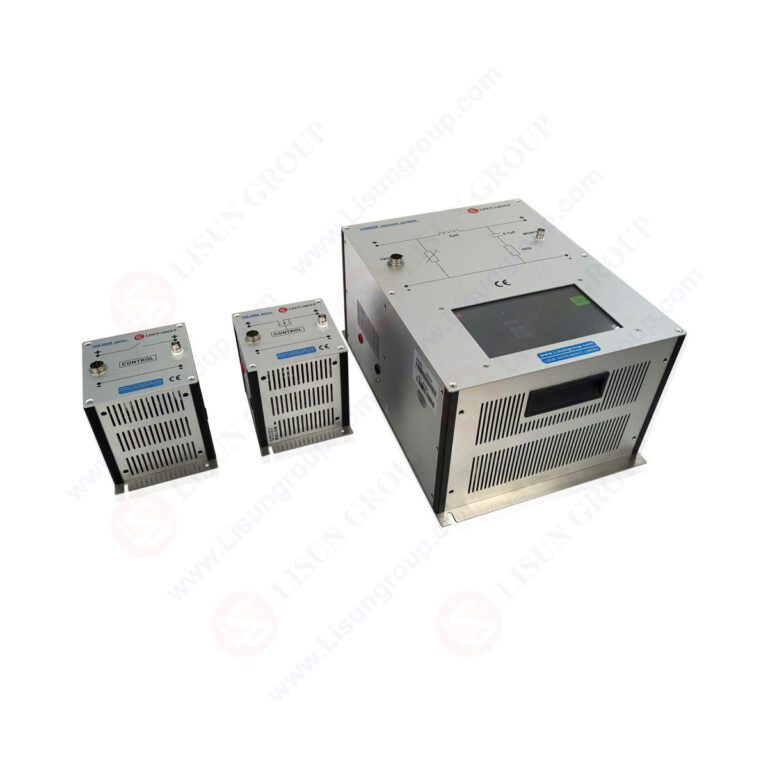
1.1 Integrated Signal Source and Amplifier Module
The RFCI61000-6 series integrates a synthesized signal generator and broadband power amplifier within a single chassis, eliminating the need for external RF sourcing equipment. The signal source delivers frequency resolution of 1 Hz across the full operating range of 150 kHz to 230 MHz, with output level accuracy maintained within ±1 dB. This integration reduces system complexity and minimizes cable losses that typically degrade measurement integrity in modular setups. The power amplifier section utilizes Class A linear amplification topology, ensuring low harmonic distortion and stable output across the entire frequency band. The 35W variant provides a minimum output of 35 watts at the RF output port, while the 85W model delivers 85 watts, accommodating higher injection requirements for large equipment under test (EUT) configurations.
1.2 Power Meter and Leveling Control
A built-in dual-channel power meter provides real-time monitoring of forward and reflected power, enabling automatic leveling control (ALC) to maintain consistent injection levels during testing. The power meter operates with a dynamic range of -30 dBm to +40 dBm and measurement accuracy of ±0.2 dB. This closed-loop feedback system compensates for impedance variations in the injection path, ensuring that the EUT receives the required disturbance level per IEC 61000-4-6 Clause 7.2. The system’s voltage standing wave ratio (VSWR) is maintained below 1.5:1 across the frequency range, minimizing power reflection and protecting the amplifier from damage under mismatched load conditions.
1.3 Touchscreen Interface and Automation Capabilities
The system incorporates a high-resolution touchscreen display for intuitive parameter configuration and real-time visualization of test progress. Operators can program frequency sweeps, modulation settings, and dwell times directly through the interface without external software. The touchscreen supports preloaded test templates aligned with IEC 61000-4-6 test levels 1 through 3, allowing rapid setup for compliance testing. For advanced automation, the system includes USB and Ethernet interfaces enabling remote control via SCPI commands, facilitating integration into automated test sequences for production compliance environments.
2.1 Coupling-Decoupling Network (CDN) Injection
The RFCI61000-6 series supports direct connection to standard coupling-decoupling networks (CDNs) for conducted immunity testing on power and signal ports. CDN injection is the primary method specified in IEC 61000-4-6 Clause 7.3.1 for testing equipment with dedicated RF ports or accessible cables. The system automatically adapts output power based on the CDN’s coupling factor, which typically ranges from 6 dB to 20 dB depending on the CDN type (e.g., CDN-M1 for mains, CDN-AF2 for signal lines). The integrated power meter measures the actual voltage developed at the CDN’s EUT port, ensuring compliance with the required test level of 1 V to 10 V (unmodulated) as specified in Annex B of the standard.
2.2 Electromagnetic Clamp (EMC) Injection
For cables that cannot be accessed with CDNs, the system supports injection via electromagnetic clamps, as described in IEC 61000-4-6 Clause 7.3.2. The clamp provides inductive coupling over a frequency range of 150 kHz to 230 MHz, with typical insertion loss between 15 dB and 25 dB. The RFCI61000-6 series compensates for this loss through its automatic leveling control, maintaining the required disturbance amplitude at the EUT terminals. The clamp method is particularly advantageous for testing multi-conductor cables where individual CDN connection is impractical, such as in industrial control systems with complex wiring harnesses.
2.3 Direct Injection and Bulk Current Injection (BCI)
Direct injection via a 100-ohm series resistor is supported for testing EUTs with coaxial ports or shielded cables, following the procedure in IEC 61000-4-6 Clause 7.3.3. The system’s low VSWR ensures minimal impedance mismatch when injecting directly into 50-ohm systems. Bulk current injection probes are also compatible, enabling testing on unshielded cables up to 400 MHz. The dual power variants allow engineers to select the appropriate power level: the 35W model suffices for typical direct injection setups, while the 85W model provides the headroom required for BCI at higher frequencies or with higher injection loss probes.
3.1 Amplitude Modulation (AM) and Pulse Modulation
The RFCI61000-6 series supports amplitude modulation at 1 kHz with 80% modulation depth, as mandated by IEC 61000-4-6 Clause 7.1 for conducted immunity testing. The internal modulator generates the sinusoidal modulating signal with less than 1% distortion, ensuring accurate reproduction of the disturbance waveform. For specific applications requiring pulse modulation, such as testing equipment for power quality compliance, the system provides adjustable pulse width from 1 µs to 100 ms and repetition rates from 0.1 Hz to 10 kHz. This flexibility allows testing against specialized disturbance profiles defined in product-specific standards like EN 55011 for industrial equipment.
3.2 Frequency Sweep and Step Modes
Engineers can select between continuous frequency sweeps or discrete step-and-hold modes for conducted immunity testing. The sweep mode automatically increments frequency at logarithmic intervals, typically 1% steps per IEC 61000-4-6 Clause 7.5, with dwell times adjustable from 0.1 seconds to 60 seconds per step. The step mode enables precise testing at critical frequencies identified during pre-compliance screening. The integrated power meter logs forward and reflected power at each frequency point, generating comprehensive test reports that document the disturbance level applied to the EUT. This data is essential for demonstrating compliance during certification audits against standards such as GB/T 17626.6 for the Chinese market.
3.3 Test Level Configuration and Calibration
The system supports preprogrammed test levels defined in IEC 61000-4-6 Table 1, ranging from Level 1 (1 V) to Level 3 (10 V), with corresponding current injection limits of 1 A to 10 A into a 150-ohm reference impedance. Calibration routines are built into the firmware, allowing operators to perform system verification using a 50-ohm power sensor as specified in Clause 6.3 of the standard. The calibration data is stored internally and can be recalled for traceability documentation. The 85W model extends the capability to Level 4 (30 V) for specialized industrial or military applications where higher disturbance levels are required.
4.1 IEC 61000-4-6 and EN 61000-4-6 Alignment
The RFCI61000-6 series is designed to fully comply with IEC 61000-4-6 Edition 5.0 (General and Residential Environments) and EN 61000-4-6 for European CE marking requirements. The system meets the frequency range requirements of 150 kHz to 80 MHz for standard testing, with an extended range to 230 MHz for specific product standards. Clause 7.1 of IEC 61000-4-6 specifies the use of 1 kHz AM at 80% modulation depth, which the system generates with less than 1% residual AM. The injection method selection per Clauses 7.3.1 through 7.3.4 is supported through the system’s modular output configuration, accommodating CDN, EM clamp, direct injection, and BCI probes.
4.2 GB/T 17626.6 Compliance for Chinese Market
For manufacturers targeting the Chinese market, the system supports GB/T 17626.6-2017, which aligns with IEC 61000-4-6 but includes additional Chinese-specific requirements. The RFCI61000-6 series meets the Chinese standard’s calibration procedures specified in Clause 7.6, which require verification of output voltage at 1 kHz AM and unmodulated carrier levels. The system’s built-in power meter directly measures the developed voltage at the EUT port, satisfying the measurement requirements of Annex C of GB/T 17626.6. This dual-standard compliance reduces testing duplication for global manufacturers exporting to both European and Chinese markets.
4.3 Product-Specific Standard References
The system supports testing against multiple product-family standards that reference IEC 61000-4-6 for conducted immunity. For LED lighting products, IEC 61547 requires conducted immunity testing at 3 V (Level 2) for residential applications. Medical devices per IEC 60601-1-2 require testing at 3 V or 6 V depending on the device classification and intended environment. Power equipment manufacturers follow IEC 61000-6-1 for residential environments or IEC 61000-6-2 for industrial environments, with test levels ranging from 3 V to 10 V. The dual power variants enable a single system to cover all these requirements by selecting the appropriate amplifier module.
5.1 RFCI61000-6 Model Variants
The following table provides a detailed comparison of the two power variants available in the LISUN RFCI61000-6 series:
| Parameter | RFCI61000-6-35W | RFCI61000-6-85W | Reference Standard |
|---|---|---|---|
| Output Power (CW) | 35 W minimum | 85 W minimum | IEC 61000-4-6 Clause 6.2 |
| Frequency Range | 150 kHz – 230 MHz | 150 kHz – 230 MHz | IEC 61000-4-6 Clause 5.1 |
| Output Impedance | 50 Ω | 50 Ω | – |
| VSWR (full band) | < 1.5:1 | < 1.5:1 | – |
| Harmonic Distortion | < -20 dBc | < -20 dBc | – |
| AM Modulation Depth | 80% at 1 kHz | 80% at 1 kHz | IEC 61000-4-6 Clause 7.1 |
| Forward Power Accuracy | ±0.5 dB | ±0.5 dB | – |
| Reflected Power Measurement | ±0.2 dB | ±0.2 dB | – |
| Maximum Test Level (CDN) | 10 V (Level 3) | 30 V (Level 4) | IEC 61000-4-6 Table 1 |
| Weight (approximate) | 22 kg | 28 kg | – |
5.2 Output Power Characteristics
The output power flatness across the frequency band is critical for consistent test results. The RFCI61000-6-35W maintains output power variation within ±1.5 dB from 150 kHz to 80 MHz, and within ±2.0 dB from 80 MHz to 230 MHz. The 85W model exhibits similar flatness with slightly higher variation at frequencies above 200 MHz due to amplifier bandwidth limitations. Both models incorporate pre-distortion compensation through digital signal processing, reducing amplitude ripple to below ±0.5 dB at the EUT port when used with calibrated CDNs. This performance ensures that the conducted immunity test profile meets the uniformity requirements of IEC 61000-4-6 Clause 7.5.
5.3 Comparison with Industry Test Requirements
The system’s output capability exceeds the minimum requirements for most commercial compliance testing. For LED lighting per IEC 61547, the required test level is typically 3 V, which the 35W model can deliver with 20 dB margin for CDN losses. Medical device testing per IEC 60601-1-2 requires 3 V or 6 V, achievable with either model. Industrial equipment per IEC 61000-6-2 requires 10 V, which the 35W model meets with 3 dB margin, while the 85W model provides 10 dB margin for robust testing with high-loss injection setups. For military-grade testing per MIL-STD-461 CS114, the 85W model supports testing up to 10 V/m equivalent field strength using BCI probes.
6.1 LED Lighting and Power Equipment Manufacturing
LED driver manufacturers require conducted immunity testing per IEC 61547 to ensure product reliability in residential and commercial installations. The RFCI61000-6 series, when paired with CDN-M1 for mains injection, can test LED drivers at Level 2 (3 V) across the 150 kHz to 80 MHz frequency range. The system’s automated sweep mode generates compliance reports documenting the disturbance level at each frequency, satisfying the documentation requirements of certification bodies. For power equipment such as variable frequency drives and UPS systems, the 85W model provides the headroom needed to test high-current EUTs where CDN losses are significant due to cable length and impedance mismatches.
6.2 Medical Device and Industrial Control Systems
Medical device manufacturers follow IEC 60601-1-2 Edition 4.0, which requires conducted immunity testing at 3 V for life-supporting equipment and 6 V for devices used in professional healthcare environments. The RFCI61000-6 series supports testing with CDNs for mains, signal, and data ports, covering all conducted paths identified in the standard. For industrial control systems, including programmable logic controllers (PLCs) and distributed control systems, the system tests against IEC 61000-6-2 Level 3 (10 V) using EM clamp injection on fieldbus cables. The 85W model is recommended for these applications due to the higher injection losses associated with long industrial cable runs.
6.3 New Energy Charging Stations and Communications Equipment
Electric vehicle charging stations must comply with IEC 61851-21-1, which references IEC 61000-4-6 for conducted immunity on AC and DC power ports. The RFCI61000-6 series, with its dual power variants, can test both residential chargers (Level 2) and commercial fast chargers (Level 3) using appropriate CDNs. The system’s frequency range up to 80 MHz covers all required test points. For communications equipment such as 5G base stations and fiber optic transceivers, testing per EN 300 386 requires conducted immunity at 3 V on DC power ports and signal lines, achievable with the 35W model using CDN-AF2 or CDN-T2 networks.
7.1 Automated Test Sequence Programming
The RFCI61000-6 series supports automated test sequence development through its SCPI command set. Engineers can program complete test campaigns containing multiple frequency sweeps, modulation types, and test levels using Python, LabVIEW, or C++ libraries. The system’s internal memory stores up to 100 user-defined test sequences, enabling rapid recall for recurring compliance tests. The automation capability is essential for production compliance testing where hundreds of EUT variants must be tested with minimal operator intervention. The system logs all test parameters and results in CSV format, compatible with statistical process control (SPC) tools for quality management.
7.2 Calibration and Verification Procedures
Regular calibration is required to maintain measurement traceability to international standards. The RFCI61000-6 series includes a calibration mode that guides operators through verification using an external power sensor and calibration kit. The recommended calibration interval is 12 months, with daily verification checks using a 50-ohm load to confirm output power consistency. The built-in power meter’s calibration is traceable to national standards through the system’s reference oscillator, which provides frequency stability of ±2 ppm per year. For ISO 17025 accredited laboratories, the system supports extended calibration with documented uncertainty budgets.
7.3 CDN and Probe Compatibility
The system is compatible with all standard CDN types defined in IEC 61000-4-6 Annex A, including CDN-M1/M2/M3 for mains, CDN-AF2/AF3 for signal lines, and CDN-T2/T4 for telecom ports. The automatic leveling control adapts to the coupling factor of each CDN type, which ranges from 6 dB for direct injection to 25 dB for high-loss networks. The system also supports third-party EM clamps and BCI probes from major manufacturers, provided they operate within the 150 kHz to 230 MHz frequency range. The 85W model is recommended for setups involving multiple CDNs or long cable runs where cumulative insertion loss exceeds 15 dB.
The LISUN RFCI61000-6 series RF Conducted Immunity Test System delivers a comprehensive, integrated solution for EMC immunity testing equipment, addressing the rigorous demands of global RF compliance validation. With dual power variants offering 35W and 85W output, the system covers test levels from 1 V to 30 V as specified in IEC 61000-4-6, EN 61000-4-6, and GB/T 17626.6. The integrated signal source, power amplifier, and power meter architecture reduces setup complexity while improving measurement accuracy through closed-loop leveling control. Multi-mode injection methods including CDN, EM clamp, direct injection, and BCI provide flexibility for testing diverse EUT types across LED manufacturing, medical devices, power equipment, industrial control, new energy charging stations, and communications sectors. The system’s automation capabilities, touchscreen interface, and comprehensive standard compliance make it a practical investment for laboratories and manufacturing facilities requiring reliable conducted immunity testing with documented traceability. Engineers evaluating RF conducted immunity solutions should consider the RFCI61000-6 series for its technical accuracy, operational efficiency, and alignment with current and emerging compliance requirements.
Q1: What are the primary differences between the RFCI61000-6-35W and RFCI61000-6-85W models for EMC immunity testing?
A: The primary difference lies in output power capability, which directly impacts the maximum achievable test level and the system’s ability to overcome injection losses. The 35W model delivers a minimum of 35 watts, sufficient for testing at IEC 61000-4-6 Levels 1 through 3 (1 V to 10 V) with standard CDN losses of 6 dB to 15 dB. The 85W model provides 85 watts, enabling Level 4 testing (30 V) and accommodating high-loss injection setups such as EM clamps with 25 dB insertion loss or long cable runs in industrial testing. Both models share identical frequency range (150 kHz to 230 MHz), modulation capabilities, and power meter accuracy specifications. For general-purpose compliance testing in LED or medical device sectors, the 35W model is cost-effective. For industrial, military, or high-power EUT testing, the 85W model provides necessary headroom.
Q2: How does the RFCI61000-6 series ensure compliance with IEC 61000-4-6 Clause 7.2 regarding injection level accuracy?
A: The system achieves compliance through its closed-loop automatic leveling control (ALC) mechanism, which continuously monitors forward and reflected power at the EUT port using a dual-channel power meter. The ALC adjusts the amplifier gain in real-time to maintain the required disturbance level, compensating for impedance variations caused by CDN coupling factors, cable losses, and EUT impedance changes. The power meter operates with ±0.2 dB measurement accuracy, while the overall system accuracy at the EUT port is maintained within ±1 dB across the full frequency range. The system also supports pre-test calibration using a 50-ohm reference power sensor per IEC 61000-4-6 Clause 6.3, establishing baseline correction factors for each frequency step. This combined approach ensures that the applied disturbance level meets the standard’s requirement of ±2 dB accuracy at the injection point.
Q3: What injection methods are supported by the RFCI61000-6 series, and how do engineers select the appropriate method for their EUT?
A: The system supports four injection methods as specified in IEC 61000-4-6 Clauses 7.3.1 through 7.3.4: CDN injection for power and signal ports with accessible connectors; electromagnetic clamp (EMC) injection for cables where CDN connection is impractical; direct injection via a 100-ohm series resistor for coaxial ports or shielded cables; and bulk current injection (BCI) using probes for unshielded cables up to 400 MHz. Engineers select the method based on EUT port type, cable accessibility, and frequency range requirements. CDN injection is preferred for mains and signal ports with standard connectors, as it provides the most direct coupling with known coupling factors. EM clamp is suitable for multi-conductor cables in industrial control systems. Direct injection is used for RF ports, while BCI is chosen for testing large cable bundles in automotive or aerospace applications.
Q4: How does the RFCI61000-6 series support testing to GB/T 17626.6 for the Chinese market alongside IEC 61000-4-6?
A: The system supports both standards through a unified test architecture that accommodates the specific calibration and test level requirements of GB/T 17626.6-2017. The Chinese standard follows IEC 61000-4-6 for basic test methods but includes additional verification procedures specified in Clause 7.6, which require measuring the developed voltage at the EUT port using a high-impedance probe. The RFCI61000-6 series’ integrated power meter can perform this measurement directly when configured with the appropriate CDN. The system’s preloaded test templates include a GB/T 17626.6 mode that adjusts sweep parameters to match the Chinese standard’s frequency step requirements and test level definitions. This dual-standard capability allows manufacturers exporting to both European and Chinese markets to perform a single test session, generating compliance data for both IEC and GB/T standards without duplicating test setups.