









Here is the comprehensive technical article on the LISUN RFCI61000-6 series RF Conducted Immunity Test System, structured according to your specifications.
Abstract
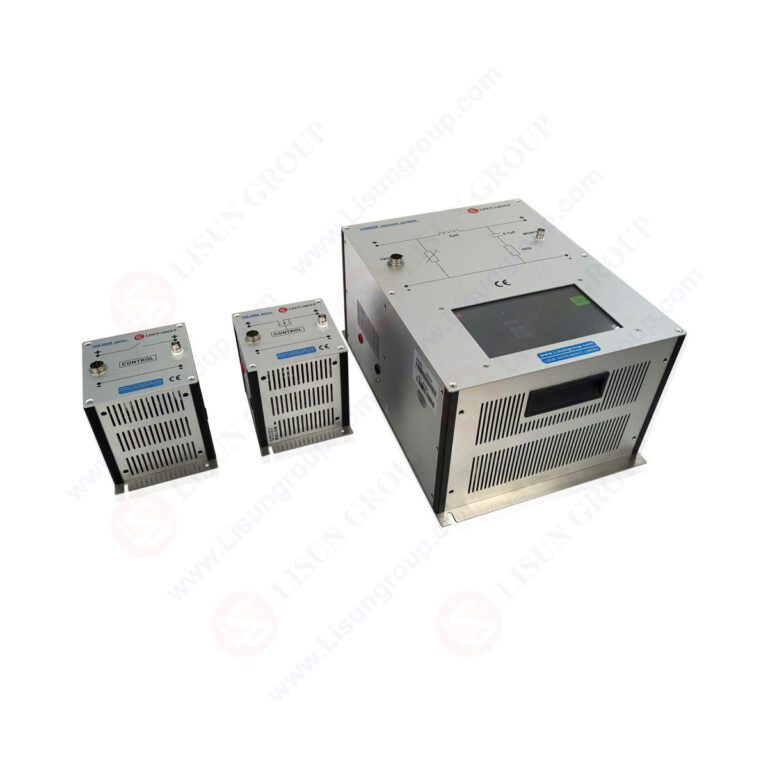
The LISUN RFCI61000-6 series RF Conducted Immunity Test System is a fully integrated solution designed to perform conducted RF susceptibility testing per IEC 61000-4-6 standards. This system combines a signal source, power amplifier, and power meter into a single, touchscreen-controlled chassis, available in 35W and 85W output power variants. It is engineered for EMC compliance testing professionals in industries requiring high reliability and precision, including medical devices, industrial controls, and LED manufacturing. By supporting multiple injection methods (CDN, current clamp, EM clamp) and a wide frequency range, the RFCI61000-6 series ensures rigorous conducted disturbance compliance validation for any equipment under test (EUT). This article details the technical architecture, operational capabilities, and application-specific advantages of this critical immunity testing platform.
1.1 Integrated All-in-One Design Philosophy
The LISUN RFCI61000-6 series distinguishes itself through a fully integrated architecture that consolidates a tracking generator, a high-linearity power amplifier, and a dual-channel power meter. This single-chassis design eliminates the common issues of impedance mismatch and cable loss variation associated with modular test setups. The system’s embedded controller manages all functions, reducing setup time and ensuring repeatable test conditions. This integration directly supports the core requirement of RF conducted immunity testing: maintaining a stable, calibrated disturbance voltage at the EUT port across the entire frequency range of 150 kHz to 230 MHz.
1.2 The RFCI61000-6-35W and RFCI61000-6-85W Variants
The series offers two primary models defined by their forward power output capabilities. The RFCI61000-6-35W provides adequate power for testing most commercial electronic devices up to a certain size and port count. The RFCI61000-6-85W model offers the higher headroom necessary for devices with lower impedance inputs or for testing multiple ports simultaneously via a single CDN. Both models feature a low voltage standing wave ratio (VSWR) of less than 1.5:1 across the test band, ensuring efficient power transfer to the coupling network.
1.3 Touchscreen Interface and Software Automation
A high-resolution touchscreen interface provides immediate access to test parameters, power monitoring, and frequency sweeps. The system includes internal firmware for pre-programmed test sequences based on the IEC 61000-4-6 standard. For advanced compliance testing, the unit interfaces with external PC software, allowing for automated pass/fail analysis, data logging, and report generation. This level of automation is critical for high-volume testing scenarios in quality control environments.
2.1 Injection Methods and Coupling-Decoupling Networks (CDN)
The RFCI61000-6 series is designed to work with a complete suite of coupling-decoupling networks (CDNs) as specified in IEC 61000-4-6 Section 6.2. The system supports injection methods CDN M1 (for single wires), CDN M2 (for balanced pairs), CDN M3 (for coaxial cables), and CDN-AF (for AC/DC power ports). The integrated power meter measures forward and reflected power at the input of the CDN, allowing the embedded closed-loop control algorithm to precisely set the disturbance voltage (e.g., 3V, 10V, or custom levels) on the EUT port.
2.2 Calibration and Level Setting (Closed-Loop Control)
The standard mandates a two-step process: calibration and testing. The LISUN system automatically performs the calibration step, connecting the power meter to the output of the CDN to measure the voltage level at the EUT port. The internal software calculates the required forward power needed to achieve the desired interference level (Vrms). During the actual conducted immunity testing, the system maintains this level by adjusting the amplifier gain in real-time, compensating for variations in the EUT’s impedance as the frequency sweeps from 150 kHz to 80 MHz.
2.3 Modulation Capabilities and Disturbance Waveforms
The system supports all required modulation types per IEC 61000-4-6, including 1 kHz amplitude modulation at 80% depth. Beyond this, it offers additional modulation modes such as pulse modulation and user-defined waveforms for rigorous susceptibility testing. The amplitude modulation is applied to the continuous wave (CW) carrier at a 1 kHz rate, which is the standard method for simulating human speech interference and other typical electromagnetic disturbances. The system’s low residual AM noise ensures that the specified test level is not exceeded unintentionally.
3.1 Frequency Range and Output Power Metrics
The system covers the full frequency range specified in the base standard: 150 kHz to 80 MHz, with an extended capability up to 230 MHz for specific applications. The power output characteristics are critical for coupling efficiency.
Table: Comparative Performance Metrics for LISUN RFCI61000-6 Models
| Parameter | RFCI61000-6-35W | RFCI61000-6-85W | Standard Requirement (IEC 61000-4-6) |
| :— | :— | :— | :— |
| Output Power (Front Panel) | 35 W (typical) | 85 W (typical) | N/A (Depends on CDN/EUT) |
| Forward Power (CDN Input) | 30 W (max) | 75 W (max) | Sufficient for 10V on EUT |
| Output Impedance | 50 ohms | 50 ohms | 50 ohms |
| VSWR (150 kHz – 80 MHz) | < 1.5:1 | < 1.5:1 | < 2:1 (Recommended) |
| AM Modulation | 1 kHz, 80% depth | 1 kHz, 80% depth | 1 kHz, 80% depth |
| Frequency Stability | < 1 ppm | < 1 ppm | Stable to < 50 ppm |
3.2 Voltage Standing Wave Ratio (VSWR) and Power Handling
Maintaining a low VSWR is paramount in conducted RF immunity testing. High VSWR indicates significant impedance mismatch, which can cause reflected power to damage the amplifier or invalidate the test level. The LISUN system’s VSWR specification of 1.5:1 ensures that the reflected power is less than 4% of the forward power. This allows the system to drive complex CDNs and EM clamps without requiring constant re-calibration, significantly improving test repeatability and reducing the risk of over-stressing the EUT.
3.3 Harmonics and Spurious Output
For accurate testing, the test signal must be clean. The RFCI61000-6 series incorporates a low-harmonic distortion design, with second and third harmonics typically 15 dB below the carrier. This is crucial when testing narrow-band devices that might respond to harmonics rather than the fundamental frequency, leading to false failure readings. The system also features a built-in attenuator to precisely control the output level from -10 dBm to the maximum rated power.
4.1 Alignment with IEC 61000-4-6 and EN 61000-4-6
The LISUN RFCI61000-6 series is designed to meet the requirements of IEC 61000-4-6 (Edition 5.0) and the harmonized European standard EN 61000-4-6. Specifically, the system addresses Clause 6.2 regarding injection methods, Clause 6.3 regarding test levels (1V, 3V, 10V), and Clause 6.4 regarding the frequency sweep. The built-in test sequences conform to the performance criteria defined in the standard, allowing users to set pass/fail thresholds based on the EUT’s functional status during the conducted RF immunity test.
4.2 Application of GB/T 17626.6 and ISO 7637
For the Chinese market, the system complies with the national standard GB/T 17626.6, which is the equivalent of IEC 61000-4-6. This is critical for compliance testing of equipment sold within China, such as medical devices listed under CFDA and industrial equipment for the CCC mark. Furthermore, the system’s frequency range and power capabilities allow it to be used for pre-compliance testing against portions of the ISO 7637 standard (Road vehicles — Electrical disturbances from conduction and coupling), particularly for transient immunity via CDN.
4.3 Testing to Performance Criteria A, B, and C
The system facilitates testing to three performance criteria. Performance Criterion A requires the EUT to continue operating as intended without any degradation during the test. Criterion B allows for temporary degradation that is self-recoverable after the disturbance is removed. Criterion C permits temporary loss of function which requires manual reset or operator action. The LISUN system helps engineers precisely apply the defined disturbance level to distinguish between these criteria, using the built-in monitoring ports for real-time analysis.
5.1 Medical Device EMC Testing
Medical devices must meet stringent immunity levels per IEC 60601-1-2, which references IEC 61000-4-6. The RFCI61000-6-85W is particularly suited for large medical equipment such as MRI systems, ventilators, and patient monitors. Its ability to deliver a stable 10V test level ensures compliance with the higher immunity requirements for life-supporting equipment. The system’s low leakage current design and safe operation are critical when testing equipment that directly interfaces with patients.
5.2 LED Lighting and Power Equipment Manufacturing
In the LED lighting industry, conducted RF immunity testing per EN 55015 (emissions) and the associated immunity standards is mandatory for CE marking. The LISUN system tests the driver circuits against interference injected via the AC mains port. For power equipment like inverters and variable frequency drives (VFDs), the system validates that the control electronics remain operational when subjected to high levels of RF disturbance on the power lines. The RFCI61000-6 series allows for easy integration into a production line testing environment, supporting the fast pass/fail verification required by quality control managers.
5.3 New Energy Charging Stations and Industrial Control
Electric vehicle (EV) charging stations must comply with both conducted emissions and immunity standards (IEC 61851-21-1). The RFCI61000-6 system tests the communication lines and power ports of the charging pile, ensuring that data protocols (e.g., PLC, CP/PE signals) are not corrupted by RF interference. In industrial control systems (PLCs, HMIs, and sensors), the system ensures robust immunity to interference from motors and switchgear, a critical factor for achieving the SIL (Safety Integrity Level) compliance in functional safety applications.
6.1 Simplified Setup and CDN Compatibility
The LISUN system features a user-friendly interface that automatically detects the CDN type and sets the appropriate calibration path. It supports both manual and automatic CDN switching via a multiplexer (optional), drastically reducing test time for multi-port devices. This plug-and-play functionality minimizes human error during setup, which is a common source of non-reproducible test results in RF immunity testing.
6.2 Data Logging and Report Generation
Integrated data logging capabilities store all test parameters, sweep results, and pass/fail data in a .csv or .pdf format. The software provides graphical plots of the disturbance voltage level vs. frequency, showing any deviations. This traceability is essential for audits by certification bodies (e.g., TUV, SGS). The report output directly supports the documentation requirements for CE marking, FCC testing, and other global compliance schemes.
7.1 Extendable Frequency Range
While the core standard requires testing up to 80 MHz, the LISUN RFCI61000-6 series provides an optional extension to 230 MHz. This is increasingly relevant for testing equipment that operates at higher frequencies or has cable resonances above 80 MHz. This capability allows the system to perform pre-compliance testing against future revisions of immunity standards that may extend the frequency range.
7.2 Software-Configurable Test Plans
The system allows users to create custom test plans by defining specific frequency points, dwell times, and level steps. This is crucial for R&D pre-compliance testing, where engineers need to identify specific resonant frequencies of the EUT. The memory can store hundreds of test plans, facilitating the testing of multiple product variants without re-entering parameters. The system also supports remote control via GPIB, USB, and Ethernet interfaces for integration into large automated test benches.
The LISUN RFCI61000-6 series RF Conducted Immunity Test System represents a robust, integrated solution for performing conducted disturbance compliance testing as per IEC 61000-4-6 and related standards. By combining a signal source, power amplifier, and power meter into a single, touchscreen-controlled chassis, it offers EMC testing engineers a significant advantage in test speed, repeatability, and ease of use. The dual power variants (35W and 85W), support for multiple CDN types, and precise closed-loop control ensure that any equipment under test, from medical devices to EV charging stations, can be rigorously validated. For quality control managers and R&D teams seeking a reliable and compliant path to market, the RFCI61000-6 series provides the technical depth and operational efficiency required for modern EMC testing.
Q1: What is the primary difference between the RFCI61000-6-35W and the RFCI61000-6-85W for EMC compliance testing?
A: The primary difference lies in their available forward power. The RFCI61000-6-35W is suitable for typical commercial devices where the injection point has a relatively high impedance (e.g., >50 ohms). The RFCI61000-6-85W is necessary when testing devices with lower input impedance (e.g., power supplies, motor drives) or when using a CDN with high insertion loss. It is also required to maintain a stable 10V test level across multiple ports simultaneously. Both models meet the core requirements of IEC 61000-4-6, but the 85W model provides the additional headroom required for high-power, large-scale equipment, ensuring that the defined interference level is maintained without amplifier saturation.
Q2: How does the system ensure accurate level setting during a conducted RF immunity test per IEC 61000-4-6?
A: The LISUN system employs a closed-loop control algorithm for accurate level setting. First, during the calibration phase, the internal power meter measures the voltage at the EUT port via the CDN. The system then calculates the required forward power to achieve the target Vrms level. During the test sweep (150 kHz to 80 MHz), the system continuously monitors the forward and reflected power at the CDN input. If the EUT’s impedance changes, causing the voltage to fluctuate, the system adjusts the amplifier gain in real-time to maintain the exact disturbance voltage. This compensates for the varying impedance of the EUT across the frequency range, a key requirement of Clause 6.4 of the standard.
Q3: Is the LISUN RFCI61000-6 series compatible with all types of Coupling-Decoupling Networks (CDNs)?
A: Yes, the system is designed with a universal 50-ohm output interface that is compatible with all CDNs specified in IEC 61000-4-6, including CDN-M1, M2, M3, AF, and T. It also works with current injection clamps (EM clamp) and bulk current injection (BCI) probes. The system’s software can be configured to identify the specific CDN model via a user-defined table, allowing it to apply the correct calibration factors. For high-throughput labs, an optional multiplexer interface is available to automatically switch between multiple CDNs, enabling the sequential testing of power, signal, and communication ports without manual cable reconnection.
Q4: What specific modulation capabilities does the RFCI61000-6 series offer for susceptibility testing?
A: The system provides 1 kHz amplitude modulation (AM) at 80% depth as specified in the main test standard. Additionally, it supports continuous wave (CW) testing, which is often used for pre-scanning to identify critical frequencies. For debugging and specific product standards, it can generate pulse modulation and custom waveform shapes. The system allows the user to switch between AM and CW mode within a single frequency sweep, which is useful for distinguishing between susceptibility to the carrier frequency itself versus the modulated interference. This flexibility ensures the system can meet both generic and product-specific immunity test requirements.