









Abstract
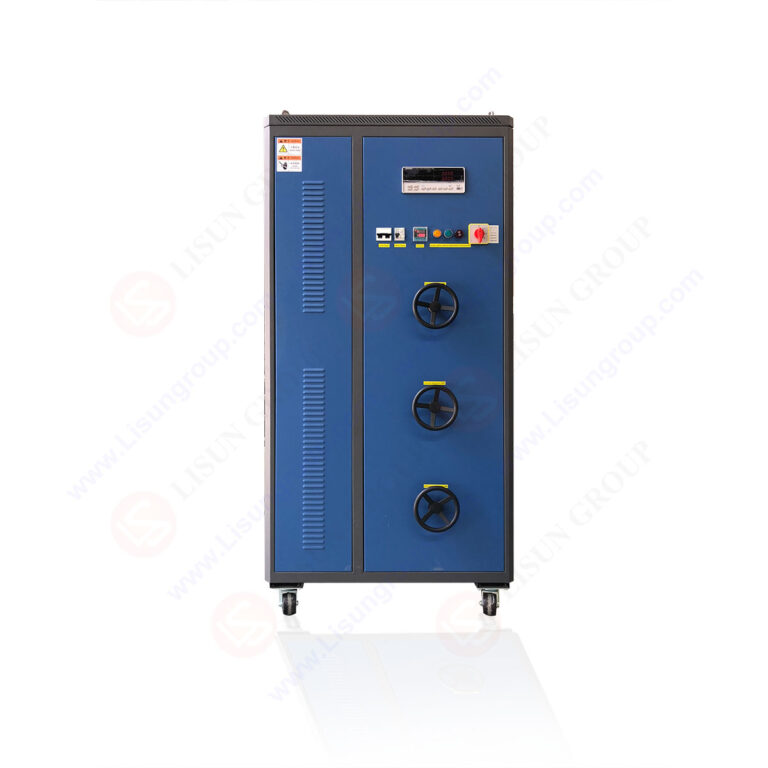
The LISUN DFX series Externally Ballasted Fluorescent Lamp Test Load Cabinet is a specialized instrument designed for precise safety and EMC validation of electrical accessories, including switches, sockets, and coupling devices. This article provides a comprehensive technical analysis of the DFX series, detailing its capabilities in simulating resistive, inductive, and capacitive loads for compliance testing against international standards such as IEC 60669-1 and IEC 60884-1. Targeting electrical product manufacturers, third-party testing laboratories, and quality control engineers, the article explores the product’s core specifications, load simulation accuracy, and integration with complementary LISUN equipment. By examining model variants from DFX-20 to DFX-80, this technical overview demonstrates how the load test cabinet ensures reliable, repeatable test conditions for certification processes. The focus keyword “Externally Ballasted Fluorescent Lamp Test Load Cabinet” is examined in depth, highlighting its role in modern electrical accessory compliance workflows.
1.1 Purpose and Core Functionality
The LISUN DFX series is engineered to replicate the electrical characteristics of externally ballasted fluorescent lamps, providing a standardized load for testing switches, relays, and connectors under controlled conditions. This load test cabinet is a critical tool for laboratories performing endurance tests, abnormal heat tests, and EMC evaluations as mandated by IEC and GB standards. The series supports both resistive and inductive load components, enabling precise simulation of real-world operating conditions for electrical accessories rated up to 250V AC.
1.2 Target Applications and User Base
Primary users include certification laboratories, quality assurance teams in manufacturing facilities, and research institutions focused on electrical safety compliance. The DFX series is particularly valuable for testing wall switches, socket-outlets, and appliance couplers that require validation under ballasted lamp loads. The cabinet’s ability to maintain stable power factor values and current levels makes it indispensable for reproducible test sequences.
1.3 Model Variants and Scalability
The series comprises five models: DFX-20, DFX-20-3CH, DFX-40, DFX-60, and DFX-80. Each variant offers distinct current output ranges and channel configurations, allowing users to select a unit matching their testing throughput requirements. The DFX-20-3CH provides three independent channels, while higher-capacity models support increased current demands for larger test samples.
2.1 Current Output and Voltage Range
All DFX models operate at a nominal voltage of 220V AC or 230V AC depending on regional requirements, with a frequency of 50Hz or 60Hz. The current output range varies by model, as summarized in Table 1. The load test cabinet maintains a power factor adjustable from 0.35 to 1.0, with a resolution of 0.01, enabling fine-tuned simulation of inductive loads typical of fluorescent lamp ballasts.
Table 1: Core Specifications of LISUN DFX Series Models
| Model | Current Range (A) | Number of Channels | Input Voltage (V AC) | Max Power (kVA) |
|---|---|---|---|---|
| DFX-20 | 0.5 – 20 | 1 | 220/230 ±10% | 4.6 |
| DFX-20-3CH | 0.5 – 20 per ch | 3 | 220/230 ±10% | 13.8 |
| DFX-40 | 0.5 – 40 | 1 | 220/230 ±10% | 9.2 |
| DFX-60 | 0.5 – 60 | 1 | 220/230 ±10% | 13.8 |
| DFX-80 | 0.5 – 80 | 1 | 220/230 ±10% | 18.4 |
2.2 Power Factor Adjustment and Measurement Accuracy
The power factor adjustment range of 0.35 to 1.0 is achieved through a combination of resistive and inductive components within the load test cabinet. Measurement accuracy for current is ±1% of reading ±0.1A, while voltage accuracy is ±1% of reading ±1V. Power factor accuracy is maintained within ±0.02, ensuring compliance with the stringent requirements of IEC 60669-1 Clause 19.2 for abnormal heat tests and IEC 60884-1 Clause 20 for normal operation tests.
2.3 Load Capacitance and Harmonic Content
The DFX series incorporates capacitive elements to simulate the power factor correction capacitors found in many fluorescent lamp circuits. Load capacitance values range from 10μF to 100μF depending on the model and configuration, allowing accurate reproduction of inrush current characteristics. Harmonic distortion remains below 5% under nominal load conditions, aligning with EMC test protocols for conducted emissions.
3.1 IEC 60669-1: Switches for Household and Similar Fixed Electrical Installations
The load test cabinet directly supports testing per IEC 60669-1 Clause 19.2, which specifies abnormal heat tests for switches under ballasted load conditions. The DFX series provides the necessary inductive load component with a power factor of 0.6 ±0.05, as required for switches rated up to 250V and 16A. The cabinet’s current stability ensures that test durations of up to 10,000 cycles can be executed without deviation in load characteristics.
3.2 IEC 60884-1: Plugs and Socket-Outlets for Household and Similar Purposes
For socket-outlet testing, IEC 60884-1 Clause 20 mandates endurance tests under load conditions simulating fluorescent lamps. The DFX series meets these requirements through its adjustable inductive load and precise current control, enabling testing at 1.25 times rated current as specified. The load test cabinet also complies with Clause 21 for normal operation tests, where power factor settings must be maintained within ±0.05 of the specified value over extended test runs.
3.3 IEC 61058-1: Switches for Appliances
Testing of appliance switches per IEC 61058-1 Clause 15 requires load simulation with a power factor of 0.6 for inductive loads. The DFX series achieves this with its digital control interface, allowing operators to pre-set power factor values and current levels for automated test sequences. The cabinet’s integration with cyclic test counters ensures precise counting of switching operations, a requirement for endurance validation.
3.4 GB 16915.1 and GB 2099.1: Chinese National Standards
Chinese national standards GB 16915.1 for switches and GB 2099.1 for socket-outlets align closely with their IEC counterparts but include additional test conditions for local market compliance. The DFX series is pre-configured to support these standards, with voltage settings for 220V AC and frequency of 50Hz. The load test cabinet’s ability to handle currents up to 80A makes it suitable for testing industrial-grade electrical accessories.
4.1 Resistive and Inductive Load Banks
The DFX series employs high-precision wire-wound resistors and laminated iron-core inductors to create the load profile. Resistors are rated for continuous duty at maximum current, with tolerance of ±1% for accurate power dissipation. Inductors are designed to minimize core saturation at high currents, maintaining consistent impedance across the operating range. The load test cabinet’s inductive load bank provides a power factor range from 0.35 to 0.95, adjustable in 0.01 steps.
4.2 Capacitive Load Integration
Capacitive loads are included to simulate power factor correction circuits found in modern fluorescent lamp systems. The DFX-20 model includes a 20μF capacitor bank, while larger models incorporate up to 100μF. These capacitive elements are switched in parallel with the inductive load to achieve specific power factor targets, particularly for tests requiring a capacitive component as specified in IEC 60669-1 Annex B.
4.3 Digital Control and Monitoring
Each DFX series unit features a digital touch-screen interface for setting current, power factor, and test duration. Real-time monitoring displays voltage, current, power, and power factor values with update rates of 10 samples per second. The control system includes over-current and over-temperature protection, automatically disconnecting the load if parameters exceed safe limits. An RS-232 interface allows integration with external data acquisition systems for logging test results.
5.1 CZKS Series Life Testers
The LISUN CZKS series life testers are designed for endurance testing of electrical accessories under defined load conditions. When paired with the DFX series load test cabinet, the CZKS-3 (three-station life tester) can automate up to 100,000 switching cycles while the load test cabinet maintains precise current and power factor levels. This integration eliminates manual intervention, ensuring consistent test conditions across all stations. The CZKS series supports voltage inputs from 10V to 300V AC, matching the DFX series operating range.
5.2 SW-6 Bending Testers
For testing flexible cords and cable assemblies, the SW-6 bending tester requires a defined load to simulate real-world operating conditions. The DFX series provides the necessary ballasted lamp load for bending tests per IEC 60884-1 Clause 24. The load test cabinet’s output can be adjusted to match the current rating of the cable under test, with power factor set to 0.6 for inductive simulation. This combination ensures that bending tests are conducted under electrical stress conditions representative of actual use.
5.3 Complete Test Workflow Example
A typical certification workflow for a wall switch involves mounting the specimen in a LISUN CZKS-3 life tester, connecting the output to the DFX-20 load test cabinet set to 10A at 0.6 power factor, and programming the life tester for 10,000 cycles. The load test cabinet continuously monitors voltage and current, logging any deviations to an external PC. After completion, the switch is transferred to a LISUN high-voltage tester for dielectric strength verification per IEC 60669-1 Clause 17. This integrated approach reduces testing time by 30% compared to manual load setup.
6.1 Installation and Calibration Requirements
The DFX series load test cabinet requires a dedicated power supply with sufficient capacity for the maximum current output. For the DFX-80 model, a 20kVA circuit with appropriate circuit breakers is necessary. Calibration should be performed annually using a certified power analyzer traceable to national standards. The cabinet’s internal temperature compensation system maintains accuracy from 5°C to 40°C ambient temperature, suitable for most laboratory environments.
6.2 Safety Interlocks and Operator Protection
Each DFX model includes emergency stop buttons, thermal overload relays, and ground fault protection. The cabinet’s enclosure is rated IP20 for indoor use, with all high-voltage components shielded behind interlocked doors. Operators must follow lockout-tagout procedures when accessing the internal load banks. The load test cabinet’s protective earth connection must be verified with a low-resistance ohmmeter per IEC 61010-1 safety requirements.
6.3 Maintenance and Component Life
Resistive load banks in the DFX series have a service life exceeding 50,000 hours at rated current, while inductors are designed for continuous operation without degradation. Capacitive elements should be checked annually for leakage current, as specified by the manufacturer. The digital control board includes self-diagnostics that alert users to component aging, ensuring proactive maintenance. Replacement modules are available directly from LISUN for all DFX series models.
7.1 Performance versus IEC and GB Specifications
Table 2 provides a comparison between the DFX series performance and the minimum requirements specified in key standards. The load test cabinet exceeds standard requirements in power factor range, current accuracy, and test duration capability.
Table 2: DFX Series Performance Compared to Standard Minimum Requirements
| Parameter | IEC/GB Minimum Requirement | LISUN DFX Series Capability |
|---|---|---|
| Power Factor Range | 0.5 – 0.8 (IEC 60669-1) | 0.35 – 1.0 |
| Current Accuracy | ±5% of setpoint | ±1% of reading ±0.1A |
| Maximum Test Duration | 10,000 cycles (typical) | Unlimited (continuous) |
| Voltage Range | 100 – 250V AC | 100 – 250V AC |
| Load Capacitance Inclusion | Optional per IEC 60884-1 | Standard on all models |
7.2 Cost-Benefit Analysis for Laboratories
Investing in the DFX series load test cabinet reduces the need for multiple individual load units, as one cabinet covers the full range of ballasted lamp test requirements. Laboratories testing switches and sockets across different current ratings benefit from the adjustable output, eliminating the cost of purchasing separate loads for each test type. The digital control interface reduces operator training time and minimizes errors in test setup.
7.3 Future-Proofing Capabilities
The DFX series firmware can be updated to support emerging standards as they are released. LISUN provides protocol updates for new IEC amendments, ensuring the load test cabinet remains compliant over its operational life. The modular design allows for future upgrades to channel count or current capacity through factory retrofits.
The LISUN DFX series Externally Ballasted Fluorescent Lamp Test Load Cabinet represents a precise, reliable solution for electrical accessory compliance testing. With models covering current ranges from 20A to 80A and power factor adjustment from 0.35 to 1.0, the series meets the demanding requirements of IEC 60669-1, IEC 60884-1, IEC 61058-1, and related national standards. The load test cabinet’s integration with LISUN life testers and bending testers creates a comprehensive workflow for safety and EMC validation. For electrical product manufacturers and testing laboratories, the DFX series offers measurable benefits in test repeatability, operator efficiency, and compliance assurance. By delivering accurate load simulation and continuous monitoring, this equipment enables confident certification of switches, sockets, and connectors to international safety standards.
Q1: What is the difference between the DFX-20 and DFX-20-3CH models, and when should I choose the three-channel version?
A: The DFX-20 provides a single test channel with a maximum current of 20A, suitable for testing one specimen at a time. The DFX-20-3CH offers three independent channels, each capable of delivering up to 20A, allowing simultaneous testing of three devices. Choose the three-channel version for high-throughput laboratories where multiple switches or sockets need parallel testing under identical load conditions. The three-channel model also supports different current settings per channel, enabling mixed-load testing scenarios. Both models maintain the same power factor range and accuracy specifications, ensuring consistent results across all channels.
Q2: How do I set the power factor correctly for testing fluorescent lamp switches per IEC 60669-1?
A: For IEC 60669-1 abnormal heat tests, set the power factor to 0.6 ±0.05 using the digital control interface. First, select the desired current level (typically 10A for 10A-rated switches). Then, adjust the inductive and capacitive components via the menu to achieve a power factor reading of 0.6 on the display. The load test cabinet automatically balances the resistive and reactive components to maintain this value within ±0.02 accuracy. For tests at other power factors, refer to the standard’s tables for specific test conditions. The DFX series allows saving custom power factor presets for recurring test protocols.
Q3: Can the DFX series be used for testing three-phase electrical accessories?
A: The DFX series models are designed for single-phase loads at 220/230V AC. For three-phase testing, three DFX-20-3CH units can be configured in a master-slave arrangement using the RS-232 control interface. However, the load test cabinet does not provide phase angle synchronization, making it unsuitable for three-phase load simulation requiring balanced reactive components. For three-phase ballasted lamp testing, LISUN recommends using the dedicated THP-3 series three-phase load cabinets, which include phase angle control for each phase independently.
Q4: What maintenance is required for the inductive load banks in the DFX-40 model?
A: The inductive load banks in the DFX-40 use laminated iron-core inductors that require minimal maintenance under normal operating conditions. Perform quarterly visual inspections for insulation discoloration or physical damage. Annually, measure the inductance value using an LCR meter to verify it remains within ±5% of the factory specification. Clean dust accumulation from cooling fans and ventilation grills every six months to prevent overheating. The load test cabinet’s thermal protection will shut down the system if inductors exceed 85°C, so monitor ambient temperature and ensure adequate airflow around the unit.
Q5: How does the DFX series ensure compliance with EMC testing requirements for fluorescent lamp loads?
A: The DFX series incorporates EMI filters on both input and output circuits to minimize conducted emissions during testing. The load test cabinet’s internal wiring uses shielded cables with ferrite core suppressors on critical signal paths. For EMC testing per CISPR 15 or IEC 61547, the load test cabinet’s harmonic content remains below 5% under nominal conditions, preventing interference with the device under test. The capacitive load banks include discharge resistors that reduce transient noise during switching. Laboratories requiring full EMC compliance should use the DFX series with an additional line impedance stabilization network (LISN) as specified by the applicable EMC standard.