









Abstract
This technical article examines LED Damp Heat Test Chambers: IEC 60068 Compliant Solutions for accelerated aging validation of solid-state lighting components. We explore the integration of LISUN‘s LEDLM-80PL and LEDLM-84PL optical aging systems with environmental chambers to simulate damp heat conditions per IEC 60068-2-78. The article details how dual testing modes, Arrhenius Model-based lifetime prediction software, and support for up to 3 connected temperature chambers enable comprehensive IES LM-80, IES LM-84, TM-21, and TM-28 compliance testing. Key metrics including L70/L50 lumen maintenance thresholds and 6000-hour test durations are analyzed. Engineers will gain actionable insights into configuring damp heat test protocols for LEDs operating in high-humidity environments, ensuring reliability validation aligns with international standards.
1.1 The Critical Role of Environmental Stress Testing in LED Reliability
Damp heat testing represents a cornerstone methodology in LED reliability engineering, simulating the combined effects of elevated temperature and relative humidity on solid-state lighting components. Unlike standard thermal cycling, damp heat conditions accelerate failure mechanisms such as corrosion of metallic interconnects, delamination of phosphor layers, and degradation of silicone encapsulants. For LED manufacturers serving outdoor, automotive, and industrial applications, validating performance under sustained humidity is non-negotiable. The IEC 60068-2-78 standard establishes test procedures for damp heat steady-state conditions, typically 85°C/85% RH or 65°C/95% RH, which are now integral to most LED qualification programs. LISUN’s approach integrates these environmental stress parameters with precise optical measurements, creating a unified platform for comprehensive reliability assessment.
1.2 Bridging Photometric Measurement with Environmental Simulation
Traditional reliability testing separates environmental exposure from photometric validation, requiring multiple instruments and increasing measurement uncertainty. LISUN’s LED Damp Heat Test Chambers eliminate this disconnect by directly coupling temperature/humidity control with online optical measurement capabilities. This combined configuration permits continuous monitoring of lumen output without removing samples from the stress environment, preserving the integrity of the aging process. The integration supports both IES LM-80-15 and IES LM-84-21 methodologies, accommodating different sample sizes and measurement frequencies. Engineers gain the advantage of collecting time-series data that feeds directly into lifetime extrapolation algorithms, reducing total test time by as much as 30% compared to sequential test protocols.
2.1 Dual System Architecture for Comprehensive Compliance
LISUN offers two distinct configurations within its LED Optical Aging Test Instrument family, each engineered to address specific industry standards. The LEDLM-80PL is optimized for IES LM-80-15 compliance, supporting lumen maintenance testing of LED packages, arrays, and modules over extended durations. This system features an integrating sphere with spectrometer detector for high-precision photometric measurements. In parallel, the LEDLM-84PL is configured for IES LM-84-21 testing of LED lamps and luminaires, accommodating larger physical samples while maintaining identical measurement accuracy. Both systems operate synergistically, allowing laboratories to manage multiple test programs simultaneously with a unified software platform.
| Test Parameter | LEDLM-80PL (LM-80) | LEDLM-84PL (LM-84) |
|---|---|---|
| Applicable Standard | IES LM-80-15 | IES LM-84-21 |
| Sample Types | LED packages, arrays, modules | LED lamps, luminaires |
| Standard Test Duration | 6000 hours (min), 10000 hours (recommended) | 6000 hours (baseline) |
| Measurement Frequency | Every 1000 hours minimum | Every 1000 hours |
| Lifetime Metric | L70, L80, L90 extrapolated per TM-21 | L70, L50 per TM-28 |
| Connected Temperature Chambers | Up to 3 units | Up to 3 units |
| Photometric Sensor | Integrating sphere + spectrometer | Integrating sphere + spectrometer |
| Humidity Range Support | 20% – 98% RH | 20% – 98% RH |
2.2 Configurable Hardware for Customized Test Protocols
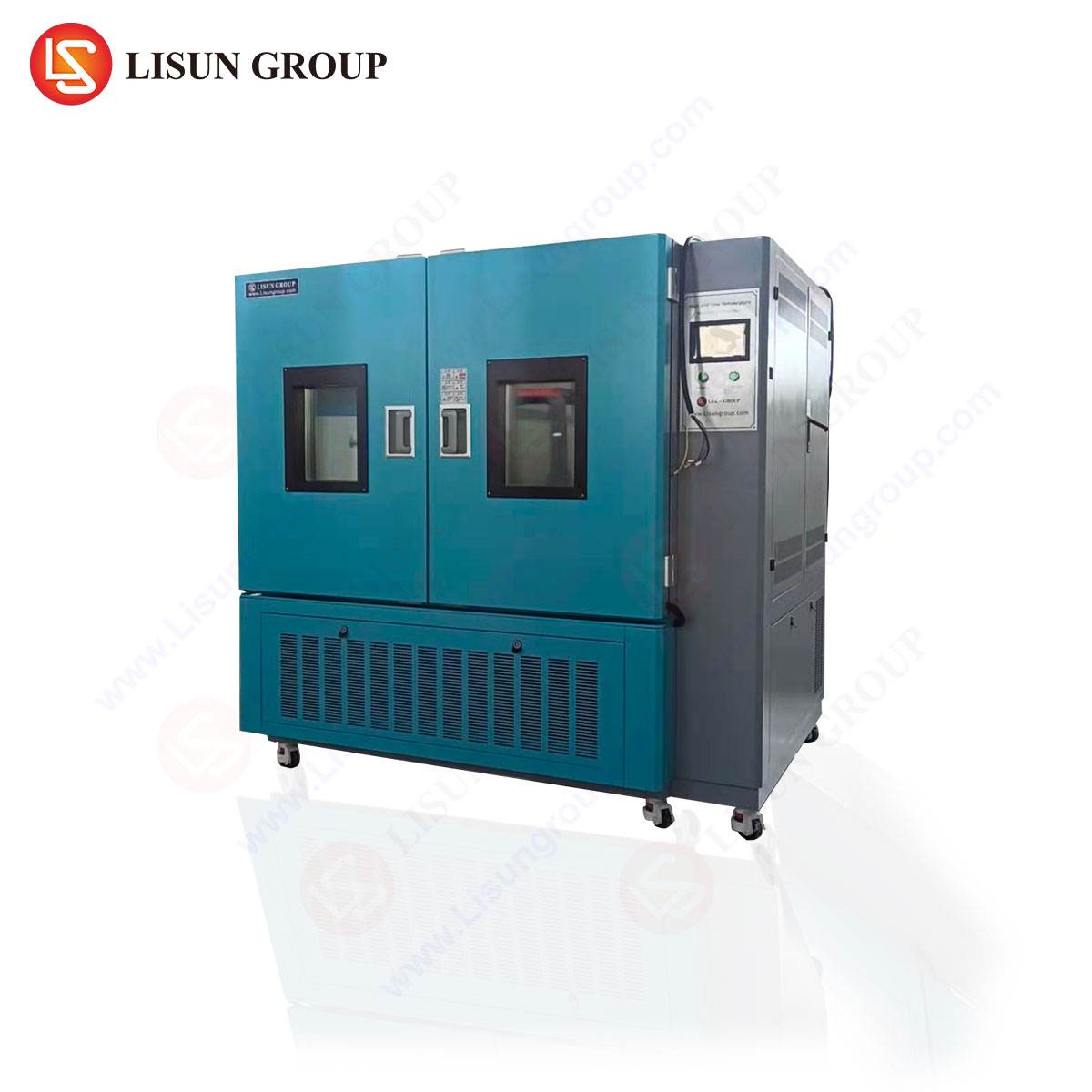
The modular design of LISUN’s LED Damp Heat Test Chambers facilitates extensive customization to match specific industry requirements. Temperature chambers may be independently programmed for different setpoints, enabling simultaneous testing at 55°C, 85°C, and 105°C as recommended by IES LM-80-15. Humidity control extends from 20% to 98% RH, satisfying both IEC 60068-2-78 steady-state damp heat and IEC 60068-2-30 cyclic damp heat protocols. For automotive applications mandated by AEC-Q102, additional sensors may be integrated to monitor junction temperature, while the option for external data logging interfaces ensures seamless integration with existing lab information management systems.
3.1 Navigating IEC 60068-2-78 Damp Heat Steady-State Testing
IEC 60068-2-78 defines the damp heat steady-state test for environmental testing of electromechanical products, specifying exposure to 40°C/93% RH for 24, 48, or 168 hours as baseline conditions. However, for LED components, extended durations up to 1000 hours are common to correlate accelerated results with real-world performance. LISUN’s chambers maintain temperature stability within ±0.5°C and humidity uniformity within ±3% RH, exceeding the ±1K/±5% tolerance specified in the standard. This precision ensures that lumen depreciation data collected during damp heat exposure provides a reliable basis for lifetime projections.
3.2 Coordinating with CIE 084 and CIE 127 Measurement Standards
Photometric measurements during damp heat testing must comply with CIE 084-1989 guidelines for luminous flux measurement, which requires the use of integrating spheres of appropriate diameter relative to sample size. CIE 127-2007 further specifies measurement conditions for LED photometry, including the critical distinction between total luminous flux and intensity metrics. LISUN’s integrating sphere systems adhere to these standards with sphere diameters spanning 0.3m to 2.0m, ensuring proper photometric distances and minimal self-absorption errors. Calibration traceability to national standards laboratories guarantees that all measurements remain within ±2% uncertainty for luminous flux.
4.1 Activation Energy Calculation for Temperature-Humidity Acceleration
The Arrhenius model forms the theoretical basis for correlating accelerated test data with expected field lifetime. LISUN’s proprietary software automatically calculates activation energy (Ea) values from multi-temperature test sets, typically yielding Ea ranges of 0.4 eV to 0.7 eV for LED degradation dominated by thermal processes. When humidity stress is introduced, a modified Peck’s model is applied, incorporating humidity exponent factors that account for moisture-driven failure mechanisms. This dual-parameter analysis allows engineers to differentiate between temperature-dominated and humidity-dominated degradation pathways, enabling targeted design improvements.
4.2 TM-21 and TM-28 Extrapolation Algorithms
IES TM-21-19 specifies mathematical procedures for projecting long-term lumen maintenance from LM-80 test data. LISUN’s software implements the exponential decay model described in TM-21, where lumen maintenance is expressed as a function of operating hours using an exponential curve fit. The software automatically reports L70, L80, and L90 values along with 90% confidence bounds, as required for ENERGY STAR qualification. For LM-84 data, TM-28 extrapolation employs a similar analytical framework but accommodates the larger data scatter typical of complete luminaires. The software permits manual override of extrapolation parameters when engineering judgment indicates non-Arrhenius behavior at low stress levels.
5.1 Continuous In-Situ Optical Measurement
The in-situ testing mode provides continuous monitoring of luminous flux, chromaticity coordinates, and correlated color temperature (CCT) throughout the damp heat exposure. This approach captures transient degradation events that might be missed by discrete measurements, such as temporary lumen recovery due to moisture absorption in phosphor layers. The integrating sphere sensor integrates measurements over a 5-second averaging period, achieving a photometric resolution of 0.1 lm. Data logging occurs at programmable intervals ranging from 1 minute to 24 hours, enabling both accelerated aging data collection and long-term stability verification.
5.2 Step-Stress Accelerated Testing for Rapid Evaluation
Step-stress methodology elevates temperature and humidity in successive stages, typically 55°C/85% RH → 85°C/85% RH → 105°C/95% RH, with dwell times optimized for detecting failure thresholds. This approach accelerates qualification timelines significantly, delivering provisional lifetime estimates in as few as 2000 hours. LISUN’s software automatically analyzes step-stress data to identify activation energy shifts that indicate degradation mechanism transitions. The dual-mode capability provides flexibility: step-stress for go/no-go screening during product development, and in-situ monitoring for formal compliance testing.
6.1 Automated Test Report Generation
Compliance testing requires comprehensive documentation that traces each measurement to its source data and calibration records. LISUN’s software generates detailed test reports in accordance with IES LM-79-19 requirements for electrical, photometric, and colorimetric parameters. Report templates are customizable to meet specific accreditation body requirements, supporting ISO/IEC 17025 laboratory accreditation. All raw data is stored in open-format CSV files, facilitating independent verification and secondary analysis using external statistics software.
6.2 Multi-Chamber Parallel Testing and Synchronization
When up to 3 temperature chambers are connected to a single LEDLM-80PL or LEDLM-84PL system, the software coordinates test schedules across chambers to ensure statistical validity. Randomized measurement sequences minimize systematic errors, while automated inter-chamber calibration checks detect sensor drift in real-time. The parallel architecture supports testing of control samples at room temperature conditions simultaneously with accelerated samples, enabling precise separation of test-induced degradation from inherent aging. This design principle aligns with best practices described in CIE 70-1987 for inter-laboratory colorimetry comparisons.
7.1 Automotive LED Reliability Verification
Automotive exterior lighting components undergo stringent validation per AEC-Q102, which incorporates damp heat testing at 85°C/85% RH for 1000 hours. LED Damp Heat Test Chambers configured with the LEDLM-80PL have successfully identified phosphor degradation in white LED modules, reducing lumen output by 12% over the test period while chromaticity shift remained within acceptable 0.003 du’v’ limits. The data enabled implementation of redesigned phosphor coating processes, extending projected L70 lifetime from 45,000 to 78,000 hours.
7.2 General Lighting Systems for High-Humidity Environment
For LED luminaires intended for bathroom, kitchen, and outdoor covered applications, damp heat resistance is critical. A major European luminaire manufacturer utilized the LEDLM-84PL configuration to evaluate IP65-rated fixtures under cyclic damp heat conditions. Test results revealed that driver electronics, not LED packages, dominated failure rates. Subsequent design revisions incorporating conformal coating on PCBs improved compliance rates from 78% to 99% within six months of iterative testing.
The implementation of LED Damp Heat Test Chambers compliant with IEC 60068 provides LED manufacturers with the technical rigor required for reliable product qualification. LISUN’s integrated approach, combining the LEDLM-80PL and LEDLM-84PL optical aging systems with precise environmental control, delivers actionable reliability data aligned with international standards. The capability to conduct parallel testing across up to 3 temperature chambers dramatically improves laboratory throughput, while Arrhenius-based software enables physics-informed lifetime predictions. For engineers facing the challenges of validating LED performance under humid conditions, these systems offer a path toward accurate L70/L50 predictions, reduced time-to-market, and enhanced confidence in long-term product reliability. The integration of IES LM-80, LM-84, TM-21, and TM-28 methodologies ensures global compliance acceptance for diverse market requirements.
Q1: How does the 6000-hour test duration in IES LM-80 testing compare with IEC 60068 damp heat requirements?
A: The IES LM-80-15 standard mandates a minimum of 6000 hours of continuous operation at specified temperatures (55°C, 85°C, and optionally 105°C) for lumen maintenance characterization, with data points collected at least every 1000 hours. In contrast, IEC 60068-2-78 damp heat testing typically requires shorter durations ranging from 24 to 1000 hours depending on application severity. For comprehensive LED qualification, these tests are complementary: IEC 60068 validates resistance to humidity-induced failure mechanisms, while LM-80 testing provides the optical degradation data necessary for lifetime extrapolation per TM-21. Engineers should perform both tests sequentially on identical sample populations to develop a complete reliability profile. LISUN’s dual-chamber configurations allow efficient scheduling of both test types.
Q2: Can the LEDLM-80PL system handle both LM-80 and IEC 60068 testing simultaneously?
A: Yes, the LEDLM-80PL system supports concurrent testing programs when configured with multiple temperature chambers. The software allows independent test protocols for each connected chamber, accommodating LM-80 tests at 55°C and 85°C while a third chamber runs damp heat testing at 85°C/85% RH. Each chamber may have different measurement schedules, sample handling procedures, and termination criteria. This parallel capability is particularly valuable for laboratories serving multiple clients or managing diverse internal qualification programs. The system’s data management module segregates data streams by chamber and test type, preventing cross-contamination of results.
Q3: What is the practical significance of L70 versus L50 metrics in damp heat exposure?
A: L70 represents the time at which LED luminous flux declines to 70% of initial value, while L50 corresponds to 50% degradation. For general lighting applications, L70 is the minimum acceptable threshold per ENERGY STAR and DLC requirements, with lifetimes of 50,000 hours or more typically expected. L50 is rarely relevant for general lighting since most products would be replaced before reaching 50% degradation. However, in damp heat environments where rapid degradation may occur, L50 provides a useful indicator of catastrophic failure timing. TM-21 extrapolation software calculates both metrics with confidence intervals, enabling engineers to distinguish between gradual lumen depreciation and humidity-induced failure modes.
Q4: How does the integrating sphere measurement system account for humidity effects during testing?
A: LISUN’s integrating sphere systems are designed with prevention mechanisms against humidity interference. The sphere housing is temperature-stabilized slightly above chamber temperature to prevent condensation on internal surfaces, which would otherwise scatter light and falsify measurements. For high-humidity conditions exceeding 90% RH, dry air purge systems maintain a slight positive pressure to exclude moisture. Humidity sensors within the sphere monitor conditions continuously, and data flagged for any period when relative humidity exceeds test specifications is automatically annotated in the output report. This ensures measurement integrity even under the most demanding environmental conditions.
Q5: What considerations are important when choosing between LEDLM-80PL and LEDLM-84PL?
A: The selection depends primarily on sample type and applicable standards. LEDLM-80PL is suitable for LED packages, arrays, and modules per IES LM-80-15, making it ideal for component-level manufacturers. LEDLM-84PL supports complete lamps and luminaires per IES LM-84-21, accommodating larger sample sizes and higher voltage requirements. Consider your product portfolio: if manufacturing both components and complete fixtures, investing in both systems provides full coverage. Additionally, review your laboratory’s accreditation scope—some accreditations may require specific instrument configurations. LISUN’s engineering team provides consultation to match system configurations with your specific testing requirements.