









Abstract
This technical article provides a comprehensive examination of LED humidity testing in accordance with IEC 60068-2-78 standards, emphasizing its critical role in validating LED reliability under damp heat conditions. We explore how LISUN’s LEDLM-80PL and LEDLM-84PL optical aging test instruments integrate humidity testing protocols with IES LM-80, IES LM-84, TM-21, and TM-28 standards to deliver robust lumen maintenance predictions. The article discusses Arrhenius Model-based accelerated aging methodologies, dual testing modes, and customizable hardware configurations supporting up to 3 connected temperature chambers. Technical professionals will gain actionable insights into implementing 6000-hour test durations, interpreting L70/L50 metrics, and ensuring compliance with international reliability standards. This resource bridges the gap between theoretical humidity testing requirements and practical laboratory implementation.
1.1 The Importance of Humidity Stress Testing
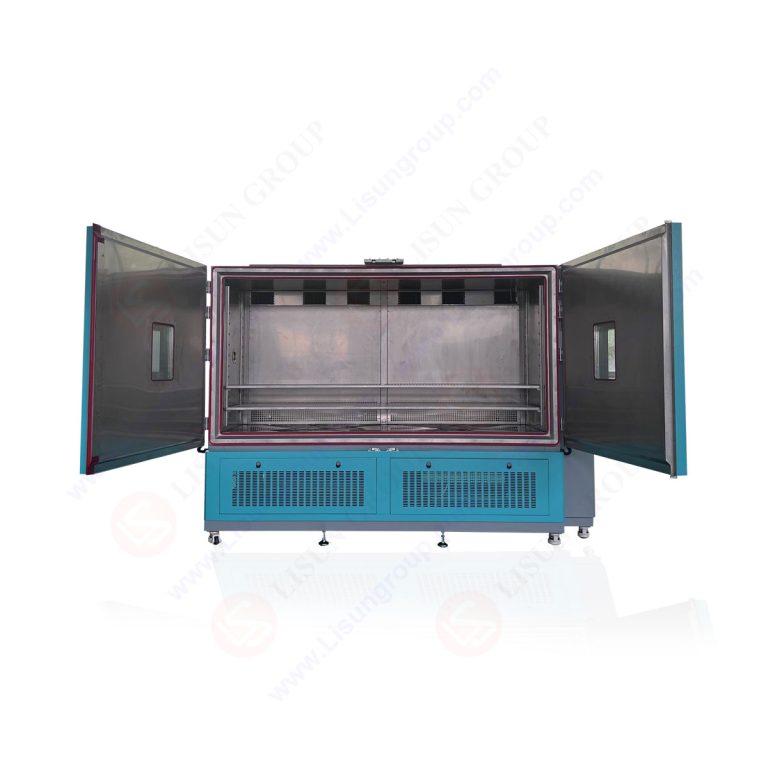
LED humidity testing is a critical reliability validation process that subjects solid-state lighting components to controlled damp heat environments to accelerate failure mechanisms. Moisture ingress remains one of the primary degradation pathways for LED packages, phosphor coatings, and driver electronics. The IEC 60068-2-78 standard establishes standardized procedures for damp heat testing, typically conducted at 85°C with 85% relative humidity (85/85 testing), which serves as an industry benchmark for assessing material stability and封装 integrity.
The 85/85 test condition represents a severe stress environment that simulates years of operation in tropical climates or high-humidity industrial applications. Through controlled exposure over 6000-hour test durations, engineers can identify premature failures in solder joints, delamination of encapsulants, and degradation of phosphor conversion layers that would otherwise manifest only after extended field deployment. This proactive approach enables manufacturers to implement corrective actions during the design phase rather than managing field failures.
1.2 Integrating Humidity Testing with Photometric Measurement
Traditional humidity testing focuses primarily on electrical and mechanical failures, but LED reliability demands concurrent photometric analysis. LISUN’s LEDLM-80PL system addresses this requirement by integrating humidity chambers with photometric measurement capabilities, enabling continuous monitoring of lumen output during damp heat exposure.
The dual system architecture provides distinct advantages for comprehensive reliability assessment. The LEDLM-80PL variant aligns with IES LM-80 standards, the industry benchmark for lumen maintenance testing, while the LEDLM-84PL variant addresses IES LM-84 requirements, which incorporate broader spectral measurements. This integration ensures that humidity-induced degradation is quantified not only through electrical parameters but through actual light output measurements, capturing the complete reliability picture.
The test system supports automatic switching between integrating sphere and optical fiber measurement paths, maintaining measurement precision throughout extended humidity exposure cycles. This dual-path approach ensures measurement accuracy even during continuous 24/7 testing operations, a critical requirement for achieving meaningful 6000-hour data sets.
2.1 Standard Requirements and Test Conditions
IEC 60068-2-78 defines damp heat testing procedures for environmental testing of electrotechnical products, establishing stepped temperature and humidity profiles that simulate service conditions. For LED applications, this standard prescribes exposure to 85°C ± 2°C with 85% ± 5% relative humidity over specified durations. The standard distinguishes between steady-state damp heat for long-term stability assessment and cyclic variations for thermally dynamic applications.
Compliance with IEC 60068-2-78 requires precise environmental control, including temperature uniformity within ±2°C and humidity stability within ±5% across all sample positions. LISUN’s humidity chambers maintain these tolerances through advanced PID control systems with multiple sensing points, ensuring all tested LED samples experience identical stress conditions. This uniformity is essential for generating statistically valid reliability data that meets both IEC and IES requirements.
The standard also specifies allowable degradation thresholds, typically permitting a maximum 20% reduction in luminous flux (L80) or 50% reduction (L50) depending on the application requirement. These metrics directly relate to the L70/L50 calculations embedded in LISUN’s analysis software.
2.2 Comparing IEC 60068-2-78 with IES Standards
While IEC 60068-2-78 provides the generic environmental testing framework, IES LM-80 and IES LM-84 standards govern the specific measurement protocols for LED lumen maintenance under these conditions. The LM-80 standard mandates 6000 hours of testing at defined operating temperatures, while TM-21 establishes the extrapolation methodology to project long-term lumen maintenance from measured data.
| Characteristic | IEC 60068-2-78 | IES LM-80 / LM-84 |
|---|---|---|
| Focus | Generic damp heat testing | LED lumen maintenance specific |
| Duration | Customizable (typically 1000-6000 hours) | 6000 hours minimum (LM-80) |
| Primary Measurements | Electrical and mechanical integrity | Photometric output (lumen, chromaticity) |
| Temperature Range | -40°C to +85°C capability | Ambient, 55°C, 85°C specified |
| Humidity Levels | 85% RH standard, 95% RH optional | 85% RH typical combined with thermal |
| Data Output | Pass/fail criteria | Lumen depreciation curves, L70/L50 projections |
| Extrapolation Methodology | Not specified | TM-21 (exponential decay model) |
| Reporting Format | Compliance certificate | Standardized test report |
This comparison table highlights the complementary nature of these standards. IEC 60068-2-78 establishes the environmental stress profile, while IES LM-80/LM-84 provides the measurement precision and reporting structure necessary for reliable performance predictions.
3.1 System Architecture and Capabilities
The LISUN LED Optical Aging Test Instrument represents state-of-the-art reliability testing technology, engineered specifically to meet the demands of IEC 60068-2-78 compliance combined with IES photometric standards. The system supports up to 3 connected temperature chambers, enabling simultaneous testing at different temperature setpoints for Arrhenius-accelerated aging analysis.
Key system specifications include:
- Photometric measurement: Integrating sphere (0.3m/1.0m/1.5m/2.0m/3.0m options) with spectral range 380-780nm
- Electrical measurement: 0.2% accuracy for power, current, and voltage
- Temperature control: Ambient to 100°C ± 0.5°C accuracy
- Humidity control: 20% to 98% RH ± 2.5% RH accuracy
- Sample capacity: Up to 250 LED samples per chamber configuration
- Data logging: Automatic measurement at programmable intervals
The system incorporates intelligent scheduling to conduct photometric measurements at operator-defined frequencies while maintaining constant environmental stress conditions. This automated approach eliminates variability associated with manual measurement routines and ensures consistent data quality throughout the entire test duration.
3.2 Dual System Variants for Different Standards
LISUN provides two complementary system configurations to address the complete spectrum of LED reliability testing requirements:
LEDLM-80PL is optimized for IES LM-80/TM-21 compliance testing, featuring the traditional 6000-hour test protocol at temperatures of 55°C and 85°C with 85% RH. This system includes TM-21 compliant software for automatic extrapolation of lumen maintenance to L70 and L50 lifetimes.
LEDLM-84PL addresses the newer IES LM-84/TM-28 standards, which require additional spectral data collection and accommodate emerging LED technologies including color-mixed modules. This system offers enhanced wavelength resolution and supports the extended data requirements of TM-28 extrapolation methodology.
The dual-system approach allows testing laboratories and manufacturers to select the configuration that precisely matches their compliance requirements while sharing common infrastructure, including temperature chambers and measurement hardware.
4.1 Mathematical Foundation for Lifetime Prediction
The Arrhenius Model forms the theoretical foundation for accelerated aging in LED reliability testing. This kinetic model describes the temperature-dependent degradation rate according to the equation:
[
k = A cdot e^{-E_a / RT}
]
where k represents the reaction rate constant, A is the pre-exponential factor, Ea is the activation energy (typically 0.35-0.45 eV for LED degradation), R is the universal gas constant, and T is the absolute temperature. LISUN’s software implements this model to translate accelerated aging data into predictived operational lifetime projections.
For humidity-accelerated degradation, the Arrhenius relationship extends to consider moisture concentration effects through the exponential dependence on both temperature and humidity. The combined stress model enables engineers to estimate failure rates at service conditions (typically 25°C-55°C, 20%-60% RH) from accelerated test data obtained at 85°C/85% RH.
4.2 Implementing Arrhenius Calculations in LEDLM Software
The LEDLM-80PL and LEDLM-84PL software suites embed Arrhenius Model calculations directly into their analysis workflows, automatically generating lifetime projections from multiple temperature datasets. The software determines activation energy empirically from the ratio of degradation rates at different temperatures, eliminating the need for assumed values.
The dual testing mode capability allows simultaneous operation at multiple temperature setpoints across connected chambers. This parallel testing approach substantially reduces total test time while providing the data necessary for accurate Arrhenius activation energy determination. The software applies weighted curve fitting to establish confidence bounds around lifetime predictions, presenting results at 90% confidence intervals as specified by TM-21 standards.
5.1 Steady-State Damp Heat Testing
Steady-state damp heat testing represents the most commonly applied regime for LED humidity evaluation. This method maintains constant temperature and humidity conditions throughout the entire test period, allowing degradation mechanisms to progress at controlled rates. For IEC 60068-2-78 compliance testing, the standard prescribes either 85°C/85% RH or 85°C/85% RH with power cycling based on the application.
LISUN systems support continuous power application during humidity exposure, simulating worst-case operating conditions. The measurement protocol captures lumen output, color coordinates, forward voltage, and correlated color temperature at predefined intervals, building a comprehensive degradation database.
The measurement interval flexibility proves particularly valuable during extended tests, with typical protocols requiring initial measurements, daily measurements during the first week, and weekly measurements thereafter. This sampling strategy balances data granularity against measurement stress that could influence degradation rates.
5.2 Cyclic Humidity Testing
For applications experiencing thermal cycling in humid environments, cyclic humidity testing provides more realistic validation. This approach varies temperature between extremes while maintaining elevated humidity, typically cycling between 25°C and 85°C with humidity varying inversely to temperature according to the vapor pressure relationship.
The dynamic nature of cyclic testing introduces thermal-mechanical stresses in addition to hygroscopic swelling, providing more comprehensive reliability assessment. LISUN chamber controllers support programmable temperature and humidity profiles with transition rates up to 5°C/minute, enabling standardized cyclic profiles to BS EN 60068-2-38.
The dual testing mode function allows simultaneous execution of steady-state and cyclic protocols across different sample groups, maximizing laboratory throughput. This parallel approach significantly reduces the time required for comprehensive reliability qualification programs.
6.1 Measuring Lumen Depreciation Metrics
Lumen depreciation measurements form the basis for LED lifetime projection and reliability qualification. The testing system quantifies luminous flux degradation over time, generating curves that characteristically show rapid initial decay followed by a more gradual, approximately exponential decline.
| Measurement Parameter | LEDLM-80PL Capability | LEDLM-84PL Capability |
|---|---|---|
| Lumen Maintenance | ✓ L70, L80, L50 | ✓ L70, L80, L50, L90 |
| Spectral Distribution | ✓ 1nm resolution | ✓ 0.5nm resolution |
| Chromaticity Shift | ✓ Δuˈvˈ reported | ✓ Δuˈvˈ within 0.003 |
| Test Duration Support | 6000 hours standard | 6000+ hours extended |
| Temperature Control | ±0.5°C | ±0.5°C |
| Humidity Control | ±2.5% RH | ±2.5% RH |
| Connected Chambers | Up to 3 | Up to 3 |
| TM Projection Software | ✓ TM-21 compliant | ✓ TM-28 compliant |
| Color-Mixed LED Support | Limited | ✓ Fully supported |
The system simultaneously monitors multiple photometric and electrical parameters, detecting any anomalies that might indicate failure modes not captured by lumen alone. This multi-parameter approach provides valuable diagnostic information for failure analysis.
6.2 Statistical Analysis and Reporting
The LEDLM software suite incorporates comprehensive statistical tools for analyzing reliability data and generating standardized reports. All data export features align with IES LM-79-19 and CIE standards for photometric reporting, ensuring seamless integration with existing documentation workflows.
TM-21 extrapolation procedures apply exponential decay curve fitting to the measured data, projecting lumen maintenance to 36,000 or 100,000 hours depending on data set size and projection limitations. The software automatically flags projections exceeding six times the test duration, maintaining conservative estimation practices.
The software also supports CIE 084 and CIE 70 standards for measurement uncertainty analysis, quantifying total measurement error contributions from sources including sphere integration, spectral calibration, and electrical measurement.
7.1 Test Planning and Sample Size Determination
Successful humidity testing begins with rigorous test planning. Sample sizes must balance statistical significance against practical limitations of chamber capacity and measurement time. For LM-80 compliance, a minimum of 20 samples per test condition is recommended, while the LEDLM system supports up to 250 samples, allowing extensive statistical power.
The factor of sample placement within the chamber significantly affects test validity. Samples must be positioned to ensure uniform exposure to both temperature and humidity, avoiding localized hot spots or condensation zones. LISUN chamber designs incorporate horizontal airflow patterns that maintain uniformity within ±1°C across all shelf positions.
7.2 Data Management and Long-Term Testing
Extended 6000-hour tests generate substantial data volumes requiring organized storage systems. The LEDLM system automatically logs all measurements to structured databases with backup functionality, ensuring data integrity throughout the multi-month test campaign.
The automatic power-fail recovery feature remains essential during extended testing. If AC power is interrupted, the system resumes operation with minimal user intervention, preserving test continuity and protecting sample validity. Standard UPS integration provides additional protection against data loss.
LED humidity testing per IEC 60068-2-78 compliance represents an essential methodology for validating LED reliability in demanding moisture-exposed applications. Through this comprehensive technical analysis, we have examined how LISUN’s LED Optical Aging Test Instrument systems—the LEDLM-80PL for LM-80/TM-21 and LEDLM-84PL for LM-84/TM-28—provide complete solutions for integrating humidity testing with photometric measurement and lifetime prediction.
The combination of environmental control, precise photometric measurement, and Arrhenius Model-based analysis software enables manufacturers and testing laboratories to achieve meaningful reliability data within practical timelines. The support for multiple temperature chambers and dual testing modes maximizes throughput while maintaining the data quality standards required by IES, CIE, and IEC standards. The 6000-hour test capability, L70/L50 metrics, and automated TM-21 extrapolation provide comprehensive reliability assessment from accelerated aging data.
For LED manufacturers, component engineers, and testing laboratories, the LISUN integrated approach represents a strategic investment in quality assurance infrastructure that delivers measurable improvements in reliability prediction accuracy.
Q1: What is the relationship between IEC 60068-2-78 humidity testing and IES LM-80 lumen maintenance testing?
A: These standards serve complementary roles in LED reliability assessment. IEC 60068-2-78 defines the environmental stress conditions—specifically damp heat at 85°C/85% RH—that simulate moisture-induced degradation mechanisms. IES LM-80 establishes the photometric measurement procedures, sample preparation, and reporting requirements specifically tailored to LED light sources. In practice, LED humidity testing per IEC 60068-2-78 is conducted using LM-80 measurement protocols to enable TM-21 lifetime extrapolation. The LISUN LEDLM-80PL integrates both requirements into a single automated system, applying the environmental stress profiles of IEC 60068-2-78 while capturing data with LM-80-compliant photometric measurement techniques.
Q2: How long should LED humidity testing last to produce reliable lifetime predictions?
A: The industry standard for LED humidity testing is 6000 hours (approximately 8.5 months) to achieve IES LM-80 compliance. This duration provides sufficient data points for reliable TM-21 extrapolation to longer operational lifetimes. However, extended testing to 10,000 hours yields improved statistical confidence and supports longer projection horizons. LISUN systems are designed for continuous operation throughout these extended periods, featuring automatic power-fail recovery, self-diagnostics, and user-autonomous maintenance requiring minimal manual oversight. The Arrhenius model enables acceleration through elevated temperatures, but extrapolation accuracy improves substantially with longer actual test durations—particularly for establishing activation energies from multi-temperature datasets.
Q3: What L70/L50 metrics are most common for LED reliability qualification?
A: L70 represents the time to 70% lumen maintenance (30% luminous flux loss) and is the most widely used metric for general lighting applications. L50, indicating 50% lumen maintenance, applies to applications where significant degradation is acceptable or for validating failure mechanisms. The LEDLM-80PL and LEDLM-84PL systems automatically calculate both metrics from measured degradation data, applying TM-21 exponential curve fitting with 90% confidence bounds. For indoor and outdoor general lighting, L70 is typically required, while automotive applications often demand more stringent L90 or L80 criteria depending on safety requirements. The LEDLM-84PL supports these extended metrics with higher spectral resolution for color shift analysis.
Q4: How does humidity testing differ from temperature-only LED aging tests?
A: Humidity testing adds moisture exposure to thermal stress, introducing hygroscopic expansion, chemical degradation of phosphor coatings, and electrochemical migration mechanisms not present in dry thermal aging. LED packages with organic materials, such as silicone encapsulants and phosphor binders, are particularly susceptible to humidity-induced degradation through hydrolytic cleavage and oxidation reactions. Testing at 85°C/85% RH typically produces faster depreciation than dry testing at the same temperature, making it a more severe stress condition. The LISUN systems support both modes, allowing engineers to separate thermal and humidity effects through comparative testing at identical temperatures with different humidity levels. This differential analysis provides valuable insights into the dominant degradation mechanisms.
Q5: Can the LISUN LEDLM-84PL handle humidity testing for emerging LED technologies like color-mixed modules?
A: Yes, the LEDLM-84PL was specifically designed to address IES LM-84 standards and incorporate the measurement complexities of advanced LED technologies. The system supports multi-channel spectral processing to analyze color-mixed LED modules individually and collectively. Enhanced wavelength resolution at 0.5nm accuracy enables precise chromaticity shift tracking, essential for detecting phosphor degradation or spectral mismatch in mixed-color systems. The instrument accommodates multiple measurement paths for simultaneous testing of different device types across connected temperature chambers, supporting up to 3 separate environmental test conditions. The TM-28 compliant software provides specialized extrapolation algorithms suitable for color-mixed and spectrally-variable LED sources, offering a future-proof solution as these technologies become more prevalent in the market.