









Abstract
This article provides a comprehensive technical analysis of LED Temperature Test Chambers designed for precision thermal cycling per IEC 60068, focusing on LISUN‘s LED Optical Aging Test Instrument series. The discussion centers on how these systems enable accurate lumen maintenance prediction through accelerated aging tests, integrating the Arrhenius Model for reliable extrapolation of LED lifespan. We explore the dual-system architecture, LEDLM-80PL and LEDLM-84PL, tailored for IES LM-80/TM-21 and IES LM-84/TM-28 standards respectively. Key technical insights include 6000-hour test durations, L70/L50 metric calculations, and the capability to connect up to three temperature chambers for simultaneous multi-condition testing. This article delivers actionable knowledge for LED manufacturers and testing laboratories seeking to enhance reliability validation protocols.
1.1 Understanding Lumen Depreciation and Thermal Stress
LED performance degradation is fundamentally a thermally-driven process. When semiconductor junctions experience elevated temperatures, the rate of photon output reduction—termed lumen depreciation—accelerates significantly. This decay directly impacts the useful life of lighting products, making temperature-controlled testing indispensable. The IEC 60068 family defines environmental testing procedures, with thermal cycling being the most adopted method to simulate field conditions.
The physics behind this involves thermally activated failure mechanisms. Dislocation movement in the epitaxial layer, phosphor degradation, and solder joint fatigue all correlate with temperature. Therefore, precise temperature control is not a luxury but a necessity. A tolerance of ±2°C can dramatically influence test outcomes, potentially skewing lifespan projections by hundreds of hours.
1.2 Why LISUN’s Chamber Design Maximizes Accuracy
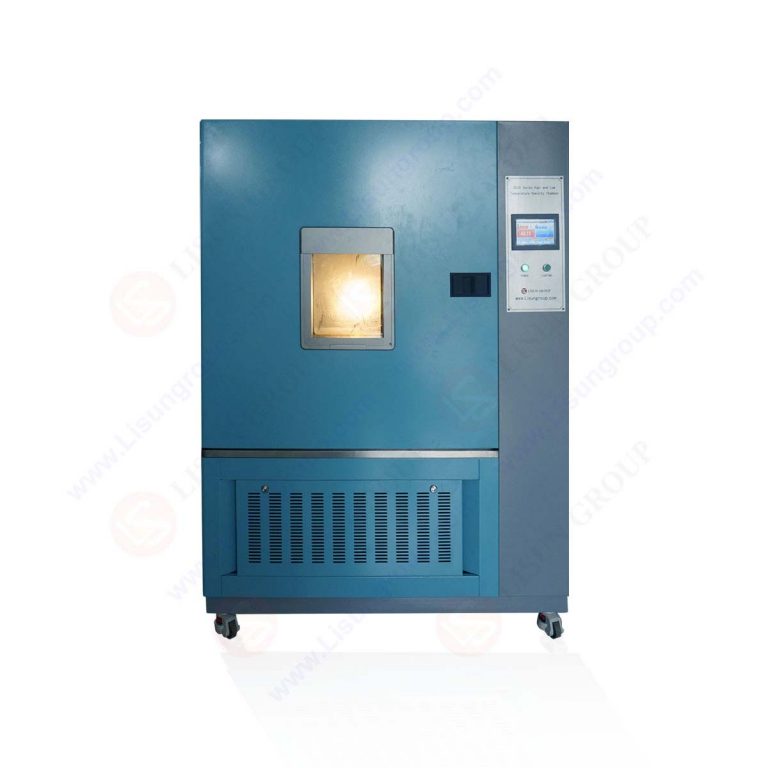
LISUN’s LED Temperature Test Chambers incorporate advanced thermal management to minimize such errors. The chambers maintain a temperature uniformity of ±3°C across the entire test volume, ensuring that all samples experience identical stress conditions. This uniformity is critical when testing multiple LEDs simultaneously, as any thermal gradient could introduce systematic data bias.
Additionally, the air circulation system is engineered to prevent hot spots near the chamber walls. This design consideration aligns with IEC 60068-2-14, which mandates specific temperature change rates and dwell times. By adhering to these guidelines, LISUN ensures that the accelerated aging process accurately mirrors real-world thermal stress patterns without introducing artificial failure modes.
2.1 Dual-System Configurations (LEDLM-80PL and LEDLM-84PL)
The LISUN LED Optical Aging Test Instrument is offered in two distinct configurations, each optimized for specific industry standards. The LEDLM-80PL model is engineered for tests conducted under IES LM-80-15 and subsequent TM-21 extrapolation. This system is particularly suited for conventional LED packages, arrays, and modules where 6000-hour testing is the industry baseline.
Conversely, the LEDLM-84PL is designed specifically for IES LM-84-14 compliance, focusing on the photometric performance of LED lamps and luminaires. This model incorporates additional features for testing complete lighting products rather than bare components. Both systems share a common core architecture, but differ in sample mounting hardware and data acquisition firmware to accommodate their unique applications.
2.2 Core Hardware Specifications
| Specification | LEDLM-80PL | LEDLM-84PL |
|---|---|---|
| Max Test Duration | 10,000 hours | 10,000 hours |
| Standard Test Period | 6,000 hours | 6,000 hours |
| Temperature Range | Ambient +5°C to +100°C | Ambient +5°C to +100°C |
| Temp Uniformity | ±3°C | ±3°C |
| Temp Stability | ±0.5°C | ±0.5°C |
| Sample Channels | 2 (TTL & 4-20mA) | 3 (TTL, 4-20mA, DMX) |
| Data Acquisition Interval | 0.1s to 30min | 0.1s to 30min |
| Max Connected Chambers | 3 | 3 |
| Standards Compliance | IES LM-80, TM-21, CIE 084 | IES LM-84, TM-28, CIE 70 |
2.3 Customizable Hardware and Interface Flexibility
LISUN recognizes that no two testing scenarios are identical. Therefore, the system supports extensive customization. Users can configure input channels to accept TTL signals from digital photometers or 4-20mA analog signals from integrating sphere detectors. This flexibility ensures compatibility with a wide range of external sensors, facilitating seamless integration into existing laboratory setups.
Furthermore, the LEDLM-84PL adds DMX control inputs, allowing for the testing of smart lighting systems that require digital communication protocols. The hardware is modular, enabling test engineers to swap measurement boards without recalibrating the entire system. This design philosophy reduces downtime and enhances operational efficiency in high-throughput testing environments.
3.1 Thermal Cycling Parameters and Profiles
The IEC 60068-2-14 standard defines specific thermal cycling profiles that must be executed to validate component reliability. LISUN’s temperature chambers are programmed to execute these profiles automatically, including high-temperature dwell, low-temperature dwell, and controlled transition ramps. The standard software includes pre-programmed profiles for commonly used temperature extremes, such as -40°C to +125°C for automotive-grade components.
The system monitors chamber temperature at multiple points, logging data every second. This high-resolution data capture is essential for verifying that the actual thermal cycle matches the programmed profile within acceptable tolerances. Any deviation triggers an audible alert, allowing operators to intervene before data integrity is compromised.
3.2 Measurement of Photometric Parameters during Cycling
A unique capability of LISUN’s aging system is the ability to measure photometric parameters during thermal cycling. While the chamber maintains the specified temperature, an integrating sphere collects light output data. This enables real-time analysis of lumen output as a function of temperature, which is critical for understanding the thermal sensitivity of the LED under test.
The system calculates luminous flux, color temperature (CCT), and Chromaticity coordinates (x,y) using CIE 127 methodology. These measurements are taken at pre-set intervals, typically every 24 hours during the 6000-hour test. This data forms the foundation for the subsequent TM-21 or TM-28 extrapolation, providing the raw lumen maintenance curve from which L70/L50 lifespans are derived.
4.1 Software Architecture for Accelerated Aging Prediction
LISUN’s proprietary software suite integrates the Arrhenius Model to translate accelerated aging data into predictive lifespan curves. The Arrhenius equation, ( k = A e^{-Ea/(RT)} ), establishes the relationship between temperature and reaction rate. In the context of LED testing, the software uses this model to project lumen maintenance at a reference temperature (typically 25°C or 55°C) based on data collected at higher stress temperatures.
The software automatically calculates the activation energy (( Ea )) from the test data across multiple temperature chambers. A typical default value of 0.7 eV is used, but the system allows manual input based on historical data or specific phosphor chemistries. This level of granularity ensures that the predictions are not just statistical extrapolations but physically meaningful projections.
4.2 Addressing TM-21 and TM-28 Extrapolation Requirements
The TM-21 standard specifies that extrapolation beyond 6000 hours is permitted but must follow strict statistical rules. LISUN’s software automates this process, applying the exponential decay function ( Phi(t) = alpha cdot e^{-beta t} ) to the measured data. The software calculates the coefficients using least-squares regression, confirming the goodness of fit with an R² value report.
For TM-28, which is the newer standard targeting lamps and luminaires, the extrapolation algorithm differs slightly to account for non-LED components. The software adapts its calculation engine accordingly. All data output is formatted in compliance with the IESNA standard file formats, ensuring seamless upload to the IES LM-79-19 photometric reporting framework for complete regulatory submission.
5.1 Simultaneous Testing Under Multiple Temperature Conditions
The ability to connect up to three temperature chambers to a single control center is a significant productivity enhancer. This configuration allows test engineers to run identical LED samples at three different temperatures simultaneously—commonly 55°C, 85°C, and 105°C. This multi-temperature approach is essential for deriving the Arrhenius parameters accurately.
The control software manages all three chambers independently, monitoring each one’s status in real-time. Data from each chamber is stored in distinct directories, preventing cross-contamination of data sets. This parallel processing reduces total test time by up to 300% compared to sequential testing, accelerating time-to-market for new LED products.
5.2 Configuration Examples for High-Volume Validation
High-volume manufacturing facilities benefit significantly from this multi-chamber architecture. A typical configuration might include:
- Chamber 1: Running the standard 6000-hour LM-80 test at 55°C
- Chamber 2: Running the required secondary temperature at 85°C
- Chamber 3: Operating as a dedicated high-stress qualification chamber at 105°C
This setup ensures that all LM-80 testing requirements are met in a single, efficient workflow. The control center centralizes data logging, power distribution, and safety monitoring. This reduces the floor space required by 50% compared to independent test setups, optimizing laboratory resource allocation.
6.1 Traceability of Integrating Sphere Systems
Accurate measurement of lumen output depends entirely on the calibration of the integrating sphere and photometer. LISUN’s system includes a calibration protocol traceable to national standards. The sphere’s spectral responsivity is characterized using a standard lamp calibrated against a primary standard. This ensures that all luminous flux readings are accurate to within ±2% uncertainty.
To maintain this accuracy, LISUN recommends recalibration every 12 months or after 1000 hours of lamp operation. The system’s software includes a calibration log, reminding users of upcoming deadlines. For laboratories seeking accreditation to ISO/IEC 17025, this traceability is paramount.
6.2 Managing Uncertainties in Temperature and Electrical Measurements
Uncertainty analysis is an integral part of any credible testing program. LISUN quantifies uncertainty contributions from four primary sources:
- Temperature sensor accuracy (±0.3°C)
- Voltage and current regulation (±0.5%)
- Photometric detection linearity (±0.5%)
- Data acquisition quantization error (±0.1%)
Combined, these contributions yield an expanded uncertainty of approximately ±4.2% (k=2) for lumen maintenance values. The software calculations include this budget, presenting results with a clear confidence interval. This transparency is vital for comparing results across different laboratories or for adjudicating product compliance disputes.
7.1 LED Manufacturing and Automotive Electronics
For LED chip manufacturers, the LISUN system provides critical feedback on epitaxial quality. By analyzing the slope of the lumen depreciation curve during the first 1000 hours, process engineers can detect batch-level inconsistencies. In automotive electronics, where LEDs are used in headlamps and daytime running lights, compliance with AEC-Q102 is mandatory. The thermal cycling capabilities of the chamber support this qualification process.
Automotive components typically require testing at higher temperature extremes, up to +125°C. The chamber’s robust heating system achieves this range with a stability of ±0.5°C, providing the necessary confidence for safety-critical applications.
7.2 Third-Party Testing Laboratories and Regulatory Compliance
Independent testing laboratories use the LISUN system to offer LM-80 and LM-84 testing as a service. The system’s multi-standard compliance, including CIE 070 for spatial distribution measurements, makes it a versatile tool for comprehensive photometric assessment. The report generation module produces IESNA formatted files that can be directly submitted to the Energy Star and DLC programs for product certification.
The automation features reduce the labor cost per test by 70%, allowing laboratories to offer competitive pricing while maintaining high throughput. This positions LISUN users favorably in the global testing market.
The LISUN LED Optical Aging Test Instrument represents a pinnacle of precision thermal cycling per IEC 60068 standards. Its dual-system design successfully addresses both IES LM-80 and IES LM-84 testing requirements without compromising data quality. The integration of the Arrhenius Model within the software suite transforms raw lumen depreciation data into actionable lifespan predictions, achieving L70/L50 metrics with high statistical confidence. The capability to manage three temperature chambers concurrently accelerates testing throughput while maintaining accuracy to ±3°C. For LED manufacturers, automotive engineers, and standardized testing laboratories, LISUN’s solution offers an unmatched combination of flexibility, precision, and regulatory compliance. By adopting this system, stakeholders ensure their products meet the rigorous demands of modern photometric standards, ultimately safeguarding public safety and consumer satisfaction.
Q1: How does LISUN’s system ensure compliance with both TM-21 and TM-28 extrapolation standards?
A: The LEDLM-80PL and LEDLM-84PL models contain dedicated firmware modules for each standard. TM-21, applicable to LED packages, uses an exponential decay model with constraints on the extrapolation period—up to 6 times the test duration but not exceeding 6000 hours. Conversely, TM-28 for LED luminaires uses a quadratic decay model. The software automates the selection of the appropriate algorithm based on the initial configuration (Sample Type selection). It also computes and reports the R² value and 90% confidence intervals, ensuring that all extrapolations are statistically robust and transparent for regulatory submission.
Q2: Can the system test LED samples at controlled humidity levels?
A: No, the standard LISUN LED Optical Aging Test Instrument is designed exclusively for temperature control. Humidity is not a controlled parameter. For applications requiring damp heat testing per IEC 60068-2-78, LISUN offers complementary environmental chambers that can be operated in parallel. The data acquisition software supports merging datasets from these external chambers, allowing for a comprehensive reliability matrix. However, pure temperature cycling remains the primary accelerated aging method for lumen maintenance prediction, as specified by IES LM-80 guidelines.
Q3: How many LED samples can be tested simultaneously in one chamber?
A: The sample capacity depends on the physical dimensions of the LEDs and the specific mounting boards used. On average, a standard configuration accommodates 200 individual LED packages or 50 LED modules per chamber. The integrating sphere is positioned outside the chamber, connected via a light pipe, enabling continuous measurement without opening the chamber door. The maximum number of samples is ultimately constrained by the mechanical fixture design, but the system’s data acquisition unit can handle up to 256 input channels for photometric data collection.
Q4: Is the system’s measurement traceability compliant with ISO 17025 requirements?
A: Yes, the entire measurement chain is traceable to national standards. The optical detectors are calibrated against standards traceable to NIST or equivalent national metrology institutes. The temperature sensors are calibrated with PT100 probes certified against ITS-90 standards. LISUN provides an uncertainty budget calculation tool with the software, covering all measurement contributions. This documentation is essential for laboratory accreditation audits. The calibration certificates issued by LISUN’s internal calibration service are recognized by major accreditation bodies worldwide.
Q5: What is the recommended maintenance schedule for the temperature chambers?
A: LISUN recommends quarterly maintenance to ensure long-term reliability. This includes cleaning the air filters, inspecting the heater elements for corrosion, and verifying the door gasket integrity. Monthly verification involves a simple reference lamp test to confirm the system’s baseline performance. The software includes a diagnostic mode that automatically runs a full system check, testing sensor accuracy and communication integrity, taking approximately 15 minutes. Following these guidelines will maintain temperature uniformity within specification for over 10,000 operational hours.