









Abstract
LED thermal management testing is critical for predicting lumen depreciation and ensuring long-term reliability in solid-state lighting products. This technical article examines the precision climate chamber solutions from LISUN, specifically the LEDLM-80PL and LEDLM-84PL optical aging test systems. These instruments integrate Arrhenius Model-based extrapolation algorithms, dual testing modes, and support for up to three connected temperature chambers, enabling simultaneous accelerated aging at multiple temperatures. The article provides a comprehensive analysis of testing methodologies aligned with IES LM-80, IES LM-84, TM-21, and TM-28 standards. Readers will gain insights into thermal management validation protocols, data acquisition strategies, and practical applications of LISUN’s precision climate chambers for LED thermal management testing.
1.1 The Physics of Lumen Depreciation and Junction Temperature
LED performance degradation is intrinsically linked to junction temperature. When an LED operates, approximately 70-85% of electrical energy converts to heat rather than light. This heat elevates the p-n junction temperature, accelerating non-radiative recombination processes and causing defect propagation in the epitaxial layer. The relationship between junction temperature and lumen maintenance follows the Arrhenius acceleration model, where photodegradation rates double for every 10°C increase in junction temperature. Precision climate chambers must therefore maintain stable ambient temperature conditions (±0.5°C) to ensure that measured lumen depreciation reflects actual LED performance rather than environmental artifacts.
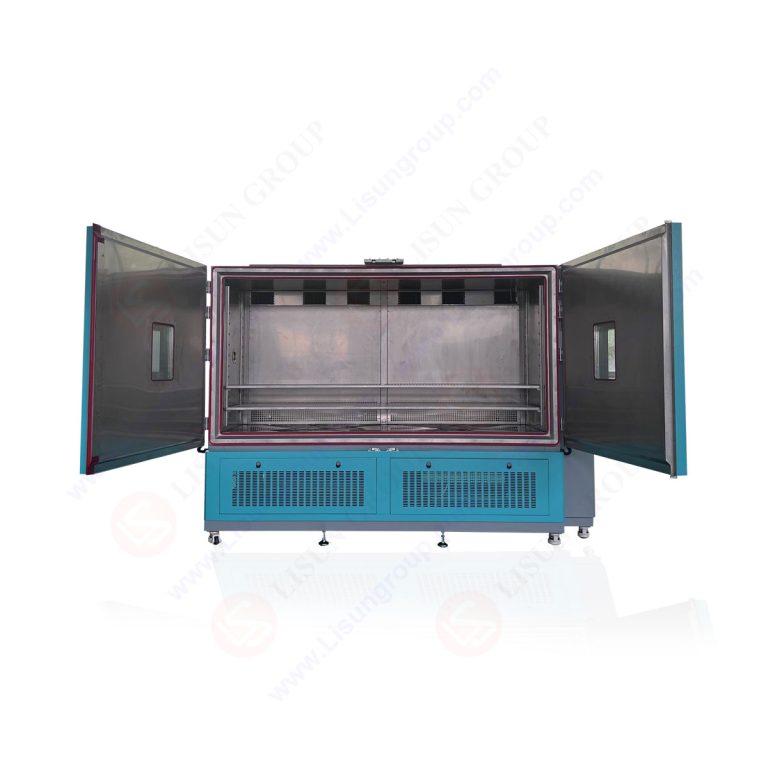
The LISUN LEDLM-80PL system accounts for this thermal sensitivity by providing temperature-controlled environments from 0°C to 100°C with uniformity better than ±2°C. This level of control is essential for generating reliable aging data that can be extrapolated to predict operational lifetime under real-world conditions. Engineers must understand that improper thermal management during testing leads to either overestimation or underestimation of L70 life, with significant consequences for warranty decisions and product certification.
1.2 Core Reliability Metrics: L70, L50, and Failing Rates
The lighting industry relies on standardized metrics to quantify LED longevity. L70 represents the time at which luminous flux depreciates to 70% of initial value, while L50 corresponds to 50% luminous flux retention. These metrics are determined through accelerated aging tests conducted at multiple controlled temperatures. According to IES LM-80-15, testing must span a minimum of 6000 hours, with photometric measurements at 1000-hour intervals. LISUN’s precision climate chambers automate this process, enabling continuous monitoring of up to 42 LED samples per temperature chamber.
The failure rate calculation incorporates Weibull distribution analysis to predict the percentage of LED population that will fall below the L70 threshold at a given time. This statistical approach requires large sample sizes and precise temperature control to minimize data scatter. LISUN’s systems support connection of three temperature chambers simultaneously, allowing engineers to test samples at 55°C, 85°C, and 105°C (or custom temperatures) in parallel, thereby collecting statistically robust datasets within the mandated 6000-hour window.
2.1 LEDLM-80PL for IES LM-80/TM-21 Compliance
The LEDLM-80PL is specifically engineered to meet the rigorous requirements of IES LM-80-15 for lumen maintenance testing of LED packages, arrays, and modules. This system incorporates a dual-channel architecture: one channel drives the LEDs with constant current while the other continuously monitors forward voltage, current, and case temperature. The built-in integrating sphere (diameter options from 300mm to 2000mm) captures photometric data without removing samples from the thermal environment, eliminating measurement uncertainties caused by handling.
Key specifications include:
- Test duration capability: 6,000 to 12,000+ hours continuous operation
- Temperature chamber range: 0°C to 100°C with ±0.5°C control accuracy
- Photometric measurement: Class A (CIE 127) integrating sphere with spectral range 380-780nm
- Sample capacity: Up to 42 LED samples per chamber configuration
- Data acquisition interval: Programmable from 1 minute to 24 hours
The TM-21 projection software embedded in the LEDLM-80PL applies exponential decay fitting to the collected data, following the guidelines established by IES TM-21-19. This allows automatic extrapolation of L70(6k) values and their 90% lower confidence bounds, which are essential for ENERGY STAR® and DLC (DesignLights Consortium) submissions.
2.2 LEDLM-84PL for IES LM-84/TM-28 Advancement
For organizations seeking alignment with the newer IES LM-84-20 standard and TM-28-19 projection methodology, LISUN offers the LEDLM-84PL. This advanced system incorporates higher-precision photometric measurement capabilities, including a spectroradiometer with 1nm wavelength resolution and stray light correction below 5E-05. The system accommodates both LED light engines and complete luminaires, making it suitable for manufacturers who need to validate final product performance rather than bare components.
The LEDLM-84PL features an integrated thermal management controller that regulates chamber humidity (20-90% RH) in addition to temperature. This dual-environment control is critical because LM-84 testing acknowledges that humidity accelerates phosphor degradation in white LEDs. By extending the precision climate chamber capabilities beyond temperature-only control, LISUN enables more realistic lifetime predictions that account for real-world environmental stresses.
2.3 Configurability and Multi-Chamber Integration
Both systems support flexible hardware configurations tailored to specific testing needs. Engineers can select between horizontal and vertical chamber orientations, multiple integrating sphere sizes, and various sample mounting structures including thermal interface material (TIM) testing fixtures. The multi-chamber architecture uses a central control unit that sequentially manages photometric measurements across up to three temperature chambers, reducing initial investment while maintaining testing capacity.
3.1 IES LM-80 and TM-21: The Foundation of LED Reliability Validation
IES LM-80-15 defines the approved method for measuring lumen depreciation of solid-state lighting products. The standard mandates testing at three case temperatures (55°C, 85°C, and a third temperature ≥105°C), with minimum 6000-hour test duration. LISUN’s precision climate chambers facilitate compliance by providing automated temperature cycling and stabilizing case temperatures within ±2°C of set points. The collected data must be reported separately for each temperature, enabling TM-21 extrapolation to predict long-term maintenance at actual operating temperatures.
Table 1: Comparison of LISUN LEDLM-80PL Operating Parameters vs. IES LM-80 Requirements
| Parameter | IES LM-80 Minimum Requirement | LEDLM-80PL Capability |
|---|---|---|
| Test Duration | 6,000 hours (3,000 hours reportable if substrate temp below target) | 6,000-12,000+ hours continuous |
| Case Temperatures | 55°C, 85°C, ≥105°C (min 3 temperatures) | 0°C-100°C (customizable up to 3 chambers) |
| Sample Size | 20 units minimum per condition | Up to 42 samples per chamber |
| Measurement Interval | 1,000 hours (additional points suggested) | Programmable 1min–24hrs |
| Temperature Accuracy | ±2°C case temperature | ±0.5°C chamber air temperature |
| Electrical Driving | Constant current ±2% accuracy | Constant current ±1% accuracy |
3.2 IES LM-84 and TM-28: Advanced Projection for Complete Luminaires
IES LM-84-20 extends testing to complete LED luminaires and light engines, acknowledging that thermal management differs between bare components and assembled products. TM-28-19 provides a projection method for these measurements, utilizing exponential or power-law models depending on data characteristics. LISUN’s LEDLM-84PL was designed with this standard in mind, incorporating larger integrating spheres (up to 2000mm diameter) capable of accommodating full-scale luminaires including their thermal heat sinks.
The dual-system approach allows manufacturers to generate both component-level (LM-80/TM-21) and product-level (LM-84/TM-28) data. This dual validation is increasingly required by utility rebate programs and building code compliance frameworks. CIE 084 and CIE 070 references are also supported for luminous flux measurement standards and inter-laboratory calibration comparisons.
3.3 CIE 127 and CIE 013.3 Integration for Photometric Accuracy
Precision climate chambers must integrate with accurate photometric measurement systems. CIE 127 describes the measurement of LEDs using integrating spheres, including specifics on sphere geometry, baffle placement, and auxiliary sphere calibration methods. LISUN’s systems implement these recommendations with a 4π geometrical configuration, ensuring that both direct and reflected luminous flux from LEDs are captured appropriately. CIE 013.3 spectral reflectance measurement standards further guide the sphere coating specification, where barium sulfate or PTFE coatings with >96% reflectance are utilized.
4.1 Mathematical Framework for Lifetime Prediction
The Arrhenius equation forms the basis for converting accelerated aging test data into real-world lifetime predictions. The relationship is expressed as:
[
L(T) = A cdot e^{frac{E_a}{k_B cdot T}}
]
Where L(T) represents lifetime at temperature T, E_a denotes activation energy (typically 0.3-0.7 eV for LED degradation), k_B is Boltzmann’s constant, and A is a pre-exponential factor. LISUN’s software automatically derives the activation energy from multi-temperature testing data, then applies this model through TM-21 extrapolation to determine L70 at the actual operating temperature (Tin-situ) which is typically lower than accelerated test temperatures.
4.2 Dual Testing Modes: Constant Current vs. Constant Power
LISUN’s precision climate chambers support two testing modes. Constant current mode maintains fixed forward current while allowing forward voltage to drift with degradation—this mimics standard LED driver operation. Constant power mode adjusts current to maintain constant power dissipation, which better represents operation under some advanced driver designs. These two modes produce different depletion signatures, and the choice depends on the application target. An added nuance: for ceramic-packaged high-power LEDs, constant power testing often yields more conservative lifetime estimates.
4.3 Extrapolation Accuracy and Statistical Bounds
TM-21 requires reporting of L70 and L50 values at 6,000 hours, with extrapolation limited to 6 times the test duration (e.g., 36,000 hours for 6,000-hour data). LISUN’s software applies the 90% lower confidence bound to account for sampling uncertainty. The multi-chamber configuration enables simultaneous testing at three temperatures, which significantly enhances statistical confidence compared to sequential testing. Uniquely, the software can reject outlier data points identified through Chauvenet’s criterion, improving the accuracy of exponential fitting.
5.1 Thermal Control and Stability
Achieving precise thermal management testing requires a chamber design that minimizes temperature gradients across the sample mounting plate. LISUN uses a forced-air convection system with PID-controlled heaters and refrigerant-based cooling for sub-ambient operation. Airflow velocity is maintained at 0.5-2.0 m/s to balance heat transfer with mechanical stress on delicate LED samples. The chamber walls incorporate 50mm polyurethane foam insulation, reducing thermal leakage to below 0.3 W/m²K. Temperature stability over 24-hours is better than ±1°C even when LEDs dissipate 80W of heat at high current density. Select custom configurations add a liquid-cooled cold plate option for extreme thermal management testing, simulating heatsink performance in-situ.
5.2 Photometric Integration and Measurement Accuracy
The integrating sphere coupling system uses a light-tight optical path that prevents external light contamination. A shutter mechanism allows measurements at user-defined intervals without disturbing ongoing aging. Spectral measurements employ a CCD-array spectroradiometer with wavelength calibration traceable to NIST standards. This setup ensures that photometric data accuracy remains within ±2% for total luminous flux measurements and ±3% for color rendering index calculations. For LED thermal management testing that involves phosphor-converted white LEDs, spectral measurement resolution of 1nm is essential to detect phosphor degradation that may not manifest as a simple luminous flux reduction.
5.3 Software Ecosystem and Data Management
The LISUN software platform provides comprehensive data visualization, automated report generation, and remote monitoring capabilities. The software compiles with 21 CFR Part 11 for electronic record-keeping, which is essential for pharmaceutical and automotive industries requiring audit trails. One notable feature is the automatic calibration reminder system that tracks measurement channels and schedules recalibration per the manufacturer’s recommended intervals. This prevents inadvertent data corruption from drift-affected photodetectors.
6.1 LED Package Manufacturing and Quality Assurance
For LED package manufacturers, the LEDLM-80PL serves as a production reliability tool. Testing completed at 6,000 hours allows FMECA (Failure Mode, Effects, and Criticality Analysis) to identify weak thermal paths in packages with poor die-attach quality. The precision climate chamber enables fault detection early in the aging process—for example, sudden forward voltage increase often correlates with bond wire fatigue. Crucially, these systems must handle a large volume of samples; the multi-chamber setup supports continuous testing of multiple production batches.
6.2 Automotive and Aerospace LED Applications
Automotive LED systems endure extreme thermal cycling, typically -40°C to +125°C ambient, with high vibration levels. Precision climate chambers that combine temperature cycling with LED illumination provide data needed to validate AEC-Q102 compliance. LISUN’s systems can implement custom temperature cycling profiles (e.g., +25°C ↔ +85°C with a 10-minute dwell time) while continuously monitoring photometric performance. This creates a predictive maintenance model for automotive headlamps where thermal management is critical for light output stability and safety. Convection heating variants also support moisture resistance testing per IEC 60068-2-78.
6.3 Third-Party Testing Laboratories
Independent testing laboratories serving multiple clients require flexible systems capable of adapting to varying standards and custom protocols. LISUN’s precision climate chambers support multiple test profiles that can be programmed per client—one lab may run IES LM-80 for one client while simultaneously conducting LM-84 testing for another using the same hardware platform. The sample mounting fixtures are interchangeable and can be customized for different mechanical configurations, including COB (chip-on-board) modules, mid-power packages, and through-hole LEDs. Since measurement accuracy is paramount for certification validity, laboratory accreditation judges prioritize the calibration traceability of luminance standards connected to the integrating sphere system.
7.1 Multi-Chamber Parallelization Strategies
One major bottleneck in LED lifetime testing is the 6000-hour minimum duration. LISUN’s architecture of supporting up to three temperature chambers controlled by a single photometric measurement unit reduces the per-sample measurement cost. Instead of purchasing three expensive spectroradiometers, labs install three temperature chambers at different set points, each equipped with an integrating sphere and monitoring photodiode. At each measurement interval, a multiplexer switches the central spectroradiometer to each sphere sequentially. This design reduces costs by ~40% compared to fully independent systems.
7.2 Energy Efficiency of Test Chambers
Given the long-duration nature of thermal management tests, chamber energy consumption becomes a significant operational expenditure. LISUN’s precision climate chambers utilize variable-speed compressors and proportional heater control, reducing power draw during steady-state operation. At a steady 85°C set point with LED heat load, a typical chamber consumes only 350-400W compared to 700-900W for older bang-bang controlled systems. For longer tests, this energy savings is decisive.
7.3 Sample Throughput and Fixture Design
Optimizing fixture design ensures maximum LED population per square meter of mounting plate. High-current LEDs require adequate spacing to avoid mutual heating, which would compromise case temperature accuracy. For 1mm² chip LEDs at 350mA, LISUN recommends 10mm minimum spacing; for 3mm² chips at 1000mA, 20mm spacing is mandatory. By exploiting the chamber’s temperature uniformity (±2°C across the plate), engineers can confidently pack samples to the maximum recommended density, mitigating throughput limitations.
LED thermal management testing is a non-negotiable element of product development and certification for modern lighting products. LISUN’s precision climate chamber systems—the LEDLM-80PL for component-level LM-80/TM-21 testing and the LEDLM-84PL for luminaire-level LM-84/TM-28 evaluation—provide robust, standards-compliant platforms for acquiring reliable long-term photometric data. These systems integrate advanced Arrhenius-based extrapolation software, dual current control modes, and support for up to three temperature chambers, significantly reducing testing costs while maintaining critical accuracy. Over 6,000-hour test cycles, modern engineers can confidently predict L70/L50 lifetimes, validate thermal management designs, and ensure compliance with IES, CIE, and regulatory standards. By balancing precision, configurability, and operational efficiency, LISUN’s solutions empower LED manufacturers and testing laboratories to deliver safer, longer-lasting illumination products that meet the rigorous demands of the global market.
Q1: What is the minimum test duration required by IES LM-80, and how does the LISUN LEDLM-80PL support this?
A: IES LM-80 requires a minimum test duration of 6,000 hours (approximately 9 months) for lumen maintenance data, with photometric measurements taken at intervals not exceeding 1,000 hours. The LISUN LEDLM-80PL is designed for this long-duration testing with a robust constant current supply (±1% accuracy) and programmable data acquisition (from 1 minute to 24-hour intervals). The system automatically records luminous flux, forward voltage, and case temperature at each measurement point and stores data in a secure database. For accelerated testing where the case temperature is substantially higher than the specified target, LM-80 permits reduced durations, but the LEDLM-80PL still provides 6,000-hour capability. After 6,000 hours, TM-21 extrapolation can project L70 values up to 6× the test duration (i.e., 36,000 hours), giving engineers practical lifetime estimates for warranty and marketing claims.
Q2: Can I perform IES LM-84 testing on complete luminaires with the LISUN system?
A: Yes, the LISUN LEDLM-84PL is specifically tailored for IES LM-84 testing of LED light engines and complete LED luminaires. Unlike the LEDLM-80PL, which focuses on bare components (packages, arrays, and modules), the LEDLM-84PL integrates a larger integrating sphere (up to 2,000mm diameter) to accommodate full luminaires including optical lenses, heat sinks, and housings. The system additionally offers humidity control (20-90% RH) within the temperature chamber, which is vital because the LM-84 standard acknowledges that humid environments accelerate the degradation of phosphor and encapsulant materials. For most product types, the LEDLM-84PL also supports photometric measurement at multiple orientations, emulating real-world installation positions, provided the luminaire does not exceed the sphere’s maximum dimensions.
Q3: How does the Arrhenius model improve lifetime prediction accuracy in LISUN’s software?
A: The Arrhenius model mathematically describes the temperature dependence of chemical reaction rates, and LED degradation follows this pattern. LISUN’s software automatically extracts activation energy (Ea) from data collected at multiple temperatures (e.g., 55°C, 85°C, 105°C) by plotting ln(time to reach L70) against 1/T. With a proper linear fit, the slope indicates Ea, and the intercept provides the pre-exponential factor. With these parameters, the software projects L70 at actual operating temperature (Tin-situ). However, TM-21-19 also mandates fitting data to an exponential decay curve; the software performs both analyses and reports whichever yields more conservative results. This dual approach guards against errors from non-Arrhenius behavior such as phosphor saturation, which may violate the single-activation-energy assumption.
Q4: What number of LED samples is statistically required for reliable L70 prediction?
A: IES LM-80-15 mandates a minimum of 20 units per test condition, but it is important to recognize this is a minimum, not a statistically derived quantity. With 20 samples and assuming normal distribution of L70 failure times, the 90% lower confidence bound (L70_LCB) can still exhibit substantial uncertainty—so many manufacturers adopt 30-50 samples per condition. LISUN’s precision climate chambers support up to 42 samples per temperature chamber, and with three chambers installed, you can simultaneously test 126 samples at three temperatures. The multi-chamber topology thus enables statistically robust datasets within the 6,000-hour window. For extreme precision, you may also run duplicate sets at control temperatures to validate repeatability.
Q5: How does the LEDLM-84PL ensure accurate photometric measurements despite continuous LED aging?
A: Maintaining photometric accuracy across thousands of hours of continuous testing presents significant challenges, most notably photodetector drift and optical component degradation. The LEDLM-84PL employs a real-time spectral monitoring system with a reference light source that is activated prior to each measurement cycle. The reference source (a stabilized tungsten-halogen lamp) is measured through the same complete optical path as the LEDs being aged. Software corrects for any measured deviations, thereby isolating the true LED lumen depreciation from instrument drift. Additionally, the integrating sphere coating (high-reflectance PTFE) is visually inspected every 500 hours and re-verified photometrically; since PTFE has negligible temperature sensitivity, the sphere’s output remains stable across the chamber’s wide temperature range. Overall, the system guarantees a maximum photometric measurement uncertainty of ±2% over the entire 6,000-hour test period.