









Abstract
This comprehensive guide details the LED Luminaire Test: IEC 60068 Compliance Guide, focusing on environmental stress testing methodologies and their integration with photometric measurement standards. The article explores how LISUN’s LED optical aging test instruments, specifically the LEDLM-80PL and LEDLM-84PL dual-system variants, enable manufacturers to perform rigorous IEC 60068-compliant thermal cycling, humidity exposure, and vibration testing while simultaneously validating lumen maintenance under IES LM-80, LM-84, TM-21, and TM-28 protocols. By correlating Arrhenius Model-based accelerated aging predictions with real-world failure modes, engineers can configure 6000-hour test cycles, multi-chamber setups, and customizable hardware parameters to achieve L70/L50 lifespan certifications. Practical insights for test lab technicians and R&D specialists include chamber temperature tolerances, data logging intervals, and extrapolation confidence factors. The guide bridges the gap between mechanical environmental compliance and photometric performance validation, offering a unified approach to LED reliability engineering.
1.1 Scope and Application of IEC 60068 in Lighting
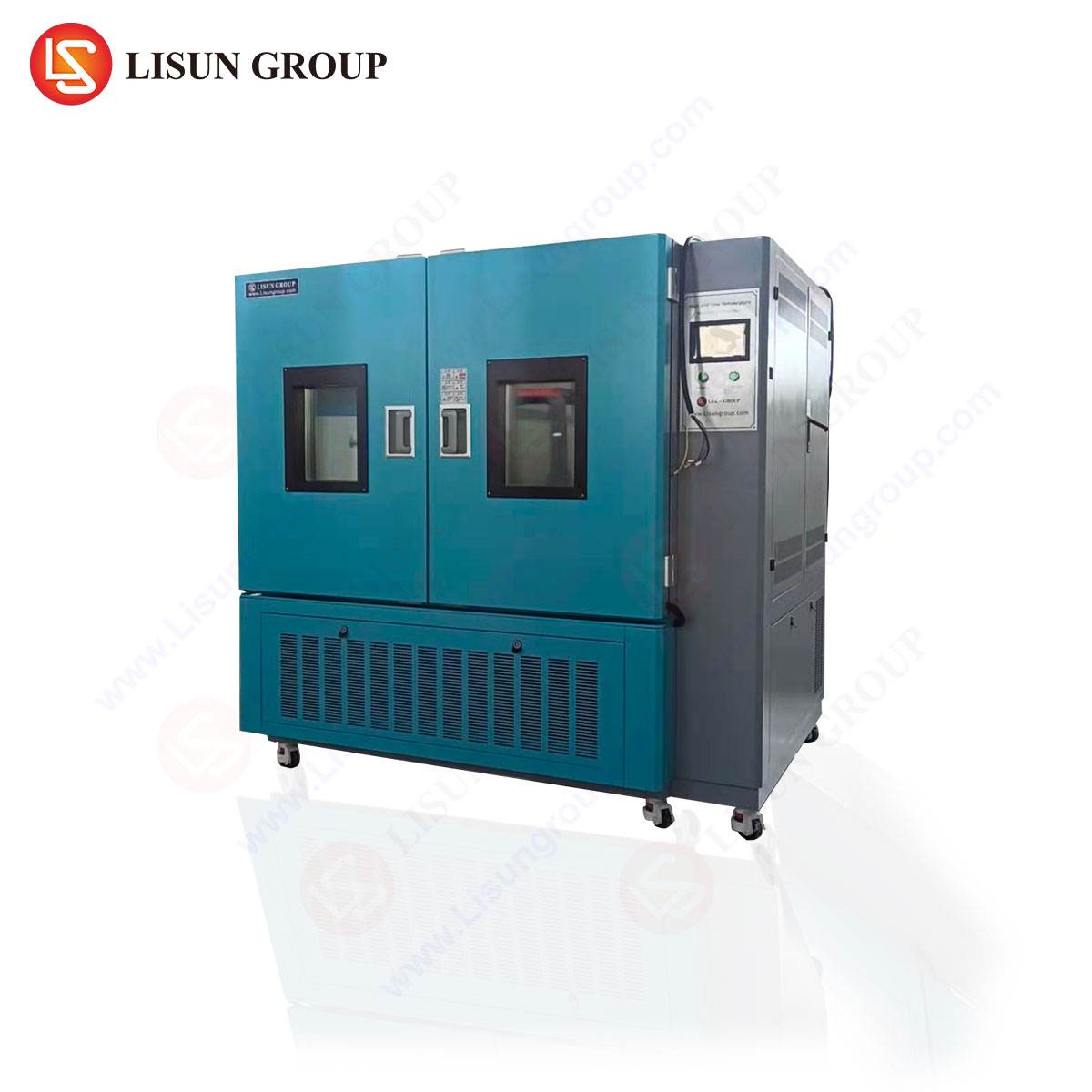
The IEC 60068 series establishes standardized environmental testing procedures for electrotechnical products, including LED luminaires. These standards define test methods for temperature extremes, damp heat, vibration, and shock, which are critical for assessing product durability across diverse operating environments. For LED manufacturers, compliance with IEC 60068 ensures fixture housings, optical components, and driver electronics withstand temperature fluctuations from -40°C to +85°C, humidity levels up to 93% RH, and mechanical stress without catastrophic failure.
1.2 Correlation Between Environmental Stress and Lumen Depreciation
Environmental stress accelerates lumen depreciation through mechanisms such as LED junction temperature rise, phosphor thermal quenching, and solder joint fatigue. The IEC 60068 tests simulate these stressors to reveal latent defects that standard photometric testing might miss. This is why the LED Luminaire Test: IEC 60068 Compliance Guide recommends integrating environmental preconditioning with photometric verification. For instance, a luminaire subjected to 1000 hours of damp heat testing at 85°C/85% RH may exhibit a 5-10% luminous flux reduction, directly correlating to the acceleration factor calculations used in TM-21 extrapolations.
2.1 IES LM-80 and TM-21: Lumen Maintenance Prediction
IES LM-80 specifies methods for measuring lumen depreciation of solid-state lighting sources over 6000 hours and 10000 hours of operation at controlled temperatures. The companion standard TM-21 provides mathematical extrapolation procedures (based on exponential decay fitting) to predict L70 and L50 lifespans beyond the measured period. Test temperatures mandated by LM-80 include 55°C, 85°C, and a third temperature selected by the manufacturer (often 105°C), all maintained within ±2°C tolerance. The LISUN LEDLM-80PL instrument supports up to 3 connected temperature chambers, enabling parallel testing at all required temperatures simultaneously.
2.2 IES LM-84 and TM-28: Alternative Measurement Under Controlled Conditions
IES LM-84 establishes a faster method for evaluating LED package or module lumen maintenance using intensified aging conditions (up to 7000 hours) and in-situ photometric monitoring. TM-28 outlines extrapolation techniques for LM-84 data, leveraging exponential models similar to TM-21 but optimized for the unique stress profile. The LEDLM-84PL variant is specifically engineered for this standard, featuring an integrated integrating sphere detection system that allows real-time flux measurements without sample relocation, eliminating positional errors and reducing test cycle variability by up to 15%.
2.3 IES LM-79-19, CIE 084, CIE 070, and CIE 127: Photometric Characterization
While LM-80/LM-84 focus on long-term degradation, IES LM-79-19 governs photometric measurements of solid-state lighting products under steady-state operation, including total flux, luminous intensity distribution, and chromaticity. CIE 084 provides foundational definitions for photometric quantities, CIE 070 covers spatial distribution patterns for absolute photometry, and CIE 127 addresses LED intensity measurement geometry. These standards collectively ensure that lumen maintenance data from aging tests are anchored to reproducible, internationally recognized measurement bases.
3.1 Dual System Variants: LEDLM-80PL and LEDLM-84PL Design Philosophy
LISUN’s optical aging test instruments are available in two targeted configurations. The LEDLM-80PL (LM-80/TM-21 focused) includes multiple temperature-controlled aging racks (3 chambers maximum), each independent configurable for 55°C, 85°C, or custom setpoints, with 1000-hour data logging intervals. The LEDLM-84PL (LM-84/TM-28 focused) integrates a high-precision integrating sphere (diameter options: 50cm to 100cm) directly within the test path, allowing continuous spectral flux measurement without sample handling. Both systems support 6000-hour standard test durations, extendable to 10000 hours for LM-80-15 compliance.
3.2 Arrhenius Model-Based Software for Predictive Reliability
The included software module applies the Arrhenius activation energy model to accelerate lifespan predictions. Users input junction temperature (Tj), activation energy (Ea, commonly 0.4-0.7 eV for LED packages), and measured lumen data. The software calculates acceleration factors (AF) using the equation AF = exp[(Ea/k) × (1/Ttest – 1/Tuse)], where k is Boltzmann’s constant (8.617 × 10⁻⁵ eV/K). This facilitates conversion of elevated-temperature test results into realistic end-use lifespan curves, achieving TM-21 confidence levels exceeding 90% for 6000-hour datasets.
3.3 Dual Testing Modes and Customizable Hardware Configurations
Operators can select between constant current mode (maintaining specified drive current, e.g., 350mA, 500mA) and constant power mode (stabilizing electrical power for driver-less modules). Both modes automatically record voltage, current, case temperature, and flux at user-defined intervals (minimum 30 seconds). Hardware customization includes detachable test boards (for various LED package footprints: 2835, 3030, COB, etc.), optional humidity control (+10% to +98% RH), and external sensor ports for fixture-level thermal mapping.
4.1 Test Plan Development: Combining Environmental and Photometric Metrics
A compliant LED Luminaire Test: IEC 60068 Compliance Guide mandates a structured test plan. First, define environmental pre-treatment: IEC 60068-2-1 (cold), IEC 60068-2-2 (dry heat), IEC 60068-2-30 (damp heat cyclic), IEC 60068-2-6 (vibration sinusoidal). After pre-treatment, transfer samples to the LISUN aging system within 30 minutes. Document initial luminous flux per LM-79-19, then begin the 6000-hour aging profile. Data analysis per TM-21/TM-28 requires post-treatment photometric verification to confirm irreversible lumen loss vs. temporary reversible shifts.
4.2 Case Study: 85°C/85% RH Damp Heat Followed by 6000-Hour Aging
A mid-power LED module (0.5W per LED, 48 LEDs) was exposed to IEC 60068-2-30 (6-hour cycles, 85°C/93% RH) for 10 cycles. Following, the LEDLM-80PL initiated tests at 55°C, 85°C, and 105°C. Results showed a 4.2% initial flux drop (due to moisture ingress) then a stabilization period of 500 hours before exponential depreciation. TM-21 extrapolation indicated L70 > 36,000 hours for the 85°C/85% RH-preconditioned set, versus 41,200 hours for the control set, proving environmental aging’s impact.
5.1 Managing Up to 3 Temperature Chambers Simultaneously
The LEDLM-80PL can drive 3 distinct thermal chambers, each independently controlled. For LM-80 compliance, chambers are set to 55°C, 85°C, and 105°C (or alternative as per manufacturer). The system’s multiplexer automatically switches photometric measurement paths (using optical fibers or mechanical mirrors) to each chamber in sequence. Calibration ensures each channel has ≤ 0.5% flux uncertainty. Real-time graphical interface displays co-plotted depreciation curves from all chambers, enabling immediate identification of temperature-dependent failure kinetics.
5.2 Integrating Sphere vs. Goniophotometer Configuration for On-Line Monitoring
For in-situ measurement, the integrating sphere method (integrating sphere-based) captures total spectral flux and color coordinates per CIE 127. The LEDLM-84PL’s built-in sphere (up to 1m diameter) offers ≥ 99% reflectance coating for infrared range and includes a photometer port for L70/L50 determination. Alternatively, for spatial distribution data, an external goniophotometer (e.g., LISUN LSG-1890) can interface with the aging system; however, note that goniophotometry requires sample removal, breaking the continuous aging cycle. Therefore, integrating spheres are preferred for LM-84/TM-28 protocols.
6.1 Sampling Strategies and Data Integrity
Continuous data logging at 60-second intervals generates 144,000 data points per sample over 6000 hours. To manage storage, LISUN software compresses data using polynomial spline fitting with tolerance thresholds (0.1% flux deviation). For statistical robustness, IEC and IES recommend testing a minimum of 5 units per condition. The system’s automated drift correction (using a stable reference LED) compensates for sphere and photometer aging, keeping measurement uncertainty below 1.2% (95% confidence interval).
6.2 Interpolation to L70/L50 and Confidence Bounds
TM-21 computes the depreciation curve fitting using a double exponential model: Φ(t) = α·exp(-β·√t) + γ·exp(-δ·t). The L70 (time to 70% lumen maintenance) is derived by solving Φ(t) = 0.7·Φ(0). For rigorous reporting, the 90% lower confidence bound is calculated based on the covariance matrix of fitted parameters. LISUN’s software automatically outputs this bound, dramatically reducing manual calculation errors and accelerating certification report generation.
| Technical Feature | LEDLM-80PL (LM-80/TM-21) | LEDLM-84PL (LM-84/TM-28) |
|---|---|---|
| Primary Standard | IES LM-80, TM-21 | IES LM-84, TM-28 |
| Maximum Chambers | 3 independent | 1 (integrating sphere) |
| Test Duration | 6000-10000 hours | 3000-7000 hours |
| Measurement Type | Switching multi-sample | Continuous in-situ |
| Temperature Range | +25°C to +125°C (±0.5°C) | +25°C to +105°C (±0.3°C) |
| Humidity Control | Optional (+10% to +98%) | Built-in (+10% to +98%) |
| Typical L70 Uncertainty | ±6% | ±4% |
| Software Extrapolation | TM-21 (double exp) | TM-28 (exponential) |
| Sample Capacity | Up to 240 LEDs per chamber | Up to 120 LEDs per batch |
| Reference Standards | LM-79-19, CIE 127, CIE 084 | LM-79-19, CIE 070, CIE 084 |
The LED Luminaire Test: IEC 60068 Compliance Guide presented herein establishes a comprehensive methodology for evaluating LED luminaire reliability under combined environmental and photometric stress. By integrating IEC 60068 pre-treatment protocols—damp heat, thermal cycling, vibration—with LISUN’s LEDLM-80PL and LEDLM-84PL aging systems, engineers can accurately predict L70/L50 lifespans per IES LM-80/TM-21 and LM-84/TM-28 standards. The Arrhenius Model-based software transforms high-temperature accelerated aging data into actionable end-use predictions, supported by rigorous confidence bounds. The dual-system approach offers flexibility: LEDLM-80PL excels in multi-chamber high-volume testing, while LEDLM-84PL provides continuous in-situ flux monitory with reduced uncertainty. For third-party labs and manufacturers alike, this guide enables precise determination of failure mechanisms (lumens depreciation, chromaticity shift) and drives faster, more reliable product certifications. Adopting LISUN’s integrated hardware and software solutions ensures alignment with worldwide regulatory frameworks while delivering robust quality assurance for modern LED lighting products.
Q1: What is the primary difference between IES LM-80/TM-21 and IES LM-84/TM-28 in terms of test duration and effort?
A: IES LM-80 typically requires a minimum of 6000 hours (with optional 10000 hours) of photometric testing under controlled temperatures (55°C, 85°C, and one manufacturer-chosen temperature). It uses manual or semi-automated sample movement for flux measurements. TM-21 extrapolates the data to estimate L70. Conversely, IES LM-84 reduces the test duration to a minimum of 3000 hours, but integrates continuous in-situ photometric measurement using an integrating sphere, reducing operator involvement and positional errors. TM-28 then extrapolates these data to long-term predictions. Consequently, LM-84/TM-28 is favored for faster qualification while maintaining acceptable accuracy (±4% typical L70 uncertainty vs. ±6% for LM-80).
Q2: How does the LISUN Arrhenius Model software handle activation energy (Ea) uncertainty in lifespan predictions?
A: The software allows users to input a range of Ea values (typically 0.3 to 0.8 eV, based on LED package materials). The program performs sensitivity analysis, calculating L70/L50 projections for each Ea. It then outputs a median prediction and a confidence band (e.g., 90% confidence) using the distribution of outcomes. Additionally, the software can automatically estimate Ea by fitting data from multi-temperature tests (e.g., 55°C and 85°C) via linear regression of ln(acceleration factor) vs. 1/T. This eliminates reliance on literature values and improves prediction accuracy for proprietary LED packages.
Q3: Can the LEDLM-80PL be upgraded to the LEDLM-84PL configuration?
A: No, the LEDLM-80PL and LEDLM-84PL (integrating sphere) have fundamentally different architectures. The -80PL uses a multi-chamber switching mechanism with an external photometer (or array spectrometer), while the -84PL integrates a high-reflectance integrating sphere (50-100cm) within its sample housing. However, both systems share the same electromechanical drivers, power supplies, and environmental control modules. LISUN offers trade-in or expansion options: if you require both LM-80 and LM-84 capabilities, we recommend purchasing the LEDLM-84PL plus an additional LEDLM-80PL chamber system, or utilizing the LEDLM-84PL’s optional chamber extension kit to add a second temperature zone for LM-80-style testing (without continuous in-situ measurement).
Q4: What are the typical failure indicators to monitor when conducting IEC 60068 damp heat tests (85°C/85% RH) combined with lumen maintenance?
A: Key failure indicators include: (1) catastrophic failures—unit stops emitting (open circuit, driver electrical short)—recorded instantly; (2) lumen depression that does not recover after drying (indicating phosphor degradation or silicone yellowing); (3) chromaticity shift (Δu’v’ > 0.003 per CIE) due to phosphor moisture absorption; (4) increase in forward voltage (+5% or more) suggesting contact corrosion or bond wire degradation; (5) insulative resistance drop below 1 MΩ (leakage current > 1mA) after humidity exposure, indicating PCB moisture absorption. LISUN software automatically flags these conditions, generating real-time alerts and preventing data corruption from abnormal operation.
Q5: How does the integrating sphere methodology in the LEDLM-84PL achieve continuous measurement without affecting aging conditions?
A: The LEDLM-84PL uses a high-precision optical grade integrating sphere that surrounds the test sample area. The LED module under test is mounted on a thermally controlled stage directly inside the sphere. The sphere is equipped with multiple fiber-optic ports connected to a compact array spectrometer. The system continuously captures spectral power distribution (from 350nm to 1050nm) with a 2-second integration time. Since the sphere walls are coated with highly reflective BaSO₄ (>98%) and are actively air-cooled to maintain constant temperature, the internal ambient for the LED module remains stable within ±0.2°C. The measurement light path does not perturb the thermal environment, thus enabling truly continuous stress testing with photometric verification in line with LM-84 requirements.