









Abstract
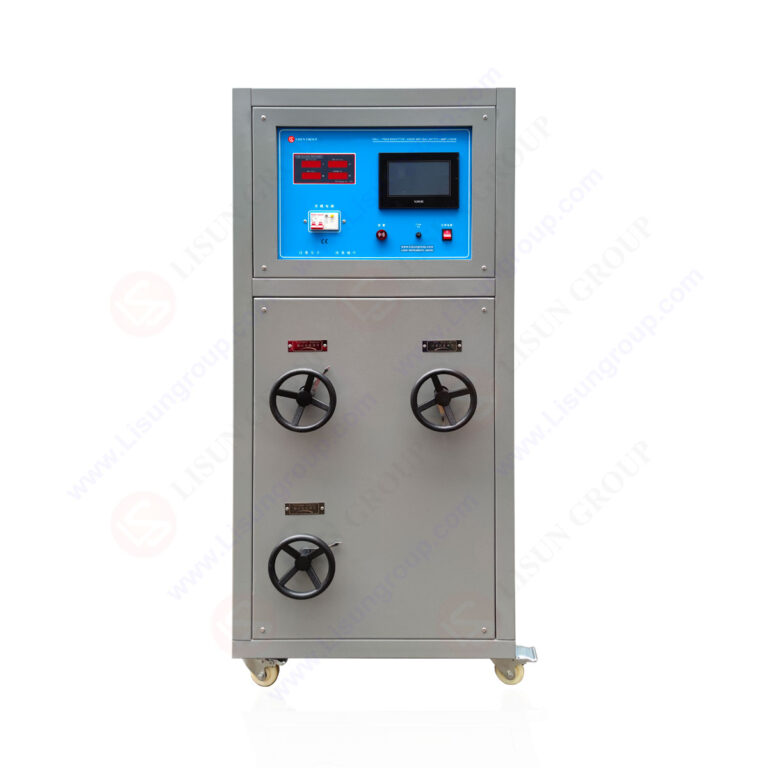
The LISUN DFX series Externally Ballasted Fluorescent Lamp Test Load Cabinet represents a critical advancement in electrical accessory compliance testing, providing precise simulation of fluorescent lamp loads for switch, socket, and circuit-breaker evaluation. This article examines the DFX-20 load cabinet working principle for LISUN testing, detailing how resistive, inductive, and capacitive load elements combine to replicate real-world ballasted lamp conditions. The DFX series enables manufacturers and testing laboratories to conduct standardized endurance testing per IEC 60669-1 Clause 19.2 and IEC 60884-1 Clause 20 requirements. With models ranging from DFX-20 to DFX-80, these load cabinets deliver adjustable current outputs from 0.10A to 80A with power factor control across 0.3 to 1.0 ranges, ensuring repeatable, verifiable test conditions for global compliance certification.
1.1 The Role of Load Cabinets in Electrical Testing
Electrical accessory testing demands accurate reproduction of real-world operating conditions to validate product safety and durability. Fluorescent lamp circuits present unique challenges due to their non-linear current characteristics, high inrush currents, and inductive behavior introduced by magnetic ballasts. The DFX-20 load cabinet working principle for LISUN testing addresses these challenges by providing controlled, repeatable load conditions that mimic actual ballasted lamp installations. Test engineers require load simulators that maintain stable parameters throughout extended endurance tests, which may involve tens of thousands of switching cycles. The DFX series fulfills this requirement through precision-engineered load elements and continuous monitoring systems that ensure test validity from initial cycle to final count.
1.2 Evolution of Load Testing Standards
International standards have progressively tightened requirements for electrical accessory testing, recognizing that inadequate load simulation leads to field failures not predicted during laboratory evaluation. IEC 60669-1 Clause 19.2 specifies mechanical endurance testing with electrical loads for switches, while IEC 60884-1 Clause 20 covers similar requirements for plugs and socket-outlets. These standards mandate specific power factor values, test currents, and operating voltages that must be maintained within defined tolerances throughout the entire test duration. The DFX series load cabinets align precisely with these standardization requirements, offering the stability and adjustability needed to satisfy both current compliance frameworks and anticipated future revisions.
2.1 Fundamental Load Circuit Topology
The DFX-20 load cabinet working principle for LISUN testing centers on a modular load bank architecture comprising precision resistive elements, iron-core inductors, and capacitive compensation networks. Each load element is individually switchable, allowing test engineers to configure the exact impedance characteristics required for specific test protocols. The resistive components provide the fundamental current-limiting function, while the inductive elements simulate the reactance of magnetic ballasts. Capacitive elements enable fine-tuning of the overall power factor, ensuring that tests conducted at 0.45 PF, 0.6 PF, or unity PF all produce accurate, representative results. This three-element topology distinguishes the DFX series from simpler resistive-only load banks, which cannot adequately represent the phase relationships present in actual fluorescent lamp circuits.
2.2 Control and Monitoring Systems
Modern compliance testing demands comprehensive data acquisition and process control. The DFX series integrates digital current metering with 0.5% accuracy, voltage display systems, and cycle counting functionality. Operators can program test run parameters, including target current values, power factor settings, and maximum test duration. The control interface provides real-time visualization of load parameters, enabling immediate detection of drift or instability. For applications requiring multi-channel testing, the DFX-20-3CH model offers three independent output channels, allowing simultaneous testing of three-pole switches or multiple accessories without cross-interference. This architectural flexibility ensures the load cabinet adapts to diverse product families and test configurations.
3.1 DFX Series Model Variations
The LISUN DFX series accommodates different testing requirements through four primary configurations. The following table compares core specifications across available models:
| Model | Current Output Range | Channels | Input Voltage | Power Factor Range | Max Load Capacitance |
|---|---|---|---|---|---|
| DFX-20 | 0.10A – 20A | 1 | AC 220V ±10% | 0.3 – 1.0 | 70 µF |
| DFX-20-3CH | 0.10A – 20A/channel | 3 | AC 220V ±10% | 0.3 – 1.0 | 70 µF/channel |
| DFX-40 | 0.10A – 40A | 1 | AC 220V ±10% | 0.3 – 1.0 | 70 µF |
| DFX-60 | 0.10A – 60A | 1 | AC 220V ±10% | 0.3 – 1.0 | 70 µF |
| DFX-80 | 0.10A – 80A | 1 | AC 220V ±10% | 0.3 – 1.0 | 70 µF |
3.2 Performance Parameters and Tolerances
Precision distinguishes compliant testing from approximate evaluation. The DFX-20 load cabinet working principle for LISUN testing incorporates components with tight tolerance ratings, maintaining current accuracy within ±0.5% of setpoint under stable conditions. Power factor adjustment resolution reaches 0.01, enabling fine granularity when matching standard requirements at PF 0.45, 0.6, or 0.8. The capacitance range extends to 70 µF, accommodating the inrush current characteristics of typical externally ballasted circuits. These specifications meet or exceed the measurement requirements specified in IEC 61058-1, ensuring that test results withstand scrutiny during certification audits.
4.1 IEC 60669-1 Switches Testing Requirements
IEC 60669-1 Clause 19.2 mandates that switches undergo mechanical endurance testing under specified electrical load conditions. For fluorescent lamp circuits, the standard requires an inductive load with power factor 0.45 to 0.5 when the test current exceeds 10A, and permits resistive loads for lower currents. The DFX-20 load cabinet working principle for LISUN testing directly addresses these parameters, providing calibrated inductive loads that meet the reactance requirements while maintaining waveform integrity. Compliance with this clause is essential for switches intended for lighting applications, particularly in commercial and industrial installations where fluorescent technology remains prevalent.
4.2 IEC 60884-1 Socket-Outlet Testing
Socket-outlets and plugs bear additional scrutiny under IEC 60884-1 Clause 20, which specifies electrical endurance testing following mechanical wear tests. The standard requires load circuits that replicate the burdens imposed by connected equipment, including the inductive characteristics of motorized appliances and ballasted lighting. Using the DFX series, laboratories configure loads to match the rated current and power factor specified for each socket-outlet classification. The load cabinet maintains these conditions throughout the required 10,000-cycle test procedure, with automatic interruption if parameters exceed acceptable tolerances. This capability ensures consistent, defensible test results that support compliance documentation.
5.1 Establishing Test Current Parameters
The DFX-20 load cabinet working principle for LISUN testing begins with accurate current determination. Operators reference the equipment under test (EUT) ratings to establish the target current value, typically matching the product’s nominal rated current. The load cabinet’s resistive elements provide coarse adjustment, while fine vernier controls achieve precise setpoints. This dual-stage configuration ensures the current stabilizes quickly and remains constant through temperature-induced resistance changes during extended testing. Stabilized test current is fundamental to producing valid results that support conformity assessment, as variations exceeding ±5% may invalidate entire test runs for certain product categories.
5.2 Power Factor Calibration Procedure
Power factor calibration constitutes the most technically demanding aspect of load configuration. The DFX-20 load cabinet working principle for LISUN testing integrates inductors with low-loss characteristics, ensuring that the phase angle between voltage and current reflects realistic ballast behavior. To calibrate, engineers set the initial resistive load, then introduce inductive reactance incrementally until the desired phase angle appears on the integrated metering system. For tests requiring power factor 0.45, the system typically operates at 0.6H inductance combined with 4.5Ω resistance, producing representative phase relationships matching magnetic ballast circuits. Many international compliance agencies require site verification of these settings before accepting test results.
5.3 Multi-Pole and Multi-Channel Configuration
Multi-pole switches and independent circuit testing present configuration challenges that the DFX-20-3CH model addresses through channel isolation. Each channel operates independently with its own load elements and monitoring circuits, allowing simultaneous testing at different current levels. This configuration capability proves important for three-phase switching devices or multi-gang socket outlets where each pole carries independent load conditions. The three-channel model maintains galvanic isolation between outputs, preventing cross-talk conditions that could compromise test validity.
6.1 Complete Endurance Testing Workflows
The DFX-20 load cabinet working principle for LISUN testing extends beyond standalone operation through integration with complementary LISUN equipment. The CZKS series life testers provide mechanical actuation for switches and sockets, generating the repeated operations that constitute endurance testing protocols. When paired with the DFX-20, these systems form a complete semi-automated test station where the life tester cycles the EUT while the load cabinet maintains specified electrical conditions. This integration reduces operator intervention, improves repeatability, and supports unattended overnight testing for extended endurance protocols.
6.2 Test Data Synchronization and Documentation
Effective compliance programs require comprehensive documentation of test conditions and results. The DFX series supports integration with LISUN data acquisition systems that record current, voltage, power factor, and cycle counts at programmable intervals. When connected to the CZKS series testers, this data integrates with mechanical operation logs, creating complete test records that satisfy quality management system requirements. For laboratories maintaining ISO/IEC 17025 accreditation, this documentation capability constitutes an essential feature supporting technical competency demonstration during assessments.
7.1 Minimum Requirements vs. DFX Capabilities
The following table maps typical standard requirements against DFX series capabilities:
| Parameter | Minimum Standard Requirement | DFX Series Capability | Margin |
|---|---|---|---|
| Current Accuracy | ±5% of setpoint | ±0.5% of setpoint | 10x improvement |
| Power Factor Range | 0.3 – 0.6 (inductive) | 0.3 – 1.0 (adjustable) | Extended range |
| Load Stability | ±2% over test run | ±0.5% over test run | 4x improvement |
| Cycle Counting | Manual verification | Integrated with ±0.1% accuracy | Automated |
| Capacitance Range | Not specified | 0 – 70 µF | Capability beyond spec |
7.2 Standards Alignment Summary
The DFX-20 load cabinet working principle for LISUN testing demonstrates alignment with multiple international standards including:
- IEC 60669-1 – Clauses 19.2, 19.3 (endurance testing with inductive loads)
- IEC 60884-1 – Clause 20 (electrical endurance for socket-outlets)
- IEC 61058-1 – General requirements for switches
- GB 16915.1 – Chinese national standard for switches
This multi-standard compliance capability positions the DFX series as versatile equipment suitable for laboratories supporting manufacturers targeting multiple international markets.
The LISUN DFX series Externally Ballasted Fluorescent Lamp Test Load Cabinet provides essential load simulation capabilities for electrical accessory compliance testing. The DFX-20 load cabinet working principle for LISUN testing combines precision resistance, inductance, and capacitance elements with sophisticated monitoring systems to deliver repeatable test conditions aligned with IEC 60669-1, IEC 60884-1, and related standards. Model flexibility, from single-channel DFX-20 to three-channel DFX-20-3CH and high-current variants through DFX-80, ensures laboratories select configurations matching their specific product testing portfolios. Integration with LISUN life testers and data acquisition systems enables complete, documented endurance testing workflows that support ISO/IEC 17025 accreditation requirements. For manufacturers and testing laboratories seeking reliable, standards-compliant load simulation equipment, the DFX series delivers the technical performance and operational efficiency necessary for credible compliance testing programs.
Q1: What distinguishes the DFX-20 load cabinet working principle for LISUN testing from simple resistive load banks?
A: The DFX-20 load cabinet working principle for LISUN testing integrates three distinct load element types: precision resistors, iron-core inductors, and capacitor banks. This three-element configuration enables accurate simulation of externally ballasted fluorescent lamp circuits, which exhibit inductive phase shifts and non-sinusoidal current waveforms. Simple resistive load banks cannot reproduce these electrical characteristics, potentially leading to inadequate testing that fails to expose real-world failure modes. The DFX-20’s inductive elements replicate ballast reactance while capacitive compensation allows fine power factor adjustment to match specific standard requirements. This technical sophistication ensures test conditions reflect actual installed conditions, producing compliance data that withstands certification scrutiny.
Q2: How does the DFX-20-3CH model support testing of multi-pole switching devices?
A: The DFX-20-3CH provides three fully independent load channels, each with its own current metering, power factor adjustment, and protective circuits. This architecture allows simultaneous testing of three-phase switches, multi-gang socket outlets, or three separate single-phase products. Each channel maintains galvanic isolation, preventing circulating currents or cross-channel interference that could affect test accuracy. Operators configure each channel independently, accommodating different current levels per phase when testing unbalanced switching devices. The three-channel configuration reduces overall test time, increases laboratory throughput, and provides operational flexibility for testing laboratories handling diverse product evaluation requests.
Q3: What maintenance procedures are recommended for sustained accuracy of the DFX series load cabinets?
A: Sustained accuracy requires periodic verification of load element tolerances and connection integrity. LISUN recommends annual calibration of current metering systems against reference instruments traceable to national standards. Inductor core conditions should be visually inspected for mechanical security and audible noise that may indicate lamination degradation. Resistive elements should be checked for hot spot discoloration suggesting abnormal temperature excursions. Capacitor bank health requires verification of capacitance values and leakage current performance. Additionally, all high-current connections should be re-torqued at specified intervals to prevent resistance increases that could cause drift. Following these procedures maintains performance and extends service life.
Q4: Can the DFX series load cabinets be used for testing LED driver circuits?
A: While the DFX series is specifically designed for externally ballasted fluorescent lamp testing, its broad current and power factor ranges permit adaptation to other load types. LED driver circuits exhibit different electrical characteristics than magnetic ballasts, including electronic switching waveforms and different inrush behaviors. The DFX series can provide fundamental current-limiting loads for LED driver output testing, but engineers should verify that the failure modes of interest are adequately represented. For compliance testing specifically addressing LED technologies, equipment designed for electronic load simulation may provide more representative conditions. Consult LISUN engineers for application-specific recommendations.
Q5: What documentation does LISUN provide to support test method validation?
A: The DFX series ships with comprehensive documentation including factory calibration certificates traceable to national measurement standards, detailed technical manuals describing circuit architecture and operational principles, and application notes referencing relevant standard clauses. LISUN also provides acceptance test procedures that laboratories can implement to verify performance upon delivery and during routine surveillance. This documentation supports ISO/IEC 17025 accreditation requirements for equipment calibration records and method validation. Additionally, LISUN offers training and technical support to help laboratories develop standard operating procedures aligned with specific test protocols for their product portfolios.