









Abstract
This article provides a comprehensive examination of LED module test solutions for IEC 60068 compliance, focusing on LISUN‘s advanced LED Optical Aging Test Instrument systems. These solutions address the critical need for reliable lumen maintenance testing under environmental stress conditions, aligning with IEC 60068 standards for temperature and humidity testing. The article details how the LEDLM-80PL and LEDLM-84PL systems, featuring Arrhenius Model-based software and dual testing modes, enable accurate prediction of L70/L50 lifetimes. By integrating standards such as IES LM-80, IES LM-84, TM-21, and TM-28, these instruments provide engineering teams with robust methodologies for validating LED module longevity and performance under accelerated aging conditions.
1.1 The Critical Role of Environmental Stress Testing in LED Reliability
LED modules deployed in industrial, automotive, and general lighting applications must withstand diverse environmental stressors as outlined in IEC 60068, which specifies environmental testing procedures for electrotechnical products. Temperature variations, humidity exposure, and thermal cycling directly impact LED lumen depreciation and chromaticity shift. LISUN’s LED Optical Aging Test Instrument bridges the gap between IEC 60068 environmental compliance and photometric performance validation.
1.2 Evolution of Lumen Maintenance Testing Standards
Modern lumen maintenance testing has evolved significantly over the past decade. While IEC 60068 provides the framework for environmental stress application, photometric standards such as IES LM-80-15 and IES LM-84-14 dictate measurement protocols. TM-21-19 and TM-28-14 offer statistical extrapolation methodologies for projecting long-term performance.
1.3 Overview of LISUN’s Dual-System Architecture
LISUN’s solution encompasses two primary system variants. The LEDLM-80PL supports LM-80/TM-21 compliance with continuous 6000-hour testing, while the LEDLM-84PL aligns with LM-84/TM-28 standards. Both systems feature integrated Arrhenius Model-based software for accelerated aging predictions.
2.1 Hardware Configuration and Modularity
The LED Optical Aging Test Instrument offers customizable hardware configurations tailored to specific testing requirements. Systems support up to 3 connected temperature chambers simultaneously, enabling parallel testing at multiple temperature setpoints. A 3-meter integrating sphere option provides high-precision photometric measurement capabilities.
2.2 Dual Testing Modes for Comprehensive Validation
Operating in either constant temperature mode or cyclic temperature mode, the instrument simulates both steady-state and diurnal temperature variations. Constant mode maintains stable temperatures (typically 55°C, 85°C, or custom setpoints) for standard LM-80 testing. Cyclic mode introduces thermal cycling profiles that stress LED modules more aggressively, simulating real-world operating conditions.
2.3 Core Measurement Capabilities
Lumen maintenance tracking at user-defined intervals, with manual or automated measurement options. Chromaticity coordinate measurements (x, y) per CIE 127 guidelines. Forward voltage monitoring to correlate electrical behavior with thermal aging. Photometric data logging with exportable CSV and graphical output formats.
Table 1: Comparative Specifications of LISUN LEDLM-80PL and LEDLM-84PL Systems
| Specification | LEDLM-80PL | LEDLM-84PL |
|---|---|---|
| Applicable Standard | IES LM-80, TM-21 | IES LM-84, TM-28 |
| Test Duration | 6000 hours (minimum required by LM-80) | 6000 hours (extendable) |
| Temperature Chambers Supported | Up to 3 chambers | Up to 3 chambers |
| Temperature Range | 25°C to 120°C (±2°C) | 25°C to 120°C (±2°C) |
| Measurement Intervals | 1000-hour increments (500-hour optional) | Continuous logging capability |
| Integrating Sphere Options | 0.3m, 1m, 2m, or 3m | 0.3m, 1m, 2m, or 3m |
| Data Analysis Software | Arrhenius Model-based, TM-21 compliant | Arrhenius Model-based, TM-28 compliant |
3.1 Temperature Testing Compliance (IEC 60068-2-1 and IEC 60068-2-2)
IEC 60068-2-1 addresses cold temperature testing, while IEC 60068-2-2 covers dry heat testing. LISUN’s LED Optical Aging Test Instrument supports temperature ranges from 25°C to 120°C, comfortably covering the specified test conditions. The system’s temperature stabilization time and uniformity (±2°C) ensure compliance with IEC 60068 requirements for temperature tolerance during measurement.
3.2 Damp Heat Testing Integration (IEC 60068-2-78)
When combined with environmental chambers offering humidity control, the LISUN system supports damp heat testing protocols per IEC 60068-2-78. The instrument’s measurement capabilities remain functional during humidity exposure when configured appropriately, enabling photometric data collection under combined temperature-humidity stress conditions.
3.3 Thermal Cycling and Shock Simulation (IEC 60068-2-14)
The cyclic temperature mode of LISUN’s system directly aligns with IEC 60068-2-14 thermal cycling test procedures. Programmable temperature change rates and dwell times allow engineers to replicate specified thermal shock profiles. Data collected during thermal cycling provides insight into LED junction temperature effects on lumen output.
4.1 IES LM-80-15: Measuring Lumen Maintenance of LED Light Sources
LM-80-15 establishes methods for measuring lumen depreciation over an extended period (typically 6000 hours minimum) at specified temperatures (typically 55°C, 85°C, and an additional user-selected temperature). LISUN’s LEDLM-80PL supports this standard with automated measurement cycles and data logging capabilities.
4.2 IES LM-84-14: Measuring Luminous Flux and Color Maintenance
LM-84-14 provides a more comprehensive framework assessing both luminous flux maintenance and chromaticity shift for LED packages, arrays, and modules. The LEDLM-84PL system specifically addresses LM-84 requirements with enhanced color measurement capabilities and extended test duration support.
4.3 TM-21-19 and TM-28-14: Projecting Long-Term Lumen Maintenance
TM-21-19 employs statistical exponential fitting to extrapolate lumen maintenance curves from LM-80 data. TM-28-14 applies a similar approach to LM-84 data. LISUN’s Arrhenius Model-based software simplifies this complex mathematical process.
4.4 Supporting Standards: IES LM-79-19, CIE 084, CIE 70, CIE 127
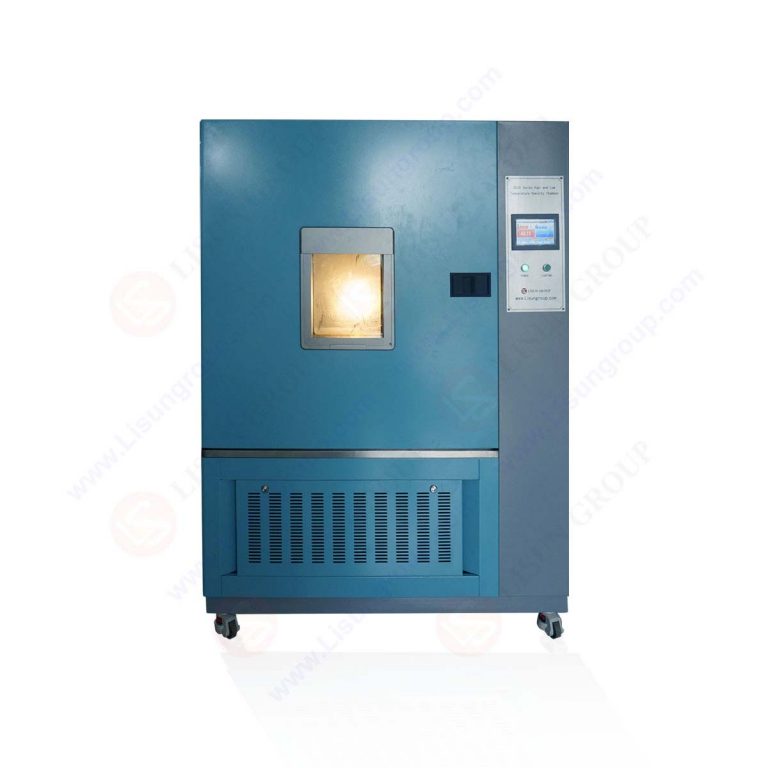
The integrating sphere configurations support IES LM-79-19 testing for electrical and photometric measurements. CIE 084 and CIE 70 provide foundational definitions and measurement guidance for luminous flux and spectral distribution. CIE 127 addresses LED measurement specifics, particularly relevant for chromaticity coordinate reporting.
5.1 Theoretical Foundations of the Arrhenius Model
The Arrhenius acceleration factor equation forms the basis for accelerated aging calculations. By testing LED modules at accelerated temperatures, engineers can extrapolate performance at normal operating temperatures. The LISUN software applies activation energy constants typical for LED phosphor and package materials.
5.2 Software Interface and Data Management
The proprietary LISUN software provides automatic calculation of TM-21/TM-28 extrapolated values. Users input measurement data, and the software generates L70 and L50 lifetime projections.
5.3 Practical Application in Engineering Decision-Making
These projections enable informed decisions about LED module selection for specific applications with defined lifetime requirements.
6.1 Test Setup and Sample Preparation
Proper sample preparation is critical for reliable results. LISUN provides comprehensive guidance including:
- Sample quantities sufficient for statistical validity (typically 20 units per temperature condition)
- Proper thermal interface material application for consistent heat dissipation
- Electrical connection verification before initiating test cycles
- Baseline photometric measurements conducted at 1000-hour intervals
Table 2: Recommended Test Configurations for Different Standards
| Standard | Temperature(s) | Duration | Measurement Points | Sample Size |
|---|---|---|---|---|
| LM-80 (IES) | 55°C, 85°C, +1 additional | 6000 hours | 0, 1000, 2000, 4000, 6000 hours | ≥20 per condition |
| LM-84 (IES) | User-defined conditions | 6000 hours | Continuous monitoring option | ≥10 per condition |
| TM-21 (IES) | Based on LM-80 data | n/a | Statistical projection | n/a |
| TM-28 (IES) | Based on LM-84 data | n/a | Statistical projection | n/a |
6.2 Data Collection Protocols
Measurement intervals at specified durations. The LISUN system facilitates both in-situ measurement using built-in detection systems and ex-situ measurement using auxiliary integrating spheres.
6.3 Data Analysis and Reporting
The system generates comprehensive reports including lumen maintenance curves, chromaticity shift plots, and TM-21 projection calculations. Reports can be customized to meet specific client or regulatory submission requirements.
7.1 Configurable System Parameters
LISUN offers extensive customization:
- Custom temperature chamber capacities built to specific space constraints
- Tailored integrating sphere sizes for various LED module dimensions
- Additional channels for simultaneous testing of multiple module types
- Optional automated sample handling for high-throughput applications
7.2 Automotive and Industrial Lighting Applications
Automotive lighting modules require compliance with IEC 60068 temperature testing procedures.
7.3 Third-Party Testing Laboratory Implementation
Third-party testing laboratories utilize LISUN systems to provide compliant testing services.
LISUN’s LED Module Test Solutions for IEC 60068 compliance provide a comprehensive approach to validated LED module testing. The dual-system architecture of the LEDLM-80PL and LEDLM-84PL supports major industry standards including IES LM-80, LM-84, TM-21, and TM-28. The integration of Arrhenius Model-based software and support for up to three temperature chambers enhances testing efficiency and accuracy. For manufacturers and testing laboratories seeking robust and standards-compliant accelerated aging solutions, LISUN’s systems deliver essential capabilities. Continuous investment in these testing methodologies is crucial for advancing LED module reliability. The practical applications within automotive, industrial, and general lighting sectors demonstrate the product’s value in addressing current and emerging engineering challenges.
Q1: What is the minimum test duration for LED module testing under IES LM-80 using the LISUN LEDLM-80PL?
A: IES LM-80-15 specifies a minimum test duration of 6000 hours at each temperature condition. The LISUN LEDLM-80PL is specifically designed for this duration, with automatic measurement and data logging capabilities at 1000-hour intervals. For more accelerated validation, users can opt for custom durations exceeding 6000 hours; however, TM-21 extrapolation validity depends on having at least 6000 hours of measured data. The instrument’s software automatically handles the temporal alignment of data points and provides projections based on the full dataset. This duration aligns with industry consensus and ensures sufficient data for statistical analysis of lumen depreciation patterns.
Q2: How does the Arrhenius Model-based software in LISUN systems improve lifetime prediction accuracy?
A: LISUN’s Arrhenius Model-based software implements the mathematical acceleration factor that relates elevated temperature testing to normal operating conditions. The software uses activation energy values appropriate for LED phosphor and package materials, typically ranging between 0.3 to 0.7 eV depending on failure mechanisms. By inputting data obtained at accelerated temperatures, the software extrapolates lumen maintenance at target operating temperatures, producing L70/L50 projection curves. This approach improves accuracy by statistically fitting exponential decay models per TM-21 or TM-28 methodologies. The software also accounts for measurement uncertainties and provides confidence intervals for projections, enhancing engineering decision-making confidence.
Q3: Can the LISUN system be used for both constant temperature and thermal cycling tests per IEC 60068?
A: Yes, the LISUN LED Optical Aging Test Instrument supports dual testing modes. Constant temperature mode maintains a stable temperature setpoint within ±2°C per standards like IEC 60068-2-1 and IEC 60068-2-2. Cyclic temperature mode facilitates thermal cycling per IEC 60068-2-14, permitting programmable rates and dwell times. This flexibility allows engineers to conduct both steady-state and thermal cycling aging tests using a single instrument platform. The system records photometric parameters throughout the thermal profile, revealing performance variations that constant-temperature testing alone would miss.
Q4: What are the primary differences between the LEDLM-80PL and LEDLM-84PL systems?
A: The LEDLM-80PL is optimized for compliance with IES LM-80-15 and TM-21-19, focusing on lumen maintenance measurement at specified temperatures over 6000 hours. The LEDLM-84PL aligns with IES LM-84-14 and TM-28-14, which provide more comprehensive assessment including chromaticity shift. While both systems support up to three temperature chambers and similar integrating sphere options, the LEDLM-84PL offers enhanced color measurement capabilities and supports both 6000-hour minimum and extended-duration testing. Software packages differ in their prediction algorithms. The choice depends on whether an organization must meet specific client or regulatory requirements or prioritize comprehensive LED module characterization.
Q5: How does humidity testing per IEC 60068-2-78 integrate with photometric measurements?
A: While the LISUN LED Optical Aging Test Instrument focuses on temperature-controlled aging, it can be integrated into a larger environmental testing setup that includes humidity control. When combined with a climate chamber capable of damp heat cycling, photometric measurements can be made at specified intervals per IEC 60068-2-78. The integration requires proper synchronization of the measurement schedule with the humidity exposure profile. LISUN provides technical support to configure such combined systems while ensuring measurement accuracy and environmental control compliance.