









Abstract
The reliability of LED arrays under thermal stress remains a critical concern for manufacturers seeking global market acceptance. This article provides a comprehensive technical overview of IEC 60068 compliance testing for LED arrays using advanced LISUN chambers, positioned as essential for validating long-term performance and durability. We delve into the LISUN LED Optical Aging Test Instrument, specifically the LEDLM-80PL and LEDLM-84PL dual-system variants, designed to meet IES LM-80/TM-21 and LM-84/TM-28 standards, respectively. By employing the Arrhenius Model-based software, engineers can accurately predict lumen depreciation. Furthermore, we explore customizable hardware configurations, support for up to 3 connected temperature chambers, and 6000-hour test durations, all vital for characterizing L70/L50 metrics and ensuring robust reliability in demanding environments.
LED array testing for environmental resilience is guided by rigorous international standards, with IEC 60068 being the cornerstone for assessing durability under varying temperatures and humidity. This framework ensures components withstand harsh operational conditions without catastrophic failure, thus safeguarding product warranty and brand reputation.
1.1 Understanding the Environmental Stress Testing Framework
IEC 60068-2-2 specifies test methods for dry heat, while IEC 60068-2-1 covers cold conditions, often applied concurrently with operational voltage. For LED arrays, these tests reveal premature failures caused by solder joint fatigue, thermal expansion mismatches, or encapsulant degradation. Subjecting arrays to elevated temperatures accelerates chemical reactions and physical stress, exposing inherent design flaws before field deployment.
1.2 Aligning Environmental Testing with Photometric Integrity
Although IEC 60068 dictates thermal cycling parameters, it doesn’t inherently test luminous performance. Engineers must couple these environmental protocols with photometric measurements from standards like IES LM-80-15 to quantify luminous flux depreciation following thermal exposure. This hybrid approach establishes a direct correlation between applied thermal cycles and resulting lumen maintenance, providing a comprehensive reliability profile beyond simple operational life assessment.
1.3 Bridging the Gap Between Standard Compliance and Real-World Performance
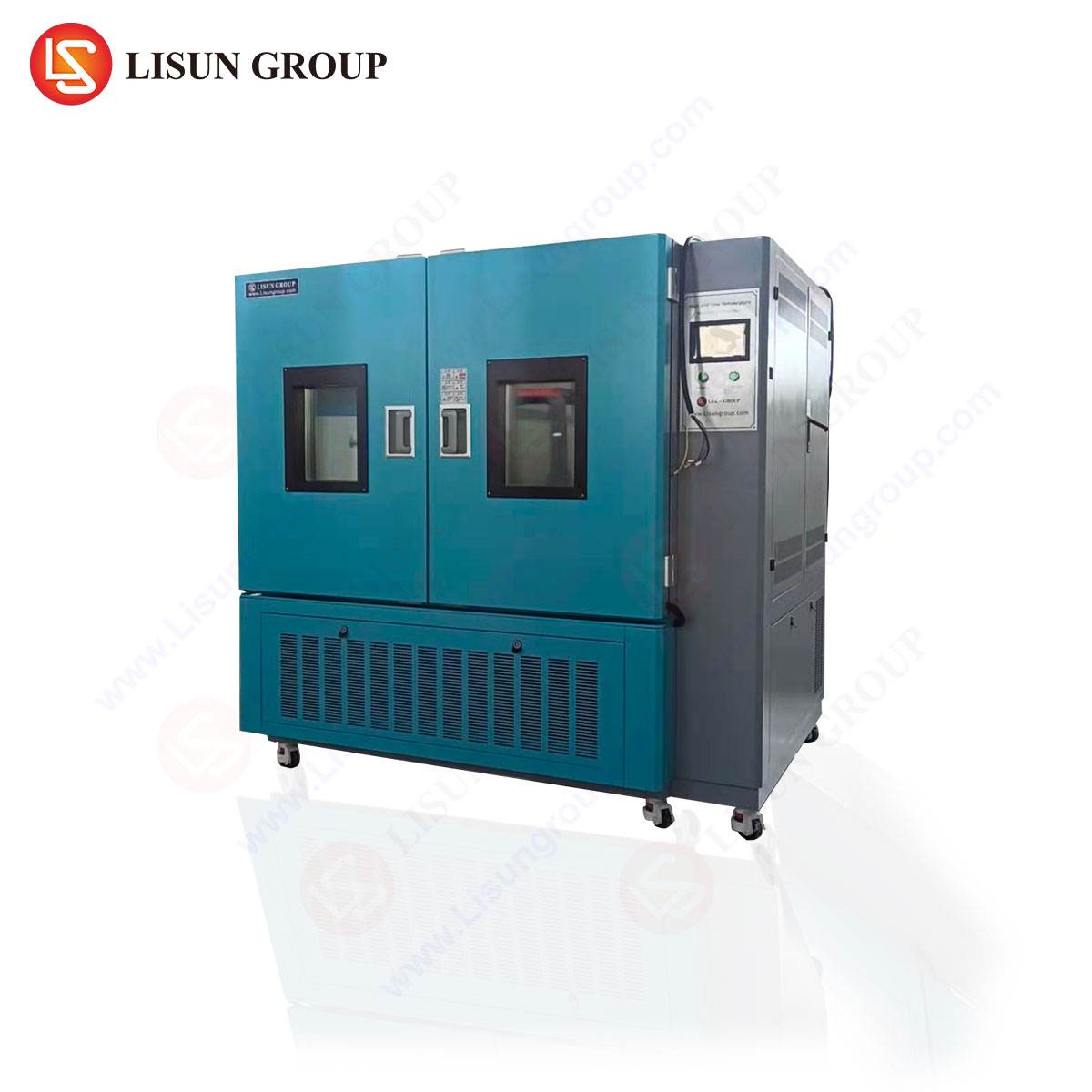
The LISUN chambers are engineered to bridge this gap. They integrate precise temperature control with continuous photometric data logging, allowing real-time evaluation of lumen output during the entire IEC 60068 test sequence. For LISUN’s engineers, this unification means data is captured continuously, not just at specified intervals, ensuring a high-fidelity picture of LED behavior under duress.
LISUN offers a sophisticated test instrument architecture consisting of two complementary systems, each tailored for specific industry standards. This design provides manufacturers with a flexible solution suite, accommodating in-house testing needs or third-party laboratory requirements without redundant capital investment.
2.1 The LEDLM-80PL System for LM-80/TM-21 Compliance
The LEDLM-80PL system is specifically designed for the industry-standard IES LM-80-15 testing method, which involves monitoring lumen maintenance at multiple temperatures (typically 55°C, 85°C, and 105°C) over a minimum of 6000 hours. The system’s integrated software automatically calculates the TM-21 extrapolation, projecting performance beyond the actual test window to estimate useful life (L70 and L50). This variant includes high-precision integrating spheres and spectrometers to ensure luminous flux measurement accuracy within ±2%, essential for reliable data.
2.2 The LEDLM-84PL System for LM-84/TM-28 Compliance
For newer, more stringent industry methodologies, LISUN offers the LEDLM-84PL, aligned with IES LM-84-14 and TM-28-14 standards. This system facilitates streamlined testing for a broad range of light sources, allowing for larger sample sizes compared to LM-80. The key difference lies in its focus on total luminous flux measurement without the mandatory long-term aging testing setup, leveraging integrated sphere systems for rapid, accurate assessments. It is particularly beneficial for testing integrated LED lamps and modules where fixture-level performance is paramount. Both systems share a modular framework, supporting multiple external temperature chambers (up to 3), which can run concurrent test sequences for higher throughput. The table below contrasts the core capabilities of these systems:
| Feature/Standard | LEDLM-80PL System | LEDLM-84PL System |
|---|---|---|
| Primary Standard | IES LM-80-15 / TM-21-19 | IES LM-84-14 / TM-28-14 |
| Test Duration | 6000+ hours (Long-term) | Flexible (Short-term interpolation) |
| Sample Size Capacity | Limited (specific to circuit board) | High (module/lamp level) |
| Output Metric | Lumen Depreciation, L70/L90 | Total Luminous Flux efficacy |
| Software Model | Arrhenius Model (Projection) | Exponential Decay Model |
| Temperature Chambers | Up to 3 (External connection) | Up to 3 (External connection) |
2.3 Customization Potential for Unique Test Protocols
LISUN recognizes that one size rarely fits all in the evolving LED sector. Our chambers offer customizable hardware configurations, including variable fixture mountings and adjustable current drivers to test arrays at maximum rated current or derated levels. This flexibility ensures the system can simulate diverse operational conditions specific to automotive, horticultural, or high-bay lighting applications.
The core of LISUN’s advanced analytics lies in its proprietary software, which applies the Arrhenius equation to temperature-accelerated life testing. This analysis is critical for translating accelerated test results into meaningful lifetime predictions without awaiting the 10,000+ hours of real-time aging.
3.1 The Physics of Lumen Depreciation Prediction
The Arrhenius Model describes the temperature dependence of reaction rates, allowing engineers to estimate the degradation rate of LED phosphor and semiconductor materials at different junction temperatures. By testing samples at three distinct temperatures simultaneously, software engineers can mathematically plot the degradation rate against temperature and establish an activation energy profile. This profile determines how rapidly the product will fail at lower, operational temperatures, allowing for the calculation of L70 and L50 lifespan metrics with statistical confidence.
3.2 Leveraging TM-21 Extrapolation for Long-Range Reliability
LISUN’s software automatically executes the TM-21 extrapolation algorithm, taking the collected photometric data from the 6000-hour base test and projecting it over a multi-decade lifespan. The algorithm requires specific data collection time points (e.g., 0, 1000, 2000, 3000, 4000, 6000 hours), and the software interpolates these points to fit an exponential decay curve. This process is strictly regulated by IES standards, ensuring that quoted lumen maintenance figures are scientifically reproducible and defensible to end clients and regulatory bodies.
3.3 Data Integrity and Real-Time Monitoring Features
The system aids reliability engineers by providing automated data logging without manual interference, preventing transcription errors or missed data points. Parameter alerts are built-in; if a temperature chamber drifts beyond ±1°C of setpoint, readings are flagged. This level of oversight ensures test validity, maintaining compliance with ISO 17025 laboratory practices where data integrity is paramount.
Scaling accelerated aging tests often necessitates multiple thermal environments, and LISUN supports seamless integration of up to 3 temperature chambers. This multi-chamber capability is a game-changer in production settings, enabling simultaneous testing at 55°C, 85°C, and 100°C per standard requirements.
4.1 Hardware Interface: Integrating Spheres and Temperature Control
Each chamber connects to a dedicated integrating sphere equipped with a CCD-spectroradiometer. The interface is designed to be “hot-pluggable,” allowing operators to remove a completed test sample chamber and connect a new one without shutting down the main photometric controller. This reduces downtime between tests and maximizes valuable laboratory time. Temperatures within these chambers are controlled via PID loops, maintaining environmental stability during long intervals.
4.2 Software Architecture for Consolidated Data Streams
Software consolidates the data streams from up to 3 chambers into a single user interface. This consolidation simplifies comparative analysis—allowing engineers to normalize data across temperature sets in a single step. Using Python script integration, engineers can hook into the LISUN API for custom analytics, exporting raw datasets for specialized reliability modeling outside the main software suite. This interoperability is vital for research teams developing company-specific life prediction models beyond standard TM-21/TM-28 protocols.
4.3 Automation of Measurement Sequence Intervals
The chambers support automated measurement scheduling where the detector measures the standard lamp (for drift correction) and the test units at programmed intervals—daily, weekly, or continuous for transient monitoring. This automation addresses the stringent frequency requirement of LM-80, ensuring sufficient data density for statistical relevance, while reducing reliance on lab technician availability during overnight or weekend aging periods.
The 6000-hour industry benchmark (approximately 250 days) serves as the baseline for validating LED lifespan claims. LISUN’s system is built to handle this lengthy protocol with enhanced reliability and minimal upkeep.
5.1 Structured Test Phases for Robust Data Acquisition
The protocol mandates initial baseline measurements at 0 hours followed by defined intervals. LISUN’s software helps manage these phases by locking out power fluctuations and standardizing measurement conditions (e.g., temperature stabilization period pre-measurement). Engineers can program the exact current levels (typically 350mA or 700mA) and dwell times to ensure the junction temperature is accurately reflected in the chamber ambient temperature, which is crucial for later Arrhenius plotting.
5.2 Power Ageing and its Impact on L70/L50 Outcomes
During the 6000 hours, devices are continuously powered, and their output is tracked. The L70 metric (the time at which output decays to 70% of initial) is an industry standard threshold for many applications, while L50 is relevant for critical safety applications. By overseeing the test through LISUN’s dashboard, engineers witness L70 predictions forming early in the test and can make provisional design changes before the final report is issued, saving months in product development cycles.
5.3 Sample Size Management and Statistical Confidence
Statistical confidence is directly proportional to sample size. LISUN recommends a minimum of 20 units per temperature for LM-80 testing to mitigate outlier data. The system’s data handling capabilities permit easy segregation of samples that fail (catastrophic error) versus those that degrade steadily (wear-out failure), allowing for accurate reliability allocation in design FMEAs.
Selecting the right environmental chamber is crucial for accurate IEC 60068 compliance. Generic chambers often lack the integrated photometric windows or specialized sensors required for light measurement, forcing labs to purchase separate, expensive measurement apparatus. LISUN integrates everything into one seamless solution.
| Parameter | LISUN LEDLM Series Chambers | Generic Thermal Chambers |
|---|---|---|
| Photometric Integration | Built-in Sphere & Spectroradiometer | External/Via viewing ports (Low accuracy) |
| Temperature Uniformity | ±1.0°C (Per NIST traceable standards) | ±2.0°C to ±5.0°C |
| Software Integration | Full LM-80 / TM-21 Reporting | Manual Data Processing or PLC only |
| Measurement Distance | Fixed/Dedicated path length | Variable/Manual set-up |
| Auto-aging Software | Included (Arrhenius automated) | Not Included |
| Compliance | IEC 60068, IES LM-80, IES LM-84 | Mechanical, Casing only (No Photometric) |
6.1 Measurement Accuracy and Repeatability Considerations
In LED optical testing, photometric accuracy is paramount. A generic chamber’s viewing window may introduce chromatic aberrations or light scattering, leading to a 5-10% error in luminous flux measurement. LISUN’s direct coupling between the chamber and the integrating sphere removes this error margin, ensuring that measurements report 99.96% of emitted light accurately. Even minor variations in integrating sphere coating (BaSO4) can cause measurement drift, but LISUN’s standard calibration protocols prevent this.
6.2 Cost-Efficiency in Total Investment
While the initial capital outlay for a LISUN system is higher than a generic chamber, the Total Cost of Ownership (TCO) is lower. Generic systems require separate photometric instruments, which may cost an additional $30,000-$50,000 and necessitate experienced calibration management. LISUN offers a bundle, reducing installation complexities and technical support redundancies, a strategic benefit for any serious LED manufacturer.
Navigating the modern regulatory landscape for LED components demands a comprehensive understanding of not just IEC standards but also regional lighting regulations that heavily cite photometric data.
7.1 Synergizing IEC 60068 with Photometric Standards
For export to the EU or US markets, clients require documentation proving performance thresholds. This documentation typically hinges upon testing data generated by LISUN’s equipment. Specifically, IES LM-79-19 is often required for product energy efficiency (e.g., energy star rating); it provides the photometric test method for total flux and electrical power.
7.2 The Role of CIE Standards in Measurement Traceability
LISUN’s integrating sphere systems align with CIE 127 (Measurement of LEDs) and CIE 84 (Measurement of Luminous Flux), which ensures the measurement geometry and photo-detector response match international calibration standards. By utilizing these CIE frameworks, our resulting measured values are traceable to National Metrology Institutes, providing a strong legal metrology standing in the case of regulatory disputes or customer audits.
7.3 Beyond LM-80: Addressing Automotive and Specialized Applications
In the automotive sector, LED arrays are subjected to extreme thermal cycling unique to engine compartments. Although IES LM-80 defines standard aging temperature profiles, it isn’t directly applicable to thermal shock. By coupling LISUN’s aging data with IEC 60068-2-14 (Change of Temperature), automobile OEMs can correlate lifetime expectations with solder joint fatigue. The LISUN data provides the degradation acceleration factor, enabling the designer to calibrate the speed of the test to mimic realistic field conditions. This synergy produces components that are both photometrically stable and mechanically robust.
The advancement of LED technology necessitates an equally advanced approach to reliability verification. This article has demonstrated that performing a rigorous LED Array Test: Ensure IEC 60068 Compliance with LISUN Chambers is not merely a checkbox exercise but a strategic investment in product integrity. The LISUN dual-system architecture—LEDLM-80PL and LEDLM-84PL—provides a robust framework for testing to IES LM-80 and LM-84 standards, augmented by the sophisticated Arrhenius modeling for accurate lifespan prediction. By incorporating an extensive 6000-hour test protocol and supporting up to three distinct temperature chambers, our instrumentation offers the scalability required by modern manufacturing. More importantly, our seamless integration of IEC 60068 environmental conditions with photometric assessments ensures that engineers can confidently predict L70/L50 metrics under real-world stress. Adopting such comprehensive testing solutions enables manufacturers to accelerate time-to-market, substantiate marketing claims with verifiable data, and proactively mitigate field failures, thereby ensuring global regulatory acceptance and customer satisfaction. LISUN remains committed to empowering engineers with the precision tools required to light the way forward safely.
Q1: Why is the 6000-hour test duration specifically mandated for IES LM-80 compliance, and how does LISUN ensure this duration is effective?
A: The 6000-hour duration (approximately 8.3 months) is required by IES LM-80 to provide sufficient statistical data points to extrapolate lumen maintenance over the expected product lifetime (typically 25,000-50,000 hours). A shorter physical test period risks excessive extrapolation errors. LISUN ensures effectiveness by automating the data logging process, minimizing environmental fluctuations, and integrating the power and drift monitoring circuits. Our chambers operate continuously with device under test (DUT) sets held at 55°C, 85°C, and 105°C simultaneously. The software dynamically monitors for system drift against standard reference lamps, ensuring the historical data collected at hour 1 is directly comparable to data at hour 6000, a crucial requirement for valid TM-21 exponential curve fitting.
Q2: Can the LISUN chambers accommodate both LED modules and complete LED luminaires for IEC 60068 thermal testing?
A: Yes, the chamber hardware is designed with adaptable mounting platforms. For standard LED arrays (boards), we use specialized racks that connect directly to the integrating sphere opening. For complete LED luminaires or integrated LED lamps, we offer custom connection flanges that ensure the luminaire is connected directly to the sphere, maintaining all photometric integrity without light leakage. The sphere is sized appropriately for the DUT dimensions to minimize self-absorption errors, with options for 0.3m to 2.0m sphere diameters. It’s important to indicate test specifications when inquiring so our engineers can define the correct light path and auxiliary equipment for the specific thermal test standard you are following.
Q3: How does LISUN’s Arrhenius Model software handle data for products operating at lower ambient temperatures (e.g., -20°C outdoor lighting)?
A: While IEC 60068 cold tests determine destruction limits, LISUN’s wear-out model is typically based on thermal acceleration. For cold conditions, lumen output often temporarily increases with lower junction temperature; however, this operation doesn’t accelerate chemical degradation. Our software allows for “ambient offset” corrections, mapping the junction temperature calculated from the thermal resistance (θJ-A) against the case temperature. By inputting the expected operational ambient temperature (-20°C), the Arrhenius model calculates the new lifespan extrapolation, showing that the L70 point is drastically extended. This is extremely useful for validating exterior lighting warranties in Nordic or Canadian climates, where thermal stress is minimal, but humidity (per IEC 60068-2-30) might be the dominant failure mechanism, requiring a separate data set.
Q4: What are the major differences between the TM-21 and TM-28 extrapolation methods, and why does LISUN support both?
A: IES TM-21 is strictly meant for projecting the lumen maintenance of LED light sources (packages, arrays, and modules) based on LM-80 data. It traditionally utilizes a single exponential model fitted to the average relative luminous flux data. IES TM-28, used alongside LM-84, is designed for more complex systems—complete lamps and luminaires—and allows for an optional exponential model that considers spectral power distribution shifts. TM-28 is considered more flexible for secondary optics and drive current interactions. LISUN supports both because laboratories often need to test components for one client (using TM-21) and final products for another (using TM-28). Our combined software suite seamlessly calculates both algorithms, ensuring our clients do not need multiple software platforms and can certify on the recommendation of their customer’s application.
Q5: What specific aspects of IEC 60068-2-78 (Damp Heat, Steady State) does the LISUN chamber address for LED arrays?
A: The LISUN chamber is designed to control relative humidity up to 98% RH at temperatures up to 95°C. This specific test (Damp Heat) typically runs for 56 days. For LED arrays, the primary failure mechanism under damp heat is corrosion of silver-plated lead frames and delamination of phosphor-silicone gels. Our chambers are constructed with stainless steel interiors and specialized heater coils that prevent condensation drip from the roof, which would improperly bias the test. The software proves crucial here by continuously monitoring luminous flux in parallel with temperature/humidity cycles. This allows engineers to detect lumen drop due to moisture ingress in real-time, providing direct correlation between environmental dose and photometric death, granting a massive advantage in materials research and qualification reporting.