









Here is the comprehensive technical article on the IEC 60068-3-1:2023 Temperature & Humidity Test Chambers by LISUN, structured according to your specifications and written from the perspective of a Senior LED Testing and Reliability Engineer.
Abstract
This article provides a technical deep-dive into the IEC 60068-3-1:2023 Temperature & Humidity Test Chambers by LISUN, focusing on their critical role in LED reliability and lifetime validation. We analyze the integration of LISUN’s LEDLM-80PL and LEDLM-84PL systems, which are designed to accelerate lumen depreciation testing in compliance with IES LM-80 and IES LM-84. The discussion covers the Arrhenius Model-based software for high-temperature aging, dual testing modes, and hardware configurability. By facilitating extrapolation per TM-21 and TM-28 standards, these chambers enable engineers to predict L70/L50 lifetimes accurately. This article offers essential insights for R&D and QC professionals aiming to optimize photometric testing and ensure long-term product reliability.
1.1 The Shift from Traditional to LED-Specific Standards
The transition from conventional lighting to solid-state lighting (SSL) necessitated a paradigm shift in reliability testing. Traditional incandescent and fluorescent lamps had well-understood failure mechanisms, but LEDs present unique challenges, primarily gradual lumen depreciation rather than sudden catastrophic failure. This has driven the industry to adopt predictive models rather than simple time-to-failure analysis. Consequently, standards like IES LM-80 (for lumen maintenance of LED packages, arrays, and modules) and IES LM-84 (for LED lamps, light engines, and luminaires) have become fundamental, requiring extended test durations to generate reliable data.
1.2 Role of the IEC 60068-3-1:2023 Framework
While LM-80 and LM-84 specify what to measure, they defer to environmental testing standards for how to control the aging conditions. The IEC 60068-3-1:2023 Temperature & Humidity Test Chambers by LISUN are engineered specifically to address this. IEC 60068-3-1 provides the supporting guidance and background for temperature and humidity testing, ensuring that the controlled environmental conditions do not introduce variables that skew the photometric results. LISUN’s chambers ensure compliance with this framework by providing stable, uniform thermal and humidity environments, which are critical when trying to replicate the statistical models required for lifetime projection.
1.3 Criticality of Controlled Degradation
The core of LED aging is the Arrhenius Model, which describes how reaction rates increase with temperature. To qualify this acceleration, precise temperature control is non-negotiable. A variance of even ±2°C can significantly alter the activation energy calculation and lead to inaccurate L70 (time to 70% lumen maintenance) predictions. The LISUN chambers are designed to minimize these variances, allowing for the isolation of thermal stress as the primary degradation accelerant.
2.1 LEDLM-80PL: The Benchmark for LM-80 Compliance
The LISUN LEDLM-80PL is a dedicated LED Optical Aging Test Instrument tailored for component-level testing. It aligns strictly with IES LM-80, which mandates testing at specific case temperatures (typically 55°C, 85°C, and a third temperature selected by the manufacturer). The LEDLM-80PL supports up to 3 connected temperature chambers simultaneously. This feature is not merely a convenience but a necessity, as it allows engineers to run the three required temperature profiles in parallel, drastically reducing the wall-clock time required. This parallel testing is vital for generating the multiple data points needed for TM-21 non-linear regression analysis.
2.2 LEDLM-84PL: Advancing to LM-84/TM-28
For testing complete luminaires or light engines, the LEDLM-84PL system is deployed. Unlike LM-80, the LM-84 standard allows testing in “operating” or “standby” modes and relies on air temperature rather than case temperature control. The LEDLM-84PL integrates a different software algorithm to calculate the in-situ temperature of the DUT (Device Under Test), adjusting the chamber setpoint dynamically to maintain the required air temperature. This is critical for correlation with TM-28, which provides the projection methodology for LM-84 data, offering flexibility for manufacturers who need to qualify end-products rather than just the LED packages.
2.3 Comparative Analysis of System Variants
To clarify the distinct applications of these two systems, the following table summarizes their key specifications and compliance targets:
| Technical Feature | LISUN LEDLM-80PL | LISUN LEDLM-84PL |
|---|---|---|
| Primary Compliance Standard | IES LM-80, TM-21 | IES LM-84, TM-28 |
| Test Subject | LED Packages, Arrays, Modules | LED Lamps, Light Engines, Luminaires |
| Temperature Control Basis | Case Temperature (Tc) | Air Temperature (Ta) |
| Supported Chamber Connections | Up to 3 Chambers | Up to 3 Chambers |
| Typical Test Duration | 6000 Hours (per LM-80) | 6000 Hours (per LM-84) |
| Software Projection | TM-21 (L70/L50) | TM-28 (L70/L50) |
| Aging Temperature Range (Typical) | Ambient + 10°C ~ 100°C | Ambient + 10°C ~ 100°C |
3.1 Decoding the Physics of Failure
Lumen depreciation in LEDs is primarily driven by junction temperature, which accelerates chemical reactions in the epoxy, phosphor, and semiconductor material. The Arrhenius equation, k = A * e^(-Ea/(kBT)), quantifies this acceleration, where Ea is the activation energy (often around 0.2-0.7 eV for LED materials). LISUN’s software leverages this model to estimate the acceleration factor between the accelerated aging temperature and the operating temperature. This allows engineers to “compress” years of real-world operation into a 6,000-hour test window without losing statistical significance.
3.2 Software Integration and Data Analysis
The integrated software within the IEC 60068-3-1:2023 Temperature & Humidity Test Chambers by LISUN automates the collection of photometric and colorimetric data. It does not merely log data; it performs the complex curve fitting required by TM-21. The software applies exponential decay equations to the luminous flux data, calculating the decay rate constant. It then extrapolates this curve to project the L70 and L50 lifetimes. This removes human error from the statistical analysis and ensures that the reported lifetime claims are reproducible and defensible, even when dealing with high-brightness LEDs that show non-linear depreciation.
3.3 Dual Testing Modes: Constant vs. Switching
The chambers offer dual testing modes essential for comprehensive validation. The first is “Constant Current” mode, where the DUT is driven at a fixed current regardless of temperature fluctuations. This isolates the thermal effect on the LED itself. The second is “Constant Power” mode, which maintains the wattage of the DUT, simulating real-world driver behavior. While IEC standard 60068-3-1 provides the environmental guidance, the selection of these modes allows the LISUN system to correlate environmental stress with electrical stress, providing a more holistic view of the product’s end-of-life behavior.
4.1 Critical Role of the Integrating Sphere
The accuracy of lumen depreciation data depends entirely on the measurement setup. LISUN integrates an integrating sphere with a spectroradiometer into the test system. The chamber is designed to house a sphere on top, allowing for in-situ measurement. This means the LED is aged and measured in the same position, avoiding the thermal shock and alignment errors associated with moving the DUT between a burn-in chamber and a measurement station. This setup aligns with CIE 084 (Measurement of Luminous Flux) and CIE 127 (Measurement of LEDs), ensuring the captured data represents true radiative flux rather than angular-dependent intensity.
4.2 Customizable Chamber Specifications
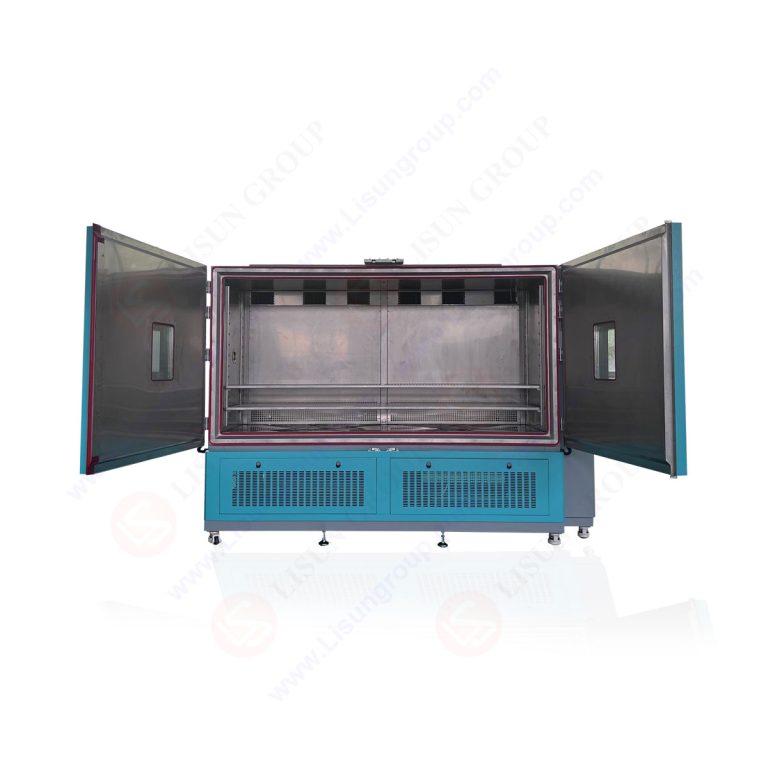
Understanding that one size does not fit all, LISUN offers custom hardware configurations. This includes adjustable interior dimensions to accommodate large luminaires (for the LEDLM-84PL) or specialized optical fibers for sensors. The temperature and humidity control systems are built with industrial-grade compressors and PID controllers, capable of rapid temperature ramp rates without overshoot. This is crucial for maintaining the stability defined by the IEC 60068-3-1:2023 Temperature & Humidity Test Chambers by LISUN, as humidity levels must often be controlled to prevent condensation on optical elements, which could scatter light and ruin photometric data.
4.3 Multi-Channel Data Acquisition
To support the up to 3 chambers, the system includes a high-channel-count data acquisition unit. This unit handles the connection of thermocouples for monitoring Tc (Case Temperature) and Tsp (Solder Point Temperature), as well as the current and voltage monitoring circuits. In a typical LM-80 setup, one might have 25 samples per temperature condition. If 3 chambers run simultaneously, the data logger must handle over 75 samples plus temperature references. The LISUN system automates this scanning, cycling through each channel quickly enough to ensure that all measurements are taken within a short enough window to be considered “simultaneous” for comparative analysis.
5.1 Alignment with CIE 084 and CIE 070
The measurement methodology adopted by LISUN systems adheres to CIE 084, which defines the measurement of luminous flux using an integrating sphere, and CIE 070, which outlines the measurement of absolute spectral power distribution. By using a spectroradiometer that is calibrated traceable to NIST standards, the system ensures that the absolute values of the lumen data are accurate. When the DUT is aged for 6000 hours, a drift of even 0.5% in the measurement reference can obfuscate the actual depreciation of the LED, which is often only a 5-10% drop at the 6000-hour mark. Therefore, the hardware stability is paramount.
5.2 The Symbiosis of Temperature Chambers and Photometry
The physical design of the IEC 60068-3-1:2023 Temperature & Humidity Test Chambers by LISUN addresses the conflict between thermal isolation and photometric measurement. The aging chamber is lined with a high-reflectance, diffuse coating (similar to the sphere material) or is designed with a mechanical shutter system. When measuring, the shutter opens, and the light reflects into the sphere. When not measuring, the shutter closes to prevent stray reflections from affecting the thermal balance. This dual-zone architecture demonstrates a high level of engineering sophistication that is rare in standard oven-type chambers.
5.3 Testing to IES LM-79-19
While LM-80 is for components, the final product verification often requires IES LM-79-19 (Electrical and Photometric Measurements of Solid-State Lighting Products). Although the aging system is primarily for LM-80/LM-84, the data generated—specifically the extrapolated L70 values—is used to justify the performance claims of the luminaire tested under LM-79-19. The LISUN system provides the foundational reliability data that substantiates the LM-79-19 photometric reports, ensuring the performance in the integrating sphere today will translate to real-world longevity tomorrow.
6.1 Standardized Test Protocols
A standard test is structured around a 6,000-hour campaign, with data points typically collected at 0, 1000, 2000, 3000, 4000, 6000 hours. The IEC 60068-3-1:2023 Temperature & Humidity Test Chambers by LISUN are programmed to interrupt the aging process at these specific intervals to perform the photometric measurement. During this period, the chamber must maintain the specified temperature within ±2°C and relative humidity within ±5% RH. The software manages this schedule autonomously, generating a report at the end of the 6000 hours that graphs the test data against the TM-21 projection model.
6.2 Logistical Efficiency in Testing
The capability to connect 3 chambers to a single controller console offers a logistical advantage. An engineer can initiate tests at:
- 55°C (Standard operation temp)
- 85°C (High stress temp)
- 100°C (Accelerated failure temp)
This tri-temp approach not only satisfies LM-80 requirements but allows for Arrhenius plot creation. By combining the L70 extrapolations from these three data sets, the software can calculate the activation energy (Ea) of the specific LED batch. This data is valuable for internal R&D to compare phosphor formulations or die attach quality, moving beyond simple compliance to actual reliability engineering.
7.1 Challenges in High-Temperature LED Testing
One key challenge is maintaining the voltage supply stability at high temperatures. As the LED heats up, its forward voltage drops, and its resistance changes. A constant current supply is mandatory to prevent thermal runaway. LISUN systems are equipped with high-precision DC power supplies that have less than 0.1% ripple and drift. This precision ensures that the current remains stable for the entire 6000 hours, without which the lumen depreciation data would be contaminated by electrical variability, a factor that is strictly controlled per IES LM-80 guidelines.
7.2 Adaptability for the Automotive Industry
For automotive electronics component engineers, the system offers specific advantages. AEC-Q102 requires temperature cycling and humidity bias testing. While the LISUN chamber is not a thermal shock chamber, its precise humidity control allows for “Damp Heat” testing (e.g., 85°C/85% RH) as outlined by IEC 60068-2-78. This dual capability of photometric aging and environmental stress makes it a versatile tool for testing LED headlamp modules and internal automotive lighting, ensuring they survive the harsh under-hood environment without compromising optical output.
7.3 Validation of LED Drivers
Though designed for lighting, the system can be configured to test the optical output of a luminaire alongside the electrical performance of its driver. By monitoring the power factor and total harmonic distortion (THD) during the 6000-hour aging, engineers can verify that the driver does not prematurely fail, which would result in a catastrophic drop in lumen output that would be incorrectly attributed to the LED package if the driver—rather than the LED—were the primary point of failure.
The IEC 60068-3-1:2023 Temperature & Humidity Test Chambers by LISUN represent a comprehensive solution for the rigorous demands of LED reliability testing. By integrating the IES LM-80/LM-84 testing methodologies with the analytical power of the Arrhenius Model, the system provides more than just environmental control; it offers a complete predictive maintenance strategy for solid-state lighting products. The ability to run three independent temperature chambers concurrently, coupled with the sophisticated TM-21/TM-28 projection software, empowers engineers to drastically reduce time-to-market without compromising on data accuracy. For LED manufacturers, third-party labs, and automotive engineers, these systems provide the confidence that L70/L50 lifetime claims are backed by robust, standard-compliant data, ensuring product longevity and customer satisfaction in an increasingly competitive market.
Q1: What is the significance of the Arrhenius Model in the LISUN software for LM-80 testing?
A: The Arrhenius Model is used to calculate the acceleration factor between the elevated test temperature (e.g., 85°C) and the actual operating temperature (e.g., 60°C) of the LED. In the LISUN software, this model allows engineers to extrapolate L70/L50 lifetimes from the 6,000-hour test data. It does this by determining the activation energy (Ea) of the thermal degradation process. A higher Ea implies that the LED is more sensitive to temperature changes. By accurately calculating this value from the three mandatory LM-80 test temperatures, we can predict how long the LED will last at a lower, realistic operating temperature, compressing years of simulated operation into a measurable test window.
Q2: Can the LISUN LEDLM-80PL be used to test LED luminaires instead of just components?
A: No, the LEDLM-80PL is specifically designed for components (packages, arrays, modules), controlled by case temperature (Tc) as mandated by IES LM-80. For complete luminaires or retrofit lamps, you would select the LEDLM-84PL, which aligns with IES LM-84 and controls based on air temperature (Ta). Using the wrong system can lead to incorrect thermal conditions, as luminaires have different thermal dissipation paths than bare components. The LEDLM-84PL software is equipped to handle the lower thermal resistance and different measurement points associated with full product testing.
Q3: How does the Chamber prevent condensation from affecting the optical measurement during Humidity tests?
A: This is a critical design feature. The integrating sphere used for photometric measurement is strictly isolated from the humidity chamber environment. While the aging area can reach 85% RH (non-condensing), the optical path leading to the sphere is maintained at a higher temperature or dried with clean, dry air/gas, preventing water molecules from condensing on the lens or the sphere wall. Since water absorbs infrared and visible light in specific bands, any condensation on the optical components would cause a spectral absorption artifact, leading to erroneous luminous flux readings and a false lumen depreciation curve. The system design prevents this physical isolation to maintain data integrity.
Q4: How does the LISUN software handle data points that fall outside the TM-21 projection curve?
A: The LISUN software utilizes statistical regression analysis recommended by TM-21. It employs a least-squares approximation and reports the R² (coefficient of determination) value. If outlier data points (e.g., due to sudden power interruptions or measurement errors) are identified, the software allows the user to flag them. However, per TM-21 protocol, only failures related to the LED package are considered; if a sample fails catastrophically (opens/shorts), its data is excluded, not just from the projection but from the “Energy Star” reporting limits. The software guides the user to ensure the extrapolation curve fits the data within a 90% confidence interval.
Q5: What is the benefit of the “up to 3 chambers” connectivity for compliance testing?
A: IES LM-80 requires testing at three or more temperatures: typically 55°C, 85°C, and a manufacturer-selected third temperature (e.g., 105°C). These tests must run for 6,000 hours. If you only had one chamber, you would have to run these tests sequentially, taking 18,000 hours (2+ years). The LISUN system allows you to run all three conditions in parallel (3 separate chambers connected to one console). This reduces the total test time to 6,000 hours (8.5 months), significantly speeding up product qualification and time-to-market for new LED designs.