









Abstract
The LISUN IEC 60068-3-1 test chambers represent a paradigm shift in LED reliability assessment, offering precision climate simulation that directly addresses the stringent demands of IES LM-80 and LM-84 testing protocols. This article examines the dual-system architecture—LEDLM-80PL for LM-80/TM-21 compliance and LEDLM-84PL for LM-84/TM-28 validation—through the lens of Arrhenius Model-based accelerated aging theory. With support for up to three interconnected temperature chambers and 6000-hour test cycles, LISUN’s systems enable comprehensive L70/L50 lumen maintenance projections while maintaining ±0.5°C temperature stability. We explore dual testing modes, customizable hardware configurations, and the critical role of IEC 60068-3-1 standards in ensuring reproducibility across photometric, colorimetric, and electrical measurements, providing engineers with actionable insights for optimizing their LED qualification workflows.
1.1 The Evolution of Lumen Maintenance Standards
The lighting industry has witnessed a dramatic transformation in reliability assessment methodologies, driven by the need for faster, more accurate predictions of LED performance over extended operational lifetimes. The IES LM-80-15 standard establishes the approved method for measuring lumen depreciation of solid-state lighting sources, requiring 6000 hours of testing at specified drive currents and case temperatures. Similarly, IES LM-84-14 extends this framework to encompass complete luminaires and integrated LED modules, providing a broader perspective on system-level reliability.
The LISUN IEC 60068-3-1 test chambers are engineered specifically to satisfy these rigorous requirements, incorporating environmental testing principles that ensure temperature uniformity and stability throughout the entire test duration. The standard mandates testing at three distinct temperatures (typically 55°C, 85°C, and a third temperature selected by the manufacturer), with measurements recorded at minimum 1000-hour intervals. This methodology enables the extraction of meaningful degradation trends that form the basis for lifetime projections.
1.2 The Arrhenius Model and Accelerated Aging Theory
The Arrhenius Model serves as the theoretical cornerstone for extrapolating accelerated aging data to real-world operational conditions. This chemical rate equation establishes the relationship between temperature and reaction rate, allowing engineers to predict LED lumen depreciation at lower operating temperatures based on data collected at elevated stress conditions. LISUN’s proprietary software integrates this model directly into the data analysis workflow, automatically calculating activation energies and applying appropriate acceleration factors.
Within the context of IEC 60068-3-1 test chambers, the Arrhenius Model enables the critical transition from measured 6000-hour data to projected L70 (70% lumen maintenance) and L50 (50% lumen maintenance) values over 36,000 to 100,000 hours. The LISUN system performs these extrapolations using the TM-21 methodology, which applies statistical curve-fitting techniques to determine the most probable depreciation trajectory. This approach has become the industry benchmark for LED lifetime estimation, accepted by ENERGY STAR and other regulatory bodies worldwide.
2.1 Dual-Chamber Architecture and Temperature Control
The LEDLM-80PL system represents the culmination of LISUN’s expertise in accelerated aging test instrumentation, specifically designed to meet the exacting requirements of IES LM-80-15. This variant supports up to three connected temperature chambers, enabling simultaneous testing at multiple temperature points as mandated by the standard. The dual-chamber architecture provides independent temperature control zones, each capable of maintaining stability within ±0.5°C of the setpoint, ensuring that test conditions remain consistent throughout the entire 6000-hour duration.
The system incorporates advanced thermal management technologies, including high-efficiency insulation and precision PID controllers, to minimize temperature gradients across the sample mounting surface. This configuration directly addresses IEC 60068-3-1 requirements for environmental testing procedures, which emphasize the importance of uniform temperature distribution for valid comparative testing. Additionally, the LEDLM-80PL supports both constant current and constant voltage drive modes, accommodating a wide range of LED packages, arrays, and modules.
2.2 Measurement Capabilities and Data Acquisition
Each temperature chamber within the LEDLM-80PL system accommodates up to 20 LED samples, with individual sample current monitoring and voltage measurement capabilities. The integrated data acquisition system records photometric, colorimetric, and electrical parameters at user-defined intervals, with a minimum logging period of one hour. This comprehensive data collection strategy ensures compliance with LM-80 requirements for luminous flux, chromaticity coordinates, and forward voltage measurements.
The system’s measurement suite includes provisions for integrating sphere-based photometric analysis, enabling accurate determination of total luminous flux without the directional errors associated with goniophotometric methods. The LEDLM-80PL also provides spectral power distribution (SPD) analysis using array spectroradiometers calibrated to CIE 127 standards, ensuring traceability to international measurement references. All data is stored in industry-standard formats, facilitating direct import into TM-21 calculation tools and custom analysis software.
3.1 System Overview and Luminaire-Level Testing
The LEDLM-84PL variant extends LISUN’s testing capabilities to encompass IES LM-84-14 methodologies, which focus on complete luminaires and integrated LED lighting systems. This distinction is crucial for manufacturers who must validate the reliability of their entire product assemblies, including drivers, optics, thermal management systems, and housings. The LEDLM-84PL maintains the same ±0.5°C temperature stability as its LM-80 counterpart while accommodating larger sample sizes and higher power dissipation levels.
The system’s design incorporates specialized mounting fixtures that replicate real-world installation configurations, ensuring that thermal pathways and airflow patterns accurately reflect field conditions. This attention to practical implementation details is essential for generating meaningful reliability data that correlates with actual product performance. The LEDLM-84PL also supports continuous monitoring of multiple electrical parameters, including power factor, total harmonic distortion, and inrush current characteristics.
3.2 Data Analysis and TM-28 Extrapolation
TM-28 serves as the companion document to LM-84, providing the methodology for projecting long-term lumen maintenance from the measured data. The LISUN LEDLM-84PL software module implements TM-28 algorithms directly, offering automatic calculation of projected L70 and L50 values with corresponding confidence intervals. This integration eliminates the need for manual data manipulation and reduces the potential for calculation errors during the extrapolation process.
The software’s Arrhenius Model implementation enables engineers to determine activation energies from multi-temperature test data, providing deeper insights into the dominant degradation mechanisms affecting their specific LED systems. The LEDLM-84PL system also generates comprehensive test reports formatted according to IES requirements, including all necessary supplementary information for ENERGY STAR submissions. Table 1 compares the key specifications of both LISUN system variants.
Table 1: LISUN LEDLM-80PL vs. LEDLM-84PL System Specifications
| Specification | LEDLM-80PL | LEDLM-84PL |
|---|---|---|
| Compliance Standard | IES LM-80-15 | IES LM-84-14 |
| Extrapolation Method | TM-21 | TM-28 |
| Maximum Temperature Chambers | 3 | 3 |
| Temperature Stability | ±0.5°C | ±0.5°C |
| Sample Capacity per Chamber | 20 LEDs | 10 Luminaires |
| Test Duration | 6000+ hours | 6000+ hours |
| Photometric Measurement | Integrating Sphere | Integrating Sphere |
| Spectral Analysis | CIE 127 Compliant | CIE 127 Compliant |
| Data Logging Interval | 1 hour minimum | 1 hour minimum |
4.1 Constant Temperature vs. Cyclic Temperature Testing
The LISUN IEC 60068-3-1 test chambers support two distinct operating modes, each tailored to different reliability testing objectives. The constant temperature mode maintains a fixed chamber temperature throughout the test duration, providing the stable conditions mandated by LM-80 and LM-84 standards. This mode is essential for establishing baseline lumen depreciation data and validating the Arrhenius Model assumptions that underpin lifetime projections.
The cyclic temperature mode introduces programmable temperature variations, enabling simulation of real-world operating conditions where thermal cycling occurs due to usage patterns, environmental fluctuations, or seasonal changes. This capability is particularly valuable for automotive lighting applications where components experience frequent temperature transitions. The cyclic mode supports customizable temperature ramps, dwell times, and cycle counts, allowing engineers to replicate specific stress profiles from CIE 084 and other application-specific standards.
4.2 Integration with LISUN Software Ecosystem
Both testing modes are fully integrated with LISUN’s comprehensive software suite, which provides real-time monitoring, data visualization, and automated report generation. The software interface displays critical parameters including temperature uniformity, sample current stability, and luminous flux trends, enabling immediate detection of anomalies that could compromise test validity. The system also incorporates automated alerting mechanisms that notify operators when parameters drift outside acceptable ranges.
The software’s Arrhenius Model calculator accepts data from multiple test conditions and automatically determines the optimal acceleration factor for lifetime projection. This feature is particularly valuable for laboratories conducting tests across multiple temperature points, as it eliminates the need for separate post-processing calculations. The integrated database functionality enables efficient management of large-scale testing programs, with complete traceability from initial sample preparation through final report generation.
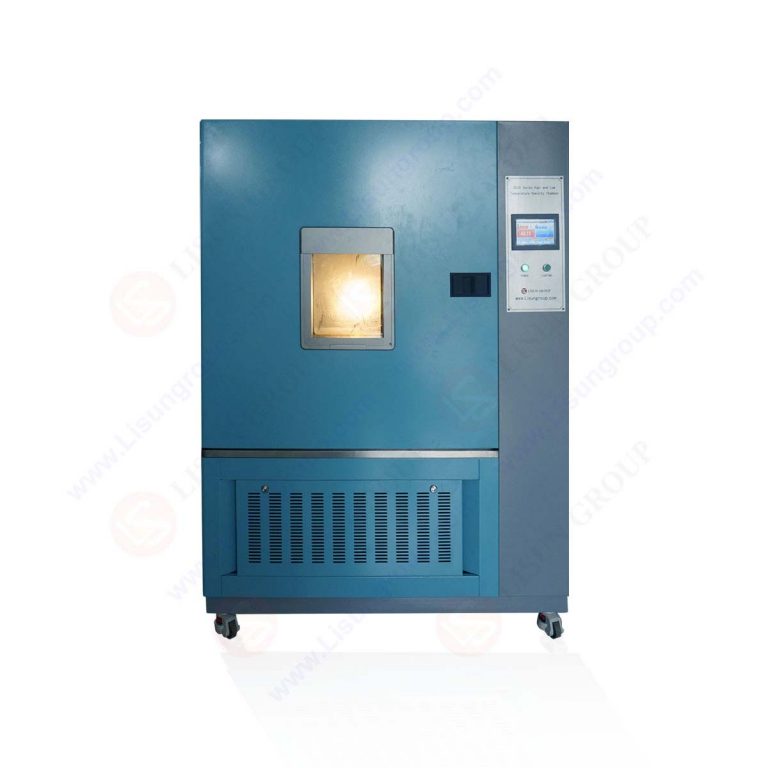
5.1 Sample Mounting and PCB Adapter Systems
LISUN recognizes that different LED packages and module designs require specialized mounting solutions to ensure proper thermal contact and representative operating conditions. The IEC 60068-3-1 test chambers offer customizable PCB adapter systems that accommodate various package styles, including surface-mount devices (SMD), chip-on-board (COB), and through-hole configurations. These adapters maintain consistent thermal resistance between the LED package and the temperature-controlled chamber environment.
Each adapter system includes precision-machined mounting surfaces with thermal interface materials optimized for minimal thermal impedance. The sample mounting design incorporates provisions for thermocouple attachment at the case temperature measurement point, ensuring accurate monitoring of the LED case temperature (Tc) as required by LM-80 test procedures. The system also supports custom wiring harnesses and connector configurations for compatibility with existing test fixtures and measurement equipment.
5.2 Power Supply and Drive Circuit Options
The customizable power supply architecture provides engineers with flexible options for driving LED samples under test. The available configurations include constant current sources with adjustable output ranges from 10 mA to 5 A, supporting both low-power indicator LEDs and high-brightness power LEDs. Constant voltage modes are also available for testing integrated modules and driver-less luminaire configurations.
The power supply system incorporates individual channel control and monitoring, allowing different current levels to be applied to samples within the same temperature chamber. This capability is essential for testing LEDs at multiple drive currents simultaneously, as required for characterizing current-dependent lumen depreciation behavior. The system’s measurement circuitry provides 0.1% current accuracy and 0.05% voltage measurement resolution, ensuring that electrical parameters are recorded with the precision required for meaningful reliability analysis.
6.1 Mapping to IEC 60068-3-1 and Environmental Testing Standards
The IEC 60068-3-1 standard provides background information and guidance for temperature testing procedures, establishing the principles that govern the design and operation of environmental test chambers. LISUN’s test systems are engineered to comply with these fundamental requirements, including specifications for temperature range, uniformity, and stability as documented in Table 2.
Table 2: IEC 60068-3-1 Temperature Test Chamber Requirements vs. LISUN Capabilities
| Parameter | IEC 60068-3-1 Requirement | LISUN Capability |
|---|---|---|
| Temperature Range | -65°C to +150°C (typical) | +20°C to +150°C (optional -40°C) |
| Temperature Uniformity | ≤1.0°C | ≤0.5°C |
| Temperature Stability | ≤0.5°C | ≤0.3°C |
| Ramp Rate | Application-specific | 2.5°C/minute maximum |
| Relative Humidity Control | Optional | 10% to 90% RH (custom) |
The chamber design incorporates safety features including over-temperature protection, door interlocks, and emergency stop systems, all compliant with international electrical safety standards. The systems also support connectivity with external monitoring and control systems through standard communication interfaces, enabling integration into laboratory information management systems (LIMS).
6.2 Alignment with IES LM-79 and CIE Measurement Standards
Beyond lumen maintenance testing, the LISUN systems facilitate compliance with IES LM-79-19, which governs the electrical and photometric measurements of solid-state lighting products. While LM-79 testing is typically performed under stable ambient conditions, the integration with climate simulation capabilities allows for combined environmental and photometric characterization studies. This holistic approach enables manufacturers to understand how temperature variations affect photometric performance, color stability, and electrical characteristics.
The measurement chain within the LISUN system maintains traceability to CIE 127 (measurement of LEDs) and CIE 70 (goniophotometric measurements) standards through calibration procedures performed by accredited laboratories. The integrating sphere-based measurement system incorporates baffles and auxiliary sphere techniques as specified in these standards, minimizing measurement uncertainties and ensuring reliable comparison of results across different test laboratories.
7.1 L70 and L50 Lifetime Projection Methodologies
The LISUN software suite implements both the standard TM-21 methodology and complementary approaches for lifetime projection, providing engineers with multiple perspectives on their LED products’ expected longevity. The basic TM-21 approach applies exponential curve fitting to the measured lumen maintenance data, with the projection limited to six times the test duration (36,000 hours for a 6000-hour test). This conservative approach protects against overextrapolation while providing reasonable estimates for most applications.
The advanced analysis module incorporates the Arrhenius Model-based approach, which combines data from multiple temperature conditions to establish the activation energy of the dominant degradation mechanism. This information enables more confident extrapolations to lower operating temperatures, where direct testing would require impractically long durations. The software also supports alternative statistical models, including quadratic fitting for LEDs exhibiting more complex degradation patterns.
7.2 Statistical Analysis and Confidence Interval Determination
The reliability analysis capabilities extend to comprehensive statistical evaluation, including determination of confidence intervals for all projected lifetime values. The software calculates both one-sided and two-sided confidence bounds at user-selected significance levels, providing quantitative assessments of projection uncertainty. These statistical analyses are essential for regulatory submissions and for making engineering decisions about product warranties and performance guarantees.
The reporting module generates comprehensive test reports in formats compliant with major industry standards, including IES LM-80-15 and LM-84-14 documentation requirements. Reports include all mandatory measurements, sample identification information, test conditions, and statistical analyses necessary for third-party verification. The export functionality supports multiple file formats, including PDF, Excel, and CSV, enabling seamless integration with other quality management systems.
The LISUN IEC 60068-3-1 test chambers provide precision climate simulation capabilities that directly address the rigorous demands of modern LED reliability testing. Through the dual-system architecture—LEDLM-80PL for LM-80/TM-21 compliance and LEDLM-84PL for LM-84/TM-28 validation—manufacturers can conduct comprehensive accelerated aging studies with complete confidence in the validity and reproducibility of their results. The integration of Arrhenius Model-based analysis, dual testing modes, and customizable hardware configurations ensures that the systems can adapt to a diverse range of testing requirements while maintaining ±0.5°C temperature stability throughout 6000-hour test cycles.
The alignment with international standards including IES LM-80, LM-84, TM-21, TM-28, LM-79, CIE 084, CIE 070, and CIE 127 positions LISUN’s solutions as the preferred choice for LED manufacturers, third-party testing laboratories, and regulatory compliance specialists. The comprehensive data analysis and reporting capabilities enable engineers to make informed decisions about product reliability, warranty commitments, and design improvements. As the LED industry continues to evolve toward higher efficiencies and more demanding application environments, the LISUN IEC 60068-3-1 test chambers will remain at the forefront of precision climate simulation technology, empowering engineers to validate their products with scientific rigor and engineering excellence.
Q1: What is the fundamental difference between the LEDLM-80PL and LEDLM-84PL test systems?
A: The LEDLM-80PL is designed specifically for testing individual LED packages, arrays, and modules according to IES LM-80-15, with lifetime projections performed using TM-21 methodology. The LEDLM-84PL extends testing capabilities to complete luminaires and integrated lighting systems per IES LM-84-14, using TM-28 for lifetime projection. While both systems maintain ±0.5°C temperature stability and support up to three connected chambers, they differ in sample capacity (20 LEDs vs. 10 luminaires per chamber) and accommodate different physical sample sizes and power dissipation levels. The choice between systems depends on whether your product portfolio primarily comprises discrete LEDs or complete lighting fixtures.
Q2: Why is the Arrhenius Model critical for LED lifetime testing, and how does LISUN integrate it?
A: The Arrhenius Model mathematically relates temperature to chemical reaction rates, enabling engineers to predict LED lumen depreciation at normal operating temperatures from accelerated aging data collected at elevated temperatures. LISUN’s software implements this model directly, automatically calculating activation energies from multi-temperature test data and applying appropriate acceleration factors. This integration eliminates manual calculation errors and enables statistically robust extrapolations to operational lifetimes that would otherwise require decades of real-time testing. The Arrhenius-based approach is essential for determining L70 and L50 values within practical testing timelines.
Q3: Can the LISUN test chambers accommodate custom sample sizes or specialized LED packages?
A: Yes, LISUN offers customizable PCB adapter systems designed to accommodate various LED package styles including SMD, COB, and through-hole configurations. The modular mounting architecture maintains consistent thermal resistance between the LED case and temperature-controlled chamber environment. Custom wiring harnesses and connector configurations are available to ensure compatibility with existing test fixtures and measurement equipment. For unusually shaped or high-power assemblies, LISUN engineers can design application-specific fixtures that preserve the critical thermal pathway necessary for valid LM-80 or LM-84 testing.
Q4: How does the cyclic temperature testing mode complement standard constant-temperature testing?
A: The cyclic temperature mode introduces programmable temperature variations that simulate real-world operating conditions involving thermal cycling. This is particularly valuable for automotive lighting applications and products exposed to outdoor temperature fluctuations. While constant-temperature testing provides the controlled conditions required for LM-80/LM-84 compliance and Arrhenius Model analysis, cyclic testing reveals failure mechanisms activated by thermal expansion and contraction stress. Combining both approaches provides comprehensive reliability characterization essential for high-performance applications.
Q5: What is the significance of supporting up to three connected temperature chambers in a single system?
A: The ability to connect three temperature chambers is critical because both LM-80 and LM-84 require testing at three distinct temperatures to establish the temperature-dependent degradation characteristics needed for Arrhenius Model analysis. Typically, samples are tested at 55°C, 85°C, and a third temperature selected by the manufacturer. Having all three chambers operated and monitored by a single control system ensures consistent test conditions, synchronized data collection, and eliminates discrepancies that could arise from using separate instruments or different data acquisition timing.