









Abstract
This comprehensive technical guide examines the application of LISUN climate chambers for IEC 60068-3 compliance testing, with particular emphasis on LED lumen maintenance validation. The article explores how the LEDLM-80PL and LEDLM-84PL dual-system variants facilitate accelerated aging tests conforming to IES LM-80, IES LM-84, TM-21, and TM-28 standards while integrating environmental stress testing per IEC 60068-3 guidelines. Key technical insights include Arrhenius Model-based lifetime extrapolation, 6000-hour test duration protocols, L70/L50 metric calculations, and support for up to 3 connected temperature chambers. Readers will gain practical knowledge for implementing robust reliability testing programs that satisfy international compliance requirements while optimizing laboratory efficiency. The guide provides specific configuration recommendations, data analysis methodologies, and comparative performance metrics essential for LED manufacturers, third-party testing facilities, and compliance specialists.
1.1 Foundational Principles of IEC 60068-3
IEC 60068-3 establishes fundamental guidance for environmental testing procedures, defining the framework for temperature, humidity, and thermal cycling parameters that influence electronic component reliability. For LED manufacturers, this standard provides the backbone for verifying that lighting products withstand real-world operational conditions. The standard’s guidance on temperature chamber calibration, measurement uncertainty, and test condition tolerances ensures consistent results across different laboratory environments. LISUN climate chambers integrate seamlessly with IEC 60068-3 protocols through precise temperature control (±0.5°C) and relative humidity regulation (±3% RH), enabling engineers to conduct compliant thermal stress evaluations before proceeding to photometric assessments.
1.2 Bridging Environmental Stress and Photometric Performance
The intersection of IEC 60068-3 environmental protocols with photometric standards creates a comprehensive reliability framework. While IEC 60068-3 dictates how thermal stress must be applied, photometric standards determine how optical degradation should be quantified. The LISUN LEDLM-80PL system exemplifies this integration by combining temperature chamber control with photometric measurement capabilities in a single workflow. Engineers can sequentially apply thermal cycling per IEC 60068-3, then transfer samples to the LEDLM-80PL aging test instrument to measure lumen depreciation under controlled conditions at 55°C, 85°C, and user-defined temperatures. This approach ensures that LED products meet both environmental robustness criteria and optical performance longevity expectations.
2.1 LEDLM-80PL and LEDLM-84PL Dual System Design
The LISUN product line features two distinct variants engineered for different testing regimes. The LEDLM-80PL is specifically configured for LM-80/TM-21 compliance testing, supporting up to 3 connected temperature chambers that can simultaneously run aging tests at different temperatures as required by LM-80 protocols. The LEDLM-84PL variant extends capabilities for LM-84/TM-28 testing, accommodating newer measurement methodologies that incorporate alternative sample configurations and updated data reporting formats. Both systems maintain temperature stability within ±2°C during 6000-hour continuous operation, with four aging test frames capable of holding multiple LED samples for statistical relevance.
2.2 Temperature Chamber Integration and Control
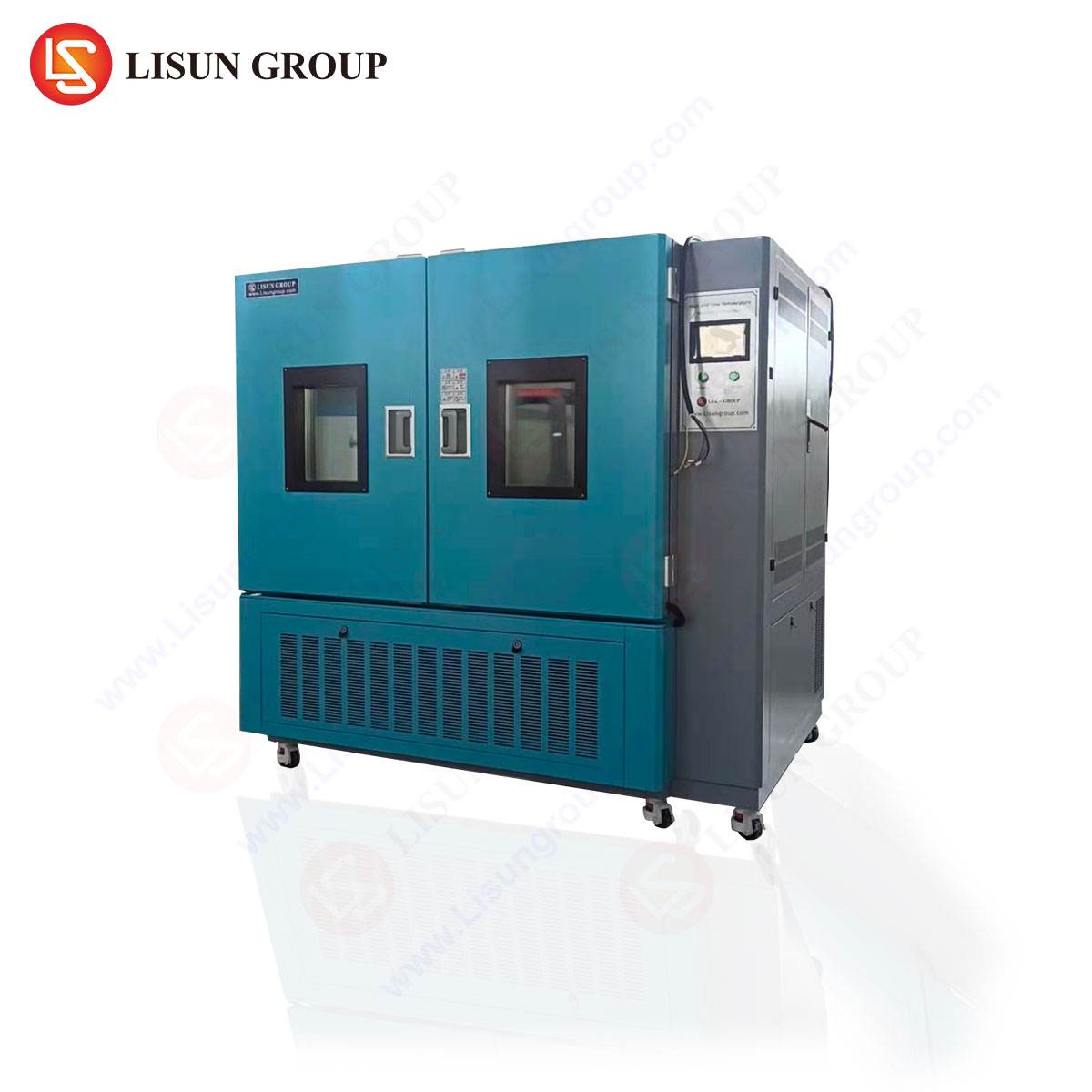
LISUN climate chambers utilize advanced PID control algorithms to maintain precise thermal environments essential for accelerated aging tests. The system supports programmable temperature profiles ranging from ambient to 100°C, with ramp rates adjustable between 0.5°C/min and 5°C/min. For IEC 60068-3 compliance, the chambers include calibration ports for external reference sensors, ensuring traceability to national standards. Each chamber provides independent control, allowing engineers to conduct multiple testing scenarios concurrently. A central data acquisition system records temperature, humidity, and elapsed time at 1-minute intervals, creating comprehensive datasets that feed directly into TM-21 extrapolation software.
3.1 IES LM-80 and TM-21 Testing Protocols
IES LM-80 (Approved Method for Measuring Lumen Maintenance of LED Light Sources) mandates 6000 hours of testing at specified temperatures, with data collected at minimum 1000-hour intervals. The LISUN LEDLM-80PL automates this process, managing multiple chambers set at 55°C and 85°C plus an optional third temperature point. Following data collection, TM-21 (Projecting Long-Term Lumen Maintenance of LED Light Sources) provides the mathematical framework for extrapolating L70 (time to 70% lumen output) and L50 (time to 50% lumen output) values. LISUN’s integrated software applies the Arrhenius Model to establish temperature-dependent acceleration factors, enabling accurate lifetime predictions beyond the 6000-hour measurement window.
3.2 IES LM-84 and TM-28 for Expanded Evaluation
Newer standards including IES LM-84 (Approved Method for Measuring Luminous Flux of LED Lamps, LED Light Engines, and LED Luminaires) and TM-28 (Projecting Long-Term Luminous Flux Maintenance of LED Lamps and Luminaires) address testing at the luminaire and integrated product level. The LEDLM-84PL variant supports these methodologies through enhanced measurement capabilities and software algorithms aligned with TM-28 extrapolation procedures. This expands compliance coverage beyond individual LED packages to complete lighting products, crucial for manufacturers producing integrated luminaires where the entire system’s reliability must be certified.
| Parameter | LEDLM-80PL (LM-80/TM-21) | LEDLM-84PL (LM-84/TM-28) |
|---|---|---|
| Temperature Chambers Supported | Up to 3 independent chambers | Up to 3 independent chambers |
| Standard Test Duration | 6000 hours minimum | 6000 hours minimum |
| Primary Temperature Points | 55°C, 85°C, + optional third | User-defined per protocol |
| Extrapolation Method | TM-21 with Arrhenius Model | TM-28 with Arrhenius Model |
| Sample Types | LED packages, arrays, modules | LED lamps, light engines, luminaires |
| Data Reporting Intervals | 1000-hour minimum | 1000-hour minimum |
| Lumen Metric Outputs | L70, L50 with confidence bounds | L70, L50 with confidence bounds |
4.1 Mathematical Foundations for Lifetime Prediction
The Arrhenius Model establishes the relationship between temperature and reaction rate, providing the theoretical basis for accelerated aging predictions. The software built into LISUN climate chambers implements the equation k = A·e^(-Ea/(k_B·T)), where Ea represents activation energy typically ranging from 0.2 to 0.7 eV for LED degradation mechanisms. By testing samples at multiple temperatures, the system determines the activation energy empirically, enabling accurate projections of lumen maintenance at operational temperatures such as 25°C or 40°C based on accelerated data from 85°C or 105°C tests. This approach reduces qualification time from years to months while maintaining statistical confidence.
4.2 Data Analysis Workflow and Reporting
The integrated software package automates data collection, normalization, and regression analysis essential for TM-21 and TM-28 compliance. After completing 6000-hour aging tests, the system performs exponential decay curve fitting using the IES-recommended methodology. It calculates L70/L50 values with 90% confidence intervals as required for ENERGY STAR submissions. The software generates comprehensive reports including raw photometric data, normalized lumen maintenance curves, and extrapolation parameters. Export functionality supports CSV and PDF formats compatible with major certification submission portals, reducing administrative overhead for testing laboratories.
5.1 Continuous Aging Mode for Standard LM-80 Compliance
Default testing configuration applies constant current (350mA, 500mA, or 700mA user-selectable) to LED samples while maintaining thermal chambers at specified temperatures for 6000 continuous hours. This mode aligns directly with LM-80 requirements, collecting photometric data at 1000-hour intervals. The system automatically switches measurement circuits sequentially across connected chambers, ensuring all samples are characterized with the same calibrated photometer. Continuous aging mode provides the straightforward dataset required for TM-21 extrapolation and regulatory submission.
5.2 Cyclic Stress Mode for Enhanced Reliability Assessment
Advanced cyclic mode applies temperature variations following user-defined profiles, simulating real-world operational conditions where LEDs experience thermal cycling from power on/off sequences. Testing parameters include cycle duration (typically 2-4 hours), temperature range (e.g., 25°C to 85°C), and soak times at extreme temperatures. This mode evaluates solder joint integrity, phosphor thermal degradation, and interconnect reliability beyond what constant temperature testing reveals. For automotive and outdoor lighting applications where thermal cycling is severe, cyclic mode provides crucial data supplementing standard compliance testing.
6.1 Chamber Configurations for Varied Testing Capacities
LISUN offers flexible chamber configurations supporting different testing scales. Single-chamber setups accommodate initial product validation with limited sample quantities. Dual and triple chamber configurations enable simultaneous testing at multiple temperatures, reducing total qualification time by 33-50% compared to sequential testing. Each chamber includes independent light-tight enclosures preventing photometric interference, isolated power supplies, and individual control interfaces. The modular design allows laboratories to expand capacity as testing volumes increase, protecting capital investment through incremental upgrades.
6.2 Measurement System Specifications and Calibration
The built-in integrating sphere and spectrometer system provides photometric measurements with ±2% luminous flux accuracy across the visible spectrum. Spectral resolution of 1nm enables precise chromaticity analysis essential for white LED characterization. Calibration traceability follows IES LM-79-19 guidelines for electrical and photometric measurements of solid-state lighting products. The system includes calibrated standard lamps for periodic verification, ensuring long-term measurement stability throughout the 6000-hour test duration. Automatic reference detection compensates for ambient temperature effects on the photodetector.
7.1 Setting Up Compliant Test Procedures
Implementation begins with establishing test plans that specify temperatures, test duration, sample quantities, and measurement intervals aligned with targeted standards. For LM-80 compliance, engineers configure chambers at 55°C and 85°C as mandatory temperatures, with an optional third temperature selected based on product application. The system validates chamber stability before test initiation, requiring temperature uniformity within ±2°C across the sample mounting area. Sample orientation follows manufacturer specifications, with appropriate thermal management simulating real-world mounting conditions.
7.2 Data Collection Integrity and Quality Assurance
Throughout 6000-hour test durations, the system maintains autonomous operation with continuous monitoring for anomalies. Photometric measurements occur during scheduled intervals without disturbing sample thermal conditions. Reference measurements using a control sample establish drift compensation factors for the measurement system. Data logging includes environmental conditions within each chamber, power supply parameters (current, voltage, power), and time-stamped photometric readings. Automated alerts notify operators of equipment faults or out-of-tolerance conditions, enabling rapid intervention to protect test validity.
7.3 Accelerated Testing Strategies for Product Development
Beyond certification testing, LISUN systems support research and development activities through flexible test profiles. Engineers can conduct preliminary 2000-hour screening tests to evaluate multiple design iterations, down-selecting promising candidates before committing to full 6000-hour certification runs. Harsh environment testing at elevated temperatures (up to 100°C) provides rapid comparative reliability data, identifying weak components or assembly techniques. These accelerated strategies complement compliance testing by providing early design feedback while maintaining rigorous standards for final qualification.
The LISUN climate chambers, specifically the LEDLM-80PL and LEDLM-84PL variants, represent comprehensive solutions for IEC 60068-3 compliance testing and LED reliability validation. By integrating environmental stress application with precision photometric measurement, these systems enable manufacturers to execute IES LM-80, IES LM-84, TM-21, and TM-28 protocols efficiently and accurately. The dual-system approach addresses both component-level and luminaire-level testing requirements, while Arrhenius Model-based software transforms 6000-hour datasets into actionable lifetime predictions. Support for up to 3 connected temperature chambers enables concurrent multi-temperature testing, reducing qualification timelines by up to 50%. For LED manufacturers, third-party testing laboratories, and regulatory compliance specialists, LISUN climate chambers deliver the technical rigor, operational flexibility, and standards alignment necessary to meet global lighting industry requirements. The integration of environmental stress per IEC 60068-3 with photometric standards creates a robust framework for ensuring LED product reliability, ultimately protecting brand reputation and consumer trust through verified performance claims.
Q1: What is the minimum test duration required for IEC 60068-3 compliance testing with LED products?
A: IEC 60068-3 itself does not mandate specific test durations for LED products, as it provides general environmental testing guidelines. However, when combined with photometric standards like IES LM-80, the minimum required test duration becomes 6000 hours for lumen maintenance certification. During this period, data must be collected at intervals not exceeding 1000 hours, providing at least 6 measurement points for TM-21 extrapolation. For accelerated development screening, shorter durations (2000-3000 hours) can provide preliminary reliability data, but final certification for L70/L50 claims requires the full 6000-hour protocol. The LISUN LEDLM-80PL system automatically manages these extended test durations across up to 3 temperature chambers simultaneously.
Q2: How does LISUN climate chamber software handle TM-21 extrapolation beyond the measured 6000-hour data?
A: LISUN’s integrated software applies the IES TM-21 mathematical methodology for lifetime extrapolation. The system first normalizes photometric data to percentage lumen maintenance values, then performs exponential least-squares regression fitting. The Arrhenius Model calculates activation energy from multiple temperature test data, establishing the temperature-dependence relationship. Using this model, the software projects lumen maintenance curves up to 6 times the test duration (36,000 hours for 6000-hour tests) for L70 calculations. The system reports projected L70 values with 90% confidence bounds, and automatically flags cases where extrapolation exceeds recommended limits. This computational approach validates lifetime claims without requiring decade-long physical testing.
Q3: Can the same LISUN system perform both LM-80 and LM-84 testing, or are separate instruments required?
A: While the LEDLM-80PL and LEDLM-84PL share the same hardware platform, they are configured with different software algorithms and measurement protocols optimized for their respective standards. The LEDLM-80PL focuses on LED packages, arrays, and modules per LM-80, while the LEDLM-84PL addresses LED lamps, light engines, and luminaires per LM-84. However, LISUN offers upgrade paths where existing hardware can be reconfigured with new software and calibrated measurement systems to switch between protocols. For laboratories requiring both capabilities, maintaining two systems allows simultaneous testing campaigns. The key difference lies in sample mounting fixtures and measurement geometry, with luminaire-level tests requiring larger integrating spheres or alternative measurement configurations.
Q4: What are the recommended calibration intervals for maintaining measurement accuracy during 6000-hour tests?
A: For photometric measurements, LISUN recommends verifying system calibration before starting each test campaign and at 1000-hour intervals during extended tests. This verification uses certified standard lamps traceable to national metrology institutes, achieving ±2% luminous flux measurement accuracy. Temperature sensors require calibration every 6 months or after 2000 hours of operation, whichever comes first, maintaining ±0.5°C accuracy. The integrating sphere’s spectral reflectance should be characterized annually, with cleaning performed if reflectance drops below 95% of initial values. Data acquisition system voltage and current measurements need quarterly verification. Adhering to this calibration schedule ensures that 6000-hour test results remain valid for TM-21 extrapolation and regulatory submissions.
Q5: How does the LISUN system support testing at additional temperature points beyond the standard 55°C and 85°C required by LM-80?
A: LM-80 requires testing at 55°C and 85°C, with a third temperature point optional at the manufacturer’s discretion. LISUN climate chambers support user-defined temperatures from ambient to 100°C, enabling testing at intermediate points such as 70°C or elevated conditions like 105°C for harsh environments. The system supports up to 3 connected chambers, each independently programmable. For LM-80 compliance, the third chamber can be set to any temperature appropriate for the product’s intended application. Additionally, cyclic temperature profiles can be programmed for enhanced reliability assessment beyond standard compliance requirements. The Arrhenius Model software incorporates data from all connected chambers to establish the temperature acceleration relationship, improving extrapolation accuracy for products with unusual degradation characteristics.