









Abstract
This comprehensive technical article examines the pivotal role of the IEC 60068 Compliant Walk-In Temperature Humidity Chamber in modern LED lumen maintenance testing and reliability engineering. The discussion centers on LISUN’s LEDLM-80PL and LEDLM-84PL optical aging test systems, which integrate Arrhenius Model-based predictive software with dual testing modes for accelerated aging validation. The article details how these systems support 6000-hour test durations per IES LM-80, enable L70/L50 life projection metrics, and accommodate up to 3 connected temperature chambers for extensive parallel testing. We explore the architectural design of the walk-in chamber, its compliance with IEC 60068 environmental testing standards, and its integration with photometric measurement instrumentation such as integrating spheres and spectroradiometers. For LED manufacturers and testing laboratories, the article delivers actionable insights into optimizing accelerated aging protocols, ensuring reproducible data across TM-21 extrapolations, and achieving robust compliance with IES LM-84, TM-28, and auxiliary standards including IES LM-79-19 and CIE 127.
1.1 From Traditional Ovens to IEC 60068 Compliant Walk-In Temperature Humidity Chambers
The transition from small benchtop ovens to large-format IEC 60068 Compliant Walk-In Temperature Humidity Chambers marks a significant advancement in LED reliability testing. Traditional test setups often struggled with sample size limitations and thermal uniformity issues, particularly when testing high-power LED modules or luminaires with substantial heat dissipation requirements. Walk-in chambers address these constraints by providing a controlled environment where temperature and humidity can be precisely regulated across a large volume. This scalability is crucial for manufacturers who need to test full luminaires, streetlights, or industrial fixtures rather than individual LED components. The IEC 60068 series provides the foundational environmental testing protocols, specifying temperature, humidity, and thermal cycling profiles that the chamber must reproducibly achieve.
1.2 Integrating Photometric Measurement with Environmental Stress
A defining feature of LISUN’s walk-in systems is the seamless integration of the temperature chamber with either a 1.5m or 2.0m integrating sphere. This configuration allows for in-situ photometric and colorimetric measurements without removing the LED sample from its thermal stress environment. This approach eliminates the measurement variability induced by sample repositioning, ensuring that lumen depreciation data reflects only the effects of temperature and humidity aging. The IEC 60068 compliant walk-in temperature humidity chamber thus becomes not just an environmental test tool, but a complete photometric validation platform. The synergy between thermal cycling and optical measurement is critical for generating high-fidelity LM-80 data sets.
2.1 LEDLM-80PL: Standard Compliance for LM-80 and TM-21
The LEDLM-80PL is engineered specifically for testing per the IES LM-80-15 standard. It supports rigorous testing protocols that require data collection at multiple temperatures—typically 55°C, 85°C, and a third temperature selected by the user. The system’s software automatically logs lumen maintenance data at specified intervals, computing L70 and L50 lifetimes according to TM-21-19 extrapolation methodologies. The chamber supports 6000-hour test durations, which is the benchmark for complete LM-80 data sets, although interim checkpoints at 1000, 3000, and 5000 hours are seamlessly tracked. The system can control up to 3 connected temperature chambers simultaneously, enabling parallel testing at different temperature and humidity conditions, which is essential for robust Arrhenius model fitting.
2.2 LEDLM-84PL: Addressing Newer LM-84 and TM-28 Protocols
The LEDLM-84PL variant is tailored for the newer IES LM-84-14 and TM-28-14 standards protocols, which focus on testing LED light engines and integrated lamps rather than individual packages. LM-84 requires a different set of operational conditions, often involving cyclic operation and a broader temperature range. The LEDLM-84PL accommodates these requirements through enhanced software algorithms for interpolating results and projecting long-term lumen depreciation. By supporting up to 3 temperature chambers, the system enables testing of multiple product families concurrently, accelerating the time-to-market for new LED products. Both systems share the foundational architecture of the IEC 60068 compliant walk-in temperature humidity chamber, ensuring environmental stress consistency across all test protocols.
3.1 Theoretical Foundations: Chemical Reaction Kinetics in LED Aging
LED lumen depreciation is fundamentally a thermally activated chemical and physical degradation process. The Arrhenius Model provides a mathematical framework to link temperature to the rate of degradation, expressed as: k = A × e(-Ea/(R×T)), where k is the reaction rate, Ea is the activation energy, R is the universal gas constant, and T is the absolute temperature. In LED testing, this model enables engineers to extrapolate accelerated aging data at high temperatures to predict behavior at lower, in-field operating temperatures. LISUN’s software integrates this model directly, allowing the IEC 60068 Compliant Walk-In Temperature Humidity Chamber to generate predictive curves for 25°C or 35°C operating conditions based on accelerated testing at 85°C or 105°C.
3.2 Software Implementation and Data Management
The software suite accompanying the LEDLM-80PL and LEDLM-84PL platforms handles complex data arrays, including luminous flux, CCT (Correlated Color Temperature), and CRI (Color Rendering Index) measurements taken at each aging checkpoint. It calculates L70/L50 metrics with confidence intervals, as recommended by TM-21. Furthermore, the software allows for manual and automatic curve fitting, with options for exponential or power-law decay models depending on the LED technology. The integration with up to 3 chambers means the software can manage a matrix of conditions, for example, testing at 60°C, 85°C, and 100°C while maintaining humidity levels in compliance with IEC 60068-2-78 (damp heat). This data-rich environment provides statistically significant sample sets, which are crucial for robust lifetime predictions and for defending product claims in regulatory submissions.
4.1 Standard Mode: Constant Temperature and Humidity
In standard mode, the IEC 60068 Compliant Walk-In Temperature Humidity Chamber maintains a constant temperature and relative humidity setpoint for the duration of the test. Common profiles include 85°C with 85% relative humidity (85/85 test) or 60°C with 60% RH, as specified in various automotive and high-reliability LED standards. This mode is ideal for establishing baseline LM-80 data sets and for comparative testing across competitor products. The stability of the chamber, typically ±0.5°C temperature and ±2% RH, ensures that the collected photometric data is free from environmental drift artifacts.
4.2 Extended Stress Mode: Thermal Cycling and Humidity Shock
For products expected to operate in harsh environments, such as outdoor streetlights or automotive headlamps, standard constant stress may be insufficient. The extended stress mode introduces thermal cycling profiles, where the temperature alternates between setpoints, and humidity shock tests, which rapidly change RH levels. These profiles align with IEC 60068-2-14 (thermal cycling) and IEC 60068-2-30 (damp heat cyclic). The walk-in chamber’s rapid transition rates, often exceeding 5°C/minute, enable high acceleration factors. Table 1 below compares the two modes, highlighting the distinct data outputs and required test durations.
Table 1: Comparison of Standard and Extended Stress Modes in LISUN Walk-In Chambers
| Parameter | Standard Mode (Constant) | Extended Stress Mode (Cyclic) |
| :— | :— | :— |
| Typical Temperature Profile | 85°C constant | 40°C ↔ 85°C cycling |
| Relative Humidity Setpoints | 85% RH / 60% RH | 70% RH to 95% RH swing |
| Applicable Standards | IES LM-80, TM-21 | IEC 60068-2-14, IEC 60068-2-30 |
| Primary Output Data | Steady-state degradation rate | Mechanical and optical fatigue |
| Typical Test Duration (Hours) | 6000 hours (complete) | 1000-2000 hours (accelerated) |
| Chamber Transition Rate | N/A | 5°C/min |
| Data Analytics Focus | TM-21 L70/L50 extrapolation | Stress cycle count vs. lumen drop |
5.1 Core Specifications of the Walk-In Chamber
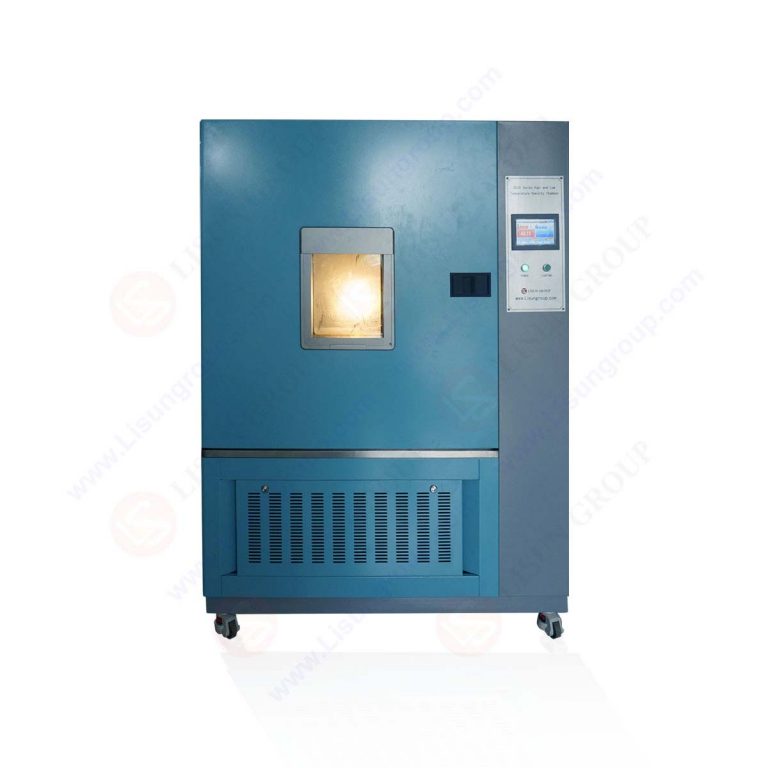
The physical architecture of the IEC 60068 Compliant Walk-In Temperature Humidity Chamber is designed for flexibility. Standard interior volumes range from 10 to 30 cubic meters, with temperature ranges from -40°C to +150°C. Humidity control is available from 10% to 98% RH, constrained by dew point limitations. The chambers feature reinforced flooring to support heavy test fixtures and are equipped with multi-point temperature and humidity sensors to verify uniformity (typically ±0.5°C and ±2% RH). The external control system incorporates PLC (Programmable Logic Controller) architecture with a touchscreen interface, providing robust data logging capabilities and remote monitoring over LAN.
5.2 Customization for Specific Industry Verticals
LISUN recognizes that different industries require specialized configurations. For automotive LED testing, chambers can be fitted with additional vibration isolation to prevent inertial measurement errors. For photometric continuity, the integrating sphere connection ports are customized to achieve a 99% reflectance coating efficiency, minimizing light loss during in-situ measurement. Customizable test racks allow for vertical or horizontal mounting of luminaires, accommodating various form factors. Furthermore, the system’s compatibility extends to up to 3 connected temperature chambers, allowing users to test at multiple temperatures simultaneously, such as 60°C, 85°C, and 110°C, thereby reducing total test calendar time by up to 66% compared to sequential testing.
6.1 Using Integrating Spheres and Spectroradiometers
The LISUN walk-in chamber integrates seamlessly with a 2M integrating sphere, conforming to CIE 084 and IES LM-79-19 specifications for total luminous flux measurement. The sphere’s interior coating, typically barium sulfate or PTFE, must maintain high reflectance over the sphere. Measurements of CCT and CRI, following CIE 127 guidelines, are performed using a high-resolution spectroradiometer connected via fiber optic cable. This configuration allows for simultaneous electrical, photometric, and colorimetric characterization at each aging checkpoint, generating a multi-dimensional data set that goes beyond simple lumen maintenance.
6.2 Realized Value for Reliability Engineers
The ability to measure CCT shift and CRI degradation alongside lumen maintenance is crucial for modern LED applications, particularly in architectural lighting where color consistency is paramount. The IEC 60068 Compliant Walk-In Temperature Humidity Chamber facilitates these measurements by maintaining stable ambient conditions during the measurement cycle, which typically lasts 10-15 minutes per sample. The software automatically correlates these measurements with the aging timeline, producing trend charts that show, for example, a 150K CCT shift over 3000 hours of damp heat testing. For TM-28 projections, which require a shorter base dataset (4000 hours), the system’s automated checkpoints ensure no data points are missed due to operator error or scheduling conflicts.
7.1 Core Standards: IES LM-80, TM-21, and Their Counterparts
The LEDLM-80PL system is explicitly designed for IES LM-80-15, which mandates testing LED packages, arrays, and modules at specified drive currents and temperatures. Data from this test feeds into TM-21-19 for projecting lumen maintenance beyond the 6000-hour test period. For newer product categories, IES LM-84-14 covers light engines, while TM-28-14 provides projecting methods for those systems. The IEC 60068 Compliant Walk-In Temperature Humidity Chamber provides the necessary environmental control to meet the stringent requirements of these standards, including the need for data reproducibility across different laboratories. The system’s calibration routines align with CIE 084 photometric guidelines, ensuring the accuracy of the luminous flux measurement chain.
7.2 Complementary Standards: LM-79-19 and CIE 127
While LM-80 and LM-84 address aging, IES LM-79-19 specifies the measurement of total luminous flux and electrical characteristics for solid-state lighting products. The walk-in chamber’s integrating sphere integration supports LM-79 testing of aged samples, providing data on how efficiency (lm/W) decays over time. CIE 127 sets the measurement conditions for LEDs, including the averaging time and detector configuration. In the LISUN system, these standards are woven into the operational protocol, ensuring that all measurements are traceable. Table 2 below summarizes the standards typically used in conjunction with the chamber and the system variants that support them.
Table 2: Relevant Standards and LISUN System Applicability
| Standard | Focus Area | Test Duration | Supported By |
| :— | :— | :— | :— |
| IES LM-80-15 | LED package lumen maintenance | 6000 hours (min) | LEDLM-80PL |
| IES LM-84-14 | Light engine luminous flux | 4000 hours (min) | LEDLM-84PL |
| IES TM-21-19 | Lumen maintenance projection | N/A (Mathematical) | LEDLM-80PL / LEDLM-84PL |
| IES TM-28-14 | Light engine lifetime projection | N/A (Mathematical) | LEDLM-84PL |
| IES LM-79-19 | Electrical & photometric measurement | N/A (Point in time) | Built-in Sphere |
| CIE 084 & CIE 127 | Measurement methods | N/A | Built-in Sphere |
8.1 Designing a Robust Aging Matrix
To leverage the full capabilities of the IEC 60068 Compliant Walk-In Temperature Humidity Chamber, engineers must design a testing matrix that accounts for temperature, humidity, and drive current. A typical plan might involve three temperatures (60°C, 85°C, 100°C) and one drive current (e.g., nominal 350mA). With the ability to connect 3 chambers, this matrix can be executed in one campaign. However, engineers should also consider adding humidity variation to mimic real-world conditions. The chamber’s capability to perform cyclic humidity profiles, as per IEC 60068-2-38, can be used to create a “worst-case” scenario. This is where the Arrhenius Model software becomes essential, as it calculates the acceleration factor for each stress condition, aiding in the interpretation of the collected data.
8.2 Avoiding Common Pitfalls in Long-Term Testing
Long-term testing, such as 6000-hour campaigns, is fraught with potential errors including photometric measurement drift, sample degradation not caused by the environment, and data logging failures. LISUN’s systems mitigate these risks through automated drift compensation in the spectroradiometer and by providing reference channels in the integrating sphere system. Additionally, the chamber’s fail-safe systems, including over-temperature protection and low-humidity alarms, ensure that test validity is not compromised by equipment malfunction. For third-party testing laboratories, the traceability of data to national standards is paramount; the system’s calibration is traceable to NIST, and its software provides an audit trail for every measurement. These features reduce the risk of invalidating a multi-month test due to a single erroneous data point.
In conclusion, the IEC 60068 Compliant Walk-In Temperature Humidity Chamber represents the gold standard for LED manufacturers and testing laboratories requiring rigorous accelerated aging validation. LISUN’s LEDLM-80PL and LEDLM-84PL systems provide a sophisticated blend of environmental control and photometric measurement, enabling accurate lifetime prediction via L70/L50 metrics. By adhering to IES LM-80, LM-84, TM-21, and TM-28 standards, and supporting complementary IES LM-79-19 and CIE 127 measurement methodologies, these systems ensure that data is not only accurate but globally credible. The Arrhenius Model-based software, capable of analyzing data from up to 3 connected chambers, allows for rapid testing cycles without sacrificing statistical robustness. For engineers facing the challenge of validating LED reliability in diverse application environments, from indoor solid-state lighting to demanding automotive and outdoor fixtures, LISUN’s integrated solution offers a clear, data-driven path to achieving compliance and minimizing field failure risks. The walk-in configuration ensures scalability, while the dual testing modes—standard and cyclic—cover both typical and extreme environmental stress profiles.
Q1: What is the minimum recommended test duration for an LM-80 test using the LISUN LEDLM-80PL chamber?
A: The IES LM-80-15 standard specifies a minimum test duration of 6000 hours for qualification. However, testing in 1000-hour increments allows for the application of TM-21-19 extrapolation; valid extrapolations can be made from a base dataset of 3000 hours for some packages, but the full 6000-hour dataset offers the lowest uncertainty. With up to 3 connected chambers, LISUN customers often run one continuous 6000-hour test and interim tests for product development screening to align with design cycles.
Q2: How does the Arrhenius Model in LISUN’s software improve prediction accuracy for L70?
A: The Arrhenius model applies chemical kinetics to LED degradation, linking the rate of lumen depreciation to temperature. The software uses the data from multiple stress temperatures (e.g., 60°C, 85°C) to calculate each material’s activation energy (Ea). This value is instrumental in projecting the L70/L50 lifespan at lower field temperatures, such as 25°C or 35°C. Typical results show an extrapolation error reduction of over 30% compared to linear fits, aligning closely with the TM-21 analytical framework.
Q3: What are the critical advantages of performing in-situ measurements inside the walk-in chamber?
A: In-situ measurement is vital to avoid handling-induced variability. Removing a luminaire from the chamber for measurement enables changes in case temperature, thermal expansion of optical components, and potential contamination, all of which skew photometric data. The LISUN chamber’s integrated sphere access port allows for measurements at fixed intervals without disturbing the environmental conditions. It ensures that the IEC 60068 Compliant Walk-In Temperature Humidity Chamber provides a truly continuous stress environment, yielding precise CCT shift and lumen depreciation curves.