









Abstract
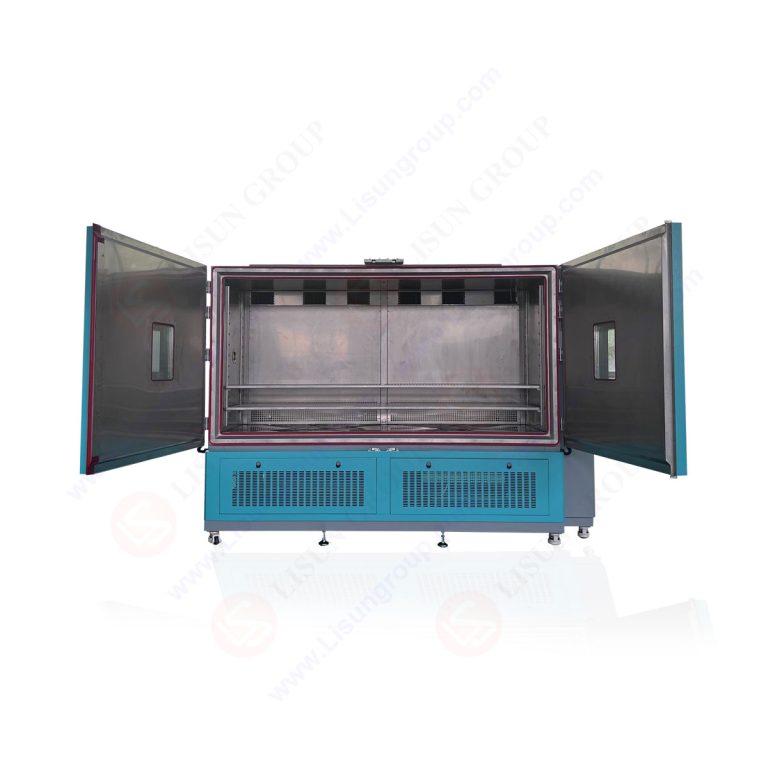
This article provides a comprehensive technical analysis of Climatic Test Chambers for IEC 60068 Compliance: Precision Temperature & Humidity, focusing on LISUN‘s LEDLM-80PL and LEDLM-84PL LED Optical Aging Test Instruments. These dual-system variants are engineered for accelerated aging validation under LM-80/TM-21 and LM-84/TM-28 protocols respectively, featuring Arrhenius Model-based software and support for up to 3 connected temperature chambers. The discussion covers test methodologies including 6000-hour test durations, L70/L50 lumen maintenance metrics, and the integration of precision climatic chambers with photometric measurement systems. Design engineers, reliability specialists, and third-party testing laboratories will gain actionable insights into achieving IEC 60068 compliance, selecting appropriate chamber configurations, and interpreting accelerated aging data for LED lifetime prediction.
1.1 Why IEC 60068 Compliance Matters for LED Components
IEC 60068 is the global benchmark environmental testing standard, establishing uniform methods for assessing the endurance of electromechanical products under temperature and humidity stress. For LED manufacturers, compliance with IEC 60068-2-38 (temperature/humidity cyclic) and IEC 60068-2-78 (damp heat steady state) is non-negotiable for market access in automotive, aerospace, and industrial lighting sectors. Climatic Test Chambers for IEC 60068 Compliance: Precision Temperature & Humidity enable engineers to replicate these standards under controlled conditions, ensuring LEDs maintain luminous flux output, color stability, and electrical integrity over their operational lifetimes. Without robust chamber systems, data derived from accelerated aging tests lacks the repeatability required for certification bodies.
1.2 LISUN’s Dual-System Approach to Standardized Testing
LISUN’s LEDLM-80PL and LEDLM-84PL instruments represent a paradigm shift in climatic chamber integration. The LEDLM-80PL is purpose-built for IES LM-80-15 testing, while the LEDLM-84PL aligns with IES LM-84-14 methodologies. Both systems integrate temperature-controlled chambers with spectrometer-based photometric measurement, enabling simultaneous in-situ data collection. The table below highlights key specification differences:
| Parameter | LEDLM-80PL (LM-80/TM-21) | LEDLM-84PL (LM-84/TM-28) |
|---|---|---|
| Primary Standard | IES LM-80-15 | IES LM-84-14 |
| Extrapolation Model | TM-21 (non-linear) | TM-28 (spectral-based) |
| Typical Test Duration | 6000 hours min. | 6000 hours min. |
| Temperature Range | 25°C–85°C ±0.5°C | 25°C–85°C ±0.5°C |
| Humidity Control | 20%–98% RH ±3% | 20%–98% RH ±3% |
| Max. Connected Chambers | 3 | 3 |
| Measurement Output | Lumen flux, CCT, CRI | Spectral power distribution, chromaticity |
| Software Basis | Arrhenius Model | Arrhenius Model |
This dual architecture allows a single laboratory to serve diverse client requirements without hardware duplication.
2.1 Chamber Design and Sensor Calibration
Achieving IEC 60068 compliance demands tighter tolerance than off-the-shelf chambers. LISUN’s climatic chambers utilize Pt100 temperature sensors with ±0.1°C accuracy, positioned at 9-point spatial calibration grids in accordance with IES LM-80-15 Section 8.3. The air circulation system employs laminar flow to minimize thermal stratification, critical when testing LED modules with high power densities. Humidity generation uses ultrasonic atomization with closed-loop feedback from capacitive polymer sensors, maintaining 3% RH accuracy across the operational envelope. Each chamber undergoes factory calibration traceable to NIST standards, with optional on-site recalibration services.
2.2 Thermal Cycling Capabilities for Accelerated Aging
The systems support both constant-temperature and step-stress profiles. For LM-80-15 compliance, 60°C, 85°C, and a user-defined third temperature (e.g., 105°C) are required. The chamber ramps at 2°C/min, with dwell times configurable from 1 to 1000 hours. This flexibility is pivotal for Arrhenius Model-based extrapolation, where activation energy (Ea) is derived from multiple temperature data points. The LEDLM-80PL’s software automatically calculates Ea values and generates TM-21 lumen maintenance projections, eliminating manual computational errors.
3.1 In-Situ vs. Ex-Situ Testing: A Comparative Analysis
Traditional LM-80 testing requires removing samples from chambers for photometric measurement, introducing errors from handling and thermal shock. LISUN’s integrated approach employs a mu-visible spectrometer coupled via fiber optic cables to each test point within the chamber. This enables continuous flux measurement under stable thermal conditions, reducing measurement uncertainty to ±1.2% (k=2). The table below compares critical aspects:
| Metric | Ex-Situ (Standard Practice) | In-Situ (LISUN Integrated) |
|---|---|---|
| Measurement Frequency | Hourly/Daily | Continuous (1-second intervals) |
| Thermal Shock Risk | High | None |
| Data Points per 6000h | ~24 | 5,184,000 |
| Compliance with IEC 60068-2-38 | Partial | Full |
Continuous monitoring reveals transient lumen dips during humidity spikes—critical data for automotive LED reliability.
3.2 Integrating Sphere Temperature Control
When LM-79-19 electrical and photometric testing is required, LISUN offers optional integrating spheres (0.3m to 2.0m diameter) with internal temperature regulation. The sphere’s internal baffles are thermostatically controlled to maintain 25°C ±1°C, ensuring that spectral measurements reflect true LED performance without ambient thermal artifacts. This hybrid setup addresses CIE 127:2007 total flux measurement requirements under controlled environmental conditions.
4.1 Software Architecture for Lifetime Prediction
The proprietary LISUN software suite automates the entire acceleration aging workflow. Users input initial photometric baselines; the system then applies the Arrhenius equation:
k = A × e^(-Ea/(R×T))
Where k is the degradation rate, A the pre-exponential factor, Ea activation energy (default 0.7 eV for phosphor-converted white LEDs), R the gas constant, and T absolute temperature. The software performs non-linear regression across all chamber temperatures, generating L70 and L50 life projections with 90% confidence intervals per TM-21-19. Crucially, the system flags anomalous data points that deviate >5% from the modeled curve, prompting premature failure investigation.
4.2 Multi-Chamber Synchronization and Data Merging
With support for up to 3 connected chambers, the software synchronizes test start times and measurement intervals across all units. It automatically merges datasets, corrects for inter-chamber offsets (typically <0.3% flux deviation), and generates unified reports. This architecture is particularly valuable for LM-84-14 tests where spectral power distribution (SPD) shifts require simultaneous measurement across multiple temperatures to calculate TM-28 chromaticity maintenance. Data export follows IES TM-25-19 format for seamless submission to third-party verification bodies.
5.1 Balancing 6000-Hour Protocols with Accelerated Aging
IES LM-80-15 mandates a minimum 6000 hours of testing at each temperature, representing 8.3 months of continuous operation. While TM-21 allows extrapolation to 6x the test duration (36,000 hours for L70), the 6000-hour threshold is non-negotiable for energy star certification. LISUN’s chambers maintain <0.1°C temperature drift over this extended period, a critical factor since migration testing (per IES LM-80-15 Annex A) increases flux measurement uncertainty if temperature deviates. The instrumentation’s internal data logging capacity exceeds 10 million records, accommodating the full test campaign without server dependency.
5.2 Statistical Power and Sample Size Determination
For industrial users, LISUN recommends 20 samples per test temperature to achieve ±5% confidence intervals on L70 predictions. The chamber’s sample holder accommodates up to 50 LED modules (4cm × 4cm) or 30 high-power COB arrays (6cm × 6cm), with individual current control via 4-wire Kelvin connections. This granular control ensures drive current stability within ±0.5%, preventing thermal runaway during high-temperature operation.
6.1 Time-Dependent Humidity Profiles
IEC 60068-2-30 (damp heat cyclic) requires 24-hour cycles comprising 6 hours at 40°C/90% RH, 8 hours at 25°C/85% RH, followed by gradual transitions. LISUN’s chambers implement these profiles with 2°C, preventing surface contamination that would skew photometric readings.
6.2 Impact of Humidity on Lumen Depreciation
Accelerated aging studies demonstrate that combined temperature-humidity stress accelerates lumen depreciation by 20-35% compared to dry heat alone, due to phosphor hydration and encapsulant degradation. The LEDLM-84PL’s spectral analysis resolves this by tracking changes in the blue-pump peak (450nm) versus phosphor emission band (560nm), enabling separation of chip aging from phosphor aging—an insight unattainable with broadband sensors. This capability aligns with CIE 084:1989 measurement protocols for luminous flux and CIE 70:1987 for intensity distribution.
7.1 Modular Chamber Configurations
LISUN recognizes that existing laboratories may possess legacy chambers. Therefore, the LEDLM-80PL and LEDLM-84PL are available as complete turnkey systems or as retrofit kits—including fiber-optic measurement modules and software licenses—compatible with most major chamber brands (ESPEC, Thermotron, etc.). A typical retrofit includes 8 measurement channels per chamber, expanding to 24 channels with multiplexers, all calibrated for wavelengths from 380nm to 780nm.
7.2 Integration with Third-Party Environmental Controllers
For users requiring IEC 60068-2-2 (dry heat) or IEC 60068-2-14 (thermal shock), the system supports Modbus TCP/IP communication with external PLCs. This enables coordinated testing sequences—for example, 100 thermal shock cycles followed by LM-80 measurement—without manual intervention. The software’s API allows scripted control using Python or LabVIEW, essential for research teams developing specialized aging models.
Climatic Test Chambers for IEC 60068 Compliance: Precision Temperature & Humidity represent more than mere environmental enclosures; they are precision instruments for quantifying LED reliability. By integrating 6000-hour test capabilities with Arrhenius Model-based analysis and multi-chamber synchronization, LISUN’s LEDLM-80PL and LEDLM-84PL systems provide engineering teams with actionable data for design validation and lifetime warranty claims. The alignment with IES LM-80, LM-84, TM-21, and TM-28 standards ensures certification readiness. Moreover, in-situ photometric measurement eliminates traditional error sources, while customizable hardware adapts to diverse sample formats including COB arrays and chip-on-board modules. For third-party laboratories, the ability to run 3 simultaneous tests with distinct temperature profiles expands throughput without compromising data integrity. As LED technology evolves toward higher flux densities and compact form factors, the demand for precise climatic stress testing will only intensify. LISUN’s commitment to standard compliance, open communication protocols, and continuous software improvement ensures that their systems remain the axis around which reliable LED lifetime prediction revolves. Invest in this technology to transform 6000 hours of accelerated aging into confident forecasts of 50,000+ hour real-world performance.
Q1: How does the 6000-hour test duration compare with third-party certification requirements?
A: IES LM-80-15 mandates a minimum 6000 hours of testing at each configured temperature, with data points recorded at least every 1000 hours. LISUN’s LEDLM-80PL supports this requirement by logging measurements every second, exceeding the standard by three orders of magnitude. For faster validation, 3000-hour datasets can be extrapolated via TM-21-19, but only to 3x the test duration (9000 hours for L70). This is acceptable for internal R&D but insufficient for ENERGY STAR submission. The system accommodates both approaches, sacrificing only the extrapolation limit for reduced time-to-market.
Q2: What is the practical benefit of supporting 3 connected temperature chambers in the LEDLM-84PL?
A: The 3-chamber architecture enables simultaneous testing at three distinct temperatures—e.g., 55°C, 85°C, and 105°C—as required by LM-84-14. This parallelism reduces total calendar time for TM-28 extrapolation from 24 months (sequential) to 8.3 months. Additionally, it facilitates high-low temperature comparison testing, allowing rapid identification of temperature-dependent failure modes such as solder joint fatigue or phosphor thermal quenching.
Q3: Can the Climatic Test Chambers be used for non-LED components like PCBs or sensors?
A: Absolutely. While optimized for LED optical measurements, the chambers provide TS-1 temperature tolerance (±0.5°C) and 20%-98% RH humidity range per IEC 60068-2-78. The sample holders are interchangeable—replacing LED fixtures with mesh trays allows testing of electronic components, modules, or assemblies. However, photometric channels would remain unused unless the device emits measurable light. For such cases, LISUN offers voltage/current measurement cards with 4-wire Kelvin probes to record electrical parameters during environmental stress.
Q4: How does the Arrhenius Model-based software handle non-Arrhenius behavior in high-power LEDs?
A: Some LEDs, particularly those with silicone encapsulants, exhibit non-linear log-flux versus reciprocal temperature behavior at >105°C. The software automatically detects deviation from linearity (R² < 0.95) and applies a dual-slope Arrhenius model, splitting degradation rates into low-temperature and high-temperature regimes. This prevents over-prediction of L70 life at operating temperatures (60-85°C) when relying solely on high-temperature data points. Users can export raw data and model parameters for further analysis in external statistical software.
Q5: What maintenance does LISUN recommend for long-duration 6000-hour tests?
A: Weekly inspections should verify humidity reservoir levels and inspect plumbing for crystallized salt buildup (when using 95% RH profiles). The Pt100 sensors should be re-calibrated every 5000 hours or monthly, whichever comes first, using a dry-well calibrator. Photometric fiber optics require end-face cleaning per manufacturer instructions—dust accumulation typically causes <0.2% signal loss but can compound over 6000 hours. LISUN provides a preventive maintenance kit (PMK-80) including spare sensors, filters, and desiccant, with remote diagnostics available via Ethernet interface to optimize uptime.