









Abstract
The IEC 60068 High-Low Temperature Humidity Heat Test Chamber represents a critical advancement in accelerated aging validation for solid-state lighting, enabling compliance with the rigorous thermal and moisture cycling demands of modern LED products. This article provides an in-depth technical examination of LISUN’s integrated aging and test solutions, specifically the LEDLM-80PL and LEDLM-84PL dual-system configurations engineered for IES LM-80/TM-21 and IES LM-84/TM-28 protocols. We explore the Arrhenius Model-based predictive software, dual testing modes, and customizable hardware that supports up to three interconnected temperature chambers. The discussion covers 6000-hour test durations, L70/L50 lumen maintenance metrics, and the strategic integration of standards like IES LM-79-19 and CIE 127. Practical applications and data-driven insights equip engineers and laboratory professionals with the knowledge to optimize reliability testing workflows.
1.1 The Lumen Depreciation Challenge
LED technology has revolutionized general lighting, yet its long-term performance under environmental stressors requires methodical verification. Lumen depreciation—the gradual reduction in luminous flux over operational time—is the primary indicator of LED life. Predicting this decline from operational hours alone is impractical; hence, accelerated aging within controlled environments is essential. The IEC 60068 High-Low Temperature Humidity Heat Test Chamber provides thermal cycling and humidity exposure that simulates years of operation within months, generating data critical for lifetime extrapolation. By subjecting LED samples to elevated junction temperatures and moisture, engineers can observe degradation kinetics that would otherwise take decades.
1.2 The LISUN Integrated Testing Philosophy
LISUN’s approach integrates the environmental chamber with optical measurement systems, creating a unified platform. Instead of moving samples between separate climate simulators and photometric equipment, the LEDLM series couples temperature control with spectral measurement in-situ. This reduces handling errors and preserves data integrity. The systems are designed around internationally recognized standards, ensuring that test results are not only internally consistent but also globally comparable. This integration is paramount for manufacturers seeking IES LM-80 accreditation, as the standard mandates strict control of ambient conditions during flux measurement.
2.1 Environmental Testing Fundamentals
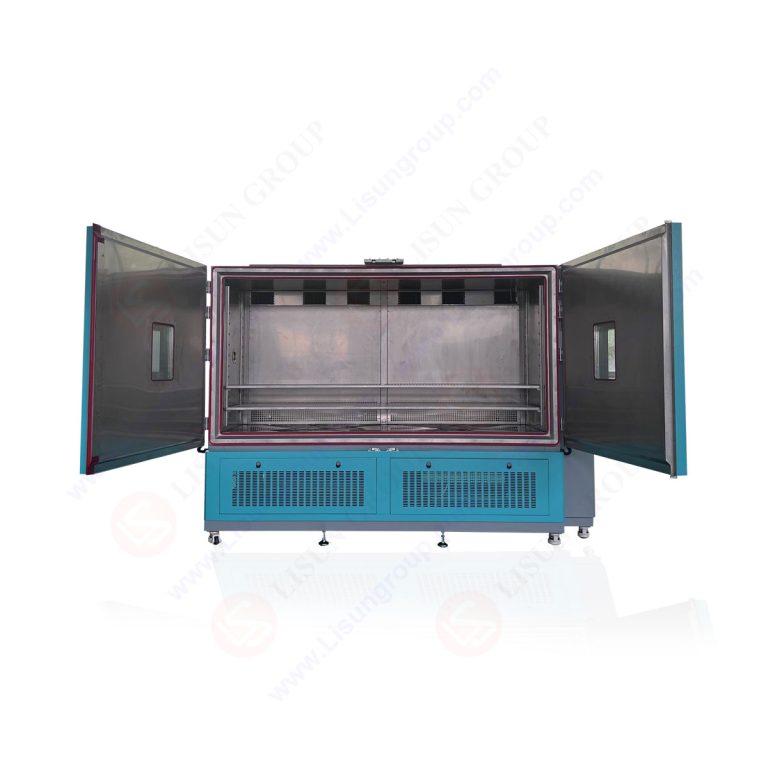
IEC 60068 is a comprehensive set of environmental testing procedures applicable to electrotechnical products, defining methods for temperature, humidity, and combined stress testing. Within this framework, the high-low temperature humidity heat test is particularly relevant for LED drivers, luminaires, and components. The IEC 60068 High-Low Temperature Humidity Heat Test Chamber executes profiles such as IEC 60068-2-1 (cold) and IEC 60068-2-2 (dry heat), alongside damp heat tests. The chamber’s ability to transition abruptly between -40°C and +150°C while controlling relative humidity from 10% to 98% enables simulation of automotive, outdoor, and industrial environments.
2.2 From Chamber Standards to Lighting-Specific Protocols
While IEC 60068 establishes the environmental stress methodology, lighting-specific standards dictate pass/fail criteria and measurement protocols. IES LM-80-15 specifies the method for measuring lumen depreciation of LED packages, arrays, and modules, requiring data collection at specific case temperatures (55°C, 85°C, etc.) and intervals up to 6000 hours. The LEDLM-80PL system is purpose-built for this, interfacing directly with the test chamber to maintain setpoint temperatures within ±2°C, ensuring compliance. Similarly, IES LM-84-14 extends testing to full LED engines and integrated lamps, which the LEDLM-84PL supports with higher current handling and modular test boards.
3.1 Dual-System Design Rationale
LISUN offers two distinct hardware configurations tailored to application-specific demands:
| Feature | LEDLM-80PL | LEDLM-84PL |
|---|---|---|
| Compliance Standard | IES LM-80, TM-21 | IES LM-84, TM-28 |
| Typical Test Duration | 3000 or 6000 hours | 6000 hours continuous |
| Case Temperature Control | 3 programmable setpoints (e.g., 55°C, 85°C, 100°C) | 3 setpoints, up to 150°C |
| Chamber Integration | Up to 3 simultaneously | Up to 3 simultaneously |
| Electrical Driving | Constant current, 0-350 mA per channel | Constant current, up to 500 mA per channel |
| Measurement Cycle | In-situ photometric measurement | In-situ + remote verification with integrating sphere |
The table illustrates that both systems leverage the same core environmental chamber but differ in electrical stress handling and predictive software. The LEDLM-80PL focuses on component-level testing, while the LEDLM-84PL addresses system-level devices with higher power requirements.
3.2 Hardware Customization and Configurability
Each chamber can be configured with multiple shelves, each holding up to 50 test boards. The boards are designed for minimal thermal resistance to ensure that the case temperature reading accurately reflects the LED’s thermal condition. Users can select optical probes that directly interface with a spectroradiometer, eliminating the need for fiber optic cables that may degrade under high temperatures. The system supports both constant current and constant voltage modes, accommodating various LED drive topologies. This modularity extends to the control system, which allows for custom test profiles—including step-stress patterns—beyond the standard TM-21 predictive curves.
4.1 Mathematical Foundations of Lifetime Estimation
The predictive software embedded in both LEDLM systems utilizes the Arrhenius equation to model temperature-dependent degradation:
$$k = A cdot e^{frac{-E_a}{k_B T}}$$
Here, (k) is the reaction rate, (A) is a pre-exponential factor, (E_a) is the activation energy, (k_B) is Boltzmann’s constant, and (T) is the absolute temperature. By measuring lumen maintenance at different case temperatures, the software calculates (E_a) and extrapolates lifespan to a reference temperature, typically 25°C or 55°C. The software then projects the time to reach L70 (70% initial lumen output) or L50 (50%) thresholds. This data-driven prediction is central to TM-21’s statistical methodology, which recommends exponential or quadratic decay models.
4.2 Software Features and Data Output
The software manages the entire 6000-hour test lifecycle, including automatic suspension for intermittent photometric checks. It records raw photometric data and generates reports compliant with TM-21’s Annex A guidelines. Key outputs include:
- Extrapolated Lumen Maintenance Curves: Plots for each test temperature, overlaid with confidence intervals.
- Activation Energy Calculation: Derived from the slope of the Arrhenius plot.
- Report Generation: Professional PDFs containing test parameters, intermediate data, and final predictions.
Importantly, the software can integrate data from up to three chambers, allowing simultaneous testing of multiple product batches. This accelerates validation pipelines significantly without sacrificing accuracy or traceability.
5.1 In-Situ Measurement Capabilities
The IEC 60068 High-Low Temperature Humidity Heat Test Chamber integrated with LISUN instruments enables two primary measurement configurations. The first is in-situ, where a spectroradiometer head is positioned within the chamber, measuring luminous flux and chromaticity coordinates directly. This approach is dictated by IES LM-80, which requires measurements at the chamber’s ambient temperature to avoid thermal shock. The LEDLM-80PL and PL84 systems incorporate automated robotic arms or fixed probes that minimize light path variations, ensuring photometric accuracy within ±2% of reading.
5.2 Remote Measurement and Integrating Sphere Compatibility
The second mode utilizes an external integrating sphere (e.g., LISUN LMS-9000) for high-precision total flux measurement. In this setup, samples are temporarily removed from the chamber and measured in a darkened sphere, following the guidelines of CIE 127 and IES LM-79-19. This two-pronged approach allows cross-validation of data: in-situ for continuous monitoring and sphere-based for absolute calibration. The dual systems thus offer enhanced flexibility, meeting both research-grade and production-screening requirements. Engineers can choose the method based on the required uncertainty budget and throughput.
6.1 Navigating the Regulatory Landscape
Compliance with lighting regulations is non-negotiable for market access. The LISUN systems are designed to support multiple standards:
- IES LM-80-15: The benchmark for measuring lumen depreciation.
- IES LM-84-14: For solid-state lighting (SSL) subassemblies.
- TM-21-19: For projecting long-term lumen maintenance.
- TM-28-14: For projecting LED lamps and luminaires.
- IES LM-79-19: For electrical and photometric measurements of SSL products.
- CIE 084: for the measurement of luminous flux.
- CIE 070: for the measurement of intensity distribution.
- CIE 127: for LED testing methodologies.
The table below outlines the applicability of these standards across test stages.
| Test Stage | Standard | Application in LEDLM System |
|---|---|---|
| Sample Setup | IES LM-80/LM-84 | Defines test conditions and board configuration |
| Environmental Stress | IEC 60068-2-2 | Governs temperature and humidity profiles |
| Photometric Reading | IES LM-79-19 | Specifies integrating sphere measurement parameters |
| Data Projection | TM-21 or TM-28 | Provides statistical extrapolation guidelines |
| Color Stability | CIE 127 | Dictates chromaticity coordinate measurement |
6.2 Technical Comparisons with Traditional Methods
Compared to conventional thermal ovens, the LISUN chambers offer superior temperature uniformity (±0.5°C) and faster ramp rates (up to 5°C/min), reducing test cycle time. Additionally, the integrated optical measurement eliminates errors associated with sample repositioning, which can introduce misalignment and thermal drift. The ability to maintain humidity control also enables compliance with damp heat tests, which are increasingly relevant for outdoor LED fixtures. This convergence of environmental and optical testing within a single platform represents a significant operational advancement, reducing lab footprint and capital expenditure.
7.1 Automotive LED Qualification
Automotive lighting demands exceptional reliability due to harsh under-hood and exterior conditions. An automotive Tier-1 supplier used the LEDLM-80PL system to qualify new headlamp LEDs. They ran 6000-hour tests at three case temperatures, including a high-stress 110°C condition. The Arrhenius-based software predicted an L70 lifespan of 50,000 hours at 85°C, a significant improvement over previous technology. This data enabled the supplier to obtain customer approval and initiate mass production, thanks to the robust telemetry provided by the IEC 60068 High-Low Temperature Humidity Heat Test Chamber.
7.2 Smart Lighting and IoT Integration
Smart lighting manufacturers require data not only on lumen maintenance but also on color shift, which impacts connectivity and sensing. The LEDLM-84PL, coupled with spectral measurement, allows for simultaneous tracking of CCT (Correlated Color Temperature) shifts and chromaticity coordinates. In one application, a manufacturer of tunable-white panels used the system to ensure chromaticity stability within a 3-step MacAdam ellipse over 6000 hours. The chamber’s humidity control was crucial for replicating high-moisture indoor environments, such as kitchens or bathrooms. This dual analysis capability is unique and highly valued by R&D teams pushing the boundaries of lighting performance.
The IEC 60068 High-Low Temperature Humidity Heat Test Chamber is an essential tool for modern LED reliability engineering, and LISUN’s LEDLM-80PL and LEDLM-84PL represent the state-of-the-art in integrated testing solutions. By seamlessly merging environmental stress with photometric measurement, these systems shorten validation cycles, enhance data accuracy, and ensure compliance with IES LM-80, LM-84, TM-21, and TM-28 standards. The incorporation of the Arrhenius model empowers engineers to make accurate lifetime predictions, converting 6000-hour test data into actionable insights for L70/L50 performance. With support for up to three chambers and dual testing modes, the systems offer scalability and flexibility. For manufacturers aiming to lead in reliability and quality, adopting such advanced testing infrastructure is a strategic investment that directly impacts product success and market leadership. LISUN continues to drive excellence in LED measurement technology.
Q1: What is the difference between IES LM-80 and IES LM-84 testing, and when to choose one?
A: IES LM-80 is designed specifically for LED packages, arrays, and modules, providing a method to measure lumen depreciation under controlled conditions, typically at case temperatures of 55°C, 85°C, and a third user-defined temperature. IES LM-84 extends this methodology to complete LED engines and integrated lamps, encompassing drivers and optics. The choice depends on the product level. If you manufacture bare LEDs or modules, follow LM-80. If your product is a self-ballasted lamp or light engine, LM-84 is more appropriate. Consequently, LISUN offers two dedicated systems—the LEDLM-80PL and LEDLM-84PL—to align with these standards, ensuring that the hardware setup and test parameters are tailored to the specific device type.
Q2: How does the Arrhenius Model in LISUN software predict L70 lifespan accurately?
A: The Arrhenius model predicts reliability by using the activation energy of the failure mechanism, which in LEDs is typically dominated by thermally activated chemical reactions within the phosphor and semiconductor. The software collects lumen maintenance data at multiple temperatures and plots the natural log of time to reach a specific degradation level (e.g., 70% flux) against the reciprocal of the temperature in Kelvin. The slope of this line gives the activation energy. This value is then used to extrapolate what the lifetime would be at lower, more realistic operating temperatures. The accuracy rests on the quality of the input data – hence the 6000-hour test duration and precise temperature control (±2°C) of the LISUN chambers, which minimize uncertainty and improve the statistical confidence of the TM-21 extrapolation.
Q3: Can the IEC 60068 High-Low Temperature Humidity Heat Test Chamber perform humidity tests and thermal cycling?
A: Yes, the chamber is fully compliant with IEC 60068-2-38 (composite temperature/humidity cyclic test) and IEC 60068-2-78 (damp heat, steady state). It can control relative humidity from 10% to 98% and switch between high and low temperature extremes. This capability is vital for testing LED products intended for outdoor or high-moisture environments, as humidity ingress can cause corrosion and optical degradation. The LISUN system allows you to program sequential humidity and thermal profiles, enabling combined stress testing. This feature distinguishes it from simpler dry ovens, making it a versatile investment for R&D labs that must simulate a variety of real-world conditions.
Q4: What are the typical maintenance intervals to ensure accurate photometric measurements?
A: Photometric and spectroradiometric heads should be calibrated annually against a NIST-traceable standard lamp. However, with the in-situ measurement capability, the apparatus may be exposed to elevated temperatures initially, which can cause minor spectral shifts. LISUN recommends a verification check every 6 months using a built-in standard or an external reference LED whose intensity known. The software includes a calibration reminder feature. For the integrating sphere, periodic cleaning of the sphere’s interior coating and a correction factor update every 2-3 years is advisable. Adhering to these intervals ensures that the 6000-hour test data remains reliable and traceable, aligning with the stringent requirements of ISO 17025 accredited labs.
Q5: How does LISUN’s system address thermal management during test?
A: Proper thermal management is critical for stable case temperature. The LISUN test boards are designed with a copper core and thermal vias to ensure efficient heat transfer from the LED to the aluminum heat sink. The chamber circulates air via a high-volume blower with a horizontal airflow pattern to maintain uniform temperature across all samples. Additionally, the system continuously monitors the case temperature of each LED via Type K thermocouples and adjusts the drive current or chamber temperature to compensate for any drift. This closed-loop control maintains the case temperature within the required ±2°C tolerance, even as the LED’s efficiency changes over time. This level of control is essential for repeatable and accurate accelerated aging tests.