









Abstract
This technical article provides a comprehensive analysis of the LISUN LEDLM-80PL/LEDLM-84PL LED Optical Aging Test Instrument, a dual-system solution engineered for IEC 60068 compliant temperature humidity chamber testing and LED lumen depreciation validation. The article details how these systems integrate IES LM-80, IES LM-84, TM-21, and TM-28 standards with Arrhenius Model-based accelerated aging software. Key technical insights include support for 6000-hour test durations, L70/L50 life prediction metrics, and connectivity for up to 3 temperature chambers in parallel. Readers will gain actionable knowledge on configuring environmental stress tests, interpreting extrapolated lifetime data, and ensuring global regulatory compliance. The focus keyword Temperature Humidity Chamber: IEC 60068 Compliant Testing Solutions appears throughout, with practical guidance for LED manufacturing, third-party testing laboratories, and R&D teams seeking robust reliability validation. The article emphasizes how LISUN’s modular approach addresses both LM-80 legacy requirements and next-generation TM-28 methodologies, providing a unified platform for accelerated aging, photometric measurement, and data-driven lifetime prediction.
1.1 The Role of Environmental Stress Testing in Solid-State Lighting
Temperature and humidity chamber testing forms the cornerstone of LED reliability verification, simulating years of operational stress in compressed timeframes. For solid-state lighting (SSL) products, degradation mechanisms such as phosphor thermal quenching, driver component fatigue, and solder joint cracking are accelerated by elevated temperature and relative humidity (RH) levels. IEC 60068 series standards define the environmental test methods, specifying temperature ranges, humidity profiles, and dwell times that replicate harsh real-world conditions. LISUN’s LEDLM-80PL and LEDLM-84PL systems are purpose-built to execute these protocols, offering programmable temperature range from -40°C to +150°C with humidity control from 20% RH to 98% RH.
1.2 Bridging IEC 60068 and IES Standards for Comprehensive Validation
A critical gap often exists between environmental stress testing (IEC 60068) and photometric performance measurement (IES standards). LISUN’s integrated approach bridges this divide, allowing engineers to synchronize chamber cycling with optical measurements without sample transfer. This eliminates measurement uncertainty caused by thermal shock during relocation. The dual system configuration enables simultaneous compliance with IEC 60068-2-2 (dry heat) and IES LM-80-15, ensuring that the Temperature Humidity Chamber: IEC 60068 Compliant Testing Solutions deliver both environmental robustness data and lumen maintenance curves from a single test campaign.
2.1 Core Hardware and Measurement Capabilities
The LEDLM-80PL is engineered for LM-80/TM-21 testing, supporting up to 3 temperature chambers (configurable to 55°C, 85°C, and user-defined setpoints). Each chamber accommodates 30 LED samples, with a total system capacity of 90 devices under simultaneous test. In contrast, the LEDLM-84PL addresses LM-84/TM-28 methodology, enabling rapid testing at higher stress levels with custom profile programming. Both systems incorporate a built-in integrating sphere (diameter options: 0.3m, 0.5m, 1.0m, 2.0m) with spectral range from 350nm to 1000nm, ensuring photometric accuracy per CIE 127 guidelines.
2.2 Software Intelligence: Arrhenius Model Integration
The proprietary software suite applies the Arrhenius Model to extrapolate lifetime data from accelerated aging tests. Engineers define activation energy (Ea) values (typically 0.2–0.7 eV for LED packages) and stress temperatures, allowing the system to calculate L70 (70% lumen maintenance) and L50 (50% lumen maintenance) points with statistical confidence. For example, a 6000-hour test at 85°C with 75% RH can be extrapolated to 36,000+ hours at 55°C operating conditions. The software automatically generates TM-21 report templates that comply with IES LM-84-19 requirements.
3.1 IES LM-80 and TM-21: Legacy Methodology for Lumen Maintenance
IES LM-80-15 specifies a minimum 6000-hour test duration (with optional 10,000 hours) at controlled current and temperature conditions. LISUN’s LEDLM-80PL streamlines this process by automating in-situ measurements at 1000-hour intervals, reducing technician intervention. TM-21-19 then applies a nonlinear least-squares exponential decay model to project long-term lumen maintenance, with the LISUN software automatically calculating the projected L70 and L50 values with 90% confidence intervals. This integration is critical for LED manufacturers seeking ENERGY STAR certification, which mandates TM-21 reporting.
3.2 IES LM-84 and TM-28: Advanced Methodology for Accelerated Testing
IES LM-84-19 enables testing at elevated temperatures exceeding LM-80’s constraints, with a minimum test duration of 3000 hours and optional 6000-hour protocols. TM-28-19 provides extrapolation procedures specifically designed for LED packages, arrays, and modules tested under LM-84 conditions. The LEDLM-84PL supports this framework by allowing chamber temperatures up to +150°C and programmable humidity ramps that simulate IEC 60068-2-78 (damp heat, steady state) profiles. This dual-standard capability allows R&D teams to correlate fast-failure mechanisms with long-term degradation trends.
3.3 Supporting Photometric Standards: CIE 084, CIE 70, and IES LM-79-19
Accurate photometric measurement is paramount for meaningful lumen depreciation data. LISUN’s integrating sphere systems align with CIE 084 (measurement of luminous flux) and CIE 70 (absolute radiometry) recommendations, ensuring traceable calibration. For total luminous flux and electrical measurements, IES LM-79-19 provides the basis for test conditions, including ambient temperature control (± 1°C) and airflow requirements. The Temperature Humidity Chamber: IEC 60068 Compliant Testing Solutions incorporate these standards directly into test profiles, facilitating seamless certification workflows for global markets.
| Feature | LEDLM-80PL (LM-80/TM-21) | LEDLM-84PL (LM-84/TM-28) |
|---|---|---|
| Standards Supported | IES LM-80-15, TM-21-19 | IES LM-84-19, TM-28-19 |
| Chamber Count | Up to 3 (parallel) | Up to 3 (parallel) |
| Temperature Range | -40°C to +150°C | -40°C to +150°C (programmable profiles) |
| Humidity Range | 20% RH to 98% RH (±2% RH) | 20% RH to 98% RH (±1.5% RH) |
| Sample Capacity | 30 LEDs per chamber (90 total) | 30 LEDs or modules per chamber |
| Minimum Test Duration | 6000 hours (per LM-80) | 3000 hours (per LM-84) |
| Measurement Interval | 1000-hour increments (in-situ) | User-defined (e.g., 500-hour) |
| Extrapolation Model | TM-21 (exponential decay) | TM-28 (nonlinear regression) |
| Integrating Sphere Options | 0.3m, 0.5m, 1.0m, 2.0m | 0.3m, 0.5m, 1.0m, 2.0m |
| Data Output | L70/L50, JEDEC confidence bounds | L70/L50, TM-28 report formats |
4.1 Selecting the Appropriate System for Your Application
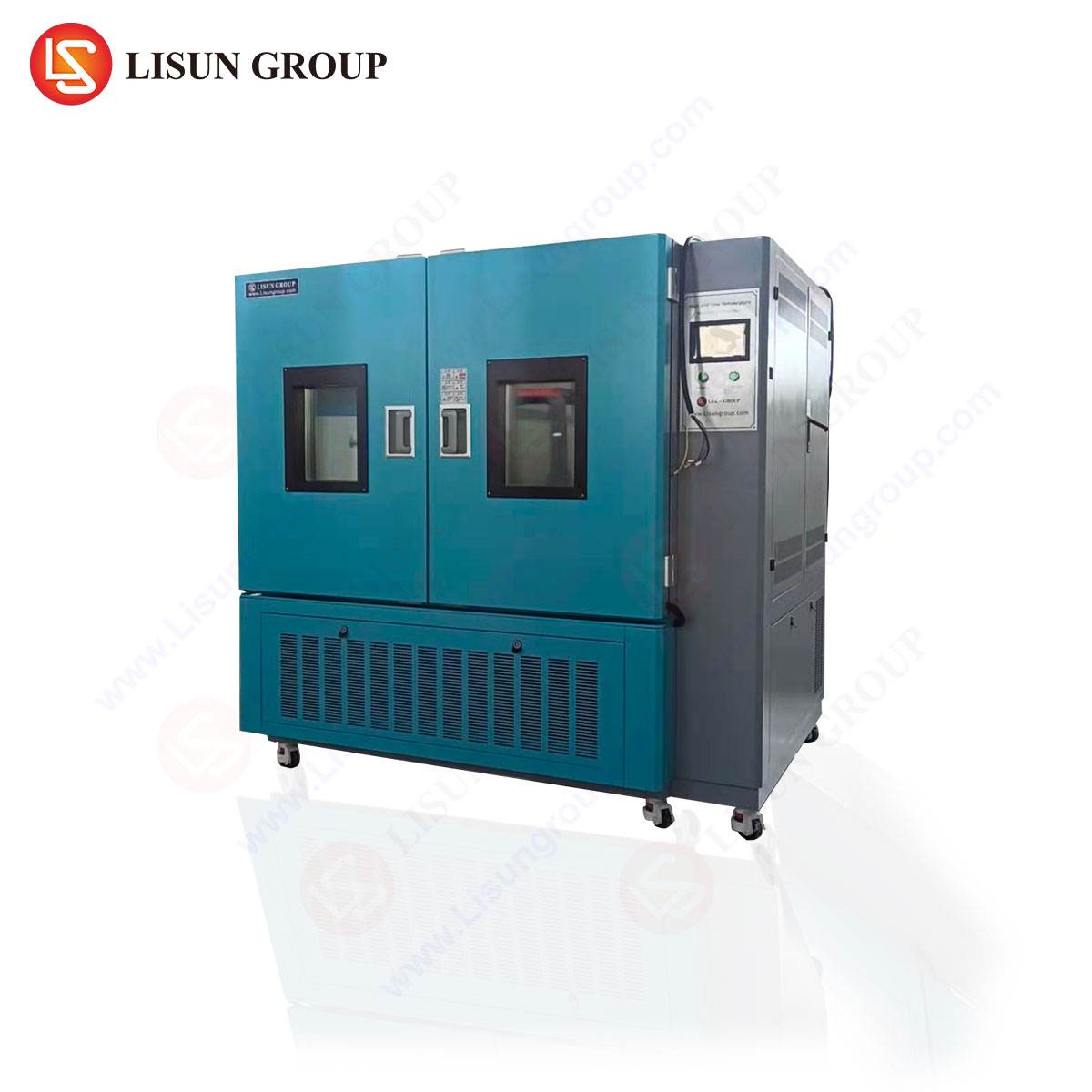
When evaluating the Temperature Humidity Chamber: IEC 60068 Compliant Testing Solutions, engineers should consider their target market requirements. For North American ENERGY STAR or DLC listings, the LEDLM-80PL is mandatory due to LM-80 data requirements. Conversely, the LEDLM-84PL suits manufacturers conducting internal reliability screening or complying with emerging IEC standards that reference TM-28. LISUN offers hybrid configurations where a single control unit operates both systems, enabling flexible test scheduling and reduced capital investment.
5.1 IEC 60068-2-78: Damp Heat, Steady State
This test subjects LEDs to continuous high humidity (typically 85% RH) at elevated temperature (85°C) for hundreds or thousands of hours. LEDLM series chambers maintain temperature uniformity of ±2.0°C and humidity uniformity of ±3.0% RH across the workspace, meeting IEC 60068-2-78 Class 2 requirements. During testing, the integrating sphere performs in-situ photometric measurements, capturing luminous flux degradation without breaking the environmental seal. This approach minimizes data scatter caused by handling, ensuring high reproducibility for lifecycle predictions.
5.2 IEC 60068-2-30: Damp Heat, Cyclic
Cyclic temperature and humidity tests (e.g., 25°C/95% RH to 55°C/95% RH within 24-hour cycles) are critical for evaluating LED drivers and PCBs with conformal coatings. The LEDLM-84PL’s programmable controllers support up to 100-step ramp/soak profiles, allowing engineers to replicate IEC 60068-2-30 Variation 1 or 2 sequences. These tests often reveal failure modes not visible under steady-state conditions, such as conductive anodic filament (CAF) formation or electrolytic corrosion. LISUN’s software logs temperature, humidity, and photometric data at each profile node, enabling correlation of environmental thresholds with optical degradation events.
6.1 In-Situ Photometric Measurement and Uncertainty Reduction
Traditional testing requires removing LEDs from the chamber for external measurement, introducing thermal and optical uncertainties. LISUN’s integrated design places an integrating sphere inside each temperature chamber or connects via fiber optic feedthroughs. This configuration allows continuous monitoring of luminous flux, correlated color temperature (CCT), and chromaticity coordinates (per CIE 127) at operating temperature. The system automatically corrects for thermal expansion effects on the sphere’s reflectance coatings using calibration coefficients derived from spectral analysis.
6.2 Extrapolation Algorithms: From 6000 Hours to 60,000 Hours
After completing the mandatory 6000-hour test (LM-80) or 3000-hour test (LM-84), the software executes TM-21 or TM-28 extrapolation routines. The Arrhenius Model within the software requires inputs of test temperature (T_test), activation energy (Ea), and a reference temperature (T_ref, typically 55°C or 85°C). The system then calculates the acceleration factor using the equation:
[
AF = expleft[frac{Ea}{k} left(frac{1}{T{ref}} – frac{1}{T{test}}right)right]
]
Where ( k ) is Boltzmann’s constant (8.617 × 10⁻⁵ eV/K). For example, increasing test temperature from 55°C (328K) to 85°C (358K) with Ea=0.5 eV yields an AF of approximately 5.0, meaning a 6000-hour test simulates 30,000 hours of real-world operation. The LISUN software automatically calculates these values and generates plots of predicted luminous flux versus operating hours, clearly marking L70 and L50 thresholds for engineering review.
7.1 Automotive and Aerospace Electronics Applications
Automotive LED modules must withstand severe temperature cycling (e.g., -40°C to +125°C) and high humidity per AEC-Q102 and ISO 16750 standards. LISUN’s chambers offer optional rapid temperature ramp rates of 5°C/min, enabling compliance with IEC 60068-2-14 (change of temperature) test profiles. Custom sample holders accommodate rigid PCB-based modules, flexible strips, or complete headlamp assemblies. For aerospace applications, altitude simulation (low pressure) can be added to test for outgassing-induced degradation.
7.2 Third-Party Testing Laboratory Scalability
Independent testing facilities require flexible scheduling and multi-client data security. The LEDLM series supports SQL database integration, allowing labs to manage hundreds of concurrent tests with different protocols. Automated email notifications alert technicians when measurement thresholds are breached or test milestones (e.g., 1000-hour checkpoints) are reached. The system’s modular chamber design permits daisy-chaining up to 3 chambers per control console, and expansion kits allow additional chambers to be added without purchasing a duplicate software license. This scalability transforms the Temperature Humidity Chamber: IEC 60068 Compliant Testing Solutions into a long-term capital asset for laboratories.
The LISUN LEDLM-80PL and LEDLM-84PL represent a definitive advancement in Temperature Humidity Chamber: IEC 60068 Compliant Testing Solutions, unifying environmental stress testing with photometric accuracy and predictive analytics. Through seamless integration of IES LM-80/TM-21 and LM-84/TM-28 methodologies, coupled with rigorous IEC 60068 environmental profiles, these systems provide the most robust framework for LED lifetime validation. The Arrhenius Model-driven software enables engineers to extrapolate 6000-hour test data to decade-scale projections, while support for up to 3 chambers maximizes throughput without sacrificing statistical integrity. Third-party laboratories benefit from the system’s multi-client data management, while OEMs gain confidence for regulatory submissions. Critically, the in-situ measurement capability eliminates thermal shock artifacts, ensuring that every L70/L50 metric reflects genuine degradation rather than measurement error. As LED technology continues advancing toward higher flux densities and tighter chromaticity bins, the need for precise, standards-compliant reliability data will only intensify. LISUN’s integrated approach positions the LEDLM series as the definitive platform for organizations committed to quality, safety, and long-term product performance validation.
Q1: What is the minimum test duration required by IES LM-80, and how does the LEDLM-80PL handle this?
A: IES LM-80-15 mandates a minimum of 6000 hours of testing (with recommendations for 10,000 hours) at specified drive currents and case temperatures. The LEDLM-80PL is pre-configured to perform in-situ measurements at 1000-hour increments, ensuring compliance with the standard’s data collection requirements. The system supports up to 3 temperature chambers running simultaneously, each at different setpoints (e.g., 55°C, 85°C, and a custom temperature), allowing engineers to gather the full LM-80 dataset in a single 6000-hour campaign. Automated shutdown features and real-time monitoring prevent data loss due to power outages, and the software generates TM-21 extrapolations directly from the 6000-hour readings, saving approximately two weeks of manual analysis time compared to traditional methods.
Q2: How does the Arrhenius Model improve the accuracy of L70/L50 lifetime predictions?
A: The Arrhenius Model quantifies how temperature accelerates chemical reaction rates, which directly correlates with lumen depreciation mechanisms such as phosphor degradation and junction darkening. By inputting the activation energy (Ea) into the LISUN software, the system computes an acceleration factor (AF) that translates test temperature data into real-world operating conditions. For instance, an LED tested at 85°C with Ea=0.5 eV exhibits an AF of approximately 5.0 relative to 55°C operation. This means a 6000-hour test provides data equivalent to 30,000 hours of typical use, enabling statistically valid L70 predictions. The software also calculates 90% confidence intervals per TM-21 guidelines, ensuring that extrapolated lifetimes are conservative and defensible in certification audits.
Q3: Can the LEDLM-84PL be used for testing complete LED luminaires or only components?
A: While IES LM-84 is primarily designed for LED packages, arrays, and modules, the LEDLM-84PL’s large integrating sphere options (up to 2.0 meters) and programmable chamber profiles allow testing of complete luminaires under specific customer agreements. For luminaire-level testing, engineers must ensure that the chamber’s temperature uniformity (±2°C) and humidity control (±1.5% RH) meet the requirements of IEC 60068-2-78 for damp heat testing. The system’s mounting fixtures can be customized to accommodate various form factors, from linear strips to high-bay fixtures, and the software supports multi-point temperature monitoring within the chamber to identify hotspots. However, for formal LM-84 compliance, only component-level testing is recognized; luminaire testing would be considered supplementary reliability validation rather than standard conformance data.