









Abstract
This comprehensive technical article examines the LISUN Constant Temperature Humidity Chamber designed explicitly for IEC 60068 testing protocols and LED reliability validation. The article explores how LISUN’s integrated LED optical aging test instruments—specifically the LEDLM-80PL and LEDLM-84PL variants—combine precise environmental control with photometric measurement capabilities to deliver unprecedented accuracy in lumen maintenance assessment. Readers will gain deep insights into Arrhenius Model-based acceleration methodologies, dual testing mode configurations, and multi-chamber scalability supporting up to 3 connected temperature chambers. The discussion centers on compliance with IES LM-80, IES LM-84, TM-21, and TM-28 standards, revealing how LISUN’s constant temperature humidity chamber for IEC 60068 testing accelerates product validation cycles while maintaining rigorous data integrity for LED lifespan prediction.
1.1 Environmental Testing Fundamentals
The IEC 60068 standard series establishes globally recognized procedures for environmental testing of electrotechnical products. For LED manufacturers, this standard governs how constant temperature humidity chambers must perform when subjecting solid-state lighting components to accelerated aging conditions. The LISUN constant temperature humidity chamber for IEC 60068 testing bridges the critical gap between standardized environmental stress application and photometric performance monitoring.
Within the IEC 60068 framework, test methods such as IEC 60068-2-78 (damp heat, steady state) and IEC 60068-2-30 (damp heat, cyclic) specify precise temperature and relative humidity profiles. The LISUN chamber integrates these profiles directly into its programmable control architecture, enabling seamless execution of standardized environmental protocols. Temperature uniformity within ±0.5°C and humidity stability at ±2% RH ensure test reproducibility across multiple chamber runs.
1.2 The Intersection of Environmental Stress and Photometric Measurement
Traditional environmental chambers provide pass/fail data based on electrical or mechanical integrity. However, LED reliability demands quantitative photometric tracking throughout the entire stress period. LISUN’s integrated solution merges these capabilities through an in-chamber optical measurement port that interfaces with the LEDLM-80PL or LEDLM-84PL control units.
The chamber accommodates industry-standard integrating sphere configurations, allowing engineers to capture lumen output data at specified intervals without disturbing the environmental conditions. This design philosophy aligns directly with IES LM-80-15 requirements, which mandate periodic photometric measurements at defined temperatures (typically 55°C, 85°C, and a third user-selected temperature). The IEC 60068 humidity chamber provides the stable ambient platform essential for generating reliable LM-80 datasets.
2.1 LEDLM-80PL for IES LM-80/TM-21 Compliance
The LEDLM-80PL represents LISUN’s dedicated solution for IES LM-80-15 testing protocols. This instrument captures lumen maintenance data across the mandatory 6000-hour test duration, with interim measurement points at 1000-hour intervals. The system’s data acquisition architecture employs spectroradiometric measurement through an integrating sphere, ensuring that colorimetric accuracy accompanies photometric readings.
Engineers can implement TM-21-19 extrapolation algorithms directly through the instrument’s software suite, projecting lumen maintenance beyond the measured 6000 hours to estimate L70 (time to 70% lumen output) and L50 (time to 50% lumen output) lifetimes. The LEDLM-80PL supports simultaneous monitoring of up to three connected temperature chambers, effectively tripling testing throughput for facilities managing multiple temperature conditions.
2.2 LEDLM-84PL for IES LM-84/TM-28 Applications
For applications requiring adherence to IES LM-84-19 (approved method for measuring luminous flux and color maintenance of LED lamps, light engines, and luminaires), the LEDLM-84PL extends testing capabilities to complete luminaires rather than just LED packages or arrays. This distinction proves critical for manufacturers selling integrated lighting products where thermal management characteristics differ substantially from bare LED components.
The dual system variants share a common hardware foundation but diverge in photometric range and driver capabilities. The LEDLM-84PL handles higher wattage devices and accommodates larger physical geometries, while both variants support the Arrhenius Model-based acceleration factors that enable predictive modeling. The accompanying software calculates activation energy values from multi-temperature datasets, permitting engineers to extrapolate lifetime performance beyond the Arrhenius relationship established from test data.
Table 1: LISUN LEDLM Series System Specifications
| Parameter | LEDLM-80PL | LEDLM-84PL |
|---|---|---|
| Primary Standard Compliance | IES LM-80-15, TM-21-19 | IES LM-84-19, TM-28-19 |
| Test Duration (Standard) | 6,000 hours minimum | 6,000 hours minimum |
| Measurement Interval | 1,000 hours | 1,000 hours |
| Photometric Measurement | Spectroradiometric | Spectroradiometric |
| Maximum Temperature Chamber Support | 3 | 3 |
| Lumen Output Range | 0.1 – 20,000 lm | 0.1 – 100,000 lm |
| Color Temperature Range | 1,000 – 10,000 K | 1,000 – 10,000 K |
| Acceleration Model | Arrhenius | Arrhenius |
| Lifetime Metrics | L70, L50 | L70, L50 |
3.1 Mathematical Framework and Activation Energy Determination
The Arrhenius acceleration model forms the theoretical backbone of LISUN’s lifetime projection software. The model expresses the acceleration factor (AF) as AF = exp[(Ea/k)(1/T_use – 1/T_stress)], where Ea represents activation energy (typically 0.3-0.7 eV for LED degradation mechanisms), k denotes Boltzmann’s constant (8.617 × 10⁻⁵ eV/K), and T values represent absolute temperatures in Kelvin.
LISUN’s software automatically computes activation energy from multi-temperature test datasets required by LM-80 protocols. By analyzing lumen depreciation slopes at three temperatures, the system determines the temperature sensitivity of the degradation process. This Arrhenius analysis enables translation of accelerated test results into real-world application lifetime predictions, with TM-21 algorithms applying the derived activation energy to project L70/L50 values at the end-use temperature.
3.2 Software Features for Data Integrity and Reporting
The LISUN software suite manages the complete data lifecycle, from raw measurement acquisition through final compliance report generation. Automated data logging eliminates human transcription errors, while the system can export data in formats compatible with recognized industry databases such as the U.S. Department of Energy’s CALiPER program requirements.
Engineers benefit from customizable report templates that align with specific customer requirements or regulatory submissions. The software performs outlier detection, flagging anomalous measurements that might indicate test equipment malfunction or sample failure. This proactive approach to data quality ensures that lifetime projection reports maintain the scientific rigor expected by third-party evaluators and regulatory bodies.
4.1 Constant Temperature Mode and Humidity Control
LISUN’s constant temperature humidity chamber for IEC 60068 testing offers engineers two operational modes to match testing objectives. The constant temperature mode maintains a fixed temperature setpoint (typically 55°C, 85°C, or an elevated rate such as 105°C) while enabling independent humidity control. This mode aligns with LM-80 test requirements where specific junction temperatures must be maintained while ambient conditions remain constant.
Humidity ranges from 20% to 98% RH, controlled through a humidification and dehumidification system that responds within 30 seconds to setpoint changes. This rapid response capability proves essential when simulating IEC 60068-2-78 damp heat conditions requiring 85°C/85% RH steady-state operation for extended periods. The chamber’s refrigeration system maintains low-temperature capability down to -40°C, accommodating thermal cycling profiles specified in IEC 60068-2-14.
4.2 Temperature Cycling Mode for Thermal Stress Evaluation
The cycling mode implements programmable temperature ramps and soak times, enabling thermal shock and thermal fatigue testing that accelerated LED solder joint and phosphor layer degradation. Ramp rates up to 5°C/minute allow efficient execution of temperature cycling profiles without compromising uniformity across the test chamber volume.
This dual-mode flexibility positions LISUN’s chamber as a versatile investment for laboratories conducting both LED-specific reliability testing and broader IEC 60068 environmental qualification for electronic components. A single instrument serves dual duty, maximizing utilization and return on capital equipment investment.
5.1 Integrating Sphere Integration and Optical Path Design
LISUN recognizes that LED testing laboratories have varying requirements based on sample characteristics and measurement standards. The chamber accommodates multiple integrating sphere diameters (typically 300mm, 500mm, or 1000mm) depending on sample luminance levels and physical dimensions. The optical port positions the sphere correctly relative to the sample for accurate flux capture.
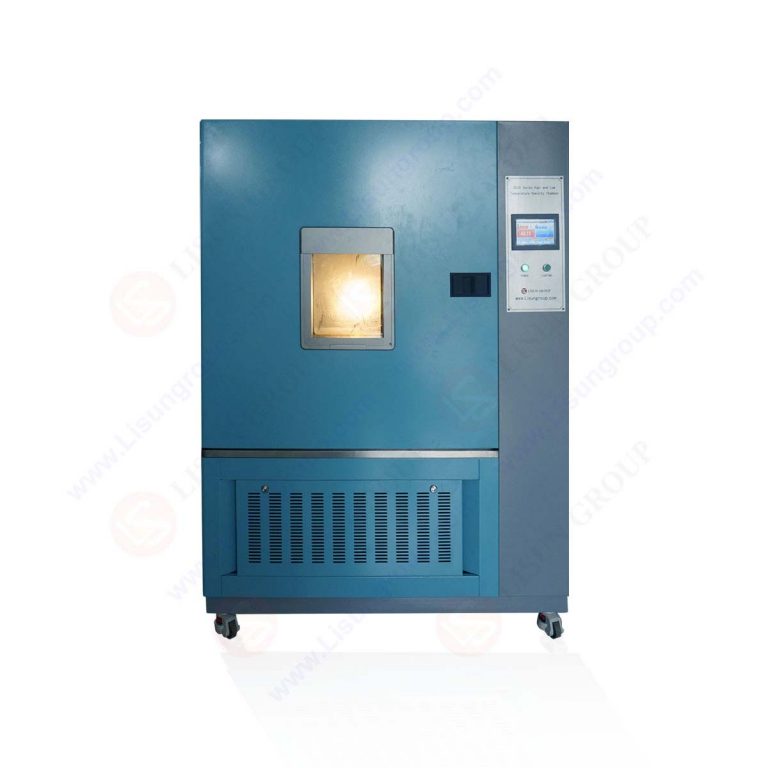
Fiber-optic cabling transmits the captured light to the spectroradiometer housed in the LEDLM control unit, maintaining signal integrity over distances up to 10 meters without significant attenuation. This architecture allows physical separation of the environmental stress chamber from sensitive electronic measurement equipment, protecting the spectroradiometer from temperature-induced drift.
5.2 Sample Load Configurations and Fixturing
Customizable test racks support various sample mounting orientations, including vertical, horizontal, and angle-adjustable positions. The system accommodates LED modules, arrays, and complete luminaires with provisions for maintaining specified orientation relative to the optical measurement path. Thermocouple attachment points permit concurrent measurement of case temperature, ambient temperature, and heat sink temperature profiles.
The chamber includes multiple electrical feed-through ports for powering samples at test conditions. Voltage and current programmable power supplies integrate with the measurement software, enabling automated current stress profiles for evaluating current-accelerated degradation mechanisms.
6.1 IES LM-80-15 and TM-21-19 Implementation
IES LM-80-15 specifies the approved method for measuring lumen maintenance of LED light sources, requiring testing at 55°C, 85°C, and a third temperature selected by the manufacturer (commonly 105°C for accelerated evaluation). The standard mandates testing for a minimum of 6,000 hours, with data reported at 1,000-hour increments. LISUN’s LEDLM-80PL, connected to up to three temperature chambers by the constant temperature humidity chamber for IEC 60068 testing, facilitates concurrent execution of all required temperatures.
TM-21-19 provides the mathematical framework for projecting long-term lumen maintenance based on LM-80 data. The standard specifies nonlinear exponential decay models, curve-fitting procedures, and reporting formats for L70 and L50 lifetime projections. LISUN software automates TM-21 calculations, including the required reporting of projected lifetimes with confidence intervals.
6.2 IES LM-84-19, TM-28-19, and Supplementary Standards
IES LM-84-19 extends reliability assessment to complete LED lamps and luminaires, recognizing that thermal management differences affect lumen depreciation. TM-28-19 projects lumen maintenance from LM-84 data using analogous extrapolation methods. The LEDLM-84PL directly supports these protocols while maintaining compatibility with LM-80 sample formats.
The chamber also aligns with IES LM-79-19 requirements for electrical and photometric measurements, ensuring that the measurement environment meets specified ambient conditions (typically 25°C ± 1°C) when performing absolute photometry. CIE 084 (measurement of luminous flux), CIE 70 (measurement of intensity distributions), and CIE 127 (measurement of LEDs) provide complementary measurement guidance that LISUN’s integrated systems accommodate.
Table 2: Standard Compliance Matrix
| Standard | Application Scope | Chamber Role | LISUN System |
|---|---|---|---|
| IES LM-80-15 | LED Package/Array Lumen Maintenance | 3-Temperature Testing | LEDLM-80PL |
| IES LM-84-19 | LED Lamp/Luminaire Lumen Maintenance | Environmental Control | LEDLM-84PL |
| TM-21-19 | Lifetime Projection (LM-80 Data) | N/A (Software) | LEDLM-80PL |
| TM-28-19 | Lifetime Projection (LM-84 Data) | N/A (Software) | LEDLM-84PL |
| IES LM-79-19 | Absolute Photometry | Ambient Control | Optional |
| CIE 084/070/127 | Measurement Methodology | Optical Path | Included |
7.1 Laboratory Workflow Integration and Throughput Optimization
Implementing the LISUN constant temperature humidity chamber for IEC 60068 testing within an existing laboratory infrastructure requires consideration of power requirements, cooling water availability, and exhaust ventilation. The chamber operates on standard 208V/240V single-phase electrical service, drawing maximum current of 30A during high-temperature, high-humidity operation.
The support for up to three temperature chambers through a single LEDLM-80PL or LEDLM-84PL control unit enables sequential or concurrent testing. Engineers can stagger test start times to optimize measurement intervals, allowing one chamber to undergo photometric measurement while others remain in state. This approach maximizes instrument utilization, delivering a throughput increase of up to 300% compared to single-chamber configurations.
7.2 Data Management and Long-Term Reliability Records
With tests extending beyond 6,000 hours (250 days), robust data management becomes critical. LISUN software provides redundant storage options, including local database storage, network-attached storage solutions, and cloud backup integration. Automatic backup scheduling ensures no data loss during extended power outages or system failures.
The software version controls all test configurations, maintaining complete audit trailing for regulatory compliance. Engineers can export raw measurement data, calculated metrics, and compliance certificates in PDF and Excel formats, streamlining reporting to regulatory bodies, customers, or internal quality management systems.
The LISUN constant temperature humidity chamber for IEC 60068 testing represents a significant advancement in solid-state lighting reliability assessment equipment. By seamlessly integrating environmental stress application with precise photometric measurement capabilities, this system addresses the complex testing requirements established by IES LM-80, IES LM-84, TM-21, and TM-28 standards. The Arrhenius Model-based software transforms raw lumen maintenance data into actionable lifetime predictions, empowering engineers to make data-driven decisions regarding product certification, warranty definitions, and design improvements.
The dual-system variants (LEDLM-80PL and LEDLM-84PL) accommodate the full spectrum of LED testing needs, from individual packages to complete luminaires, while providing scalability to connect up to three temperature chambers for increased throughput. The LISUN chamber’s compliance with IEC 60068 environmental test conditions and its dual testing modes deliver versatility that extends beyond LED-specific applications to general electronic component reliability testing. As the lighting industry continues transitioning to solid-state technologies, LISUN’s integrated testing solution ensures manufacturers can validate product reliability with scientific precision and regulatory confidence. The 6000-hour test duration, L70/L50 metrics, and multi-temperature acceleration capabilities establish a comprehensive framework for engineering robust, long-lasting LED products.
Q1: How does the LISUN constant temperature humidity chamber for IEC 60068 testing integrate with existing LM-80 test protocols?
A: The LISUN chamber integrates directly with LM-80 testing workflows by maintaining precise temperature conditions (55°C, 85°C, and optional third temperature) while housing the sample within the integrating sphere’s optical path. The LEDLM-80PL software schedules 1,000-hour measurement intervals, automatically recording lumen output and chromaticity data without interrupting environmental conditions. Engineers can connect up to three chambers to a single LEDLM-80PL, enabling parallel testing at all required temperatures simultaneously. This architecture ensures substantial acceleration of LM-80 test completion while maintaining complete data traceability, with automated export capabilities for TM-21 extrapolation and reporting to certification bodies or customers requiring LM-80 datasets.
Q2: What distinguishes the LEDLM-80PL from the LEDLM-84PL regarding testing capabilities?
A: The LEDLM-80PL specifically addresses IES LM-80-15 protocols for LED packages, arrays, and modules, with photometric range covering 0.1 to 20,000 lumens. The LEDLM-84PL extends capabilities to IES LM-84-19 whose scope includes complete LED lamps, light engines, and luminaires, supporting measurements up to 100,000 lumens. This higher capacity accommodates larger samples with different thermal characteristics. Both systems share the same chamber interface, Arrhenius-based acceleration software, and 3-chamber support. However, the LEDLM-84PL requires more substantial power supply capability and may necessitate larger integrating sphere configurations. Application-specific selection ensures the chosen system aligns precisely with the test specimens under evaluation.
Q3: How does LISUN’s software implement TM-21 lifetime projection from LM-80 test data?
A: LISUN software implements TM-21-19 compliant projections by utilizing the lumen maintenance data collected at each temperature condition. The software performs nonlinear least-squares curve fitting to the exponential decay model: Φ(t) = α·exp(β·t), where β incorporates the temperature-dependent degradation rate. From three temperature datasets, activation energy is calculated using Arrhenius regression methodology. The software extrapolates lumen maintenance to L70 or L50 endpoints, projecting lifetimes at the specified operating temperature. Reporting includes projected lifetime values, 90% confidence intervals based on the TM-21 statistical methodology, and documentation of calculation parameters. Automated report generation ensures consistent, transparent, and standards-compliant communication of lifetime projections to interested parties.
Q4: Can the chamber perform IEC 60068-2-78 damp heat testing in addition to LED photometric tests?
A: Yes, the LISUN constant temperature humidity chamber fully supports IEC 60068-2-78 damp heat testing (steady-state) with 85°C/85% RH conditions. The chamber maintains relative humidity stability of ±2% RH across temperature ranges from -40°C to 150°C. When conducting IEC 60068-2-78, typically performed over 56 days (1,344 hours), the chamber operates without LED photometric measurement but provides the required environmental stress. By designing the chamber to serve dual purposes, LISUN ensures cost-effective utilization where lighting reliability testing and broader electrotechnical product qualification can proceed simultaneously or sequentially using the same capital equipment. This flexibility maximizes laboratory productivity while maintaining standards compliance across multiple test programs.
Q5: What maintenance procedures ensure long-term accuracy of the LISUN chamber and photometric system?
A: Preventive maintenance involves quarterly calibration of the temperature sensor (PT100 RTD) and relative humidity sensor using NIST-traceable references. Annual photometric calibration of the integrating sphere and spectroradiometer using standard lamps ensures measurement traceability. The chamber’s distilled water supply for the humidification system should be monitored for contamination, with filter replacement every 6 months. Cleaning of the optical port window should verify that no film deposition from humidity cycling compromises light transmission. LISUN’s technical support provides scheduled maintenance packages, calibration services, and remote software diagnostics to ensure the complete measurement chain maintains the manufacturer’s stated accuracy specifications throughout operational life.