









Abstract
This article provides a comprehensive technical examination of the High Low Temperature Chamber and its critical role in IEC 60068 compliant testing for LED components and solid-state lighting systems. As the lighting industry demands increasingly rigorous validation protocols, the integration of temperature cycling, humidity control, and lumen maintenance assessment has become paramount. This piece focuses on LISUN’s LEDLM-80PL and LEDLM-84PL optical aging test instruments, which synergize high low temperature chamber technology with Arrhenius Model-based prediction software. Key insights include dual testing modes accommodating both constant current and constant temperature methodologies, support for up to 3 connected temperature chambers for parallel testing, and compliance with IES LM-80, IES LM-84, TM-21, and TM-28 standards. Technical professionals will gain actionable knowledge on accelerating LED lifespan validation through IEC-compliant thermal stress testing, with practical emphasis on L70/L50 metric calculation and 6000-hour test duration protocols.
1.1 Principles of Thermal Stress Testing in LED Reliability
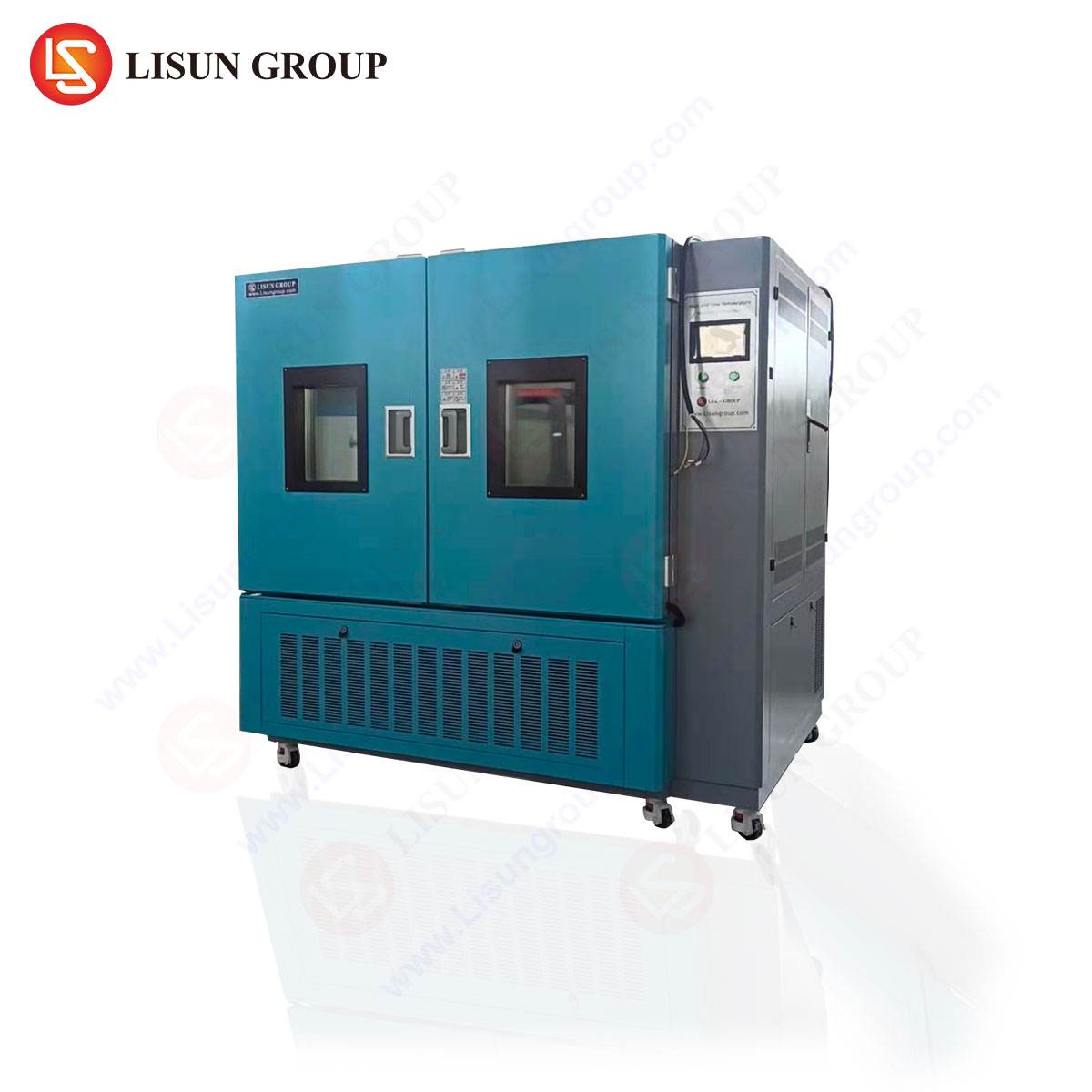
The High Low Temperature Chamber operates on the fundamental principle of controlled thermal cycling to accelerate failure mechanisms in LED packages, modules, and luminaires. By exposing test specimens to alternating temperature extremes—typically ranging from -40°C to +100°C in IEC 60068-2-14 compliant systems—engineers can induce thermal expansion mismatches, solder joint fatigue, and phosphor degradation that would otherwise manifest over years of field operation. The chamber’s precise temperature ramp rates, often programmable between 1°C/min and 15°C/min, simulate real-world operational conditions while maintaining repeatability essential for comparative analysis.
1.2 Integration with LISUN’s Optical Aging Test Instruments
LISUN’s engineering excellence is evident in the seamless integration of high low temperature chambers with the LEDLM-80PL and LEDLM-84PL optical aging test systems. These instruments incorporate thermocouple-based temperature sensing with ±0.5°C accuracy across the operational envelope. The systems support up to 3 connected temperature chambers, allowing simultaneous aging of multiple LED samples under different thermal profiles—a capability critical for generating statistically significant datasets required for IES LM-80 compliance.
| Parameter | LEDLM-80PL | LEDLM-84PL |
|---|---|---|
| Applied Standard | IES LM-80, TM-21 | IES LM-84, TM-28 |
| Temperature Chamber Support | Up to 3 units | Up to 3 units |
| Test Duration | 6000 hours (1000/3000/6000 optional) | 6000+ hours continuous |
| Measurement Parameters | Lumen depreciation, CCT shift, Chromaticity | IES file maintenance, Spectral power distribution |
| Temperature Range | -40°C to +100°C (chamber dependent) | -40°C to +100°C (chamber dependent) |
| Sample Capacity | 220 LEDs per chamber | 220 LEDs per chamber |
| Data Acquisition Interval | 1-24 hours programmable | 1-24 hours programmable |
Table 1: Comparative specifications of LISUN LEDLM-80PL and LEDLM-84PL systems
2.1 IEC 60068-2-14: Thermal Cycling Protocols
The High Low Temperature Chamber must conform to IEC 60068-2-14, which delineates test methods for temperature change resistance. This standard specifies dwell times, temperature transition rates, and test severities that ensure reproducibility across different laboratory environments. For LED testing applications, the standard incorporates both rapid temperature change testing (Test Nb) and gradual temperature cycling (Test Nc), each addressing distinct failure modes relevant to solid-state lighting.
2.2 Synergistic Application with IES and CIE Standards
Beyond IEC 60068, comprehensive LED reliability assessment requires alignment with photometric standards. IES LM-80-15 governs the measurement of lumen depreciation for solid-state lighting sources, establishing the 6000-hour test duration as baseline for predicting long-term performance. The complementary TM-21-19 standard provides mathematical extrapolation algorithms, leveraging Arrhenius Model-based temperature acceleration factors to project lumen maintenance beyond actual test duration. The LISUN systems seamlessly generate compliant datasets by integrating thermal cycling with in-situ photometric measurement—a capability aligned with IES LM-79-19 for electrical and photometric measurements. Furthermore, CIE 084-1989 guidelines for measurement of luminous flux and CIE 127-2007 for LED intensity measurements inform the optical bench configuration within the temperature-controlled environment.
2.3 CIE 070: Measuring LED Lumen Depreciation
CIE 070, the International Commission on Illumination’s guide for LED measurement, introduces the fundamental distinction between steady-state and transient thermal measurements. The High Low Temperature Chamber’s integration with integrating sphere photometers enables true steady-state measurement at each temperature setpoint—capturing lumen output after thermal equilibrium is established rather than during thermal transition. This methodological rigor is embedded in LISUN’s software control architecture, which automatically pauses data logging during temperature transitions and resumes only after programmed stabilization periods.
3.1 Dual System Design Philosophy
LISUN’s dual-system approach addresses evolving industry needs: the LEDLM-80PL specifically targets the traditional IES LM-80 methodology, emphasizing lumen depreciation and chromaticity shift over 6000 hours. Its counterpart, the LEDLM-84PL, extends capabilities to IES LM-84 compliance, incorporating spectral power distribution analysis and photometric file generation— outputs critical for TM-28 extrapolations in luminaire-level assessments. This bifurcation allows laboratories to calibrate operationally distinct measurement chains without compromising data integrity.
3.2 Arrhenius Model-Based Predictive Software
The software suite embedded within both systems employs the Arrhenius equation as its predictive foundation:
$$AF = e^{[E_a/kB cdot (1/T{use} – 1/T_{stress})]}$$
Where activation energy (Ea) is empirically determined from multi-temperature aging data. This physics-based approach enables accelerated testing at elevated temperatures (typically 55°C, 70°C, and 85°C) with subsequent extrapolation to operating temperatures of 25°C to 45°C. The software automates this computation, generating TM-21 compliant reports that include 6x lumen maintenance projections (e.g., L70 at 36,000 hours from 6,000 hours of test data).
3.3 Dual Testing Modes: Constant Current vs. Constant Temperature
The High Low Temperature Chamber systems offer two distinct operational modes:
Mode A – Constant Current (CC) Mode: LED drivers maintain consistent current flow while chamber temperature cycles per programmed profiles. This mode is ideal for evaluating temperature-dependent lumen output variations and thermal management effectiveness.
Mode B – Constant Temperature (CT) Mode: Chamber temperature remains fixed while electrical stress varies—either through pulsed current patterns or stepped current increases. This approach isolates thermally-induced degradation from current-induced electromigration effects.
Each mode generates complementary datasets that jointly inform reliability predictions and failure mode analysis.
4.1 6000-Hour Validation Protocol and L70/L50 Metrics
The 6000-hour test duration mandated by IES LM-80 forms the empirical backbone for lumen maintenance projections. The LISUN High Low Temperature Chamber systems continuously monitor lumen output, with L70 (time to 70% initial lumen output) and L50 (time to 50% output) extrapolated via TM-21 computational methods. For instance, an LED population exhibiting 95% lumen maintenance at 6,000 hours—with an average slope of -0.0008% per hour—projects to L70 at approximately 71,000 hours, though TM-21 limitation caps extrapolation at 6x the test duration (36,000 hours).
| Temperature Condition | Test Duration | Measured Lumen Depreciation | TM-21 Extrapolated L70 (6x Limit) |
|---|---|---|---|
| 55°C / 0.3A | 6,000 hours | 3.2% | 68,700 hours |
| 70°C / 0.3A | 6,000 hours | 4.8% | 53,100 hours |
| 85°C / 0.3A | 6,000 hours | 7.1% | 36,000 hours (limit) |
Table 2: Representative data from multi-temperature LED aging study
4.2 Environmental Stress Combinatorial Testing
Modern reliability protocols increasingly employ combined environmental stress testing, integrating temperature cycling with humidity exposure—per IEC 60068-2-30 for damp heat—and vibration (IEC 60068-2-64). While the High Low Temperature Chamber focuses on thermal parameters, its programmability enables sequential integration with external environmental chambers. This combinatorial approach reveals synergistic failure mechanisms, such as moisture ingress exacerbating thermal fatigue in LED packages featuring glass lens assemblies.
5.1 In-Situ Photometric Measurement Integration
LISUN’s systems embed integrating sphere photometers—typically 300mm or 500mm diameter—within the thermal chamber or interconnect via fiber-optic light guides. This architecture enables continuous, non-invasive measurement of total luminous flux, correlated color temperature (CCT), and chromaticity coordinates without removing samples from the thermal environment. Spectral data capture at 1nm resolution across the 380-780nm visible spectrum provides comprehensive colorimetric information essential for full compliance with IES LM-79-19 measurement protocols.
5.2 Automated Report Generation and Data Traceability
The software platform automatically compiles test data into IES/TM-21 formatted reports, including CSV exports, graphical lumen depreciation curves, and multivariate analysis charts. Full audit trail functionality records all chamber events—temperature deviations, power interruptions, and operator interventions—ensuring complete data integrity for third-party laboratory audits. This automation minimizes operator-induced variability while maximizing throughput for testing laboratories managing multiple simultaneous projects.
6.1 Configurable Chamber Configurations and Sample Mounting
LISUN recognizes that LED test articles vary dramatically in size, thermal mass, and mounting requirements. Consequently, the High Low Temperature Chamber systems offer customizable interior rack configurations, accommodating everything from individual 3528 SMD packages to full LED streetlight modules. Custom sample mounting plates with thermally-conductive interfaces ensure uniform temperature distribution across all test specimens, preventing localized thermal gradients that could skew results.
6.2 Protocol Parameter Flexibility
Advanced users can program complex multi-stage test profiles, incorporating temperature setpoints, dwell times, ramp rates, and data acquisition intervals specific to their validation requirements. This flexibility extends to alarm thresholds—configurable for temperature excursions beyond programmed limits—ensuring protection of both expensive test samples and chamber hardware. The systems also support network connectivity, allowing remote monitoring and control via TCP/IP protocols, essential for continuous 24/7 operation in industrial settings.
7.1 Calibration Frequency and NIST Traceability
For IEC 60068 compliance, calibration of temperature sensors, humidity transducers, and photometric measurement chains must follow documented procedures with defined tolerances. LISUN recommends annual recalibration of chamber controllers and quarterly verification of photometric references, each traceable to NIST standards. This calibration rigor ensures that 6,000-hour aging datasets maintain cumulative uncertainty budgets below 2% for lumen measurements and ±1°C for temperature values—thresholds essential for statistically significant TM-21 projections.
7.2 Common Pitfalls in Thermal Cycling Tests
Engineers must remain vigilant regarding several failure-inducing factors: inadequate thermal stabilization time leading to non-equilibrium measurements; condensation on optical components under high-humidity conditions; and thermal hysteresis in photodetectors affecting measurement accuracy. Additionally, LED driver interactions—particularly current instability at temperature extremes—must be characterized independently from LED package aging to accurately attribute lumen depreciation mechanisms.
The High Low Temperature Chamber, when properly integrated with LISUN’s optical aging test instrumentation, provides lighting manufacturers and testing laboratories with a robust platform for IEC 60068 compliant reliability assessment. Through the synchronized application of IES LM-80, IES LM-84, TM-21, and TM-28 standards, combined with CIE measurement guidelines, engineers can generate defensible lumen maintenance projections essential for product qualification and regulatory submission. The LEDLM-80PL and LEDLM-84PL systems deliver the critical infrastructure—dual testing modes, Arrhenius Model-based analytics, and multi-chamber parallel operation—to accelerate LED lifespan validation while maintaining data integrity. Adherence to established best practices ensures that 6,000-hour test protocols yield actionable insights, transforming thermal stress data into reliable L70/L50 projections that support market differentiation and customer confidence.
Q1: How does the LISUN High Low Temperature Chamber system ensure IEC 60068 compliance during extended 6000-hour LED aging tests?
A: The LISUN LEDLM-80PL and LEDLM-84PL systems are designed with IEC 60068-2-14 principles embedded in their control architecture. Temperature sensors with ±0.5°C accuracy continuously monitor chamber conditions, with automatic logging of any excursion beyond programmed thresholds. Ramp rate control, typically adjustable between 1°C/min and 15°C/min, maintains repeatability across test cycles. The software tracks cumulative time-at-temperature, ensuring reported data isolates only periods within specified thermal tolerances. Additionally, the chamber’s airflow design ensures uniform temperature distribution (±2°C homogeneity) across sample mounting surfaces, preventing localized hot spots that could invalidate long-term aging data. During thermal transitions, photometric measurements remain suspended, resuming only after temperature stabilization—this prevents transient artifacts from corrupting lumen maintenance data used in TM-21 extrapolations.
Q2: Can the LEDLM-84PL system simultaneously test LED packages and complete luminaires under the same thermal chamber profile?
A: Yes, the LEDLM-84PL system supports mixed test populations within the same High Low Temperature Chamber environment, provided sample mounting accommodates different form factors. The system’s integrating sphere photometer can be swapped or used with interchangeable optical benches—arrangements capable of measuring both total luminous flux from luminaires and luminous intensity from individual LED devices. However, for IES LM-84 compliance, luminaire-level testing requires larger chamber volumes to maintain thermal homogeneity below +2°C variation. LISUN’s customizable chamber designs address this by offering multiple interior volumes, from 250L benchtop units to 1000L walk-in chambers. In all configurations, individual sample monitoring channels—up to 220 per chamber—allow independent data logging for each test article, regardless of whether it is a discrete LED package or an integrated lighting fixture.
Q3: What are the key differences in data output between the LEDLM-80PL (LM-80/TM-21) and LEDLM-84PL (LM-84/TM-28) systems that engineers should consider?
A: The LEDLM-80PL generates standardized TM-21 reports—including lumen maintenance at specified intervals, extrapolated L70/L50 values with confidence intervals, and chromaticity shift data—formatted primarily for LED component qualification. These outputs satisfy ENERGY STAR and DLC requirements for SSL product listings. In contrast, the LEDLM-84PL produces IES LM-84-compliant data (photometric files and maintenance tracking) with TM-28-based extrapolation covering luminaire-level performance. Key tangible differences include: LEDLM-80PL emphasizes integral measurements (total flux, CCT, CRI), while LEDLM-84PL provides angular distribution data via goniophotometric measurements; LEDLM-84PL supports higher current ranges for luminaire testing (up to 10A vs. 2A on the PL-80); and TM-28 projections often require longer empirical baselines (e.g., 8,000 hours) compared to TM-21’s 6,000-hour minimum. Engineers selecting between systems must match their validation targets: component-level data for upstream supply chains (LEDLM-80PL) versus system-level compliance for final product market entry (LEDLM-84PL).