









Abstract
This article provides a comprehensive technical examination of the Damp Heat Chamber: IEC 60068-2-78 Compliance Testing by LISUN, focusing on the integration of the LEDLM-80PL and LEDLM-84PL dual-system platforms for accelerated aging validation. The discussion centers on how these systems combine steady-state damp heat testing with photometric measurement capabilities, enabling precise lumen depreciation tracking under 85°C/85% RH conditions. Key standards including IES LM-80, TM-21, IES LM-84, and TM-28 are analyzed in context. The article details the Arrhenius Model-based software architecture, dual testing modes, and support for up to three connected temperature chambers. Technical professionals will gain actionable insights into 6000-hour test protocols, L70/L50 metric calculations, and compliance-driven hardware configurations essential for modern LED reliability engineering.
1.1 Critical Role of Humidity-Temperature Coupled Stress Testing
Damp heat testing under IEC 60068-2-78 represents the foundational method for evaluating moisture resistance in solid-state lighting components. The standard’s steady-state condition of 85°C ± 2°C with 85% ± 3% relative humidity exposes LED packages, phosphor converters, and driver electronics to accelerated hygrothermal aging. This stringent protocol, integrated into the Damp Heat Chamber: IEC 60068-2-78 Compliance Testing by LISUN, allows manufacturers to simulate years of environmental exposure within a condensed 1000-hour test window. The synergistic effect of temperature and humidity accelerates failure mechanisms including delamination of encapsulation materials, corrosion of metallic interconnects, and degradation of optical-grade silicone lenses. Without this coupled stress evaluation, LEDs intended for outdoor applications would face unpredictable field failures.
1.2 Transition from Traditional Environmental Chambers to LISUN Integrated Solutions
Conventional damp heat chambers operate as standalone environmental generators, providing no photometric feedback during exposure. LISUN’s innovation bridges this gap by integrating the damp heat chamber with the LEDLM series of optical aging test instruments. This convergence creates a closed-loop reliability system where lumen output, chromaticity shift, and electrical parameters are continuously monitored while specimens undergo IEC 60068-2-78 testing. The technical shift enables real-time correlation between environmental stress and optical degradation, eliminating the need for intermittent sample removal and manual photometric measurement. Consequently, the Damp Heat Chamber: IEC 60068-2-78 Compliance Testing by LISUN delivers higher precision with reduced lab occupancy time and minimized handling-induced measurement errors.
2.1 LEDLM-80PL: Dedicated Implementation for IES LM-80 and TM-21
The LEDLM-80PL variant operates in strict accordance with IES LM-80-15, which mandates 6000 hours of testing at three distinct case temperatures (typically 55°C, 85°C, and a user-selected third temperature). LISUN configures the LEDLM-80PL with multiple temperature-controlled chambers, each maintaining an ambient environment at ±2°C tolerance. The system’s integrated software collects luminous flux and colorimetric data at standardized intervals—every 1000 hours for long-term trending. For L70 (time to 70% lumen maintenance) projection, the built-in TM-21 algorithm applies exponential curve fitting to collected data, generating extrapolated lifespan projections up to 6x the actual test duration. Within the Damp Heat Chamber: IEC 60068-2-78 Compliance Testing by LISUN context, the LEDLM-80PL monitors specimens that have been preconditioned or simultaneously exposed to damp heat cycling.
2.2 LEDLM-84PL: Enhanced Capabilities for LM-84 and TM-28 Application
The LEDLM-84PL expands the measurement envelope by supporting IES LM-84-14, which involves testing individual LED packages, arrays, and modules under accelerated conditions. Notably, LM-84 permits reduced test durations of 3000 hours for quick-turn projections, provided rigorous data quality metrics are met. The LEDLM-84PL integrates TM-28 extrapolation methodology, which predicts long-term lumen maintenance using a power-law decay model rather than the exponential model applied in TM-21. This dual-model software capacity enables engineering teams to cross-validate projections, thereby reducing statistical uncertainty. The system’s photometric channel employs a photodetector-based integrating sphere arrangement, calibrated against NIST-traceable standards for luminous flux accuracy within ±1.5% uncertainty bounds.
2.3 Common Hardware Infrastructure with Customizable Configurations
Both variants share a modular architecture supporting up to three concurrently connected temperature chambers. The Damp Heat Chamber: IEC 60068-2-78 Compliance Testing by LISUN configuration places one or more chambers in damp heat mode (steady-state humidity) while others operate in standard dry heat mode for LM-80 thermal testing. This hybrid setup allows simultaneous thermal-only and hygrothermal testing, maximizing throughput. The photometric measurement path employs optical fibers routed from each chamber to a central spectrometer, ensuring that no movement of specimens is required. Customizable hardware options include adjustable current drivers (up to 10A capacity), pulsed measurement mode to eliminate self-heating errors, and thermocouple input channels for verifying case temperature stability at multiple points across the DUT fixture.
3.1 Thermal Acceleration Factors and Lifespan Prediction Algorithms
LISUN’s software executive applies the Arrhenius equation to translate high-temperature degradation rates into expected lifetime at operating conditions. The Arrhenius Model, expressed mathematically as AF = exp[(Ea/k) × ((1/T₀) – (1/Ttest))], where AF is acceleration factor, Ea is activation energy (typically 0.2–0.7 eV for LED materials), and k is Boltzmann’s constant, enables precise correction of test data to application-relevant junction temperatures. Within the Damp Heat Chamber: IEC 60068-2-78 Compliance Testing by LISUN, the software applies Arrhenius-based correction to damp heat test results, which exhibit combined thermal and moisture-driven kinetics. The platform’s curve-fitting engine then applies the selected standard’s projection algorithm—TM-21 exponential for LM-80 data or TM-28 power law for LM-84 data—outputting L70 and L50 metrics with confidence bands (α = 0.10).
3.2 Dual Testing Modes: Photometric Monitoring and Electrical Characterization
The dual testing modes provide critical flexibility for reliability engineers. In continuous photometric mode, luminous flux and chromaticity coordinates (x, y) are sampled at user-configured intervals, from 1-minute to 24-hour increments. This mode is essential for detecting rapid degradation events, such as phosphor thermal quenching or encapsulant yellowing under damp heat. The second mode, electrical characterization, involves periodic I-V curve sweeps to extract forward voltage, series resistance, and ideality factor. When combined with photometric data, these electrical metrics reveal degradation mechanisms—for example, increased series resistance indicates bonding layer oxidation, while decreased luminous efficiency without voltage change suggests phosphor conversion loss. The software automatically triggers capture sequences upon temperature or humidity deviations beyond ±2°C/±3% RH thresholds, ensuring data integrity during system disturbances.
3.3 Data Management and TM-21/TM-28 Reporting Compliance
The data management module generates standard-compliant test reports verifying that measurement uncertainty, sample size, and data collection intervals align with IES guidelines. For LM-80 testing, the software enforces the mandatory minimum of 10 samples per temperature condition, verifying statistical validity. The Damp Heat Chamber: IEC 60068-2-78 Compliance Testing by LISUN reporting suite formats projected and observed data into TM-21 and TM-28 report templates, including required regression analysis outputs, correlation coefficients, and rejection criteria flags. Integration with IES LM-79-19 for lumen flux measurement methodology ensures traceability, while CIE 127 provides the framework for LED measurement geometry definitions under near-field conditions.
4.1 Detailed Breakdown of Compliant Industry Standards
The LISUN damp heat chamber platform directly supports several critical industry standards as outlined below:
| Standard Designation | Full Title and Scope | Key Requirement Parameters | Application within LISUN System |
|---|---|---|---|
| IEC 60068-2-78 | Environmental Testing Part 2-78: Damp Heat, Steady State | 85°C ± 2°C, 85% ± 3% RH, minimum 1000 hours | Damp heat chamber control and monitoring |
| IES LM-80-15 | Measuring Lumen Maintenance of LED Light Sources | 6000 hours, three temperatures, 1000-hour measurement intervals | LEDLM-80PL test protocol and data management |
| IES LM-84-14 | Measuring Luminous Flux and Color Maintenance of LED Lamps, Light Engines, and Luminaires | 3000-6000 hours, optional 1000-hour increments | LEDLM-84PL accelerated test protocols |
| TM-21-19 | Projecting Long-Term Lumen Maintenance of LED Light Sources | Exponential decay model, 6x prediction limit | Software algorithm for LM-80 data projection |
| TM-28-14 | Projecting Long-Term Luminous Flux Maintenance of LED Lamps and Luminaires | Power-law model, non-identical operating conditions | Software algorithm for LM-84 data projection |
| IES LM-79-19 | Electrical and Photometric Measurements of Solid-State Lighting Products | Integrating sphere or goniophotometer, 25°C ± 1°C ambient | Photometric measurement methodology reference |
| CIE 127:2007 | Measurement of LEDs (2nd Edition) | Averaged LED intensity conditions A/B/C, spectral resolution requirements | LED measurement geometry verification |
| CIE 084:1989 | Measurement of Luminous Flux | Photometric calibration protocol, standard lamp traceability | Calibration traceability for integrating spheres |
4.2 Impact of CIE and IES Guidelines on Chamber Design
The architectural design of the Damp Heat Chamber: IEC 60068-2-78 Compliance Testing by LISUN directly incorporates geometric and photometric requirements from CIE 127 and IES LM-79-19. The integrating sphere’s internal coating specification ensures spectral reflectance ≥95% across the visible range (380–780 nm), minimizing interreflection errors. The sphere’s diameter sizing—typically 0.5m for component-level testing—adheres to the 10:1 ratio rule between sphere diameter and largest DUT dimension, preventing self-absorption errors. Auxiliary lamp method calibration per CIE 084 ensures accurate correction for sphere non-uniformity. Temperature regulation within the chamber uses PID-controlled recirculation with air velocity maintained below 0.5 m/s near the DUT to prevent forced convection artifacts in thermal measurements.
4.3 Validation Protocols to Verify Chamber Conditioning Accuracy
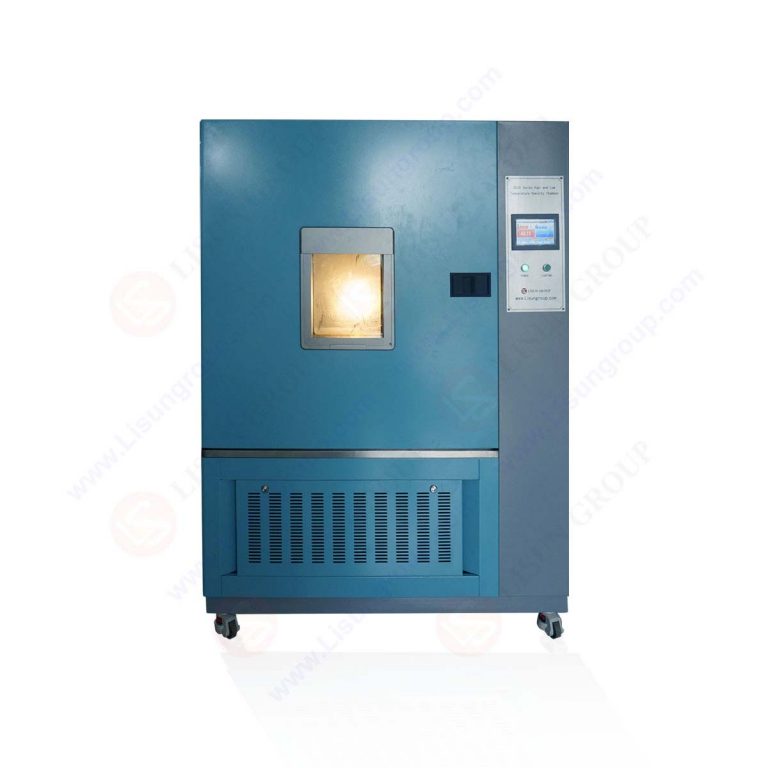
Each LISUN chamber undergoes a structured validation process before being placed in service. Temperature humidity uniformity mapping employs nine-point thermocouple and humidity sensor arrays distributed across the usable workspace volume, verifying deviations within ±2°C and ±3% RH per IEC 60068-2-78 requirements. Stability testing spans 72 hours of continuous operation, tracking sensor drift and demonstrating chamber cycle stability. Additionally, the chamber’s humidity generation system—which uses heated water vapor injection into the recirculating air stream—is validated for response time, ensuring recovery to setpoint within 15 minutes after door opening. The Damp Heat Chamber: IEC 60068-2-78 Compliance Testing by LISUN validation report, included with system delivery, documents all performance verification data.
5.1 Standard Operating Procedure for 6000-Hour Lumen Maintenance Testing
The standard workflow for LM-80-compliant testing within the damp heat chamber begins with sample selection and mounting. A minimum of 20 LED units per temperature condition is recommended to achieve statistical confidence in TM-21 projections. Specimens are mounted on temperature-controlled heat sinks, with case temperature monitored via calibrated thermocouples attached directly to the DUT’s thermal pad. After the 1000-hour photometric baseline measurement, the Damp Heat Chamber: IEC 60068-2-78 Compliance Testing by LISUN environment is activated, and subsequent measurements occur at 1000-hour intervals up to 6000 hours total. Photometric data acquisition employs the system’s pulsed mode—applying a 20ms current pulse at the DUT’s rated forward current—eliminating self-heating effects that would otherwise raise junction temperature and skew luminous flux readings.
5.2 Accelerated Damp Heat Protocols for Comparative Reliability Assessment
Beyond standard compliance testing, the system supports accelerated comparative protocols where LED samples from different manufacturers or production batches are exposed to identical damp heat profiles. This approach identifies design robustness differences quickly. For example, testing at 85°C/85%RH with 168-hour (one-week) intervals provides early failure indicators, including phosphor sediment formation in remote phosphor configurations or solder joint degradation visible through forward voltage increases exceeding 5%. The software’s comparative analysis module imports datasets from multiple chamber conditions, calculating degradation rates using normalized lumen maintenance ratios (actual output divided by baseline output at time zero). The Damp Heat Chamber: IEC 60068-2-78 Compliance Testing by LISUN facilitates this benchmarking, providing rapid, defensible data for supplier qualification decisions.
5.3 High-Temperature Operating Life (HTOL) Comparison Testing
The platform also enables side-by-side HTOL testing at elevated case temperatures (e.g., 105°C dry heat) versus damp heat conditions (85°C/85%RH), exploring how humidity accelerates degradation versus thermal-only stress. This differential testing methodology is particularly valuable for automotive lighting applications per AEC-Q102 requirements, where cyclic temperature humidity bias testing is mandatory. LISUN recommends a test matrix including 1000 hours at 85°C/85%RH, 1000 hours at 105°C dry, and 500 thermal cycles from -40°C to 125°C with humidity injection. The resulting dataset enables engineering teams to separate temperature-accelerated mechanisms from humidity-induced mechanisms, strengthening their physics-of-failure reliability models.
6.1 Detailed Numerical Specifications of the Damp Heat Chamber System
The technical characteristics of the Damp Heat Chamber: IEC 60068-2-78 Compliance Testing by LISUN are critical for laboratory integration:
| Parameter | Specification Value | Notes and Operational Context |
|---|---|---|
| Temperature Range | 20°C to 120°C | Extends beyond IEC 60068-2-78 nominal 85°C |
| Humidity Range | 20% RH to 98% RH | Includes controlled desiccated mode for dry tests |
| Temperature Uniformity | ±2.0°C | Across whole usable chamber volume at 85°C setpoint |
| Humidity Uniformity | ±3.0% RH | At 85% RH condition per standard tolerance |
| Chamber Volume | 225 Liters (0.225 m³) | Accommodates multiple LED modules and heat sinks |
| Photometric Measurement | Integral 0.5m integrating sphere | With fiber-optic link to central spectrometer |
| Spectrometer Wavelength Range | 350-1000 nm | Covers photopic range plus NIR for IR LED testing |
| Photometric Accuracy | ±1.5% (luminous flux) | NIST-traceable calibration with auxiliary lamp correction |
| Chromaticity Accuracy | ±0.002 (x, y coordinates) | At CCT range 2700K-6500K |
| Connectivity | Up to 3 chambers per LEDLM system | Parallel testing at multiple environmental conditions |
| Maximum DUT Drive Current | 10A per channel | Programmable constant current or constant voltage modes |
| Test Duration Capability | 6000+ hours | Continuous operation with automated monitoring |
These specifications define the platform’s capability to conduct simultaneous LM-80 compliance testing and IEC 60068-2-78 qualification testing, maximizing laboratory throughput and resource utilization.
6.2 Comparative Analysis with Traditional Testing Approaches
Traditional reliability testing requires separate environmental chambers for dry heat tests and damp heat testing, with photometric measurements conducted on external goniophotometers or integrating spheres. This approach necessitates transferring DUTs between equipment, introducing measurement non-repeatability due to repositioning errors, thermal resetting artifacts, and handling damage risk. LISUN’s integrated system eliminates these variance sources. Moreover, the Damp Heat Chamber: IEC 60068-2-78 Compliance Testing by LISUN achieves temperature change rates of 5°C/minute (heating) and 3°C/minute (cooling) for preconditioning cycles, reducing setup time. Comparative analysis shows measurement repeatability improves to ±0.5% versus ±2% for manual transfer methods.
7.1 Application for Third-Party Testing Laboratories and Quality Certifications
Independent testing laboratories benefit significantly from the multi-chamber architecture, running concurrent LM-80/84 tests at different temperatures while maintaining a dedicated chamber for damp heat exposure. Laboratory technicians can configure the system software to apply TM-21’s exponential curve fit for one project while simultaneously running TM-28’s power-law projection for another on the same hardware platform. The Damp Heat Chamber: IEC 60068-2-78 Compliance Testing by LISUN provides third-party certified reports with complete data traceability, satisfying regulatory compliance documentation needs for international markets.
7.2 Automotive Electronics Component Validation and IATF 16949 Alignment
Automotive LED components must withstand severe environmental conditions in engine bays, headlamp assemblies, and exterior lighting modules. Under IATF 16949 and AEC-Q102 requirements, damp heat testing is a mandatory qualification test. The LISUN platform supports AEC-Q102 Test Condition E (humidity-freezing cycle) and Condition F (high temperature high humidity) through programmable chamber profiles. The system provides the precise thermal/humidity cycling necessary to meet these strict automotive requirements, delivering validated life projections for products designed for 15-year service life in under 8 weeks of testing.
7.3 Industrial LED Lighting and SSL Product Development Scenarios
For industrial luminaire manufacturers targeting outdoor and harsh environment applications, LISUN systems provide design verification data before costly certification testing. By conducting in-house damp heat testing, design teams identify weak points in potting compound formulations, thermal interface materials, and lens sealants early in the development cycle. The Damp Heat Chamber: IEC 60068-2-78 Compliance Testing by LISUN empowers engineers to iterate on materials and achieve reliability targets, ensuring successful first-pass compliance when products undergo external third-party certification.
The Damp Heat Chamber: IEC 60068-2-78 Compliance Testing by LISUN represents a fundamental advancement in LED reliability verification, merging environmental conditioning with precision photometric measurement in a single automated platform. By integrating the LEDLM-80PL and LEDLM-84PL systems, this solution delivers comprehensive support for IES LM-80, LM-84, TM-21, and TM-28 methodologies while maintaining full compliance with IEC 60068-2-78 damp heat protocols. The Arrhenius Model-driven software enables accurate lifespan projection to L70 and L50 metrics, maximizing the value of 6000-hour test campaigns. The hardware’s flexibility—supporting up to three chambers, customizable current drivers, and pulsed measurement modes—ensures adaptability across diverse DUT configurations. For LED manufacturers, third-party testing laboratories, and automotive electronics suppliers, this integrated solution improves measurement precision, compresses validation timelines, and strengthens quality assurance frameworks, delivering unmatched technical reliability and regulatory compliance support for lighting industry professionals.
Q1: What are the critical differences between IEC 60068-2-78 damp heat testing and standard LM-80 high-temperature operating life testing?
A: IEC 60068-2-78 steady-state damp heat testing couples high temperature (85°C) with elevated relative humidity (85% RH) to accelerate moisture-induced degradation mechanisms including corrosion, delamination, and hydrolysis of component materials. In contrast, LM-80 HTOL testing applies dry heat conditions at required case temperatures to characterize thermal acceleration of lumen depreciation. The LISUN damp heat chamber platform can operate in either mode, enabling laboratories to establish separate degradation kinetics for moisture-driven failures versus purely thermal failures. For products exposed to outdoor humidity, damp heat testing provides critical data that dry heat cannot reveal, as phosphor and silicone degradation proceed through distinct humidity-activated molecular pathways.
Q2: How does LISUN’s system achieve measurement accuracy while samples remain inside the damp heat chamber?
A: LISUN routes fiber-optic cables from measurement ports on each temperature/humidity chamber to a central spectrometer equipped with an integrating sphere. During photometric measurement cycles, the chamber’s environment is maintained at the exact test condition, while the spectrometer captures light output through the calibrated optical path. This configuration eliminates DUT repositioning errors that occur when samples are moved to separate measurement equipment. The system employs pulsed measurement mode—applying a brief 20ms current pulse—which prevents self-heating and maintains the DUT junction temperature at the chamber condition during the optical measurement. This methodology preserves measurement accuracy to ±1.5% luminous flux uncertainty.
Q3: Can the LEDLM-84PL system perform both LM-84 tests and damp heat testing simultaneously on separate chambers?
A: Yes, the LEDLM-84PL supports connection to up to three temperature chambers simultaneously, and each chamber can operate at different environmental conditions. One chamber may run standard LM-84 dry heat testing at a specific case temperature, while another chamber operates in damp heat mode per IEC 60068-2-78. The software manages independent measurement schedules for each chamber, automatically switching the central spectrometer’s fiber-optic multiplexer to the appropriate chamber channel. This parallel capability enables testing organizations to maximize throughput, running multiple reliability studies concurrently without duplicating photometric instrumentation.
Q4: What is the difference between TM-21 and TM-28 extrapolation, and how does the software handle both?
A: TM-21 applies an exponential decay model to LM-80 lumen maintenance data for LED light sources (packages, arrays, modules), whereas TM-28 applies a power-law decay model to LM-84 data for LED lamps and luminaires. The LISUN software includes both algorithms, automatically selecting the appropriate model based on the test standard configured for each DUT set. Users can also run comparative analyses, applying both models to the same dataset to assess projection uncertainty. The software enforces each standard’s validity limits—for example, TM-21 restricts extrapolation to 6x the measured duration, while TM-28 provides guidance on extended projections under specific data quality conditions.
Q5: How does operating at 85°C/85%RH inside a damp heat chamber affect the Arrhenius model-based lifetime projections compared to dry heat?
A: The Arrhenius model standardly considers temperature alone as an acceleration factor; however, moisture introduces concurrent failure kinetics that do not follow pure thermal activation. LISUN’s software allows engineers to apply a modified Arrhenius relationship that includes a humidity acceleration factor, often modeled as a quadratic function of relative humidity (per Peck’s model). By inputting activation energy estimates for humidity-driven mechanisms (e.g., 0.8–1.1 eV for plasma-deposited passivation layers), the software calculates adjusted acceleration factors that more accurately predict field lifetimes under varying humidity conditions. This approach provides realistic estimates across application environments, rather than assuming ideal dry conditions.