









Abstract
This comprehensive technical article explores the critical role of thermal aging chambers in achieving IEC 60068 compliance testing solutions for LED lighting products. As the lighting industry increasingly demands reliable performance validation across extended operational lifetimes, the integration of accelerated aging protocols with photometric measurement has become essential. This article examines LISUN’s LEDLM-80PL and LEDLM-84PL optical aging test instruments, which combine thermal stress application with real-time lumen maintenance tracking. The discussion covers dual system architectures, Arrhenius Model-based predictive analysis, and alignment with IES LM-80, IES LM-84, TM-21, and TM-28 standards. Thermal Aging Chamber: IEC 60068 Compliance Testing Solutions enable manufacturers to accelerate product qualification timelines while maintaining data integrity. Practical implementation strategies, temperature chamber configurations supporting up to three connected units, and L70/L50 extrapolation techniques provide engineers with actionable frameworks for robust reliability validation.
1.1 Defining the Role of Thermal Aging in LED Reliability
The thermal aging chamber serves as the cornerstone of accelerated lifetime testing for LED components and luminaires. By subjecting devices to elevated temperatures within carefully controlled environmental enclosures, engineers simulate years of operational stress in condensed timeframes. Semiconductor junction degradation, phosphor conversion efficiency loss, and solder joint fatigue represent primary failure mechanisms accelerated through thermal exposure.
IEC 60068-2 series standards establish uniform test procedures for environmental testing, particularly Part 2-2 (Test B: Dry Heat) and Part 2-14 (Test N: Change of Temperature). LISUN’s thermal aging chamber solutions integrate these protocols with photometric measurement capabilities, allowing continuous luminous flux monitoring throughout the aging process. This convergence eliminates the common disconnect between thermal stress application and optical performance assessment, enabling direct correlation between thermal history and lumen maintenance.
1.2 Technical Architecture of Modern Aging Chambers
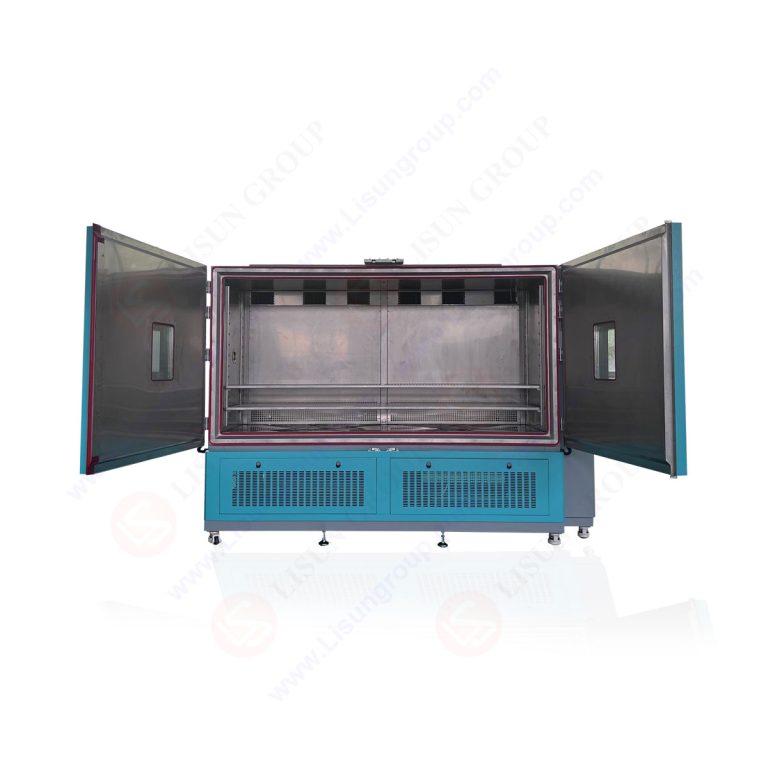
Contemporary thermal aging systems employ dual-mode configurations combining constant temperature operation with cyclic temperature profiles. The LEDLM-80PL and LEDLM-84PL systems exemplify this architecture, featuring independent temperature control modules with adjustable setpoints ranging from ambient to 100°C or higher. Air circulation systems ensure temperature uniformity within ±2°C across the test volume, critical for achieving reproducible degradation rates.
Key hardware specifications:
- Integrated optical measurement ports compatible with spectroradiometers or illuminance meters
- Multiple independent test zones supporting simultaneous evaluation of different product batches
- Data acquisition interfaces sampling photometric values at user-defined intervals
- Safety interlocks with over-temperature protection and alarm notification systems
The seamless integration between chamber control and optical instrumentation distinguishes modern systems from conventional thermal ovens. Real-time luminous flux data flows directly into analysis software, enabling continuous lumen depreciation tracking without sample disturbance or environmental perturbation.
2.1 System Overview and Capabilities
The LISUN LEDLM-80PL thermal aging chamber is specifically engineered to support IES LM-80-15 testing methodology, which establishes procedures for measuring lumen maintenance of LED light sources. This system accommodates the mandatory 6000-hour minimum test duration, with recommended measurement intervals at 0, 1000, 2000, 3000, 4000, 5000, and 6000 hours. Temperature control capability supports the three required test temperatures (typically 55°C, 85°C, and a manufacturer-selected third temperature), ensuring compliance with LM-80 documentation requirements.
Integration with TM-21-19 extrapolation algorithms enables prediction of long-term lumen maintenance beyond actual test durations. The system software automatically calculates L70 and L50 lifetimes based on the Arrhenius Model, deriving activation energies from multi-temperature degradation data. This predictive capability transforms 6000-hour physical testing into decade-scale lifetime projections, essential for warranty planning and product claims validation.
2.2 Photometric Integration and Data Acquisition
The LEDLM-80PL incorporates built-in photometric measurement using integrating sphere or goniophotometer connectivity, depending on configuration. Luminous flux measurements capture the total spectral power distribution at each aging interval, enabling not only luminous flux maintenance calculations but also chromaticity shift analysis in accordance with LM-80 requirements. Data logging occurs automatically at preset intervals, eliminating manual measurement procedures that introduce errors and consume staff resources.
The system software automatically generates compliance-ready reports matching LM-80 submission formats, including:
- Lumen maintenance raw data tables
- TM-21 extrapolated lifetime projections
- Chromaticity coordinate drift documentation
- Temperature chamber operating verification records
These comprehensive outputs facilitate streamlined submission to ENERGY STAR, DLC, and other regulatory programs requiring documented LM-80 reports.
3.1 Addressing Modern Testing Requirements
The LEDLM-84PL thermal aging chamber extends testing capabilities to accommodate IES LM-84-14 methodology, which provides alternative procedures for measuring luminous flux and photon flux maintenance of solid-state lighting products. Unlike LM-80’s specific focus on LED packages, arrays, and modules, LM-84 encompasses complete luminaires, offering flexibility for testing integrated lighting products. The LEDLM-84PL system maintains identical temperature chamber performance specifications while supporting the larger sample volumes typical of full luminaire testing.
TM-28-14 extrapolation algorithms process LM-84 data to project long-term lumen maintenance, applying statistical models optimized for complete product systems rather than individual light sources. The dual-system architecture within LISUN’s product line ensures manufacturers can select the appropriate testing protocol based on product scope and market requirements.
3.2 Sample Capacity and Flexible Configuration
Large-format temperature chambers accommodate luminaires up to 800mm × 800mm × 800mm, with interchangeable sample racks supporting various mounting orientations. Temperature uniformity claims remain within ±2°C across the working volume, validated at each specified test temperature using calibrated thermocouples at nine spatial positions. Data acquisition channels expand to monitor multiple independent sensors, facilitating concurrent testing of heterogeneous product families within a single chamber run.
Configuration flexibility:
- Modular temperature chambers supporting up to 3 connected units through a single controller
- Individual chamber temperature setpoints enabling multi-temperature studies in parallel
- Photometric measurement sequencing across chambers to share instrumentation resources
- Network connectivity for remote monitoring and centralized data management
4.1 Theoretical Foundation and Application
The Arrhenius Model forms the mathematical basis for temperature-accelerated lifetime prediction in LED testing. The rate equation k = A·e^(-Ea/RT) relates degradation rate (k) to activation energy (Ea), gas constant (R), and absolute temperature (T). LISUN’s analysis software applies this relationship to lumen maintenance data collected at multiple temperatures, solving for activation energy and pre-exponential factor through nonlinear regression.
Software implementation automatically validates data quality, identifying outliers or anomalous measurement points that could distort lifetime projections. The system calculates confidence bounds for L70/L50 estimates, providing statistical context for engineering decisions. Arrhenius plot generation visualizes degradation rate versus inverse temperature relationships, confirming linear behavior consistent with single-mechanism degradation processes.
4.2 Extrapolation Techniques and Reporting
Lumen maintenance extrapolation follows TM-21 methodology for LM-80 datasets and TM-28 procedures for LM-84 data. The software fits exponential decay functions to measured luminous flux values, excluding early stabilization periods (typically first 1000 hours) to isolate true degradation kinetics. Projected L70 values indicate the operating hours at which luminous flux decreases to 70% of initial readings, while L50 projections represent the 50% maintenance threshold.
Reporting outputs include:
- Tabulated projected lifetime values at 25°C, 55°C, 85°C, and custom temperatures
- Graphical plots overlaying measured data with extrapolated curves
- Activation energy calculations with uncertainty analysis
- End-of-life prediction comparison across different temperature scenarios
These quantitative outputs directly support manufacturer warranty commitments and regulatory compliance submissions.
5.1 Constant Temperature Mode for Standard Compliance
Constant temperature aging represents the conventional approach mandated by LM-80/LM-84 testing protocols. The thermal aging chamber maintains stable temperature conditions throughout the 6000-hour test duration, isolating thermal degradation effects from mechanical stress factors. This mode provides the controlled variables necessary for Arrhenius analysis and reproducibility across laboratories.
Temperature stability within ±2°C ensures consistent degradation acceleration, with chamber temperature monitored and logged continuously. Automatic air circulation baffles maintain spatial uniformity while minimizing temperature gradients that could create differential aging rates across samples. This operational stability satisfies IEC 60068-2-2 Test B requirements for dry heat testing.
5.2 Thermal Cycling Mode for Comprehensive Stress Testing
IEC 60068-2-14 Test N compliance requires thermal cycling capability, subjecting products to alternating temperature extremes. LISUN’s dual-mode systems incorporate programmable cycling profiles with adjustable ramp rates, dwell times, and temperature limits. This testing mode reveals failures associated with thermal expansion mismatch, solder joint fatigue, and connector reliability—mechanisms invisible during constant temperature operation.
Comparison of test modes:
| Parameter | Constant Temperature | Thermal Cycling |
|---|---|---|
| Temperature Range | Fixed setpoint | Programmable limits |
| Ramp Rate | N/A | 1-15°C/minute |
| Cycle Duration | N/A | 30 min to 24 hours |
| Primary Failure Mechanism | Chemical/photochemical degradation | Thermo-mechanical stress |
| Standards Alignment | LM-80, LM-84 | IEC 60068-2-14 |
| Typical Duration | 6000 hours | 100-1000 cycles |
Simultaneous photometric monitoring during thermal cycling captures transient performance variations, distinguishing permanent degradation from reversible temperature-dependent effects. This comprehensive characterization supports robust product qualification before market introduction.
6.1 Comprehensive Standards Alignment
The thermal aging chamber solutions integrate multiple industry standards into a unified testing platform. Beyond IEC 60068 series requirements and LM-80/LM-84 methodologies, complementary standards support comprehensive optical characterization. IES LM-79-19 defines electrical and photometric measurement procedures for SSL products, ensuring consistent reporting of total luminous flux, efficacy, and chromaticity. CIE 084 describes measurement of luminous flux using integrating sphere photometers, validating the optical measurement chain.
CIE 070 provides guidance on measurement of spatial light distribution properties, while CIE 127 addresses LED measurement methodologies for intensity and total flux determinations. The integration of these standards into the testing workflow ensures results withstand international scrutiny and regulatory review.
| Standard | Application | LISUN Integration |
|---|---|---|
| IES LM-80-15 | LED package/module lifetime | LEDLM-80PL chamber configuration |
| IES LM-84-14 | Luminaire lifetime testing | LEDLM-84PL large-volume chamber |
| TM-21-19 | Lifetime extrapolation | Automated software algorithms |
| TM-28-14 | Luminaire extrapolation | Large-scale predictive analytics |
| IES LM-79-19 | Photometric measurement | Integrating sphere integration |
| IEC 60068-2-2 | Dry heat testing | Thermal chamber control |
| IEC 60068-2-14 | Thermal cycling | Programmable profile execution |
6.2 Application Across Industry Verticals
LED lighting manufacturers leverage thermal aging chamber testing for quality assurance programs spanning product development through production validation. Automotive electronics engineers validate headlamp and interior lighting modules against rigorous OEM requirements for 15-year operational lifetimes. Third-party testing laboratories deploy multiple chamber configurations to serve diverse clients, maximizing instrument utilization through flexible sample scheduling.
SSL product certification pathways through ENERGY STAR and DesignLights Consortium (DLC) require documented LM-80 data with TM-21 projections, making chamber testing infrastructure essential for market access. Municipal lighting agencies and utility efficiency programs increasingly demand lifetime documentation as procurement criteria, elevating the importance of standardized aging validation.
7.1 Test Protocol Design Considerations
Successful thermal aging testing requires careful protocol development balancing compliance requirements with practical time constraints. Engineers must select appropriate test temperatures based on product operating environment and target lifetime projections. LM-80 mandates testing at 55°C and 85°C with a third temperature selected by the manufacturer, typically representing worst-case operating conditions.
Sample size calculations ensure statistical significance, with LM-80 requiring minimum of 20 units per temperature condition. Test duration selection considers whether accelerated degradation rates at elevated temperatures enable early termination with TM-21 extrapolation or if full 6000-hour completion is necessary. Cost-benefit analysis of parallel temperature chamber operation versus sequential testing weighs capital expenditure against timeline acceleration.
7.2 Configuration Optimization and Data Management
Up to 3 connected temperature chambers through a single controller enables distributed testing architectures while minimizing controller investment. Each chamber operates independently with individual setpoints, allowing simultaneous LM-80 and LM-84 studies or multiple temperature conditions in parallel. Shared photometric instrumentation sequentially measures samples across chambers, maximizing expensive optical equipment utilization.
Data management protocols must address:
- Automated measurement scheduling and data archiving
- Metadata association for traceability and audit readiness
- Statistical process control monitoring for chamber performance
- Cloud or network backup for disaster recovery
Engineers implementing robust data governance ensure test data integrity, supporting regulatory submissions and internal quality documentation requirements.
Thermal aging chamber systems from LISUN, represented by the LEDLM-80PL and LEDLM-84PL platforms, provide comprehensive solutions for IEC 60068 compliance testing and LED lifetime validation. The integration of precise thermal control with real-time photometric measurement enables manufacturers to conduct rigorous accelerated aging studies that generate actionable reliability data. Compliance with IES LM-80, LM-84, TM-21, and TM-28 standards through automated workflows reduces certification lead times and ensures data consistency across laboratories.
Arrhenius Model-based software transforms 6000-hour physical test campaigns into decade-scale lifetime projections, supporting design iteration, warranty definition, and regulatory compliance. Dual testing modes addressing both constant temperature and thermal cycling requirements expand the scope of reliability characterization. Configuration flexibility accommodating up to three connected temperature chambers enables parallel testing strategies that optimize equipment utilization.
For LED manufacturers, third-party laboratories, and automotive electronics suppliers, LISUN’s thermal aging chamber solutions deliver the technical rigor and standards compliance essential for successful product commercialization in demanding global markets. The reliability data generated through these systems empowers confident engineering decisions backed by robust empirical evidence.
Q1: What is the minimum test duration required for LM-80 compliance, and how does the LISUN thermal aging chamber support this requirement?
A: IES LM-80-15 mandates a minimum testing duration of 6000 hours, with interim measurements performed at 1000-hour intervals. The LISUN LEDLM-80PL system is specifically engineered to support this extended duration, providing continuous temperature control within ±2°C and automated photometric measurements at required intervals. The system maintains test continuity through robust data logging and alarm notifications for any chamber deviations. Optional accelerated protocols allow early termination after 3000 hours with TM-21 extrapolation, provided sufficient data points exist for statistical projection. This flexibility enables manufacturers to balance certification timeline requirements with available testing resources. The automated data collection ensures measurement consistency throughout the extended test period, maintaining data integrity for regulatory submissions.
Q2: How does the Arrhenius Model improve LED lifetime prediction accuracy?
A: The Arrhenius Model establishes the mathematical relationship between temperature and degradation rate, enabling prediction of lifetime at operational temperatures from accelerated test data. LISUN’s software applies this model to lumen maintenance data collected at multiple temperatures, solving for activation energy specific to the tested product. This approach identifies the temperature sensitivity of degradation mechanisms, allowing accurate L70/L50 projections at any desired temperature. The model assumes single dominant degradation mechanism across the temperature range, which the software validates through Arrhenius plot linearity analysis. When nonlinear behavior is detected, engineers must investigate potential mechanism transitions or additional failure modes. The resulting predictions inform warranty decisions, maintenance schedules, and product specification compliance documentation.
Q3: What are the differences between LM-80 and LM-84 testing methodologies?
A: IES LM-80 applies specifically to LED packages, arrays, and modules—light source components rather than complete products. LM-84 extends testing coverage to complete luminaires, accommodating integrated drivers, optics, and thermal management systems. Practical differences include sample size requirements, with LM-80 typically requiring 20+ individual light sources while LM-84 allows fewer complete luminaires. Chamber volume requirements increase for luminaire testing, necessitating larger capacity thermal chambers. Temperature selection differs, with luminaire testing accounting for internal thermal conditions influenced by driver heat and housing thermal management. The corresponding extrapolation standards, TM-21 for LM-80 data and TM-28 for LM-84 data, employ different statistical approaches reflecting products’ complexity differences. Manufacturers choose between methodologies based on product scope and target market certification requirements.
Q4: Can thermal cycling testing be combined with photometric measurements in a single chamber?
A: Yes, LISUN’s dual-mode thermal aging chamber systems integrate thermal cycling capability with continuous photometric monitoring. During thermal cycling per IEC 60068-2-14, the system measures luminous flux at multiple points throughout each cycle, capturing both temperature-dependent performance variation and permanent degradation. Programming capabilities allow measurement timing aligned with soak periods or ramp transitions, providing comprehensive performance characterization across thermal conditions. This combined approach identifies reversible luminous flux reductions separate from irreversible lumen depreciation—critical differentiation for understanding thermal management impacts on optical performance. Cycling profiles can be specified between any temperature setpoints within chamber operating range, with ramp rates adjustable from 1-15°C/minute. The integrated data acquisition captures complete thermal-optical performance maps supporting comprehensive reliability characterization.
Q5: How does connecting multiple temperature chambers to a single controller enhance testing productivity?
A: The ability to connect up to 3 temperature chambers through one controller enables parallel testing strategies that significantly reduce qualification timelines. Each chamber can operate at different temperatures, allowing simultaneous conduct of the three LM-80-required temperature conditions without requiring three complete standalone systems. Engineers configure individual chamber setpoints, monitoring schedules, and measurement sequences through the centralized software interface. Photometric measurement instruments are shared across chambers through automated switching, sequentially sampling from each chamber in rotation. This architecture reduces capital investment by approximately 35% compared to three independent test systems. Additionally, operational efficiency improves through centralized data management, reduced training requirements, and simplified maintenance procedures. For high-volume testing needs, multiple controller systems can be networked for enterprise-wide data aggregation and analysis.