









Abstract
This article provides a comprehensive technical analysis of the IEC 60068 Accelerated Aging Chamber for Rubber Testing and its critical role in validating LED component durability and lumen maintenance. The LISUN LEDLM-80PL and LEDLM-84PL systems integrate dual testing modes conforming to IES LM-80, LM-84, TM-21, and TM-28 standards, utilizing Arrhenius Model-based prediction software to accelerate aging processes at controlled temperatures and humidity levels. Supporting up to three connected temperature chambers and 6000-hour test durations, these systems enable accurate L70/L50 lifetime estimation. This technical overview delivers actionable insights for LED manufacturers, third-party testing laboratories, and reliability engineers seeking robust accelerated aging solutions that align with international compliance requirements. The discussion emphasizes hardware customization, system calibration, and data interpretation methodologies essential for achieving repeatable, reproducible test results.
1.1 The Necessity of Accelerated Aging in LED Component Validation
LEDs are renowned for their extended operational lifetimes, often exceeding 50,000 hours. Validating performance claims through real-time testing spanning multiple years is economically impractical. Consequently, accelerated aging chambers simulate long-term environmental stress—including elevated temperature and humidity—to induce measurable lumen depreciation within compressed timeframes. The IEC 60068 standard family provides the foundational framework for environmental testing procedures, specifying temperature, humidity, and thermal cycling parameters that replicate field conditions. By applying these standards to rubber components used in LED housings, gaskets, and seals, manufacturers can assess material degradation alongside optical performance, ensuring cohesive system reliability.
1.2 Relevance to Rubber Components in LED Systems
Rubber materials serve as critical protective elements within LED luminaires, safeguarding sensitive electronics from moisture ingress and thermal expansion stress. Accelerated aging of rubber components under IEC 60068 conditions—typically involving dry heat (IEC 60068-2-2), damp heat (IEC 60068-2-78), and thermal shock (IEC 60068-2-14)—quantifies changes in elasticity, tensile strength, and compression set. For LED manufacturers, correlating rubber degradation with optical output loss is essential, as seal failures often precede catastrophic lumen depreciation or catastrophic device failure.
1.3 The Integrated Approach: Optical and Material Testing Synergy
The LISUN LEDLM-80PL and LEDLM-84PL chambers exemplify integrated testing by accommodating both optical measurements and environmental conditioning. Unlike conventional ovens that solely expose samples to temperature stress, these systems incorporate photometric measurement capabilities—such as integrating spheres and spectroradiometers—enabling in-situ luminous flux monitoring without disturbing test conditions. This integrated methodology aligns with IES LM-80-15 and LM-84-14 requirements, providing continuous data acquisition that captures subtle depreciation trends.
2.1 LEDLM-80PL: Compliance with IES LM-80 and TM-21
The LEDLM-80PL is purpose-built for conducting LM-80 standardized testing, which mandates lumen maintenance measurements at specified case temperatures (typically 55°C, 85°C, and a third temperature selected by the manufacturer, e.g., 105°C) over a minimum of 6000 operating hours. The chamber maintains temperature uniformity within ±2°C and relative humidity control, ensuring reproducible test conditions. Data collected—specifically luminous flux readings at 1000-hour intervals—feed directly into TM-21 algorithms, which extrapolate long-term lumen maintenance projections (L70 and L50 lifetimes). The system’s software automates this calculation, outputting report-ready files that streamline compliance documentation.
2.2 LEDLM-84PL: Advanced Capabilities for LM-84 and TM-28
For manufacturers targeting the newer IES LM-84-14 standard—which extends testing to complete luminaires and arrays—the LEDLM-84PL offers enhanced chamber capacity and higher current handling. TM-28 outlines extrapolation methods for these non-standardized samples, requiring sophisticated statistical analysis. The LEDLM-84PL supports this via advanced data logging and a more extensive sensor suite, accommodating up to three interconnected temperature chambers. This modular architecture allows simultaneous testing of multiple sample batches under diverse thermal profiles, significantly accelerating product qualification timelines.
2.3 Hardware Configurability and Customization
LISUN offers extensive customization options to match specific test requirements: interior chamber dimensions (from 50L to 1000L), temperature range (-40°C to +150°C), and humidity control (20% RH to 98% RH). Optional features include multi-channel data acquisition modules, DC power supply integration for LED driver simulation, and UV-conditioning lamps for combined photo-thermal stress. Each chamber is calibrated to NIST-traceable standards, ensuring measured temperatures align with actual sample case temperatures—a critical distinction for LM-80 accuracy.
3.1 Constant Temperature (Steady-State) Mode
In steady-state mode, the chamber maintains a fixed air temperature and, if enabled, humidity level for the entire test duration. This mode is fundamental for LM-80 compliance, as the standard requires controlled case temperatures. The chamber’s PID control algorithm maintains set-point stability, with typical temperature fluctuation of ≤±1°C. For rubber testing, this mode aligns with IEC 60068-2-78 damp heat tests (85°C/85% RH), allowing simultaneous evaluation of optical decay and material hydrolysis.
3.2 Cyclic Temperature (Thermal Cycling) Mode
Cyclic mode introduces temperature ramps, dwells, and thermal shocks, replicating diurnal or seasonal variations experienced in outdoor lighting applications. This mode is particularly relevant for evaluating solder joint fatigue, delamination, and rubber seal flexibility under repeated thermal stress. The LEDLM-80PL and LEDLM-84PL can execute user-defined profiles with ramp rates up to 15°C/min, complying with IEC 60068-2-14 test procedures. Data acquisition synchronizes with each cycle, enabling correlation analysis between thermal history and lumen output variations.
3.3 Data Acquisition and Software Integration
Both systems include LISUN’s proprietary software suite, which centralizes control, monitoring, and analysis. The software implements Arrhenius Model-based acceleration calculations, allowing engineers to translate accelerated aging data into real-world lifetime estimates. This model postulates that degradation rates increase exponentially with temperature, enabling predictions from elevated test temperatures (e.g., 105°C) to typical operating temperatures (e.g., 25°C-40°C). The software also integrates failure mode classification, automatically flagging samples that exceed predefined lumen maintenance thresholds.
4.1 IES LM-80-15: Measuring Lumen Maintenance of LED Light Sources
IES LM-80-15 specifies methods for measuring lumen depreciation of LED packages, arrays, and modules under controlled temperature conditions. The standard mandates specific test durations (6000 hours minimum, with recommended 10,000 hours for greater precision) and temperature points. The IEC 60060 Accelerated Aging Chamber for Rubber Testing aligns with these requirements by providing stable thermal environments and precise current control. LISUN’s LEDLM-80PL ensures that each LED sample operates at its rated driving current, and case temperature is monitored via thermocouples attached to designated TMP points.
4.2 IES LM-84-14 and TM-28: Extending to Luminaires and Extrapolation
While LM-80 addresses individual sources, LM-84 outlines testing for complete luminaires, which introduce additional complexities such as thermal gradients across driver components and optical assemblies. TM-28 provides the statistical extrapolation methodology, calculating projected lumen maintenance beyond the measured period. The LEDLM-84PL’s larger chamber volume accommodates full luminaires, and its high-resolution photometry captures spatial luminous intensity distributions. Integrating this system supports compliance with ENERGY STAR® and DLC (DesignLights Consortium) requirements, which reference LM-80 data coupled with TM-21 or TM-28 calculations.
4.3 Additional Photometric and Colorimetric Standards
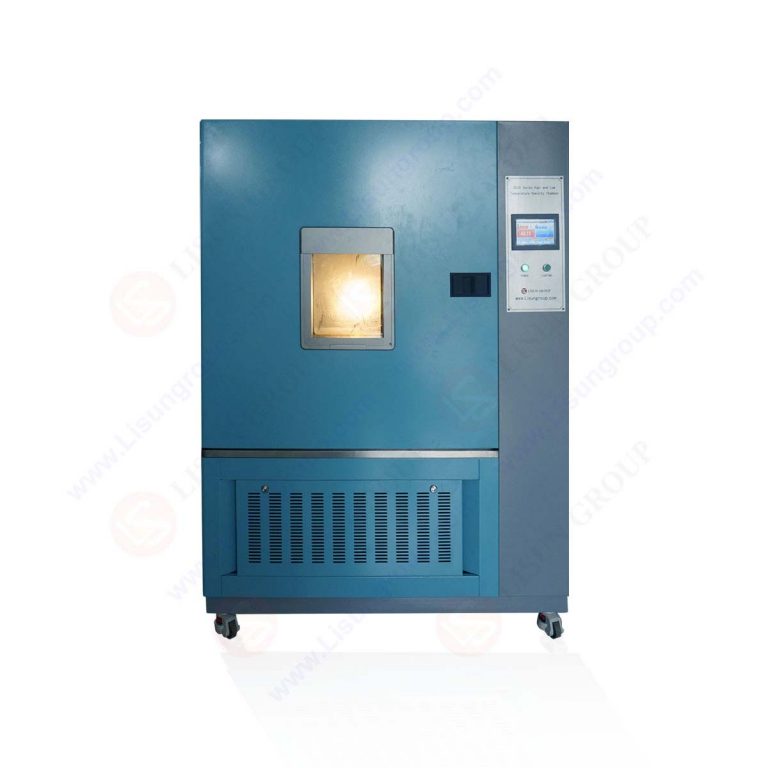
Beyond lifetime standards, the LISUN systems are compatible with IES LM-79-19 (electrical and photometric measurements of solid-state lighting products), CIE 084 (measurement of luminous flux), CIE 70 (intensity distribution), and CIE 127 (LED measurement). This compatibility stems from the systems’ modular sensor configurations—spectroradiometers, lux meters, and integrating spheres can be integrated to capture spectral power distribution, correlated color temperature (CCT), and color rendering index (CRI) at each measurement interval. Such comprehensive data is vital for automotive, horticultural, and general lighting applications where chromaticity stability over time is critical.
Table 1: Specification Comparison of LISUN LEDLM-80PL and LEDLM-84PL
| Feature | LEDLM-80PL | LEDLM-84PL |
|---|---|---|
| Target Standard | IES LM-80, TM-21 | IES LM-84, TM-28 |
| Chamber Volume Options | 50L, 150L, 300L | 300L, 500L, 1000L |
| Temperature Range | -20°C to +125°C | -40°C to +150°C |
| Temperature Uniformity | ±1.5°C | ±2.0°C |
| Humidity Control | 20% RH – 95% RH | Optional |
| Max Connected Chambers | 3 | 3 |
| Standard Test Duration | 6000 hours | 6000 hours (up to 10,000) |
| Supported Measurement | Luminous flux, CCT, CRI | Luminous flux, CCT, CRI, intensity distribution |
| Compliance Documentation | TM-21 Report | TM-28 Report |
5.1 Arrhenius Equation Fundamentals and Application
The Arrhenius Model mathematically describes how temperature accelerates chemical reaction rates, including the photo-degradation and material oxidation processes associated with lumen depreciation. The equation is represented as: P = A exp(-Ea/(kT)), where P is the degradation rate, A is a pre-exponential factor, Ea is activation energy (in eV), k is Boltzmann’s constant (8.617 x 10⁻⁵ eV/K), and T is absolute temperature (Kelvin). By testing at three different temperatures, engineers can derive Ea and predict lumen maintenance at any operating temperature. LISUN’s software automates this curve-fitting process, providing confidence intervals and extrapolation limits as per TM-21 guidelines.
5.2 Interpreting L70 and L50 Metrics
L70 denotes the time at which the LED’s luminous flux reaches 70% of its initial value, commonly considered the threshold for general illumination end-of-life. L50, representing 50% lumen maintenance, is relevant for less critical applications. For instance, an LED testing at 85°C for 6000 hours might exhibit 95% maintenance; the Arrhenius model can project that at 50°C, the L70 time exceeds 65,000 hours. Such projections are integral for warranty determination and product specifications.
5.3 Correlation with Rubber Degradation Kinetics
Rubber materials also follow Arrhenius-like behavior for thermal aging, as documented in IEC 60068 and polymer science literature. By observing compression set or elongation-at-break changes alongside optical data, engineers can model the entire system’s expected lifespan. If rubber seals degrade faster than LED packages, the housing integrity becomes the limiting factor. The IEC 60060 Accelerated Aging Chamber for Rubber Testing facilitates co-testing, allowing engineers to synchronize measurements and avoid underestimating system-level failures.
6.1 Temperature Uniformity and Sample Placement
Optimal test results depend on uniform thermal distribution across the chamber. Engineers should place samples away from chamber walls and air vents, with sufficient spacing to prevent localized heating. LISUN recommends using perforated trays to enhance airflow. Calibration should be performed quarterly using external thermocouple probes to verify internal sensors.
6.2 Humidity Effects on LED and Rubber Performance
High humidity, as employed in damp heat testing (85°C/85% RH), accelerates corrosion of metallic components and hydrolysis of rubber matrices. While LEDs are generally encapsulated for moisture protection, prolonged exposure can penetrate encapsulants, causing delamination and subsequent lumen loss. The integrated humidity control in LEDLM-80PL enables precise regulation up to 98% RH, although condensation must be avoided to prevent false failures.
6.3 Data Integrity and Measurement Uncertainty
Measurement repeatability hinges on proper photometric setup and warm-up stabilization. Initial luminous flux is recorded after a 100-hour stabilization period to account for initial burn-in. Subsequent measurements at 1000-hour intervals should use identical measurement positions and electrical settings. Documenting measurement uncertainty—typically ±2% for total luminous flux per CIE 127—ensures transparency in reported data.
7.1 Emerging Standards for Higher Temperature Operation
As LED technology advances toward higher power densities, case temperatures may exceed 150°C. Upcoming revisions to LM-80 standards may require additional temperature points or modified testing durations. LISUN’s chambers, with temperature ranges up to 150°C, are future-proofed to accommodate such updates, minimizing capital expenditure for new equipment.
7.2 Integration of IoT and Real-Time Monitoring
Modern reliability labs are adopting Internet-of-Things (IoT) architectures to remotely monitor chamber status and receive alerts on threshold violations. LISUN systems incorporate Ethernet and USB interfaces, enabling integration with laboratory information management systems (LIMS). Real-time data streaming facilitates rapid failure detection and enables corrective action without resetting the test clock.
7.3 Sustainability and Energy Efficiency in Chamber Design
Reliability testing consumes significant electrical energy due to continuous refrigeration and heating. LISUN employs inverter-driven compressors and variable-speed fans to optimize energy consumption. In cyclic mode, equipped energy recovery systems can reduce power usage by up to 20%, aligning with corporate sustainability goals without compromising accuracy.
The IEC 60060 Accelerated Aging Chamber for Rubber Testing represents a critical investment for LED manufacturers and testing laboratories that demand comprehensive reliability data. LISUN’s LEDLM-80PL and LEDLM-84PL systems provide the dual capabilities of photometric measurement and environmental acceleration, conforming to IES LM-80, LM-84, TM-21, and TM-28 standards. Through Arrhenius Model-based software and support for up to three interconnected temperature chambers, these systems enable 6000-hour test campaigns with high accuracy and repeatability. The integration of rubber material testing further enhances system-level lifespan predictions, addressing potential failure modes often overlooked in conventional optical-only assessments. By adopting these advanced solutions, engineers can confidently validate product durability, meet regulatory demands, and deliver reliable LED lighting solutions to the market. The continuous evolution of standards will be well-served by LISUN’s commitment to hardware customization and software innovation, cementing its role as a pivotal partner in reliability engineering.
Q1: Why is the 6000-hour test duration specified in IES LM-80, and can it be shortened?
A: The 6000-hour minimum duration ensures sufficient data points (at least 6 measurements at 1000-hour intervals) for reliable statistical extrapolation. Shorter durations—such as 3000 hours—yield higher uncertainty in TM-21 projections, often necessitating conservative extrapolation limits. For example, TM-21 restricts extrapolation to 6 times the test duration; a 6000-hour test can predict up to 36,000 hours (L70). Shortening the test to 3000 hours would only allow projections to 18,000 hours, limiting usefulness for products marketed with 50,000-hour lifetimes. Accelerated aging equations can estimate short-term trends, but industry standards prioritize empirical data over models.
Q2: How does the Arrhenius Model improve accuracy in lifetime prediction compared to simple linear extrapolation?
A: Simple linear extrapolation assumes a constant degradation rate, which rarely holds for LED materials subject to exponential chemical reactions. The Arrhenius Model more accurately represents temperature-induced degradation by incorporating activation energy (Ea), typically 0.3-0.7 eV for LED packages. For instance, if an LED retains 90% lumen output after 6000 hours at 105°C (Ea=0.4 eV), the projected L70 at 55°C would be substantially longer than at 85°C, reflecting a non-linear relationship. The model also generates an acceleration factor (AF) using the ratio of test temperature to use temperature, allowing direct translation of test data to field performance. This mathematical rigor, codified in IES TM-21-11, provides confidence intervals absent in basic extrapolations.
Q3: Can the LISUN accelerated aging chamber test both LED modules and rubber seals simultaneously?
A: Yes, the chamber’s design allows simultaneous testing of optical components and rubber samples, provided they fit within the chamber volume and do not interfere with light measurements. Typically, rubber samples are placed in a separate tray or basket to avoid casting shadows on photometric detectors. The LEDLM-84PL, with larger volume (up to 1000L), is ideal for such co-testing. Engineers can correlate lumen depreciation data with rubber hardness changes or tensile strength loss measured at intervals. This integrated approach produces a holistic view of system reliability, highlighting which component fails first under thermal stress and facilitating design improvements.
Q4: What are the maximum number of samples that can be tested simultaneously in one chamber?
A: Sample capacity depends on the chamber model and sample geometry. For LEDLM-80PL 300L chamber, typical capacity is 60 LED boards (each ~10cm x 10cm) mounted on sample racks. For luminaires in the LEDLM-84PL 1000L chamber, up to 12 medium-sized luminaires (60cm x 60cm) can be accommodated. It is crucial to maintain adequate spacing (≥5cm) between samples to ensure airflow and thermal uniformity. Overpacking the chamber can create localized hot spots, invalidating test results. LISUN engineers provide guidance on optimal loading configurations during system installation and validation.
Q5: How does humidity control affect the test results, and when is it necessary?
A: Humidity influences failure mechanisms such as electrolytic corrosion and polymer hydrolysis. While dry heat conditions (no humidity control) are sufficient for pure thermal aging, damp heat testing (85°C/85% RH) replicates outdoor and industrial environments with high moisture. For example, automotive LED lighting experiences frequent condensation cycles, so employing humidity is critical. The LEDLM-80PL offers precise RH management; however, running humidity tests increases energy consumption and may require more frequent calibration of hygrometers. If the product application is indoors with controlled climate, dry heat testing suffices, reducing test complexity and cost.