









Abstract
The Temperature Humidity Environmental Stress Chamber IEC60068 Test represents a cornerstone methodology for validating LED luminaire longevity and photometric stability under accelerated aging conditions. This article examines LISUN‘s integrated LED Optical Aging Test Instrument solutions, specifically the LEDLM-80PL and LEDLM-84PL dual-system variants, which combine temperature humidity environmental stress chambers with advanced photometric measurement capabilities. By leveraging Arrhenius Model-based extrapolation software and supporting up to three connected temperature chambers, these systems enable comprehensive 6000-hour test campaigns aligned with IES LM-80, IES LM-84, TM-21, and TM-28 standards. Technical professionals gain critical insights into lumen depreciation metrics (L70/L50), dual testing modes, and customizable hardware configurations that streamline IEC60068 compliance testing while maintaining data integrity across extended stress protocols.
1.1 Defining the Temperature Humidity Environmental Stress Chamber IEC60068 Test Protocol
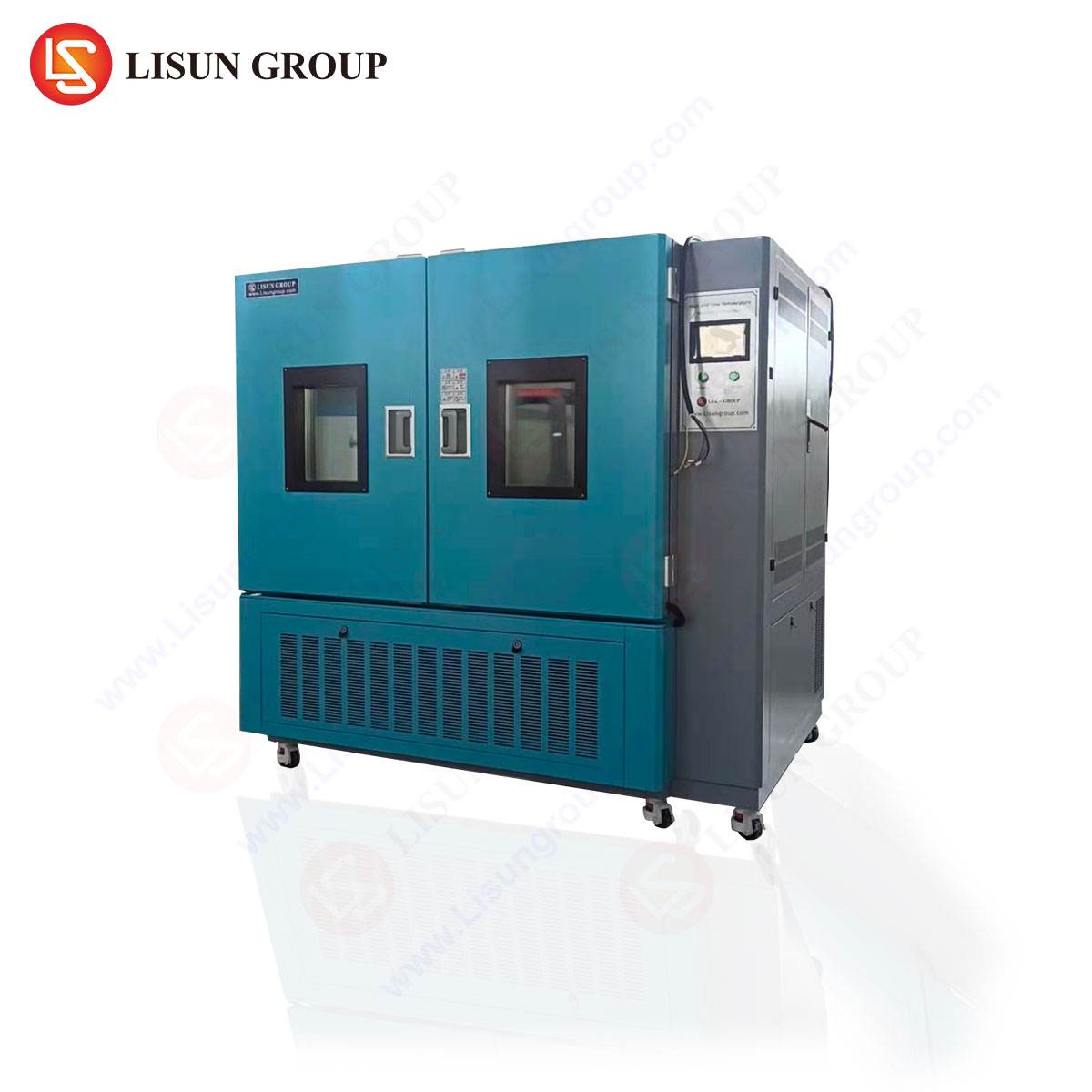
The Temperature Humidity Environmental Stress Chamber IEC60068 Test establishes standardized procedures for subjecting electrical and electronic components to controlled temperature and humidity cycling. For LED manufacturers, this protocol simulates real-world operational stressors including thermal cycling, moisture ingress, and hygroscopic stress that accelerate failure mechanisms such as solder joint fatigue, phosphor degradation, and encapsulant yellowing. IEC 60068-2-38 specifically addresses combined temperature and humidity cyclic tests, requiring precise chamber control within ±0.5°C temperature uniformity and ±3% relative humidity accuracy to ensure reproducible accelerated aging conditions across multiple test specimens.
1.2 Correlation Between Environmental Stress and Lumen Depreciation
Photometric performance degradation directly correlates with cumulative environmental stress exposure. Elevated temperature accelerates thermally-activated failure modes governed by Arrhenius kinetics, while humidity accelerates chemical degradation pathways including hydrolysis of silicone encapsulants and corrosion of metallic interconnects. Industry data indicates that LED packages subjected to 85°C/85%RH conditions exhibit lumen maintenance values 15-25% lower than identical samples tested under dry heat conditions at equivalent temperatures. This physiological coupling necessitates integrated testing solutions capable of simultaneously controlling environmental parameters while capturing real-time photometric data, a capability uniquely embedded within LISUN’s comprehensive aging test platforms.
2.1 Dual-System Configuration: LEDLM-80PL and LEDLM-84PL
LISUN’s flagship aging test systems are specifically engineered to address divergent industry requirements. The LEDLM-80PL system is optimized for IES LM-80-15 compliance testing, supporting standard 6000-hour test durations with automatic data logging at 1000-hour intervals. Conversely, the LEDLM-84PL system aligns with IES LM-84-19 methodologies, incorporating enhanced spectral measurement capabilities for evaluating correlated color temperature (CCT) stability and chromaticity shift alongside traditional lumen maintenance tracking. Both variants share common infrastructure, including modular temperature chamber interfaces, high-precision photometric sensors, and ruggedized data acquisition electronics designed for continuous 24/7 operation across extended test campaigns.
2.2 Hardware Customization and Scalability Options
Recognizing that test laboratories require operational flexibility, LISUN offers extensive hardware configuration options. Systems support multiple chamber mounting configurations, accommodating both integrating sphere-based absolute photometry and goniophotometer-compatible measurement geometries. Temperature chamber interfaces include standard RS-485 communication protocols for seamless data synchronization, with options for Ethernet-based remote monitoring across distributed laboratory environments. For large-scale validation programs, up to three independent temperature chambers can be simultaneously connected to a single optical aging instrument, enabling parallel testing of different LED batches or alternative stress profiles without compromising measurement throughput or data integrity.
2.3 Integrated Photometric Measurement Capabilities
The convergence of environmental stress testing and photometric measurement within a single platform eliminates traditional measurement gaps that introduce temporal errors. LISUN systems incorporate spectroradiometer-grade optical sensors enabling simultaneous measurement of luminous flux, CCT, chromaticity coordinates (u’, v’), and color rendering metrics. This integrated approach ensures that photometric data captures instantaneous device performance under exact environmental conditions, critical for establishing accurate degradation kinetics models. Measurement uncertainty remains below ±1.5% for luminous flux determinations, compliant with requirements outlined in CIE 084 and CIE 127 technical reports governing photometric measurements.
3.1 IES LM-80-15 and TM-21-19: Lumen Maintenance Testing and Projection
IES LM-80-15 defines the standard methodology for measuring lumen depreciation of solid-state lighting sources, specifying minimum 6000-hour test durations at three different case temperatures (typically 55°C, 85°C, and 105°C). LISUN’s LEDLM-80PL instrument fully automates compliance testing by maintaining precise temperature control while recording photometric data at required intervals. The integrated software subsequently applies TM-21-19 exponential decay models to extrapolate long-term lumen maintenance projections, calculating L70 and L50 lifetimes based on Arrhenius acceleration factors derived from the multi-temperature test dataset. This rigorous statistical approach ensures projected lifetimes carry statistically significant confidence bounds, typically achieving r² correlation coefficients exceeding 0.95 for compliant datasets.
3.2 IES LM-84-19 and TM-28-19: Comprehensive Photometric Evaluation
The IES LM-84-19 standard extends beyond lumen maintenance to encompass comprehensive photometric characterization including spectral power distribution stability and chromaticity maintenance. LISUN’s LEDLM-84PL variant addresses these requirements through dual testing modes: standard continuous aging mode and intermittent characterization mode. The latter temporarily interrupts environmental stress exposure to conduct detailed spectral sweeps, enabling precise quantification of chromaticity shift (Δu’v’) over aging time. TM-28-19 projection methodologies then utilize this multidimensional data to predict color stability metrics alongside lumen maintenance projections, providing lighting designers and specification engineers with comprehensive reliability data essential for applications demanding strict color consistency, such as architectural lighting and medical illumination.
3.3 Integration with CIE Standards and IES LM-79-19 Photometric Testing
While LM-80/LM-84 focus on aging behaviors, IES LM-79-19 defines electrical and photometric measurement requirements for solid-state lighting products. LISUN systems bridge these frameworks by providing pre-aging baseline photometric characterization compliant with LM-79-19 methodologies. Additionally, measurements align with CIE 084 (photometric measurement standard) and CIE 070 (absolute intensity distribution) guidelines, ensuring that aging test data remains fully traceable and comparable across international testing facilities. This comprehensive standards integration streamlines compliance documentation, allowing manufacturers to satisfy regulatory requirements across multiple jurisdictions using a single integrated test platform.
4.1 Theoretical Foundations of Acceleration Factor Calculations
The Arrhenius Model establishes mathematical relationships between temperature-induced degradation rates and activation energy (Ea), enabling accelerated testing at elevated temperatures to predict room-temperature operational lifetimes. For LED systems, activation energies typically range from 0.2 eV to 0.7 eV depending on dominant failure mechanisms—phosphor thermal quenching exhibits lower activation energies while solder joint intermetallic growth demonstrates higher temperature sensitivity. LISUN’s software automatically calculates activation energies from multi-temperature test data using least-squares regression on logarithmic degradation rate plots, providing engineers with critical insights into dominant aging mechanisms and their temperature dependencies.
4.2 Software Implementation for L70/L50 Extrapolation
The proprietary software suite integral to both LEDLM-80PL and LEDLM-84PL systems automates complex lifetime prediction calculations. Input parameters include measured lumen maintenance data at specified time intervals, test temperatures, and confidence level requirements (typically 90% lower bound). The software applies TM-21 exponential decay fitting routines, generates Arrhenius plots, and computes acceleration factors for arbitrary operational temperatures. Output reports include projected L70 and L50 lifetimes with statistical confidence bands, visually compelling degradation curves, and complete data export capabilities compatible with industry-standard analysis platforms. This automated workflow reduces analysis time from days to minutes while eliminating manual calculation errors that compromise reliability assessments.
| Specification Parameter | LEDLM-80PL (LM-80/TM-21) | LEDLM-84PL (LM-84/TM-28) |
|---|---|---|
| Recommended Standard | IES LM-80-15 | IES LM-84-19 |
| Projection Methodology | TM-21-19 | TM-28-19 |
| Primary Output Metrics | Lumen Maintenance, L70/L50 | Lumen Maintenance, CCT Shift, Δu’v’ |
| Included Photometric Parameters | Luminous Flux only | Spectral Power Distribution, CCT, CRI |
| Directly Connected Chambers (Max) | 3 independent chambers | 3 independent chambers |
| Test Duration (Standard) | 6000 hours minimum | 6000 hours minimum |
| Data Logging Interval | ≤1000 hours | ≤1000 hours (continuous option) |
| Measurement Uncertainty | <±1.5% luminous flux | <±1.5% luminous flux; <±0.002 Δu'v' |
| Arrhenius Analysis Support | Automatic Activation Energy | Automatic Activation Energy Calculation |
| CIE Standard Alignment | CIE 084, CIE 127 | CIE 084, CIE 070, CIE 127 |
6.1 Multi-Chamber Synchronization Strategies
Capitalizing on the capability to connect up to three temperature chambers, laboratories can implement efficient parallel testing matrices. For example, simultaneous testing at manufacturer-recommended temperatures (e.g., 55°C, 85°C, and 105°C) across multiple LED lots optimizes chamber utilization while generating comprehensive Arrhenius datasets within a single 6000-hour campaign. LISUN’s control software coordinates data acquisition across chambers, timestamp-synchronizing photometric measurements to ensure temporal alignment essential for accurate degradation rate comparisons. This parallelization strategy reduces total validation timelines by up to 66% compared to sequential testing approaches.
6.2 Preventive Maintenance and Calibration Protocols
Operational integrity of long-duration aging tests demands rigorous preventive maintenance programs. LISUN recommends quarterly photometric sensor calibration using traceable standard lamps calibrated against national metrology institutes, ensuring measurement drift remains below 0.5% over the test campaign duration. Temperature chamber sensors require annual calibration validation against independent reference probes, verifying uniformity within ±0.5°C and stability within ±0.1°C during steady-state operation. Humidity generation systems, including ultrasonic atomizers and desiccant dryers, require periodic inspection to prevent scale accumulation and microbial growth that could compromise humidity accuracy during 85°C/85%RH accelerated stress testing.
7.1 LED Manufacturing Quality Control Integration
For LED package and module manufacturers, integrating the Temperature Humidity Environmental Stress Chamber IEC60068 Test into routine quality assurance workflows provides early detection of process variations affecting reliability. Statistical process control methodologies applied to L70 data from production batches enable identification of subtle manufacturing shifts that accelerate degradation, such as phosphor settling inconsistencies or die-attach void formation. LISUN’s automated data management facilitates real-time monitoring dashboards, triggering quality alerts when projected lifetimes deviate beyond control limits, thereby preventing field failures and associated warranty liabilities.
7.2 Third-Party Laboratory Compliance Testing Services
Independent testing laboratories leveraging LISUN platforms achieve significant competitive advantages through reduced turnaround times and expanded testing throughput. The dual-mode operational flexibility allows laboratories to schedule intermittent characterization without compromising ongoing continuous aging tests, maximizing instrument utilization rates exceeding 90%. Moreover, full compliance with international standards enables laboratories to issue test reports recognized by ENERGY STAR, DLC (DesignLights Consortium), and other regulatory programs, positioning them as authoritative validation centers for the global LED marketplace. Automated report generation features align outputs with specific program requirements, minimizing administrative overhead and accelerating certification timelines for manufacturer clients.
The Temperature Humidity Environmental Stress Chamber IEC60068 Test, when properly implemented through integrated platforms such as LISUN’s LEDLM-80PL and LEDLM-84PL systems, provides LED manufacturers and testing laboratories with unprecedented capability for comprehensive reliability validation. By combining precise environmental stress control with continuous photometric monitoring and sophisticated Arrhenius Model-based analytical software, these systems enable accurate L70/L50 lifetime predictions crucial for product specification and warranty determination. Alignment with IES LM-80, IES LM-84, TM-21, TM-28, and supporting CIE standards ensures laboratory results possess global acceptance and regulatory compliance. The scalability supporting up to three connected temperature chambers, combined with customizable hardware configurations, accommodates diverse testing requirements from rapid production screening to comprehensive multi-temperature qualification programs. As LED technology continues advancing toward higher efficiencies and more demanding application environments, rigorous environmental stress testing remains indispensable. LISUN’s integrated solutions empower engineers to validate product reliability with confidence, accelerating innovation while minimizing field failure risks and supporting sustainable lighting adoption worldwide.
Q1: What are the critical differences between IEC60068-2-38 and IES LM-80 environmental stress testing for LEDs?
A: IEC 60068-2-38 defines general environmental stress testing procedures for electronic components, focusing on combined temperature and humidity cycling to evaluate overall device robustness. This standard primarily addresses mechanical integrity, electrical performance, and package reliability under environmental stressors. Conversely, IES LM-80-15 specifically targets LED lumen maintenance measurement, requiring sustained high-temperature operation rather than cyclic environmental profiles. While IEC60068 testing identifies environmental failure modes such as corrosion or delamination, LM-80 testing quantifies photometric degradation rates essential for lifetime projection. LISUN’s integrated platforms bridge both requirements by incorporating environmental chamber interfaces for IEC-style preconditioning while maintaining core photometric measurement capabilities aligned with LM-80/LM-84 methodologies.
Q2: How does LISUN’s software calculate activation energy (Ea) from multi-temperature LED aging data?
A: LISUN’s proprietary software applies linear regression analysis to the natural logarithm of degradation rates plotted against reciprocal absolute temperatures (1/T). The slope of this Arrhenius plot equals −Ea/k, where k represents Boltzmann’s constant (8.617 × 10⁻⁵ eV/K). By collecting lumen maintenance data at three temperatures—for instance, 55°C, 85°C, and 105°C—the software computes degradation rates from exponential curve fitting at each temperature. Linear regression across temperatures yields activation energy with standard error estimation. Typical LED activation energies range 0.2-0.7 eV; values below this window suggest measurement inconsistencies or dominant non-thermal degradation mechanisms, prompting data quality review before proceeding with lifetime extrapolation.
Q3: What is the practical advantage of supporting three connected temperature chambers in LISUN aging systems?
A: The three-chamber capability enables simultaneous testing of identical LED samples under different environmental conditions, directly supporting Arrhenius Model implementation. Rather than sequentially testing one temperature condition at a time—which risks temporal variations due to sample degradation during storage—parallel testing ensures all samples experience identical age, starting from the same manufacturing batch. This eliminates batch-to-batch variability as a confounding factor, improving activation energy calculation accuracy. Additionally, three-chamber operation allows concurrent evaluation of different LED colors, drive currents, or package configurations, effectively tripling testing throughput and enabling comprehensive reliability characterization within industry-standard 6000-hour test windows.
Q4: How do LISUN LEDLM-80PL systems ensure measurement accuracy throughout extended 6000-hour test campaigns?
A: Measurement accuracy preservation across extended campaigns involves multiple strategies. First, photometric sensors incorporate LED-stabilized reference channels that continuously monitor detector drift, applying real-time correction factors. Second, automated calibration sequences, triggered at predefined intervals, compare measurements against an internal stable light source with traceable calibration, correcting any systematic deviations. Third, controlled temperature stabilization of optical detectors prevents thermally-induced sensitivity changes, maintaining measurement uncertainty below ±1.5% throughout the entire test duration. Finally, comprehensive data logging includes environmental chamber conditions synchronized with photometric readings, enabling post-test analysis to identify and potentially correct for anomalous measurement events, ensuring delivered lumen maintenance data meets stringent standards compliance requirements.
Q5: Can LISUN LEDLM-84PL systems simultaneously evaluate lumen maintenance and color shift (Δu’v’) during aging?
A: Absolutely. The LEDLM-84PL system represents the evolution of LED reliability testing by integrating spectroradiometric capabilities that capture full spectral power distributions at each measurement interval. This enables simultaneous computation of luminous flux (for L70/L50 projections), CCT drift, chromaticity coordinates (u’, v’), and Δu’v’ calculations per TM-28-19 requirements. During continuous aging mode, spectral measurements occur at configurable intervals without interrupting environmental stress conditions. Advanced analysis software generates chromaticity shift plots over aging time, calculates color maintenance projections using TM-28 algorithms, and produces comprehensive reports documenting both photometric and colorimetric stability—essential data for applications requiring strict color consistency expectations throughout operational lifetimes.