









Abstract
The LISUN DFX series Externally Ballasted Fluorescent Lamp Test Load Cabinet addresses the critical need for precise, repeatable load simulation in electrical accessory compliance testing. This article examines the DFX series’ role in validating switches, relays, and connectors against international standards. The externally ballasted fluorescent lamp load test cabinet provides engineers with a reliable tool for simulating real-world lamp loads, ensuring product safety and performance. With multi-channel configurations, adjustable power factors, and digital measurement capabilities, the DFX series streamlines conformity assessment workflows. For manufacturers and third-party laboratories, these cabinets offer a path to efficient certification, reducing test time while maintaining stringent accuracy. This technical overview details specifications, standard alignment, integration options, and operational best practices.
1.1 The Unique Characteristics of Ballasted Lamp Loads
Fluorescent lamps with external ballasts present complex electrical behaviors, including high inrush currents, inductive reactance, and non-linear resistance profiles. Testing switches and connectors with these loads requires a simulator capable of replicating conditions that differ significantly from purely resistive loads. The DFX series is engineered to reproduce these characteristics precisely.
1.2 Limitations of Conventional Resistive Load Banks
Traditional resistive load banks cannot simulate the phase angle and crest factor associated with magnetic ballasts. This inadequacy leads to under-testing, potentially allowing defective products to reach the market. The LISUN DFX cabinets incorporate inductive components with adjustable power factors, bridging this critical gap in load simulation fidelity.
2.1 Model Overview and Configuration Options
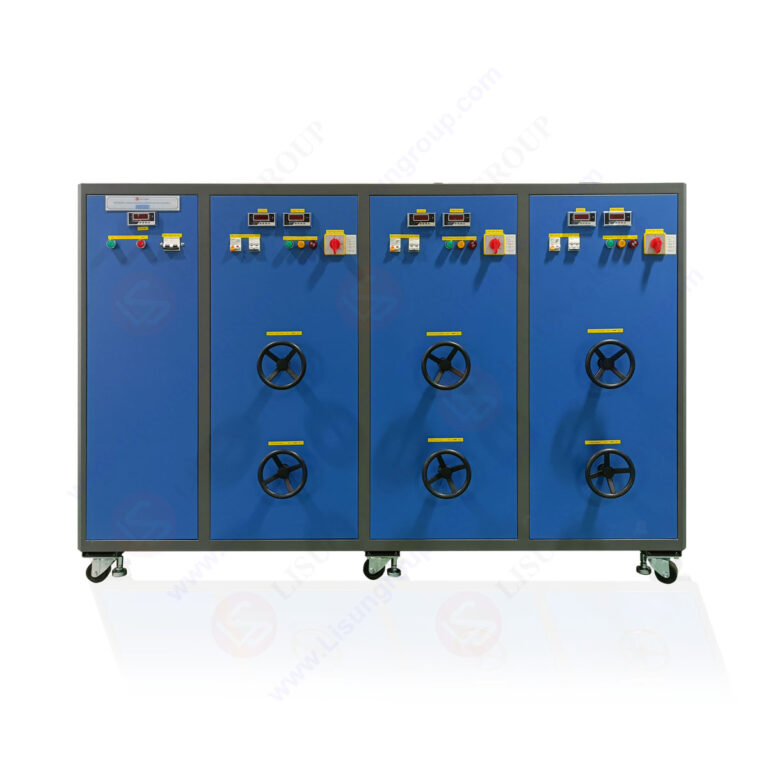
The DFX series offers a scalable solution across five models: DFX-20, DFX-20-3CH, DFX-40, DFX-60, and DFX-80. These units support various test scenarios, from single-channel, low-current evaluations to multi-channel, high-current cycling. Each model is air-cooled and designed for bench-top or rack-mounted installation, accommodating diverse laboratory layouts.
2.2 Core Electrical Parameters and Accuracy
All models incorporate digital meters for real-time voltage and current monitoring, ensuring test accuracy within ±0.5% of reading. The adjustable power factor ranges from 0.3 to 1.0, with a resolution of 0.01, allowing precise emulation of different ballast types. Table 1 provides a comprehensive specification comparison across the series.
Table 1: LISUN DFX Series Model Specifications
| Model | Output Current Range | Number of Channels | Input Voltage (AC) | Max. Load Power (VA) | Inrush Capability |
|---|---|---|---|---|---|
| DFX-20 | 0.1A – 20A | 1 | 110V/220V | 4000 | 20x steady-state |
| DFX-20-3CH | 0.1A – 20A per CH | 3 | 110V/220V | 12000 (total) | 20x steady-state |
| DFX-40 | 0.1A – 40A | 1 | 220V | 8000 | 20x steady-state |
| DFX-60 | 0.1A – 60A | 1 | 220V | 12000 | 20x steady-state |
| DFX-80 | 0.1A – 80A | 1 | 220V | 16000 | 20x steady-state |
3.1 Alignment with IEC 60669-1 for Switches
The DFX series is configured to meet the load testing requirements of IEC 60669-1 for household and similar fixed electrical installations. Specifically, Clause 19.2 mandates endurance testing with inductive loads at defined power factors; the DFX’s adjustable PF range directly satisfies these conditions. This alignment enables straightforward certification of switches for fluorescent lamp circuits.
3.2 Conformance to IEC 60884-1 for Socket-Outlets and Connectors
For socket-outlets and connectors, IEC 60884-1 Clause 20 stipulates tests with ballasted loads to evaluate contact performance. The DFX cabinets provide the necessary current and voltage stability to execute these protocols accurately. The multi-channel DFX-20-3CH model allows simultaneous testing of multiple specimens, significantly accelerating throughput for high-volume certification batches.
4.1 Simulating Diverse Ballast Types
Magnetic ballasts typically exhibit power factors between 0.4 and 0.6, while electronic ballasts behave differently. The DFX series allows engineers to set the PF to match the target ballast specification, ensuring the test load accurately represents field conditions. This granularity is essential for validating products intended for global markets with varying installation practices.
4.2 Impact on Contact Wear and Thermal Stress
A precise power factor setting influences both the switching arc duration and the thermal load on contacts. A higher PF results in lower reactive current but may understate stress; conversely, a lower PF increases inductive kickback, testing the switch’s arc suppression capabilities. The DFX system’s 0.01 PF resolution provides the control needed to replicate worst-case scenarios without over-testing beyond standard requirements.
5.1 Independent Channel Control for Multi-Specimen Testing
The DFX-20-3CH model boasts three independent channels, each with its own current settings and power factor adjustments. This feature enables simultaneous testing of three different switch models under varied load conditions, dramatically improving laboratory efficiency. Each channel operates synchronously or independently based on the test protocol, offering flexibility in experimental design.
5.2 Integration with LISUN CZKS Series Life Testers
For automated endurance testing, the DFX cabinets integrate seamlessly with the LISUN CZKS series switch life testers. The CZKS controller manages the switching cycles—counting operations, detecting failures, and logging data—while the DFX provides the correct load. This synergy creates a fully automated test bench capable of running millions of cycles without operator intervention, reducing human error and operational costs.
6.1 Setting Up a Compliant Test Sequence
Operators configure the DFX by selecting the target current, power factor, and voltage via the front-panel interface. The system’s digital display provides real-time feedback, allowing verification of load conditions before initiating the test. For complex protocols, the cabinet supports external control via RS-232, enabling integration with custom software or existing laboratory information management systems (LIMS).
6.2 Ensuring Repeatability and Traceability
The DFX series includes built-in calibration points that align with metrological traceability requirements. Periodic recalibration can be performed using external reference meters, ensuring long-term accuracy drift remains within specified limits. This traceability is paramount for laboratories seeking ISO/IEC 17025 accreditation, as it directly supports the validity of test results.
7.1 Pairing with LISUN SW-6 Bending Testers for Comprehensive Assessment
Beyond electrical load testing, mechanical endurance is a critical parameter for switches. The LISUN SW-6 bending tester evaluates the mechanical strength of cords and terminations. When used in concert with the DFX series, laboratories can establish a complete test protocol: mechanical stress testing with the SW-6, followed by electrical load testing with the DFX. This integrated approach covers both physical and electrical failure modes, aligning with the full scope of standards like IEC 60669-1.
7.2 Building a Turnkey Laboratory Configuration
A typical turnkey setup includes the DFX load cabinet, a CZKS life tester, a SW-6 bending tester, and a temperature-controlled environment. Table 2 outlines how these components map to different standard clauses, demonstrating a cohesive testing strategy.
Table 2: Integrated Testing Workflow Matrix
| Standard Clause | Required Test | Complementary LISUN Equipment |
|---|---|---|
| IEC 60669-1 Clause 19.2 | Electrical endurance with ballasted load | DFX-20 + CZKS-3 |
| IEC 60669-1 Clause 20.2 | Mechanical endurance | SW-6 Bending Tester |
| IEC 60884-1 Clause 20 | Load test for socket-outlets | DFX-40 + CZKS-3 |
| IEC 60669-1 Clause 18.1 | Temperature rise test | DFX-60 + Data Logger |
The LISUN DFX series Externally Ballasted Fluorescent Lamp Test Load Cabinet provides a robust, standards-aligned solution for validating electrical accessories under realistic load conditions. With its precise power factor adjustment, multi-channel configurability, and seamless integration with complementary LISUN automation equipment, this externally ballasted fluorescent lamp load test cabinet delivers measurable efficiency gains for manufacturers and testing laboratories. By enabling accurate simulation of fluorescent lamp loads per IEC 60669-1 and IEC 60884-1, the DFX series supports confident compliance decisions and accelerates time-to-market. Whether for single-station R&D validation or high-throughput third-party certification, the DFX series’ comprehensive specifications—ranging from 20A to 80A with PF resolution of 0.01—address the most demanding test protocols. Adopting this technology ensures that products leaving the factory floor are both safe and reliable, upholding the highest standards of electrical quality.
Q1: How does the LISUN DFX series improve testing accuracy compared to simple resistive loads?
A: Simple resistive loads fail to emulate the inductive phase angle and inrush currents characteristic of externally ballasted fluorescent lamps. The DFX series incorporates dedicated inductive circuits with an adjustable power factor range of 0.3 to 1.0, allowing engineers to faithfully reproduce real-world electrical dynamics. This ensures that switches and connectors are subjected to accurate stress levels, including the high initial current surge and subsequent steady-state operation. The DFX’s digital metering provides ±0.5% accuracy, giving test engineers confidence in the validity of results. Consequently, products validated with the DFX are more likely to pass field performance expectations, as testing conditions closely mirror actual installation scenarios.
Q2: Can the DFX-20-3CH model run different test conditions on each channel simultaneously?
A: Yes, the DFX-20-3CH is specifically designed with three independent channels, each featuring its own output current setting (from 0.1A to 20A) and power factor adjustment. This allows a single cabinet to conduct three distinct test protocols concurrently, whether testing different switch models or evaluating the same model under varied load conditions. Each channel operates with synchronized or independent cycle counting when paired with a compatible life tester. This multi-channel capability significantly reduces lab time for certification batches, transforming what would be three separate test runs into a single, streamlined session. It is an ideal solution for laboratories with high throughput demands.
Q3: What are the key calibration and maintenance requirements for the DFX series to ensure long-term reliability?
A: The DFX series is designed for long-term stability, but routine calibration is recommended to maintain measurement accuracy within ±0.5%. Calibration involves verifying the digital meters’ voltage and current readings against traceable reference instruments. The adjustable power factor network should also be checked to ensure the inductive and resistive components respond correctly to setting changes; this can be verified using a power analyzer. Regarding maintenance, the air-cooled system requires periodic cleaning of filters and fan grilles to prevent overheating. The manufacturer provides recommended calibration intervals, typically annually, depending on usage frequency. Adhering to these procedures supports ISO/IEC 17025 accreditation and ensures consistent test validity.
Q4: Is the DFX series suitable for testing loads other than fluorescent lamp ballasts?
A: Although optimized for externally ballasted fluorescent lamps, the DFX series demonstrates versatility for other inductive loads within its current and voltage ranges. For instance, it can approximate the electrical behavior of certain LED drivers, small motors, or transformers, provided their power factors fall within the adjustable range of 0.3 to 1.0. Engineers can customize the power factor and current settings to mimic the load characteristics of these devices. However, it is crucial to compare the target load’s inrush current and steady-state profile with the DFX capabilities to avoid under-specification. For non-lamp loads, consulting the technical specification sheet ensures the cabinet’s output accurately represents the intended application.