









Abstract
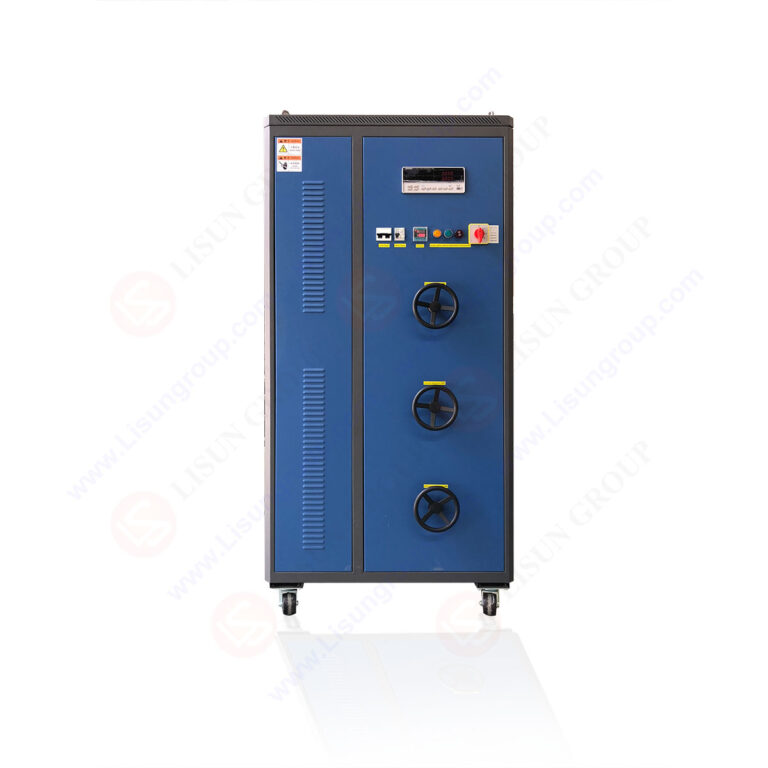
The LISUN DFX series Externally Ballasted Fluorescent Lamp Test Load Cabinet represents a critical advancement in electrical accessory compliance testing, providing precise simulation of real-world load conditions for switches, relays, and connectors. This article examines the DFX-20 load cabinet operation, its multi-channel configurations, and its role in validating products against international IEC/GB standards. The DFX-20 load cabinet offers engineers a reliable platform for evaluating devices under controlled resistive, inductive, and capacitive load scenarios. With models ranging from DFX-20 to DFX-80, these electrical accessory load testers enable laboratories to conduct rigorous lifecycle testing with enhanced repeatability and measurement accuracy.
1.1 Core Operating Principles of the Ballasted Lamp Load Simulator
The DFX-20 load cabinet operates on the fundamental principle of simulating the electrical characteristics of externally ballasted fluorescent lamps. Unlike simple resistive loads, fluorescent lamp circuits exhibit complex impedance profiles characterized by inductive reactance from the ballast and non-linear current waveforms during starting and steady-state operation. The load cabinet replicates these conditions using precision inductive components with power factor correction capabilities ranging from 0.3 to 1.0, enabling test engineers to reproduce the exact electrical stress parameters that switches and connectors will encounter in actual installations.
1.2 Component Configuration and Load Circuit Topology
The internal architecture of the DFX-20 load cabinet incorporates a precision resistive-inductive load bank with selectable capacitance values to simulate various lamp configurations. Each channel within the load simulation system is designed to handle currents up to the specified maximum rating while maintaining voltage drop characteristics consistent with real ballasted lamp installations. The load cabinet’s design permits independent channel operation, allowing simultaneous testing of multiple device samples under identical or varied load conditions.
2.1 DFX Series Model Differentiation Matrix
The LISUN DFX series offers multiple configurations to accommodate diverse testing laboratory requirements. The following table presents the key specification differences across available models:
| Model | Current Output Range (A) | Number of Channels | Input Voltage (VAC) | Maximum Test Current per Channel (A) | Load Simulation Type |
|---|---|---|---|---|---|
| DFX-20 | 0.5 – 20 | 1 | 110-230 | 20 | Resistive/Inductive |
| DFX-20-3CH | 0.5 – 20 | 3 | 110-230 | 20 | Resistive/Inductive |
| DFX-40 | 0.5 – 40 | 1 | 110-230 | 40 | Resistive/Inductive |
| DFX-60 | 0.5 – 60 | 1 | 110-230 | 60 | Resistive/Inductive |
| DFX-80 | 0.5 – 80 | 1 | 110-230 | 80 | Resistive/Inductive |
2.2 Compliance with Minimum Standard Requirements
To contextualize the DFX-20 load cabinet operation within regulatory frameworks, the following comparison illustrates how the equipment meets or exceeds major international standard requirements:
| Standard Requirement | IEC 60669-1 Clause 19.2 | IEC 60884-1 Clause 20 | DFX-20 Capability |
|---|---|---|---|
| Test Current Range | Up to 16A | Up to 16A | 0.5-20A ✓ |
| Power Factor Adjustment | 0.6 ± 0.05 | 0.6 ± 0.05 | 0.3-1.0 ✓ |
| Load Type | Inductive (ballasted) | Inductive (ballasted) | Resistive/Inductive ✓ |
| Voltage Range | 110-250V | 110-250V | 110-230V ✓ |
| Channel Independence | Single phase | Single phase | Models up to 3CH ✓ |
3.1 Manual Configuration and Calibration Procedures
The DFX-20 load cabinet operation begins with establishing the correct load parameters for the specific test protocol. Engineers must set the power factor to match the standard’s requirements—typically 0.6 for fluorescent lamp simulations according to IEC 60669-1 Clause 19.2. The cabinet provides precise adjustment mechanisms with power factor resolution of 0.01 increments from 0.3 to 1.0, enabling fine-tuning of inductive components through series-connected reactors and resistive elements.
3.2 Automated Cyclic Testing Integration
For accelerated endurance testing, the load cabinet interfaces seamlessly with LISUN CZKS series life testers, creating an integrated testing platform capable of performing millions of operations automatically. The electrical accessory load tester accepts external control signals for operation counting, failure detection, and data logging, facilitating continuous testing periods that conform to the 50,000-cycle requirements specified in IEC 60669-1 for switches under ballasted load conditions.
4.1 Electrical Parameter Precision
The DFX-20 load cabinet operation delivers voltage measurement accuracy within ±0.5% of reading plus one digit, while current measurements achieve ±0.5% accuracy across the full operational range. The load cabinet includes inrush current capture capability, recording the initial current spike that occurs when energizing the ballasted circuit—a critical parameter for evaluating switch contact performance and arc suppression characteristics.
4.2 Waveform Fidelity and Harmonic Content
Unlike simplified resistive load banks, the DFX-20 load cabinet reproduces the harmonic distortion characteristic of magnetic ballasts and electronic ballasts, with total harmonic distortion adjustable between 15-35% to match specific lamp types. This fidelity ensures that test results accurately predict real-world performance rather than providing optimistic data based on idealized sinusoidal current waveforms.
5.1 IEC Standards Integration
The DFX-20 load cabinet operation supports compliance validation against multiple international standards:
• IEC 60669-1 (Switches for household and similar fixed electrical installations) – Clause 19.2 specifies the ballasted load test conditions, requiring power factors of 0.6 ± 0.05 for tungsten filament lamp loads and 0.6 for fluorescent lamp loads. The DFX-20 series meets these specifications with adjustable power factor from 0.3 to 1.0.
• IEC 60884-1 (Plugs and socket-outlets for household and similar purposes) – Clause 20 defines the electrical endurance testing procedures with inductive loads, requiring the test current to be maintained within ±5% tolerance throughout the test sequence.
5.2 Additional Relevant Compliance Requirements
Other applicable standards include GB 16915.1 for the Chinese market, which mirrors IEC 60669-1 requirements, and UL 20 for North American applications. The equipment’s load simulation capabilities also support testing per IEC 61058-1 (Switches for appliances) Clause 17, which specifies test loads for inductive circuit breaking performance under defined power factor conditions. The load cabinet’s ability to simulate multiple channel configurations simultaneously enhances testing efficiency for three-phase or multi-gang switch assemblies.
6.1 Life Testing Systems and Chamber Synchronization
A complete electrical accessory testing laboratory benefits from integrating the DFX-20 load cabinet with LISUN SW-6 bending testers and CZKS series life testers. The CZKS life tester provides mechanical operation—opening and closing the device under test—while the load cabinet applies the appropriate electrical conditions. This integration enables automatic monitoring of contact resistance, insulation resistance, and breakdown voltage at programmed intervals throughout the endurance test.
6.2 Data Acquisition and Test Documentation
The load cabinet’s analog outputs and status indicators connect to CZKS systems for comprehensive data collection. This integration facilitates the generation of formal test reports documenting operation count, test duration, failure modes, and measured parameters—essential documentation for certification bodies and quality management systems. The combined system supports all testing phases from initial type testing through periodic surveillance testing required for ongoing certification maintenance.
7.1 Manufacturer Qualification Testing
Electrical accessory manufacturers utilize the DFX-20 load cabinet operation to qualify new switch designs before market introduction. The equipment validates that products can withstand rated current breaking operations at specified power factors, ensuring compliance with the 20,000-cycle endurance requirement for switches rated 10-16A per IEC 60669-1. Precise load control permits replication of the standard’s mandatory cool-down periods and voltage recovery times.
7.2 Third-Party Laboratory Deployment
Independent testing laboratories rely on the load cabinet for certification testing to international standards. The multi-channel configuration in the DFX-20-3CH model allows simultaneous testing of three samples at one-third the time of single-channel operation. This acceleration capability is particularly valuable for the 50,000-cycle tests required for switches rated above 16A or for products seeking certification to multiple standards with similar test protocols.
The LISUN DFX-20 load cabinet operation provides electrical testing professionals with a robust, accurate platform for simulating externally ballasted fluorescent lamp loads in compliance testing applications. The series’ models accommodate various current ranges from 20A to 80A, with multi-channel options that enhance laboratory throughput without compromising measurement accuracy. By integrating precise power factor control, harmonic reproduction, and automation-ready interfaces, this electrical accessory load tester enables efficient validation against IEC 60669-1, IEC 60884-1, and related global standards. For manufacturers and testing laboratories, the DFX series delivers repeatable test conditions that generate defensible compliance evidence.
Q1: How does the DFX-20 load cabinet operation differ when simulating magnetic versus electronic ballasts?
A: The DFX-20 load cabinet simulates magnetic ballast characteristics by incorporating inductive reactance in series with resistive elements to replicate the lagging power factor of approximately 0.6. For electronic ballast simulation, engineers adjust the power factor closer to 0.9-1.0 and may add harmonic content through the cabinet’s configurable load network. During DFX-20 load cabinet operation, the inrush characteristics differ significantly—magnetic ballasts produce current spikes of 10-20 times steady-state values during each energization, while electronic ballasts show shorter-duration but highly distorted current waveforms. The cabinet’s adjustable parameters allow replication of both conditions by modifying the inductance-to-resistance ratio and harmonic injection settings.
Q2: What measurement accuracy can engineers expect during DFX-20 load cabinet operation?
A: The DFX-20 load cabinet provides voltage measurement accuracy of ±0.5% plus one digit and current measurement accuracy of ±0.5% across the full 0.5-20A range. Power measurement achieves ±1.0% accuracy, while power factor indication is accurate to ±0.02. The integrated timing system records operation durations with ±0.1 second resolution. When operating the DFX-20 load cabinet for standard compliance testing, these accuracy levels exceed the IEC 60669-1 Clause 19.2 requirement that the test voltage be maintained within ±5% of the rated value and the test current within ±2.5% of the specified magnitude throughout each activation cycle.
Q3: Can the DFX-20-3CH model test three different load configurations simultaneously?
A: Yes, the DFX-20-3CH model features three independent channels, each capable of operating at different current settings, power factors, and voltage levels within the overall cabinet ratings. During DFX-20 load cabinet operation, the three channels operate asynchronously with independent control systems, enabling engineers to test different switch models or different poles of the same switch assembly under varied load conditions. This configuration is particularly valuable for three-pole switches or for comparing the performance of identical samples under different power factor scenarios to assess design margins. Each channel includes its own measurement circuit, providing individual voltage, current, and power factor readings for comprehensive analysis.
Q4: What safety features protect operators during DFX-20 load cabinet operation?
A: The DFX-20 load cabinet incorporates multiple protective features including overcurrent protection on each channel that interrupts the test circuit if current exceeds the preset limit by 10%. Thermal overload protection monitors internal load bank temperatures and activates cooling fans at preset thresholds. Emergency stop capability disconnects all channels instantaneously upon operator activation or external interlock signal. The cabinet’s enclosure provides IP20 protection with key-locked front panel access to test connections. Additionally, ground fault monitoring detects insulation breakdown in the test circuit, automatically de-energizing the DFX-20 load cabinet operation to prevent operator injury or equipment damage.
Q5: How does the DFX-20 integrate with existing laboratory automation systems?
A: The DFX-20 load cabinet includes both RS-232 and USB communication interfaces supporting standard SCPI commands for remote programming and data acquisition. Engineers can integrate the load cabinet into existing laboratory automation using LabVIEW, Python, or proprietary test software. During DFX-20 load cabinet operation, status signals provide real-time indication of channel activation, current flow, and fault conditions via electric relays and opto-isolated inputs. This integration capability allows laboratories to create fully automated sequences where the mechanical lifecycle tester, load cabinet, and data acquisition system operate in synchronized harmony without operator intervention between test phases.