









Abstract
The LISUN DFX series Externally Ballasted Fluorescent Lamp Test Load Cabinet represents a critical advancement in electrical accessory compliance testing, specifically designed to simulate the complex load characteristics of fluorescent lighting circuits. This article examines the operational principles, technical architecture, and compliance validation capabilities of the DFX-20 load cabinet and its variants, including the DFX-20-3CH, DFX-40, DFX-60, and DFX-80 models. These load test cabinet systems enable manufacturers and testing laboratories to perform accurate, repeatable endurance testing of switches, relays, and connectors under conditions that precisely replicate real-world ballasted lamp loads. By integrating resistive, inductive, and capacitive load simulation with precise power factor control, the DFX series ensures alignment with international standards including IEC 60669-1, IEC 60884-1, and GB 16915.1, providing a comprehensive solution for electrical accessory load testing and certification workflows.
1.1 The Critical Role of Load Simulation in Compliance Testing
Electrical accessories such as switches, sockets, and connectors must withstand real-world operational stresses before receiving certification. Load simulation technology reproduces the electrical characteristics of actual devices connected to these accessories, enabling controlled, repeatable testing conditions. Without accurate load simulation, manufacturers cannot guarantee product reliability or achieve compliance with international safety standards.
1.2 Why Fluorescent Lamp Loads Present Unique Challenges
Fluorescent lighting circuits with external ballasts exhibit distinctive electrical behaviors, including high inrush currents during lamp ignition and inductive-reactive power consumption during steady-state operation. These characteristics impose severe stress on switching contacts, creating failure modes not observed with purely resistive loads. The DFX-20 load cabinet addresses this complexity by precisely emulating these dynamic load conditions.
2.1 Core Components and Circuit Configuration
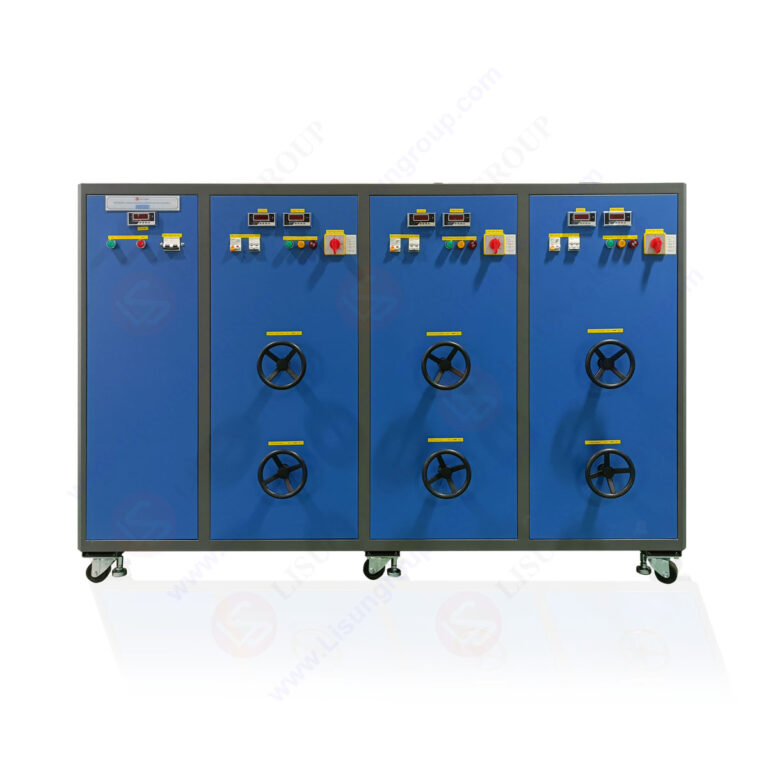
The DFX series load cabinet integrates multiple load simulation elements within a single enclosure. Key components include precision resistors for active power consumption, iron-core inductors for reactive power simulation, and capacitor banks for power factor adjustment. These elements combine in series-parallel configurations to replicate the impedance characteristics of externally ballasted fluorescent lamp circuits.
2.2 Model Variants and Configurations
The DFX series offers multiple configurations to accommodate diverse testing requirements. Each model provides specific current handling capabilities and channel configurations, allowing laboratories to select the appropriate system for their workload.
| Model | Output Current Range | Channels | Input Voltage | Power Factor Range |
|---|---|---|---|---|
| DFX-20 | 0.5A – 20A | Single | 100-277V AC | 0.3 – 1.0 |
| DFX-20-3CH | 0.5A – 20A per channel | 3 (Independent) | 100-277V AC | 0.3 – 1.0 |
| DFX-40 | 1A – 40A | Single | 100-277V AC | 0.3 – 1.0 |
| DFX-60 | 1A – 60A | Single | 100-277V AC | 0.3 – 1.0 |
| DFX-80 | 2A – 80A | Single | 100-277V AC | 0.3 – 1.0 |
3.1 Resistive-Inductive-Capacitive (RLC) Load Synthesis
The DFX-20 load cabinet operates by synthesizing the impedance characteristics of a complete fluorescent lighting fixture through RLC network configuration. The resistive component simulates the steady-state power consumption of lamps, while the inductive element replicates the ballast transformer behavior. The capacitive component, adjustable through multiple steps, enables precise power factor calibration to match specific ballast designs.
3.2 Power Factor Control and Adjustment Mechanism
Power factor stands as a critical parameter in fluorescent lamp load simulation, typically ranging between 0.3 and 0.9 depending on ballast type. The DFX series provides continuous power factor adjustment through variable inductive and capacitive elements, enabling operators to dial in the exact power factor required by testing standards. This precision ensures that contact stress during testing accurately reflects real-world usage patterns.
Table: Comparison of DFX-20 Capabilities vs. Standard Requirements
| Parameter | IEC 60669-1 Clause 19.2 Requirement | DFX-20 Capability | Compliance Status |
|---|---|---|---|
| Test Voltage | 100-250V AC | 100-277V AC | Exceeds |
| Load Current | Up to 16A typical | 0.5-20A | Meets |
| Power Factor Setting | 0.6 ± 0.05 for inductive loads | 0.3-1.0 adjustable | Exceeds |
| Test Cycles | 10,000-30,000 cycles | Unlimited (counter-based) | Meets |
4.1 IEC 60669-1 Switch Testing Compliance
The DFX-20 load cabinet supports compliance testing under IEC 60669-1 Clause 19.2, which specifies the endurance test for switches intended for fluorescent lighting loads. This standard requires switches to withstand multiple operating cycles under specified voltage, current, and power factor conditions. The load cabinet precisely maintains these parameters throughout extended test sequences.
4.2 Additional Standard Compliance and Test Scenarios
Beyond IEC 60669-1, the DFX series supports testing under IEC 60884-1 Clause 20 for plugs and socket-outlets, GB 16915.1 for Chinese market compliance, and IEC 61058-1 for appliance switches. Each standard specifies unique load parameters, all achievable through the load cabinet’s flexible configuration.
5.1 Integration with Life Testing Systems
The DFX-20 load cabinet integrates seamlessly with LISUN CZKS series switch life testers, enabling fully automated endurance testing. The life tester provides mechanical actuation while the load cabinet maintains precise electrical conditions, creating a complete test system that operates unattended for extended periods.
5.2 Test Sequence Programming and Monitoring
Operators can program complex test sequences through integrated control interfaces, including multiple stages with different load conditions. Real-time monitoring systems record voltage, current, and power factor measurements throughout testing, generating comprehensive compliance documentation for certification purposes.
6.1 Measurement Precision and Calibration
The DFX-20 load cabinet incorporates high-accuracy measurement circuitry with ±0.5% current measurement accuracy and ±1% power factor resolution. Built-in calibration routines ensure long-term stability, with recommended annual recalibration to maintain compliance with laboratory accreditation requirements.
6.2 Thermal Management and Duty Cycle Capability
Extended endurance testing generates substantial heat within load elements. The DFX series implements forced-air cooling systems and thermal protection circuits that prevent overheating during continuous operation, allowing 24-hour unattended testing at full load ratings.
7.1 Comprehensive Testing Workflow Architecture
A complete electrical accessory testing laboratory requires multiple test stations. The DFX-20 load cabinet functions as a central component within LISUN’s integrated testing ecosystem, connecting with:
- CZKS series life testers for mechanical endurance testing
- SW-6 bending testers for cord anchor and flexible cable testing
- Temperature rise test systems for thermal performance evaluation
This integration enables manufacturers to establish complete compliance testing workflows within a single laboratory infrastructure.
7.2 Data Management and Report Generation
Modern compliance testing demands comprehensive documentation. The DFX series interfaces with laboratory information management systems, generating detailed test reports that include full parameter traces, cycle counts, and compliance statements aligned with specific standard requirements.
The LISUN DFX-20 load cabinet and its series variants provide a comprehensive solution for electrical accessory compliance testing under conditions that accurately simulate externally ballasted fluorescent lamp loads. The system’s precise RLC load synthesis capabilities, combined with flexible power factor adjustment from 0.3 to 1.0, enable laboratories to conduct testing aligned with IEC 60669-1, IEC 60884-1, GB 16915.1, and IEC 61058-1 requirements. The integration with complementary LISUN equipment creates complete automated testing workflows, reducing operator intervention while enhancing measurement repeatability. For manufacturers, third-party testing laboratories, and quality control engineers, the DFX series delivers a reliable, accurate platform for validating electrical accessory performance under realistic operating conditions. The investment in proper load simulation technology yields significant benefits: accelerated certification timelines, reduced product failure rates, and improved market access across global jurisdictions requiring standardized electrical safety compliance.
Q1: What is the primary difference between the DFX-20 and DFX-20-3CH models?
A: The DFX-20 provides a single load channel capable of simulating one fluorescent lamp circuit at a time, with current handling up to 20A. The DFX-20-3CH incorporates three independent channels, each supporting the same 20A capacity, allowing simultaneous testing of three separate switches or accessories. This multi-channel configuration significantly increases laboratory throughput, enabling parallel testing of multiple samples under identical environmental conditions. Each channel in the 3CH model maintains independent power factor and current settings, providing flexibility for testing different product types concurrently. For laboratories handling high-volume certification workloads, the multi-channel configuration substantially reduces total test time while maintaining the same measurement accuracy and standard compliance as the single-channel model.
Q2: How does the power factor adjustment in the DFX-20 load cabinet affect test accuracy?
A: Power factor adjustment is critical because it determines the phase relationship between voltage and current during switching operations, directly influencing contact arcing characteristics and wear patterns. The DFX-20 offers continuous adjustment from 0.3 to 1.0 with ±1% resolution, allowing exact replication of real ballast performance. A magnetic ballast typically exhibits power factor around 0.5-0.7, while electronic ballasts may show higher values approaching 0.9 or greater. If test conditions deviate from the specified power factor, contact stress may be unrealistic, producing either falsely optimistic results (weak arcing) or unnecessarily harsh conditions (excessive arcing). The DFX series’ precision in this parameter ensures that endurance test results accurately predict real-world product lifespan.
Q3: Can the DFX-20 be used for testing automotive or DC applications?
A: No, the DFX-20 load cabinet is specifically designed for AC applications with voltages from 100-277V AC, which encompasses the majority of electrical accessory testing requirements in residential, commercial, and industrial installations. The internal RLC network is optimized for AC frequency response characteristics at 50/60Hz, and the load simulation elements are designed for AC magnetic circuit behavior. For DC applications or high-frequency electronic ballast testing, different test equipment is required. However, the DFX-20 does support testing with electronic ballasts in terms of load simulation, as long as the supply is AC. For specialized requirements beyond the standard AC range, consult with LISUN technical support to identify appropriate alternative testing solutions.
Q4: What maintenance procedures are recommended for the DFX-20 load cabinet?
A: The DFX-20 requires systematic maintenance to maintain measurement accuracy and operational reliability. LISUN recommends quarterly internal inspection for thermal stress damage, checking connection integrity of load resistors and inductors. Monthly calibration verification using reference standards ensures measurement accuracy remains within ±0.5% specification. The forced-air cooling system requires filter cleaning every 2-4 weeks depending on laboratory environment dust levels. Annual full calibration by accredited laboratory services is mandatory for laboratories maintaining ISO 17025 accreditation. Additionally, operators should verify power factor calibration before each extended test run, particularly when switching between inductive and capacitive load configurations.
Q5: Does the DFX series support testing according to both IEC and GB standards?
A: Yes, the DFX series load cabinets are designed with universal compliance capability, supporting test protocols aligned with both international IEC standards and Chinese GB standards. The load parameters specified in GB 16915.1 for switches and GB 2099.1 for socket-outlets align closely with IEC requirements but may specify different test durations or acceptance criteria. The DFX control system includes predefined test profiles for major global standards, automatically configuring voltage, current, power factor, and test cycle parameters. Operators can also create custom test profiles for specialized requirements. This dual-standard compliance capability makes the DFX series particularly valuable for manufacturers exporting to multiple international markets.