









Abstract
The LISUN DFX series Externally Ballasted Fluorescent Lamp Test Load Cabinet is an indispensable instrument for evaluating the durability and safety of LED drivers, switches, and electrical accessories under simulated real-world conditions. This guide explores the operational principles, technical specifications, and compliance benefits of the DFX-20 load cabinet, focusing on its role in verifying the performance of LED drivers against international standards. Designed for electrical product manufacturers, third-party testing laboratories, and quality control engineers, the DFX-20 provides precise resistive, inductive, and capacitive load simulation with a power factor resolution of 0.001, ensuring accurate cyclic testing. By integrating this load cabinet into testing workflows, users can achieve reliable, repeatable results that meet stringent certification requirements, ultimately enhancing product reliability and market readiness while reducing the risk of field failures.
1.1 Core Purpose and Architecture
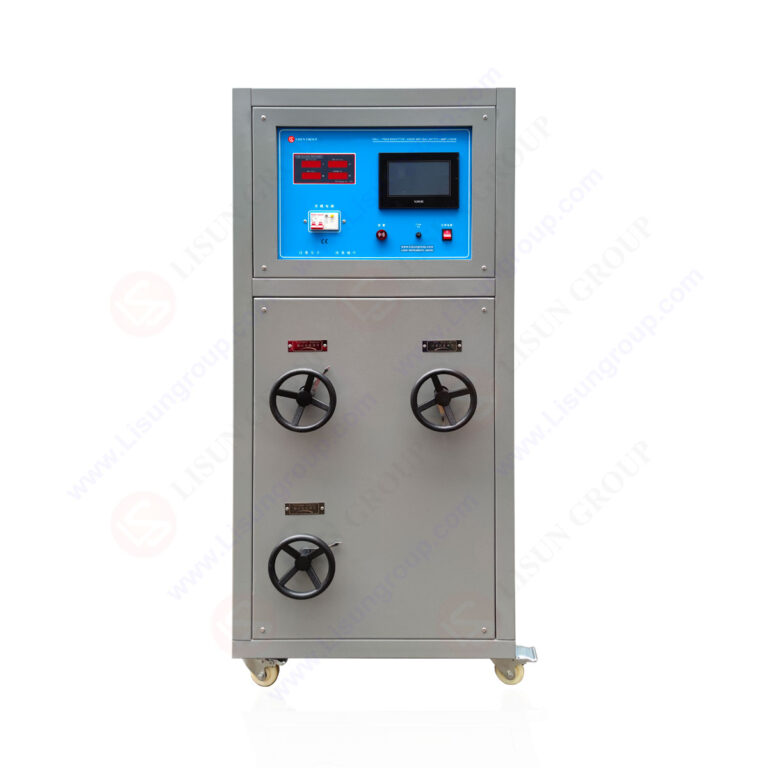
The LISUN DFX-20 load cabinet serves as a specialized load simulation device for testing the electrical endurance of switches, relays, and LED drivers under controlled conditions. Its architecture is designed to emulate the characteristics of externally ballasted fluorescent lamps, including the high inrush currents and inductive loads encountered during normal operation. The cabinet integrates selectable resistor and inductor networks, enabling precise configuration of load parameters to match specific testing protocols.
1.2 Key Performance Capabilities
This electrical accessory load tester delivers a current output range from 0.2A to 20A (with models up to 80A), accommodating a broad spectrum of testing scenarios. The integrated power factor adjustment mechanism spans from 0.3 to 0.99, allowing engineers to replicate diverse load conditions accurately. Additionally, the cabinet supports both single-phase and three-phase configurations, with the DFX-20-3CH model providing three independent channels for multi-device testing, thereby enhancing throughput and testing efficiency.
2.1 Alignment with IEC and GB Requirements
The DFX-20 is engineered to comply with multiple international standards, including IEC 60669-1 Clause 19.2, which specifies test procedures for switches with inductive loads, and IEC 60884-1 Clause 20, governing the testing of plugs and socket-outlets. It also supports GB standards such as GB 16915.1 and GB 15092.1, ensuring compatibility with regional certification requirements. This compliance makes the load cabinet a critical asset for laboratories seeking accreditation.
2.2 Verification of Electrical Endurance
By simulating the electrical stress encountered over a product’s lifecycle, the DFX-20 enables cyclical testing that typically involves up to 50,000 operations. The cabinet’s ability to maintain load accuracy within ±2% ensures that test results are reproducible and defensible during audits. This precision is vital for verifying that LED drivers and switches can withstand prolonged operational demands without failure, aligning with the safety and performance mandates of global regulatory bodies.
3.1 Comparative Analysis of DFX Series Models
The LISUN DFX series encompasses multiple models tailored to diverse testing needs. The table below provides a comparative overview of core specifications:
| Model | Current Output Range (A) | Channels | Input Voltage (VAC) | Power Factor Range | Dimensions (H×W×D, mm) |
|---|---|---|---|---|---|
| DFX-20 | 0.2–20 | 1 | 220–240 | 0.3–0.99 | 700×500×550 |
| DFX-20-3CH | 0.2–20 | 3 | 220–240 | 0.3–0.99 | 900×500×550 |
| DFX-40 | 0.4–40 | 1 | 220–240 | 0.3–0.99 | 800×600×600 |
| DFX-60 | 0.6–60 | 1 | 220–240 | 0.3–0.99 | 900×700×650 |
| DFX-80 | 0.8–80 | 1 | 220–240 | 0.3–0.99 | 1000×700×700 |
3.2 Load Simulation Accuracy
The load cabinet incorporates high-precision components, including air-core inductors and wire-wound resistors, to achieve a resistance tolerance of ±1% and an inductance tolerance of ±2%. The built-in digital meter provides real-time monitoring of voltage, current, and power factor, with a display accuracy of ±0.5%. These specifications ensure that the DFX-20 meets the stringent requirements for Type 1 and Type 2 load testing as defined by IEC standards.
4.1 Enhancing Workflow with Life Testers
The DFX-20 load cabinet seamlessly integrates with LISUN’s CZKS series life testers, enabling automated, continuous testing of LED drivers and switches. This combination allows for simultaneous control of load conditions and operation cycles, reducing manual intervention and human error. The integration is facilitated through standardized communication interfaces, ensuring plug-and-play compatibility within existing test setups.
4.2 Complementary Testing Equipment
For comprehensive compliance testing, the DFX-20 can be paired with LISUN’s SW-6 bending testers and other mechanical endurance devices. This synergy supports multi-faceted evaluations, including mechanical stress and electrical load testing, within a single workflow. Such integration is particularly beneficial for third-party laboratories aiming to offer end-to-end certification services, from initial design verification to final type testing.
5.1 Setup and Calibration Procedures
Proper setup is critical to accurate testing. Engineers must connect the load cabinet to a stable power supply and configure load parameters via the front-panel controls or remote software interface. Calibration is recommended prior to each test series, involving verification of resistance and inductance values against reference standards. The cabinet’s self-calibration function simplifies this process, ensuring optimal accuracy.
5.2 Safety and Maintenance Considerations
The DFX-20 incorporates multiple safety features, including overcurrent protection, thermal cutoff, and emergency shutdown mechanisms. Regular maintenance, such as inspecting contactors and cleaning air vents, is essential to maintain performance. Additionally, the cabinet’s fan-cooled design prevents overheating during extended test runs, preserving component longevity and operational reliability.
6.1 Simulating Fluorescent Lamp Loads
The primary application of the DFX-20 is to simulate the electrical characteristics of fluorescent lamps with external ballasts, which present unique challenges such as high inrush currents. By replicating these conditions, the load cabinet allows manufacturers to evaluate LED driver compatibility and durability, ensuring that drivers can handle the stress of real-world installations. This testing is crucial for validating product claims and achieving mark approvals.
6.2 Case Study: Endurance Testing for Smart Switches
A practical example involves using the DFX-20 to conduct endurance tests on smart switches controlling LED lighting circuits. The cabinet’s programmable cycling function enables automated testing over thousands of operations, documenting any failures in contact performance or insulation integrity. This data provides engineers with actionable insights into design weaknesses, facilitating iterative improvements before market launch.
7.1 Precision and Flexibility
Compared to conventional resistive load banks, the DFX-20 offers superior flexibility through its combined resistive and inductive load networks, enabling accurate emulation of power factors down to 0.3. This precision is often missing in generic load testers, which may only support pure resistive loads, thereby limiting their applicability to modern electronic lighting systems.
7.2 Cost-Effectiveness and Longevity
The DFX-20’s robust construction and high-quality components reduce downtime and maintenance costs, offering a lower total cost of ownership over its operational lifetime. Its capability to handle currents up to 20A (or higher in other models) across diverse test scenarios eliminates the need for multiple specialized devices, making it a cost-effective investment for testing laboratories and manufacturers.
The LISUN DFX-20 load cabinet is a critical tool for any organization involved in the compliance testing of LED drivers and electrical accessories. Its advanced load simulation capabilities, precise power factor control, and adherence to international standards such as IEC 60669-1 and IEC 60884-1 make it an invaluable asset for ensuring product safety and performance. The integration of the DFX-20 into automated testing workflows with LISUN’s life testers enhances efficiency and reliability, reducing time-to-market for new products. Furthermore, its robust design and low maintenance requirements translate into sustained operational value. For electrical product manufacturers, third-party laboratories, and quality control engineers, adopting the DFX-20 load cabinet represents a strategic decision to elevate testing precision, achieve regulatory compliance, and deliver high-quality products to the global market.
Q1: What types of loads can the LISUN DFX-20 simulate for LED driver testing?
A: The DFX-20 is designed to simulate resistive, inductive, and capacitive loads, specifically emulating the characteristics of externally ballasted fluorescent lamps. This includes high inrush currents and variable power factors ranging from 0.3 to 0.99, which are critical for testing LED drivers under realistic conditions. The cabinet utilizes high-precision resistor and inductor networks to replicate load profiles accurately, ensuring that test results are indicative of real-world performance. Its adjustable settings allow engineers to tailor the load to specific testing standards, such as IEC 60669-1 Clause 19.2, making it a versatile solution for various compliance testing scenarios.
Q2: How does the DFX-20 ensure accuracy during prolonged endurance tests?
A: The DFX-20 incorporates a built-in digital monitoring system with ±0.5% display accuracy for voltage, current, and power factor. Its resistance and inductance components maintain tolerances of ±1% and ±2%, respectively, ensuring load stability over extended test durations. Additionally, the cabinet’s fan-cooled design prevents thermal drift, which is a common source of inaccuracy in high-current testing. These features collectively ensure that endurance tests remain reliable and reproducible, meeting the rigorous demands of standards like IEC 60884-1 Clause 20 and supporting valid certification outcomes.
Q3: Can the DFX-20 be integrated into an automated testing system?
A: Yes, the DFX-20 is engineered for seamless integration with LISUN’s CZKS series life testers and other automated equipment. It offers communication interfaces that facilitate remote control and data logging, allowing for unattended operation during long test cycles. This integration enables synchronized control of load conditions, cycling counts, and failure detection, significantly enhancing testing productivity. For laboratories seeking to automate their compliance workflows, the DFX-20 serves as a foundational component, delivering consistent and auditable results with minimal operator intervention.
Q4: What safety features are incorporated in the DFX-20 load cabinet?
A: The DFX-20 is equipped with multiple safety mechanisms to protect both the operator and the device under test. These include overcurrent protection, which automatically disconnects the load if current exceeds preset limits, and thermal shutdown systems that prevent overheating during sustained operation. An emergency stop button provides immediate manual intervention capability, while internal contactors are rated for high-cycle operation, reducing the risk of arcing or welding. These features ensure that the cabinet operates safely under demanding test conditions, aligning with laboratory safety standards and minimizing equipment damage risks.
Q5: Is the DFX-20 suitable for testing LED drivers used in smart home systems?
A: Absolutely. The DFX-20’s ability to simulate complex load profiles, including those with non-linear characteristics and high inrush currents, makes it ideal for testing LED drivers intended for smart home applications. These drivers often interact with dimmers and control systems, necessitating verification of electrical endurance under diverse conditions. The cabinet’s precise power factor control and high current capacity allow engineers to replicate these scenarios effectively, ensuring that smart LED drivers are robust and compliant with international safety standards. This testing is essential for achieving certifications required for market access.