








Abstract
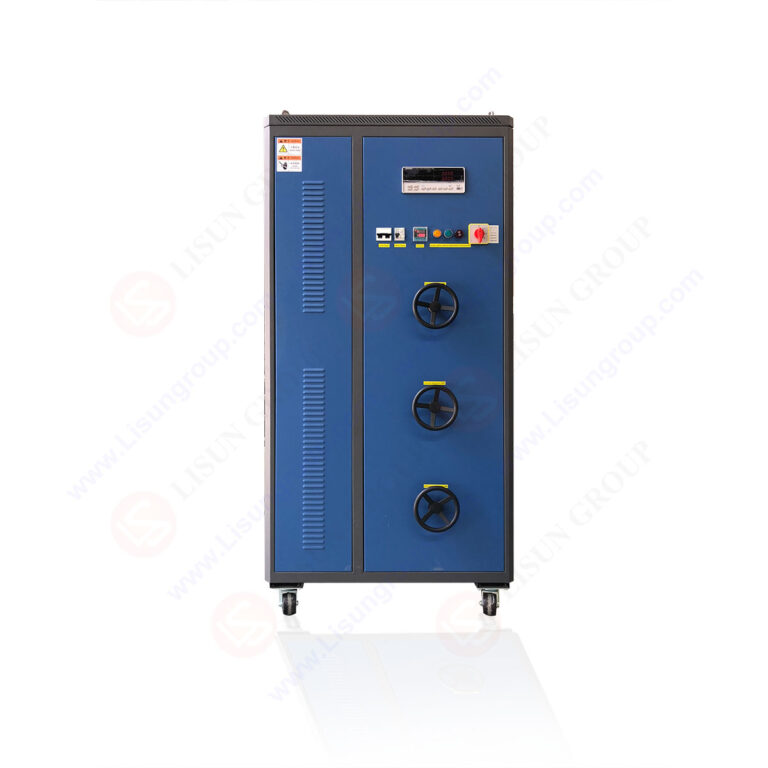
The LISUN DFX-20 load cabinet represents a pivotal advancement in electrical accessory compliance testing, specifically engineered to simulate externally ballasted fluorescent lamp loads for switch, socket, and coupling endurance evaluations. This article provides an in-depth technical analysis of the DFX-20 load cabinet, examining its operational principles, load simulation capabilities, and compliance alignment with international standards including IEC 60669-1, IEC 60884-1, and GB 16915.1. Designed for electrical product manufacturers, third-party testing laboratories, and quality control engineers, the DFX-20 facilitates precise power factor adjustment, multi-channel operation, and cyclic test execution. The load cabinet’s ability to replicate realistic inductive and resistive load conditions ensures reliable, repeatable testing outcomes. This comprehensive review explores the DFX-20’s technical specifications, integration with complementary LISUN testing equipment, and its critical role in verifying switch endurance, thermal performance, and electrical safety parameters.
1.1 The Fundamental Need for Accurate Load Simulation
Electrical accessories such as switches, sockets, and couplings undergo rigorous endurance testing to verify their operational reliability under sustained electrical stress. The nature of the connected load significantly influences contact wear, thermal degradation, and arcing characteristics. Incandescent lamps present a purely resistive load with high inrush currents, while fluorescent lamps with external ballasts introduce inductive components that affect current zero-crossing behavior and arc extinction. The LISUN DFX-20 load cabinet addresses this complexity by generating precisely controlled load profiles that mimic real-world fluorescent lighting circuits. This capability is essential for manufacturers seeking to validate product performance against the stringent requirements of IEC 60669-1 Clause 19.2, which mandates specific load types for switch endurance testing.
1.2 Overview of the LISUN DFX Series Architecture
The LISUN DFX series encompasses multiple models configured to meet diverse testing requirements. The DFX-20 serves as the foundation model, providing a 20-ampere load handling capacity with power factor adjustment from 0.3 to 1.0. The series extends to DFX-20-3CH with three independent channels, DFX-40, DFX-60, and DFX-80 for higher current demands. Each load cabinet integrates resistive and inductive load banks, enabling precise simulation of external ballast characteristics. The series is designed to operate with LISUN’s CZKS series life testers, creating a comprehensive testing workstation for electrical accessories. The DFX-20 load cabinet ensures that testing parameters remain stable throughout extended endurance cycles, critical for generating reproducible compliance data.
2.1 Load Bank Configuration and Adjustment Mechanisms
The DFX-20 load cabinet employs a sophisticated combination of resistive and inductive elements arranged in switchable banks. The resistive load bank provides the active power component, adjustable in fine increments to achieve the desired current draw. The inductive load bank introduces the reactive component, enabling power factor adjustments across the range of 0.3 to 1.0. This configuration replicates the impedance characteristics of externally ballasted fluorescent lamps, including the phase angle between voltage and current. The load cabinet includes a power factor resolution of 0.01, allowing test engineers to precisely match the requirements of specific lamp ballast types. Calibration is performed using internal reference meters, with accuracy maintained within ±0.5% for current measurements.
2.2 Input Requirements and Electrical Protection
The DFX-20 load cabinet operates with an input voltage range of 100-250V AC, 50/60Hz, accommodating international testing requirements. The maximum test current of 20 amperes is continuously adjustable, providing flexibility for testing accessories rated at various current levels. Built-in thermal protection prevents load bank overheating during extended testing sessions, with automatic shutdown at critical temperatures. The cabinet includes overcurrent protection and emergency stop functionality to safeguard both the equipment and test samples. Status indicators and digital displays provide real-time monitoring of applied voltage, current draw, power factor, and cumulative cycle count. These features ensure safe operation during unattended endurance testing, common in compliance laboratories processing multiple samples.
3.1 IEC 60669-1 Switches for Fixed Installations
The LISUN DFX-20 load cabinet is specifically calibrated to meet the load simulation requirements of IEC 60669-1, particularly Clause 19.2 governing mechanical and electrical endurance. This clause mandates testing switches with defined load types, including incandescent lamps, fluorescent lamps with external ballasts, and inductive loads. The DFX-20’s power factor adjustment capability is critical for meeting Clause 19.2.3, which specifies a power factor between 0.6 and 0.9 for inductive load tests, depending on the switch rating. The load cabinet’s ability to maintain stable current and power factor throughout the required 50,000 operational cycles ensures consistent contact stress and arcing conditions. Temperature rise testing under Clause 19.1 also benefits from the DFX-20’s precise current control.
3.2 IEC 60884-1 Plugs and Socket-Outlets
For socket-outlet testing, the DFX-20 load cabinet aligns with IEC 60884-1 Clause 20, which specifies endurance testing with defined loads and operational cycles. The standard requires socket-outlets to undergo 5,000 mechanical operations with electrical load applied, followed by an additional 5,000 operations without load. The DFX-20 supports this two-phase testing protocol through programmatic control of load application timing. The inductive load simulation capability addresses Clause 20.2’s requirement for testing with a load having a power factor of 0.6 ± 0.05, replicating fluorescent lamp circuits. The load cabinet’s measurement accuracy ensures that current levels remain within the ±5% tolerance specified by the standard, critical for test validity.
4.1 Model-by-Model Specification Analysis
The DFX series provides scalable load simulation capacity to accommodate different testing scenarios. The DFX-20 serves as the entry-level model suitable for most switch and socket testing. The DFX-20-3CH extends functionality by providing three independent load channels, enabling simultaneous testing of multiple samples or three-phase applications. Higher-current models, DFX-40, DFX-60, and DFX-80, address testing requirements for industrial-grade accessories with larger current ratings. Each model maintains the same power factor adjustment range and accuracy specifications, ensuring consistent performance across the series. Input voltage requirements remain identical, simplifying laboratory infrastructure planning.
| Model | Max Current (A) | Channels | Power Factor Range | Input Voltage (V) | Measurement Accuracy |
|---|---|---|---|---|---|
| DFX-20 | 20 | 1 | 0.3–1.0 | 100–250 | ±0.5% |
| DFX-20-3CH | 20 per channel | 3 | 0.3–1.0 | 100–250 | ±0.5% |
| DFX-40 | 40 | 1 | 0.3–1.0 | 100–250 | ±0.5% |
| DFX-60 | 60 | 1 | 0.3–1.0 | 100–250 | ±0.5% |
| DFX-80 | 80 | 1 | 0.3–1.0 | 100–250 | ±0.5% |
4.2 Comparison with Standard Minimum Requirements
The DFX-20 load cabinet exceeds minimum compliance thresholds specified in international testing standards, providing enhanced testing confidence. IEC 60884-1 requires current tolerance of ±5% and power factor accuracy of ±0.05. The DFX-20 achieves ±0.5% current accuracy with power factor resolution of 0.01, significantly outperforming minimum requirements. This improved precision enables detection of marginal product failures that might escape detection with lower-accuracy equipment. The load cabinet’s extended current range exceeds the typical 10-16 ampere ratings of standard residential switches and sockets, allowing testing of commercial-grade accessories without additional equipment investment.
| Parameter | Minimum Standard Requirement | LISUN DFX-20 Capability |
|---|---|---|
| Current Measurement Accuracy | ±5% | ±0.5% |
| Power Factor Accuracy | ±0.05 | ±0.01 |
| Power Factor Range | 0.3–0.9 | 0.3–1.0 |
| Max Test Current | 16A (typical) | 20A continuous |
| Frequency Range | 50/60Hz | 50/60Hz |
5.1 CZKS Series Life Tester Synchronization
The DFX-20 load cabinet integrates seamlessly with the LISUN CZKS series life testers, creating an automated endurance testing system. The CZKS life tester controls the mechanical operation of switches or the insertion/withdrawal of plugs, while the DFX-20 applies the specified electrical load. Communication between the units enables synchronized load application and removal at precise points in the mechanical cycle. This integration supports programmable test sequences, including load-on/load-off timing that replicates real-world usage patterns. The CZKS life tester can be configured for various actuation mechanisms, including rocker switches, push buttons, and rotary switches, with adjustable operating speed and dwell time.
5.2 SW-6 Bending Tester Adjunct for Flexible Cords
For comprehensive testing of cord-connected accessories, the DFX-20 load cabinet can be paired with the LISUN SW-6 bending tester. This configuration enables simultaneous evaluation of mechanical durability and electrical performance under load. The bending tester subjects flexible cords to repeated flexing cycles while the DFX-20 maintains the electrical load condition. This combined approach addresses the requirements of IEC 60884-1 Clause 23 for cord anchorage and bending endurance. The load cabinet’s stable current output ensures that any electrical discontinuity caused by conductor fatigue is immediately detected, providing objective failure criteria. This integrated testing approach reduces overall testing time while producing comprehensive compliance data.
6.1 Configuring Test Protocols for Switch Endurance
Test engineers configure the DFX-20 load cabinet for switch endurance testing according to specified product standards. The process begins with setting the desired test current based on the switch rating and the applicable load type. For fluorescent lamp loads, the power factor is adjusted to the standard-required value, typically 0.6 for IEC 60669-1 testing. The load cabinet’s digital interface allows precise entry of test parameters, with real-time verification of actual operating conditions. During the endurance test, the DFX-20 continuously logs test data, including voltage, current, power factor, and cycle count. This data serves as evidence of testing conditions during compliance certification audits.
6.2 Data Acquisition and Reporting Capabilities
The DFX-20 load cabinet includes comprehensive data logging capabilities that streamline the preparation of compliance documentation. The unit records test parameters at user-defined intervals, storing up to 10,000 data points for later retrieval. The included PC software enables visualization of test trends, identification of anomalies, and generation of compliance reports in standard formats. The DFX-20’s measurement system captures voltage and current waveforms, allowing post-test analysis of transient behavior during contact switching. This capability helps engineers identify issues such as contact bounce or inadequate arc suppression, which correlate with premature switch failure. The data export function supports common spreadsheet formats for further analysis.
7.1 Recommended Calibration Schedule and Procedures
The LISUN DFX-20 load cabinet requires periodic calibration to maintain measurement accuracy and ensure test validity. The manufacturer recommends calibration at 12-month intervals or after 10,000 operational cycles, whichever occurs first. Calibration procedures verify current measurement accuracy, power factor adjustment correctness, and load bank stability. The process uses traceable reference standards, with calibration certificates issued to document compliance with ISO 17025 requirements. Internal self-calibration functions provide daily verification of measurement accuracy, alerting operators to drift beyond acceptable limits. The load cabinet’s modular design facilitates component replacement during calibration, minimizing laboratory downtime.
7.2 Environmental Considerations and Preventive Maintenance
Maintaining the DFX-20 load cabinet within specified environmental parameters ensures reliable operation and extended service life. The recommended operating temperature range is 0-40°C, with relative humidity below 80% non-condensing. Dust accumulation on load bank components can affect heat dissipation, so periodic cleaning with compressed air is essential. The forced-air cooling system should be checked regularly for proper airflow and filter cleanliness. Preventive maintenance includes inspection of electrical connections for signs of thermal stress, verification of proper grounding continuity, and testing of safety interlocks. These practices reduce the risk of test interruption and ensure consistent load cabinet performance across extended testing campaigns.
The LISUN DFX-20 load cabinet represents an essential tool for electrical accessory compliance testing, providing precise simulation of externally ballasted fluorescent lamp loads. Its comprehensive capabilities address the stringent requirements of IEC 60669-1, IEC 60884-1, and GB 16915.1, ensuring manufacturers can validate product performance with confidence. The load cabinet’s precise power factor adjustment, accurate current control, and stable operation over extended endurance cycles make it indispensable for switch and socket-outlet testing. The DFX-20’s integration with CZKS life testers and SW-6 bending testers creates a complete testing solution that streamlines compliance workflows. For quality control engineers and testing laboratories, the load cabinet offers the repeatability and reliability essential for generating defensible compliance data. The investment in the DFX-20 load cabinet directly contributes to product reliability, safety, and regulatory compliance, supporting successful market access and consumer protection.
Q1: What is the significance of power factor adjustment in the LISUN DFX-20 load cabinet?
A: Power factor adjustment in the DFX-20 load cabinet is critical for accurately simulating the electrical characteristics of externally ballasted fluorescent lamps. Real fluorescent lighting circuits exhibit inductive behavior due to the ballast, causing the current waveform to lag the voltage waveform. The power factor quantifies this phase relationship, with typical values around 0.6 for standard magnetic ballasts. Testing switches or sockets with purely resistive loads, as opposed to inductive loads, does not subject the contacts to the same arcing conditions during switching. The DFX-20 allows adjustment from 0.3 to 1.0 with 0.01 resolution, enabling precise replication of specific ballast types. This accuracy is essential for generating valid compliance data, as testing with incorrect power factor parameters can lead to false pass or fail outcomes.
Q2: Can the DFX-20 load cabinet be used for testing LED lamp load simulators?
A: The DFX-20 load cabinet is specifically designed for externally ballasted fluorescent lamp load simulation, and its resistive and inductive load bank architecture reflects this focus. LED lamps present different load characteristics, including capacitive input filter effects and non-linear current draw profiles. Testing with the DFX-20 may not accurately replicate the unique current waveform associated with LED drivers. However, for standards requiring testing with inductive loads that mimic fluorescent lamps, the DFX-20 remains appropriate when the standard specifies this load type. For LED-specific simulation, LISUN offers alternative load simulation products designed to match LED driver characteristics. Test engineers should consult the applicable product standard to determine the required load type before selecting the appropriate load simulation equipment.
Q3: How does the DFX-20 load cabinet maintain current stability during long-duration endurance testing?
A: Current stability during extended endurance testing is achieved through the DFX-20’s closed-loop control system. The load cabinet continuously monitors actual output current using internal current transformers, comparing it to the set value. Any deviation, caused by component heating or line voltage variations, triggers automatic adjustment of the load bank resistance. This feedback control maintains current within ±0.5% of the set point throughout the test duration. Additionally, the inductive load bank includes temperature-compensated components that minimize drift over time. The forced-air cooling system maintains operating temperature, preventing thermal-related resistance changes. This stability ensures that switches and sockets are tested under consistent electrical stress, producing repeatable and reliable compliance data essential for certification.
Q4: What safety features does the LISUN DFX-20 load cabinet incorporate for laboratory protection?
A: The DFX-20 load cabinet incorporates multiple layers of safety protection designed for continuous laboratory operation. Overcurrent protection initiates immediate shutdown if current exceeds the set threshold, preventing damage to the load bank and test samples. Thermal sensors monitor load bank temperature, triggering automatic disconnection at critical limits to prevent overheating or fire risk. The cabinet includes an emergency stop button easily accessible from the front panel, allowing immediate power interruption during testing. Ground fault circuit interrupting functionality provides additional operator protection against electrical shock. The enclosure is constructed to IP20 standards, protecting against accidental contact with live components while allowing adequate ventilation. These safety features ensure the DFX-20 can operate unattended during overnight endurance tests with appropriate supervision.
Q5: How does the DFX-20 integrate with existing laboratory test equipment?
A: The DFX-20 is designed for seamless integration into existing test setups through multiple connectivity options. Standard remote control via RS-232 interface allows connection to automated test systems or PC-based control software. Relay outputs provide dry contact signals that can synchronize with external test equipment, such as CZKS life testers, ensuring precise coordination of load application and mechanical operation. The digital display and control panel facilitate standalone operation when manual testing is preferred. The load cabinet can be configured to operate in master-slave arrangements, allowing synchronous operation of multiple units for expanded channel count. This flexibility enables laboratories to optimize their testing infrastructure, minimizing capital expenditure while maintaining testing capabilities across diverse product categories.