








Abstract
Selecting the appropriate load cabinet is critical for accurate switch testing and compliance verification in electrical accessory manufacturing. The LISUN DFX series Externally Ballasted Fluorescent Lamp Test Load Cabinet provides a robust solution for simulating realistic electrical loads during endurance and reliability testing of switches, relays, and connectors. This article examines the technical specifications, standard compliance, and practical applications of the DFX series, including models DFX-20, DFX-20-3CH, DFX-40, DFX-60, and DFX-80. With precise power factor adjustment, multiple load channels, and compatibility with international testing standards, the DFX series enables laboratories to conduct reproducible tests aligned with IEC 60669-1 and IEC 60884-1 requirements. This guide serves as a technical resource for engineers selecting load simulation equipment for switch testing applications.
1.1 The Role of Load Simulation in Electrical Accessory Testing
Switch testing requires simulating real-world electrical conditions to verify product durability and safety. A load test cabinet generates controlled electrical loads—resistive, inductive, and capacitive—to replicate the stress switches experience during normal operation. The LISUN DFX series achieves this through externally ballasted fluorescent lamp configurations, which produce characteristic current waveforms and power factors common in lighting circuits. These load conditions are essential for evaluating contact performance, thermal behavior, and mechanical endurance over thousands of test cycles.
1.2 Why Externally Ballasted Fluorescent Lamp Loads Matter
Fluorescent lighting circuits present unique electrical characteristics—including high inrush currents and low power factors—that differ significantly from purely resistive loads. The electrical accessory load tester must replicate these conditions accurately to ensure test results correlate with field performance. The DFX series uses external ballasts to generate these realistic load profiles, enabling manufacturers to assess switch performance under conditions that match actual installation environments.
2.1 Model Variants and Core Configurations
The DFX series includes five models designed to accommodate different testing capacities:
| Model | Current Range (Per Channel) | Number of Channels | Input Voltage | Power Factor Range |
|---|---|---|---|---|
| DFX-20 | 0.1A – 20A | 1 | AC 220V ±10%, 50Hz | 0.4 – 0.98 |
| DFX-20-3CH | 0.1A – 20A | 3 | AC 220V ±10%, 50Hz | 0.4 – 0.98 |
| DFX-40 | 0.1A – 40A | 1 | AC 220V ±10%, 50Hz | 0.4 – 0.98 |
| DFX-60 | 0.1A – 60A | 1 | AC 220V ±10%, 50Hz | 0.4 – 0.98 |
| DFX-80 | 0.1A – 80A | 1 | AC 220V ±10%, 50Hz | 0.4 – 0.98 |
These configurations allow testing laboratories to select a load cabinet matching their specific current requirements, from low-current switch testing to high-current industrial applications.
2.2 Load Parameter Adjustment Capabilities
Precision control over test parameters distinguishes professional load simulation systems. The DFX series offers:
- Continuously adjustable current output with 0.1A resolution
- Power factor adjustment range from 0.4 to 0.98 with 0.01 resolution
- Individual phase control for multi-channel configurations
- Built-in load capacitance ranging from 0.5μF to 50μF depending on model
These capabilities enable engineers to replicate specific circuit conditions mandated by testing standards and customer requirements.
3.1 International Standards Addressed
The LISUN DFX series supports testing procedures aligned with multiple international standards, ensuring global market acceptance of tested products:
| Standard | Relevant Clause | Application |
|---|---|---|
| IEC 60669-1 | Clause 19.2 | Switches for household and similar fixed electrical installations – Endurance testing |
| IEC 60884-1 | Clause 20 | Plugs and socket-outlets – Mechanical and electrical endurance |
| IEC 61058-1 | Clause 17 | Switches for appliances – Electrical endurance testing |
| GB 16915.1 | Clause 19 | Chinese national standard equivalent for switches |
These standards specify test conditions including load types, current levels, power factors, and cycle counts that the ballasted lamp load simulator must replicate exactly.
3.2 Meeting Endurance Testing Requirements
Endurance testing per IEC 60669-1 Clause 19.2 requires switches to withstand specified numbers of operating cycles under defined electrical loads. The DFX series enables precise programming of:
- Test cycles ranging from 1 to 999,999 operations
- Operating frequency adjustable from 1 to 60 cycles per minute
- Current and power factor stability within ±2% throughout extended test durations
Engineers can configure the load test cabinet to maintain consistent load characteristics even as test sessions extend over multiple days, ensuring result reproducibility.
4.1 Circuit Architecture and Load Stability
The DFX series employs a sophisticated circuit design incorporating:
- High-precision current sensing with 0.5% accuracy
- Automatic voltage regulation maintaining ±1% output stability
- Thermal protection circuits preventing overload damage
- Digital display showing real-time current, voltage, and power factor readings
This architecture ensures that the electrical accessory load tester maintains accurate simulation conditions even during prolonged testing sessions where component heating might otherwise affect performance.
4.2 User Interface and Control Systems
The operator interface of the DFX series balances ease of use with comprehensive control functionality. The digital control panel provides:
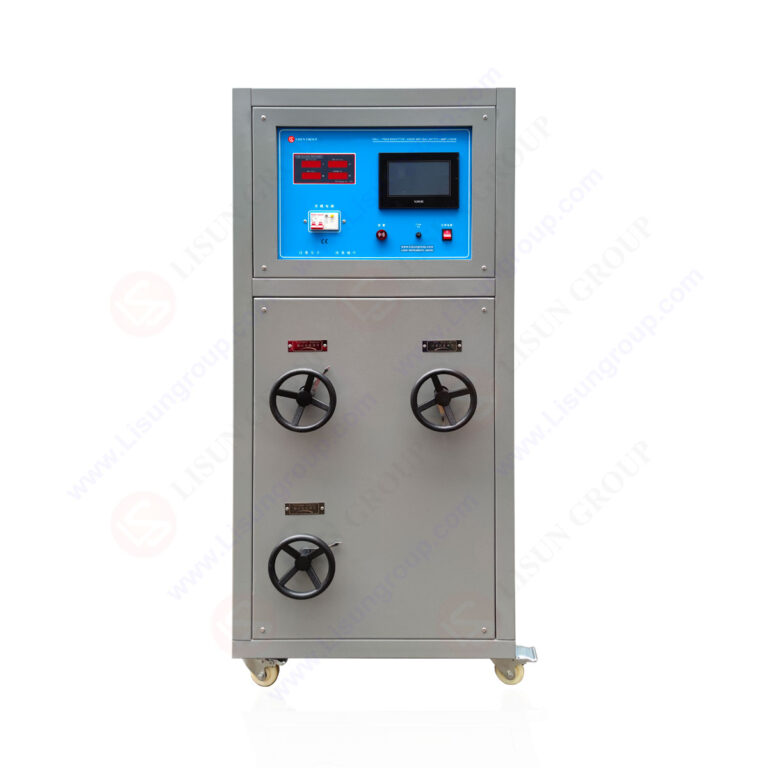
- Direct numeric entry for current and power factor settings
- Memory storage for up to 20 test parameter configurations
- RS-232 and USB communication ports for remote control and data logging
- Emergency stop functionality for immediate test interruption
These features enable integration into automated testing systems while maintaining manual control capability for research laboratories conducting specialized evaluations.
5.1 Creating a Complete Switch Testing Workstation
The DFX series integrates seamlessly with other LISUN testing equipment to build comprehensive test platforms. When combined with the CZKS series switch life testers, the load cabinet provides the electrical stress conditions while the life tester manages mechanical actuation and cycle counting. This integration creates an automated endurance testing system capable of conducting unattended tests over extended periods.
5.2 Embedded Systems for Enhanced Testing Capabilities
For comprehensive mechanical testing, the DFX load simulator works alongside other accessories:
- SW-6 bending testers for evaluating flexible cord connections
- Temperature measurement systems for monitoring contact heating
- Data acquisition modules for recording test parameters over time
The modular design of LISUN equipment ensures straightforward integration, allowing laboratories to configure customized load cabinet test systems meeting specific product requirements.
6.1 Application-Based Model Selection Criteria
Model selection depends on the testing requirements of the products being evaluated:
| Testing Application | Typical Current Range | Recommended Model |
|---|---|---|
| Residential switches (lighting circuits) | Up to 10A | DFX-20 |
| Commercial lighting controls | Up to 20A | DFX-20 or DFX-20-3CH |
| Industrial switchgear | Up to 40A | DFX-40 |
| Heavy-duty contactor testing | Up to 60A | DFX-60 |
| High-current circuit breaker testing | Up to 80A | DFX-80 |
The future testing needs should also be considered when selecting equipment, with multi-channel configurations offering flexibility for testing multiple products simultaneously.
6.2 Multi-Channel Advantages for Production Testing
The DFX-20-3CH model provides three independent load channels, enabling simultaneous testing of three separate switches. This configuration offers significant productivity advantages for manufacturing quality control:
- Reduced floor space requirements compared to three single-channel units
- Lower capital investment than multiple individual load simulators
- Shared control interface streamlining operator interaction
- Independent test programs running concurrently on each channel
Production facilities conducting routine quality verification can significantly increase throughput using the electrical accessory load tester multi-channel configuration.
7.1 Calibration and Maintenance Procedures
Maintaining test accuracy requires regular calibration and preventive maintenance. Recommended procedures include:
- Annual calibration using traceable reference standards
- Monthly visual inspection of connections and cables
- Quarterly verification of load resistance and capacitance values
- Documentation of calibration results for audit purposes
Proper maintenance ensures the load cabinet continues providing accurate simulation conditions throughout its operational life, preserving the validity of test data.
7.2 Safety Considerations for High-Current Testing
Working with high electrical currents introduces significant safety considerations. The DFX series incorporates multiple safety features:
- Overcurrent protection tripping within 0.1 seconds
- Ground fault detection interrupting power upon leakage
- Emergency stop buttons positioned on front panel
- Thermal sensors monitoring internal component temperatures
Laboratories should establish clear safety protocols for operating the ballasted lamp load simulator, including proper personal protective equipment and restricted access to energized areas during testing.
The LISUN DFX series Externally Ballasted Fluorescent Lamp Test Load Cabinet represents a technically advanced solution for load cabinet requirements in switch testing applications. With models ranging from the DFX-20 to the DFX-80, these systems provide current outputs from 0.1A to 80A across multiple channels, power factor adjustment from 0.4 to 0.98, and stable load simulation meeting IEC 60669-1 Clause 19.2, IEC 60884-1 Clause 20, IEC 61058-1 Clause 17, and GB 16915.1 Clause 19 requirements. The integration capabilities with CZKS series life testers and other LISUN equipment enable comprehensive testing workstations for complete product evaluation. The precision control, measurement accuracy of 0.5%, and robust safety features make the DFX series an appropriate choice for third-party testing laboratories, manufacturing quality control departments, and research institutions conducting electrical endurance tests. For engineers seeking reliable load simulation equipment, the DFX series delivers the technical capabilities necessary for compliance testing and product development, ensuring manufactured switches meet the rigorous reliability standards expected in modern electrical installations.
Q1: How does the LISUN DFX series load cabinet achieve the specified power factor range of 0.4 to 0.98?
A: The DFX series achieves power factor adjustment through a combination of externally ballasted fluorescent lamp configurations and adjustable reactive components. The external ballast introduces inductive reactance into the test circuit, while integrated capacitor banks provide capacitive compensation. By adjusting the ratio of inductive to capacitive elements, the load test cabinet can achieve power factors from 0.4 (highly inductive, typical of uncompensated fluorescent circuits) to 0.98 (near-unity, similar to power factor corrected circuits). The digital control system automatically calculates the required component combinations based on operator-set parameters, ensuring accurate load cabinet simulation. This flexibility allows testing laboratories to reproduce specific circuit conditions mandated by IEC 60669-1 Clause 19.2 testing procedures, which specify different power factors depending on the switch type and intended application.
Q2: Can the DFX-20-3CH model test three different switch types simultaneously with different load conditions?
A: Yes, the DFX-20-3CH is specifically designed to support independent testing on each of its three channels. Each channel features its own current setting, power factor adjustment, and test cycle counter, allowing operators to configure different load parameters for products being evaluated simultaneously. This capability proves particularly valuable for production line testing where different switch models require distinct test conditions. Each channel provides the full current range of 0.1A to 20A with power factor adjustment from 0.4 to 0.98, maintaining ±2% accuracy under varying conditions. The independent channel operation also enables testing products from different production batches concurrently, improving laboratory throughput. However, operators should confirm that the total power consumption across all active channels does not exceed the cabinet’s maximum capacity, which is calculated based on the combined current draw and voltage requirements.
Q3: What maintenance procedures are recommended for the LISUN DFX series to maintain testing accuracy over extended operation?
A: To maintain testing accuracy, LISUN recommends a structured maintenance program. Daily checks include verifying display readings against known reference values and inspecting cables for damage. Monthly maintenance involves cleaning air filters, checking fan operation, and testing emergency stop functionality. Quarterly procedures include verifying current measurement accuracy using a calibrated reference meter and checking power factor settings against known load configurations. Annually, the electrical accessory load tester should receive full calibration using traceable standards, including verification of current output accuracy, power factor adjustment, and timing functions. Additionally, connections should be torque-checked to ensure proper contact integrity, and load resistors should be measured to confirm they remain within specification. Documentation of all maintenance activities is essential for quality system compliance, as testing data validity depends on properly maintained equipment.
Q4: What is the recommended warm-up time for the DFX series load cabinet before conducting compliance tests?
A: LISUN recommends a minimum 30-minute warm-up period for the DFX series load cabinet before conducting compliance tests requiring precise measurements. This warm-up allows internal components to reach thermal equilibrium, ensuring stable resistance values and consistent power factor characteristics. During warm-up, operators should set the desired load parameters and allow the system to stabilize. For critical tests, LISUN suggests verifying load stability by comparing initial readings with readings taken after 15 minutes of operation at the test current level. The internal temperature monitoring system continuously tracks component temperatures and provides alerts if operating temperatures exceed recommended ranges. In climate-controlled laboratory environments maintained at 23°C ±5°C with humidity below 80% RH, the warm-up period may be shortened to 15 minutes. However, for maximum accuracy in test results, following the recommended 30-minute warm-up ensures the ballasted lamp load simulator delivers consistent, reproducible conditions across all test cycles.