









Abstract
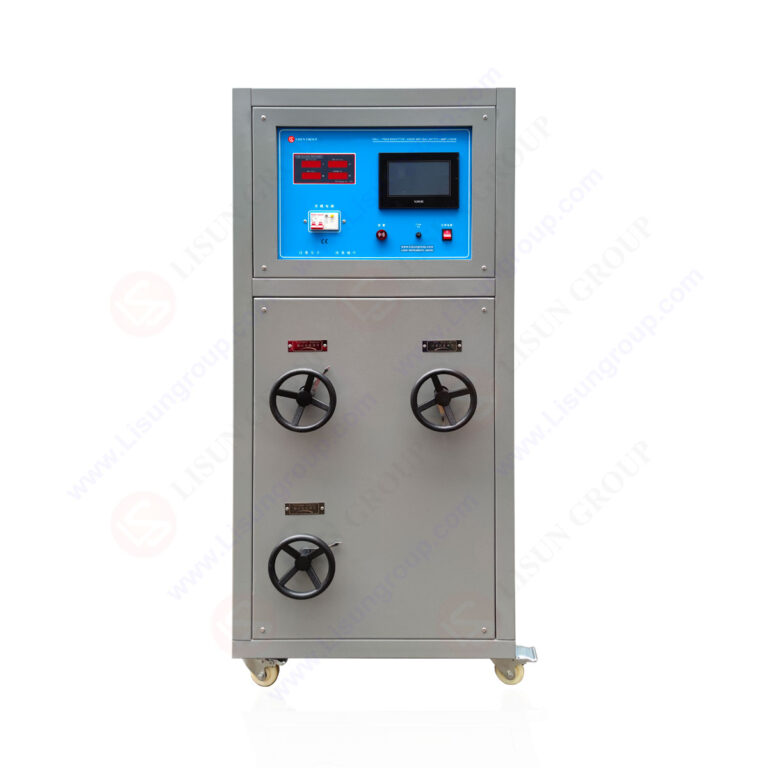
For manufacturers and testing laboratories validating electrical accessories, achieving precise and repeatable load simulation is fundamental to compliance. The LISUN DFX series Externally Ballasted Fluorescent Lamp Test Load Cabinet provides a standardized, programmable solution for simulating the complex electrical characteristics of ballasted lamp loads. This technical article details the capabilities of the DFX series, particularly the DFX-20-3CH model, in performing critical compliance tests for switches, sockets, and connectors. Its core value lies in enabling accurate validation against international EMC and automotive standards, ensuring product safety and performance through reliable, automated load simulation. The Externally Ballasted Fluorescent Lamp Test Load Cabinet is an indispensable tool for rigorous electrical accessory validation.
1.1 The Critical Role of Standardized Loads in Testing
Electrical accessories like switches, sockets, and connectors must be validated under conditions that accurately reflect real-world use. A primary challenge is simulating the inrush current and complex impedance of fluorescent lamp circuits driven by external ballasts. Manual or improvised load setups introduce variability, compromising test repeatability and compliance certification. A dedicated load simulator standardizes this critical variable.
1.2 Overview of the LISUN DFX Series Solution
The LISUN DFX series is engineered specifically to meet the stringent requirements of international standards for accessory testing. It replaces unstable physical lamp and ballast combinations with a solid-state, programmable electronic load. The cabinet can precisely simulate resistive (R), inductive (L), capacitive (C), and mixed (RLC) load characteristics, with a focus on the inductive nature of ballasted lamps. This ensures tests for endurance, temperature rise, and electrical strength are performed under consistent, standards-defined conditions.
2.1 Key Performance Parameters
The DFX series offers high precision and programmability. Key specifications include a wide current output range, typically from 0.5A to the model’s maximum rating (e.g., 20A). Power factor is adjustable from 0.3 to 1.0 with a resolution of 0.01, allowing fine-tuning to match specific ballast characteristics. Measurement accuracy for current and power is typically within ±(0.5% of reading + 0.2% of range). Load capacitance can be switched in discrete steps (e.g., 0.1µF, 0.5µF, 1.0µF) to simulate capacitive loads as per relevant clauses.
2.2 DFX Series Model Comparison
The series comprises several models to accommodate different testing scales and current requirements. The DFX-20-3CH is a common configuration offering three independent channels.
| Model | Max. Current per Channel | Channel Count | Typical Input Voltage | Primary Application Scope |
|---|---|---|---|---|
| DFX-20 | 20 A | 1 | 250V AC | Single-device high-current tests |
| DFX-20-3CH | 20 A | 3 | 250V AC | Multi-sample or multi-circuit testing |
| DFX-40 | 40 A | 1 | 250V AC | High-current switches & industrial connectors |
| DFX-60 | 60 A | 1 | 250V AC | Heavy-duty automotive or industrial accessories |
| DFX-80 | 80 A | 1 | 250V AC | Maximum current rating validation tests |
3.1 Alignment with IEC and GB Standards
The design and function of the DFX series are directly aligned with clauses from major international and national standards. It is engineered to fulfill the specific load requirements for tests mandated in these documents, providing the necessary evidence for certification bodies.
3.2 Key Standard References and Test Applications
- IEC 60669-1 (Switches for Household & Similar Purposes): Clause 19.2 (Temperature rise test) and Clause 20 (Normal operation test) require the accessory to be tested with the specified load. The DFX cabinet provides the precise resistive-inductive load simulation needed.
- IEC 60884-1 (Plugs & Socket-Outlets): Clause 20 (Temperature rise test) and the tests for normal operation mandate the use of standardized loads. The DFX simulates the characteristics of a ballasted lamp load as referenced.
- GB 2099.1 & GB 16915.1: These are the Chinese national standards equivalent to IEC 60884-1 and IEC 60669-1, respectively. The DFX series is fully compliant with their identical load simulation requirements.
- Automotive Connector Standards (e.g., USCAR-2, LV214): While load profiles may differ, the DFX’s programmable current, power factor, and cycle counting capabilities are essential for performing endurance (cycling) tests on automotive switches and connectors, simulating loads like lamps, motors, or heaters.
4.1 Complementary LISUN Testing Equipment
The DFX load cabinet is rarely used in isolation. It is designed to integrate seamlessly with other LISUN apparatus to form a complete validation workstation.
- CZKS Series Life Testers: The DFX cabinet acts as the programmable load bank for the CZKS mechanical life tester. The CZKS automates the physical actuation (ON/OFF cycling) of a switch, while the DFX provides the standardized electrical load, enabling fully automated endurance testing per IEC 60669-1 Clause 20.
- SW-6 Bending Tester: For cord and cable tests, the DFX can provide a monitored load during mechanical flexing procedures, allowing for simultaneous electrical continuity checking under strain.
4.2 Automated Test Sequence Execution
A significant advantage is programmability. Users can define complex test profiles: set the initial current, power factor, test duration (or cycle count), and even implement step-loading sequences. This allows for automated execution of multi-stage tests, improving laboratory throughput and eliminating operator error during long-duration endurance trials.
5.1 Resistive, Inductive, Capacitive, and Mixed (RLC) Load Simulation
Beyond simple resistive loads, the DFX excels at simulating real-world components:
- Inductive (L): Simulates ballasts, motor coils, and transformers. Adjustable power factor directly controls the L component.
- Capacitive (C): Simulates power factor correction circuits or specific capacitive inrush conditions via switched capacitor banks.
- Mixed (RLC): Allows for creating complex impedance profiles to model composite loads found in actual electronic devices.
5.2 Precision Control and Measurement Features
The cabinet provides digital setting and readback of all key parameters. Current, voltage, power, power factor, and cumulative cycle counts are displayed on an integrated HMI. High-resolution DACs and precision measurement circuits ensure the set value is the value applied to the Device Under Test (DUT), with real-time monitoring to verify performance.
6.1 Providing Stable Load for EMC Testing
During Electromagnetic Compatibility (EMC) testing—such as conducted emissions (CISPR 14-1, CISPR 25)—the Device Under Test must operate under its normal load. A variable physical load can itself be a source of noise. The DFX cabinet provides a spectrally clean, stable, and repeatable load, ensuring that emissions measurements are attributable to the DUT alone, not the test setup.
6.2 Automotive Accessory Endurance and Performance Testing
Automotive standards demand rigorous validation of every electrical component. The DFX-20-3CH is ideal for testing:
- Switches (Turn signal, headlamp, power window): Simulating the inductive load of lamps or motors over hundreds of thousands of cycles.
- Connectors & Sockets (12V/24V): Performing current-load temperature rise tests and cyclic endurance tests with precise current profiling.
- Control Modules: Acting as a simulated actuator load for bench testing of relay drivers or solid-state outputs.
7.1 Enhanced Repeatability and Reduced Uncertainty
By eliminating the variability of aging physical ballasts and lamps, the DFX series ensures that a test performed today yields the same results as one performed next year. This dramatically reduces measurement uncertainty in compliance testing, a critical factor for accredited laboratories.
7.2 Improved Safety and Efficiency
The cabinet incorporates safety features like over-current protection, emergency stop, and secure terminal connections. It replaces bulky, heat-generating resistive banks and noisy magnetic ballasts. Setup time is reduced from hours to minutes, and automated tests can run unattended, freeing up technician resources.
The LISUN DFX series Externally Ballasted Fluorescent Lamp Test Load Cabinet transcends being a simple piece of test equipment; it is a foundational component for achieving credible and certifiable compliance in electrical accessory validation. Its precise simulation of resistive, inductive, and capacitive loads, direct alignment with specific clauses in IEC, GB, and automotive standards, and seamless integration with life cycling and mechanical testers create a robust, reliable testing ecosystem. For manufacturers, it de-risks the R&D and qualification process by providing consistent, standards-based results. For third-party testing laboratories, it enhances accreditation standing through improved test repeatability and reduced measurement uncertainty. Ultimately, the DFX series empowers engineers to validate product safety, endurance, and performance with a level of technical rigor that meets the exacting demands of global markets, ensuring that electrical accessories perform reliably under real-world conditions.
Q1: How does the DFX load cabinet improve upon using actual fluorescent lamp and ballast combinations for testing?
A: Physical lamp-ballast combinations suffer from inherent variability—component aging, temperature drift, manufacturing tolerances, and lamp starting characteristics all affect the electrical load, introducing unacceptable uncertainty into compliance tests. The DFX cabinet replaces these with a solid-state, programmable simulator that delivers a precise, repeatable, and stable load. It digitally sets parameters like current and power factor with high resolution, ensuring every test cycle is identical. This eliminates a key source of error, enhances lab accreditation, and allows for automated long-duration tests without the maintenance and replacement issues associated with physical lamps.
Q2: Can the DFX-20-3CH simulate loads for both 50Hz and 60Hz power systems, and how is this managed?
A: Yes, the DFX series is designed to operate correctly on both 50Hz and 60Hz mains supplies. The core load simulation circuitry, particularly for generating the inductive (lagging power factor) component, is effective across this frequency range. The key for compliance is that the simulated load’s current waveform and magnitude meet the standard’s requirement when powered by the local mains frequency. The cabinet’s calibration and performance are validated to ensure the set parameters (e.g., 16A at PF 0.9) are achieved regardless of whether the input is 50Hz or 60Hz, making it suitable for global testing applications.
Q3: What is the advantage of having three independent channels in the DFX-20-3CH model compared to a single-channel unit?
A: The three-channel configuration offers significant logistical and efficiency benefits for testing laboratories. Firstly, it allows for simultaneous, parallel testing of three identical devices (e.g., three samples of a switch model), drastically reducing total test time for sample batches. Secondly, it enables the testing of a single, multi-circuit device (e.g., a multi-gang switch or a socket outlet with multiple poles) where each circuit must be loaded independently according to the standard. Each channel can be programmed with different parameters if needed, providing flexibility. This maximizes the utilization of the test station and floor space.
Q4: How does the cabinet ensure safety when testing devices that might fail during a high-current endurance test?
A: The DFX incorporates multiple layers of safety protection. It features electronic over-current protection (OCP) that will immediately shut down the output if the current exceeds a safe threshold, protecting both the cabinet and the downstream equipment. An emergency stop button provides instant manual override. Furthermore, the outputs are designed with secure, shrouded terminal connections to prevent accidental contact. During a test, if the Device Under Test fails short-circuit, the OCP will react; if it fails open-circuit, the cabinet will simply register a loss of load and can be programmed to halt the test, preventing the continuation of a meaningless cycle count.
Q5: Is the DFX cabinet suitable for testing DC-powered automotive accessories, or is it only for AC applications?
A: The standard DFX series is primarily designed for AC load simulation aligned with IEC and GB standards for mains-powered accessories. For DC automotive testing (e.g., 12V/24V systems), the fundamental requirement for a programmable, stable current load is similar, but the implementation differs. LISUN offers specialized DC load solutions for this market. However, the DFX can be applicable in specific automotive contexts where the accessory is designed for AC operation within the vehicle (e.g., in certain heavy trucks or aviation), or for validating switches that control AC loads in hybrid/electric vehicles. It is crucial to match the load simulator’s specifications to the standard’s defined test conditions.