









Abstract
The LISUN HM-700 Haze Meter and Spectrophotometer represents a significant advancement in optical testing instrumentation for transparent and translucent materials. This article provides a technical examination of the HM-700 haze and transmittance tester, detailing its optical design, measurement capabilities, and compliance with international standards including ASTM D1003, ISO 13468, CIE No.15, and JIS K7105. Designed for quality control managers, R&D engineers, and compliance specialists, the HM-700 integrates 0/d geometry optical systems, multi-light source spectral analysis, and advanced transmittance compensation algorithms to deliver precise haze, transmittance, and color measurements. Key applications span automotive electronics, plastics manufacturing, glass production, and display industries, where material optical properties directly impact product performance and regulatory compliance. This article explores the instrument’s technical specifications, operational advantages, and practical implementation for achieving reliable, repeatable testing results.
1.1 0/d Geometry Optical System Design
The HM-700 haze and transmittance tester employs a 0/d (0-degree illumination, diffuse detection) optical geometry that aligns with ASTM D1003 and ISO 13468 requirements. In this configuration, a collimated light beam illuminates the sample at a 0-degree angle, while an integrating sphere collects transmitted light over a hemisphere. This geometry minimizes directional reflectance errors and ensures accurate measurement of total transmittance and diffuse transmittance. The integrating sphere, coated with high-reflectance barium sulfate, provides uniform light collection across wavelengths from 380 nm to 780 nm, enabling precise haze calculation as the ratio of diffuse transmittance to total transmittance.
1.2 Multi-Light Source Spectral Analysis
The HM-700 integrates multiple light sources including D65 (daylight), A (incandescent), C (average daylight), and F2 (cool white fluorescent), allowing users to simulate different viewing conditions. Each illuminant is calibrated to CIE standard spectral power distributions, ensuring measurements correlate with human visual perception. The instrument’s spectrophotometer measures spectral transmittance at 10 nm intervals across the visible spectrum, producing data for CIE Lab, CIE LCh, and yellowness index calculations. This multi-light source capability is critical for applications where final product appearance under varying lighting conditions must be validated.
1.3 Transmittance Compensation Algorithms
To maintain accuracy across different sample thicknesses and absorption characteristics, the HM-700 incorporates proprietary transmittance compensation algorithms. These algorithms correct for internal reflections, baseline drift, and sample-induced scattering using iterative numerical methods. A built-in reference beam monitors source intensity fluctuations, applying real-time compensation to maintain measurement repeatability of ±0.1% for total transmittance. This compensation is particularly valuable when testing materials with high haze values (>30%), where secondary scattering can introduce systematic errors in conventional instruments.
2.1 Measurement Range and Repeatability
The HM-700 achieves a haze measurement range of 0% to 100% with a resolution of 0.01%, while total transmittance spans 0% to 100% with 0.001% resolution. Repeatability, critical for statistical process control, is documented at ±0.05% for haze values below 30% and ±0.1% for higher haze levels. These specifications meet or exceed the requirements of ISO 13468-2 for inter-laboratory reproducibility. The instrument’s photometric accuracy is verified using calibrated neutral density filters traceable to national metrology institutes.
2.2 Supported Standards and Compliance
The HM-700 is designed to comply with a comprehensive set of international standards:
| Standard | Application | HM-700 Compliance Metric |
|---|---|---|
| ASTM D1003 | Haze and luminous transmittance of transparent plastics | 0/d geometry, CIE C illuminant |
| ISO 13468 | Total luminous transmittance of plastics | D65 illuminant, 2° observer |
| JIS K7105 | Optical properties of plastics | CIE standard illuminants |
| CIE No.15 | Colorimetry | Spectral data at 10 nm intervals |
Each standard requires specific illuminant and observer combinations, which the HM-700 supports through software-selectable presets. The instrument automatically applies the correct weighting functions for spectral transmittance calculations, eliminating manual correction errors.
2.3 Data Storage and Connectivity
The HM-700 stores up to 10,000 measurement records internally, including spectral data, computed indices, and timestamp information. USB and RS-232 interfaces enable direct data export to laboratory information management systems (LIMS) or spreadsheet software. The instrument’s firmware supports password-protected user profiles, ensuring compliance with FDA 21 CFR Part 11 requirements for electronic records in regulated industries.
3.1 Calibration and Baseline Correction
Accurate haze measurement requires meticulous calibration. The HM-700 uses an air reference as the zero standard and a certified haze standard for full-scale calibration. Before each measurement session, the instrument performs an auto-zero routine that compensates for integrating sphere contamination and detector dark current. For continuous monitoring, a built-in stability check verifies baseline drift remains below ±0.01% over 24 hours. Users are advised to perform full calibration weekly using the certified standards supplied with the instrument.
3.2 Sample Preparation and Measurement Protocol
To achieve reproducible results with the HM-700 haze and transmittance tester, samples must be clean, dry, and free of surface scratches or finger prints. The instrument accommodates samples up to 10 mm thickness with a 20 mm diameter measurement aperture. For films, a sample holder applies uniform tension to prevent wrinkles that could alter optical path length. The recommended measurement protocol involves five readings at different sample positions, with results reported as the mean value. Standard deviation flags are automatically generated when variability exceeds user-defined thresholds.
3.3 Validation Against Reference Standards
Inter-laboratory validation studies demonstrate the HM-700’s agreement with primary reference instruments within 0.3% for haze and 0.2% for transmittance using NIST-traceable standards. The instrument’s spectral response matches the CIE 2° standard observer within 0.5% across the visible spectrum. This level of accuracy positions the HM-700 as a suitable replacement for older hazemeters that lack spectral correction capabilities.
4.1 CIE Lab and CIE LCh Calculations
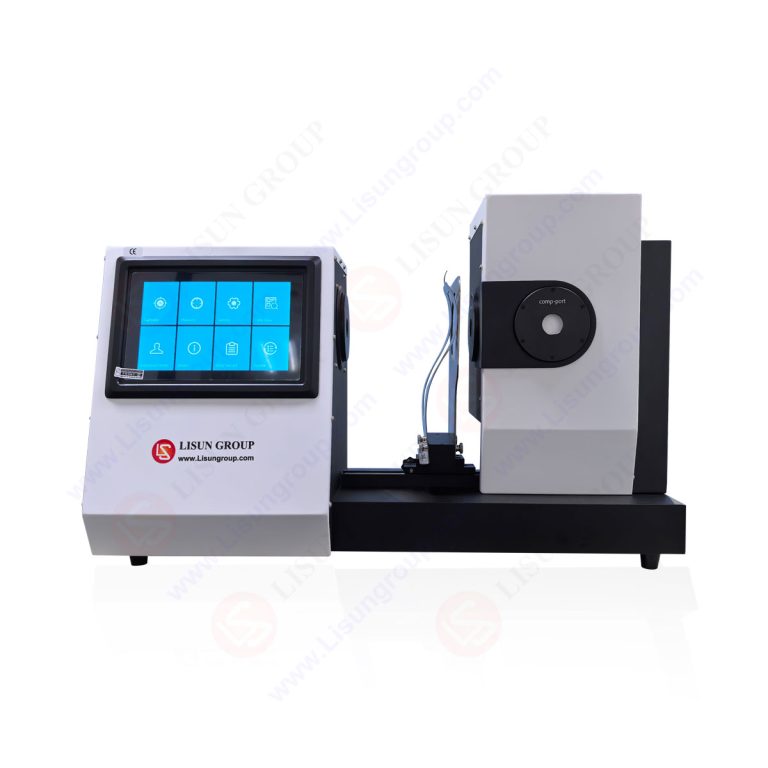
Beyond haze and transmittance, the HM-700 evaluates color coordinates using the CIE 1976 (Lab) color space. Spectral transmittance data is converted to tristimulus values X, Y, Z using CIE standard illuminants and observer functions. The instrument then computes L (lightness), a (red-green), b (yellow-blue), and derived parameters such as chroma C* and hue angle h°. For transparent materials, color analysis is essential when slight tint variations affect product aesthetics, such as in automotive windows or display cover glass.
4.2 Yellowness Index and Whiteness Index
The HM-700 calculates yellowness index (YI) per ASTM E313 and whiteness index (WI) per CIE recommendations. Yellowness index, a critical parameter for aging studies in plastics and polymers, is computed from CIE tristimulus values using the formula YI = 100(1.28X – 1.06Z)/Y for D65/10°. Whiteness index applications include paper and film manufacturing where substrate color must be strictly controlled. The instrument can track YI trends over time, providing early warning of material degradation in accelerated weathering tests.
4.3 Spectral Transmittance Analysis for Coating Evaluation
For coated glass or laminated films, the HM-700’s spectral transmittance curves reveal performance characteristics such as UV-blocking efficiency or visible light transmission. The instrument generates graphs showing transmittance versus wavelength, allowing engineers to identify absorption bands specific to dyes or anti-reflective coatings. This capability is particularly valuable in architectural glass testing where solar heat gain coefficients correlate with near-infrared transmittance.
5.1 Automotive Electronics and Lighting
In automotive electronics, the HM-700 haze and transmittance tester validates optical properties of dashboard displays, headlight lenses, and window coatings. For instrument panel overlays, haze values below 1% are often required to prevent distracting reflections while maintaining clarity. Headlight lenses must sustain transmittance above 85% after UV exposure; the HM-700’s spectral analysis monitors degradation rates. The multi-illuminant feature simulates daylight and low-beam conditions, ensuring compliant visibility.
5.2 Plastics and Film Manufacturing
Plastics manufacturers use the HM-700 for quality control of packaging films, optical films, and sheet goods. Cast polypropylene films, for example, require haze below 2% for clear packaging applications, while matte finishes target 30-50% haze. The instrument’s digital output facilitates real-time statistical process control, reducing scrap rates. For barrier films, transmittance measurements correlate with coating thickness uniformity.
5.3 Glass Production and Display Manufacturing
In flat glass production, the HM-700 verifies compliance with ASTM C1036 for architectural glass. Low-e coatings are tested for visible light transmittance and haze after heat treatment. Display manufacturers rely on the instrument for cover glass validation; touchscreen assemblies require transmittance above 90% and haze below 0.5% to maintain image quality. The spectral analysis function detects anti-glare coating degradation that could cause diffusion.
6.1 Technical Comparison Table
| Parameter | LISUN HM-700 | Conventional Hazemeter | Competing Spectrophotometer |
|---|---|---|---|
| Optical Geometry | 0/d | 0/d or d/0 | d/8 (integrating sphere) |
| Light Sources | D65, A, C, F2 | D65 only | D65, A, TL84 |
| Haze Repeatability | ±0.05% | ±0.1% | ±0.2% |
| Spectral Range | 380-780 nm | Broadband only | 360-830 nm |
| Data Storage | 10,000 records | 100-500 records | 5,000 records |
| Compliance Standards | ASTM D1003, ISO 13468, JIS K7105, CIE No.15 | ASTM D1003, ISO 13468 | ASTM D1003, ISO 13468, CIE No.15 |
| Measurement Speed | 3 seconds | 2 seconds | 5 seconds |
6.2 Operational Advantages
The HM-700’s multi-illuminant capability distinguishes it from basic hazemeters that measure only under D65. For automotive clients requiring compliance with both SAE and European standards, switching illuminants without recalibration saves significant time. The larger data storage capacity enables batch testing without computer connection, ideal for production floor environments. Additionally, the HM-700’s spectral data collection enables post-measurement analysis that broadband instruments cannot perform.
7.1 Automated Pass/Fail Criteria
The HM-700 software enables users to define pass/fail limits for haze, transmittance, yellowness index, and color difference (ΔE*). During batch testing, the instrument audibly signals failures and logs results with timestamps. This automation reduces operator error and speeds up high-volume QC operations. Limits can be saved per product type, allowing rapid changeover between different materials.
7.2 Data Analysis and Reporting
Built-in reporting functions generate summary statistics including mean, standard deviation, and capability indices (Cp, Cpk). Reports can be exported as PDF or CSV files, organized by lot number or date range. For audits, the HM-700 maintains an electronic signature trail that meets ISO 17025 requirements. The trend analysis module displays moving averages to detect gradual process shifts before products exceed specifications.
The LISUN HM-700 Haze Meter and Spectrophotometer provides a comprehensive solution for optical testing of glass, films, and plastics, combining precise 0/d geometry with multi-light source spectral analysis. Its compliance with ASTM D1003, ISO 13468, JIS K7105, and CIE No.15 ensures acceptance in global markets. The instrument’s technical strengths—±0.05% haze repeatability, 10,000-record data storage, and real-time compensation algorithms—deliver the reliability demanded by automotive, display, and packaging quality control laboratories. Compared to conventional hazemeters, the HM-700 offers superior accuracy and flexibility through its spectral capabilities and multi-illuminant support. For quality control managers and R&D engineers, the HM-700 reduces testing time while improving measurement confidence. Its data analysis tools enable proactive process control, reducing waste and rework. Ultimately, the HM-700 represents a practical investment for organizations seeking to standardize haze and transmittance testing around a single, versatile instrument that meets current regulatory requirements and adapts to future material innovations.
Q1: How does the HM-700 ensure measurement accuracy for high-haze samples above 30%?
A: The HM-700 haze and transmittance tester addresses the challenge of high-haze materials through its iterative compensation algorithm and large integrating sphere. When haze exceeds 30%, conventional instruments may underestimate true haze due to secondary scattering within the integrating sphere. The HM-700 accounts for this by computing a correction factor based on measured spectral transmittance and known scattering properties of the sphere coating. Additionally, the instrument uses a dual-beam design where a reference detector monitors source output fluctuations, ensuring that variations from lamp aging or temperature drift are compensated in real time. For validation, users can test calibrated haze standards at 50% and 70% haze levels; the HM-700 typically maintains accuracy within ±0.3% of certified values even at these extremes.
Q2: Can the HM-700 be used for testing colored or tinted transparent materials?
A: Yes, the HM-700 is particularly effective for colored transparent materials because of its full spectral measurement capability from 380 nm to 780 nm. Unlike broadband hazemeters that measure only total luminous transmittance, the HM-700 records transmittance at individual wavelengths, allowing accurate colorimetry for tinted glass, dyed films, and colored plastics. For example, automotive privacy glass often requires both haze and color coordinates (Lab*) to match design specifications. The instrument calculates these values under multiple illuminants (D65, A, C, F2) and observers (2° and 10°), providing complete color characterization. Users should note that for deeply colored samples with transmittance below 1%, measurement noise increases; the HM-700 compensates by extending integration time automatically in its software.
Q3: What maintenance is required to maintain the HM-700’s calibration over time?
A: Regular maintenance of the HM-700 haze and transmittance tester includes daily cleaning of the integrating sphere’s entrance port using lint-free wipes and isopropyl alcohol to remove dust accumulation. The reference standards (air and haze standard) should be verified weekly against a calibrated master set stored in a desiccator. Annually, the instrument should undergo full recalibration by a certified technician, which includes verifying spectral response against a NIST-traceable lamp and checking sphere reflectance with a diffuse standard. The instrument’s firmware performs automated self-diagnostics at power-up, flagging any deviations in baseline response or detector linearity. Users can also run a validation check using an external certified haze standard at any time to confirm performance. Following these procedures ensures the HM-700 maintains its specified repeatability of ±0.05% for haze measurements over its operational lifetime.