









Abstract
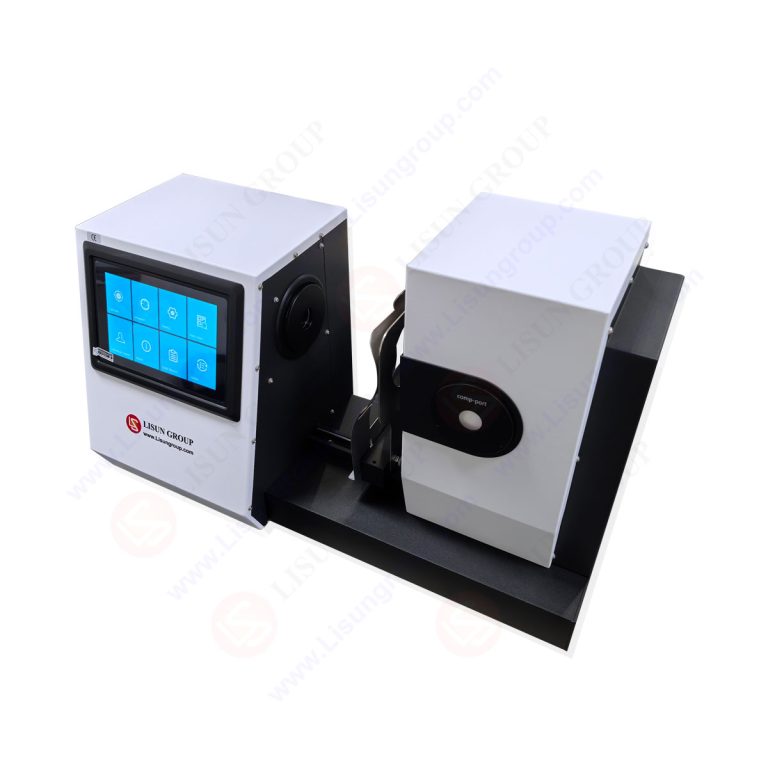
The LISUN HM-700 Haze and Transmittance Tester represents a significant advancement in multi-parameter optical measurement for transparent and translucent materials. This instrument integrates haze measurement, spectral transmittance analysis, and colorimetry within a single platform, addressing critical quality control requirements across automotive, plastics, glass, and display industries. By combining 0/d optical geometry with multi-light source spectral analysis, the HM-700 delivers laboratory-grade precision with measurement repeatability of ±0.1% for transmittance and ±0.02% for haze. The system supports comprehensive compliance testing against ASTM D1003, ISO 13468, CIE No.15, and JIS K7105 standards simultaneously. This article examines the instrument’s core technologies, operational capabilities, application scenarios, and practical benefits for quality assurance professionals managing optical property specifications in high-volume production environments.
1.1 0/d Optical Geometry and Spectral Response Matching
The HM-700 employs the 0/d (0° illumination, diffuse detection) optical geometry, which is the preferred configuration for haze and transmittance measurements according to ASTM D1003. In this arrangement, a collimated light beam passes through the sample at normal incidence, while an integrating sphere collects all transmitted light, including both direct and scattered components. The instrument’s spectral response is precisely matched to the CIE standard observer function, ensuring measurements correlate with human visual perception. The integrating sphere, coated with high-reflectance barium sulfate, provides diffuse reflectance exceeding 98% across the visible spectrum, minimizing measurement uncertainty from sphere wall absorption.
1.2 Multi-Light Source Spectral Analysis System
Unlike single-source instruments, the HM-700 incorporates multiple light sources including D65 (daylight), A (incandescent), and C (average daylight) illuminants, as defined by CIE No.15. This multi-source capability allows operators to evaluate samples under different lighting conditions without hardware reconfiguration. The instrument’s spectrophotometric module performs full-spectrum analysis across the 380-780nm range, enabling precise calculation of color coordinates (CIE Lab, CIE LCh), yellowness index (ASTM E313), and whiteness index (CIE). The spectral resolution of 5nm ensures accurate detection of narrow-band absorption features common in tinted glasses and color filters.
1.3 Transmittance Compensation Algorithms
Accurate total transmittance measurement requires compensation for surface reflections and thickness variations. The HM-700 employs proprietary algorithms that correct for Fresnel reflection losses at both sample surfaces, automatically subtracting approximately 4% per surface for materials with refractive indices near 1.5. This compensation is critical for materials with different refractive indices, such as polycarbonate (n=1.586) versus acrylic (n=1.49). The instrument also incorporates thickness normalization, converting measured transmittance to equivalent values per unit thickness, enabling direct comparison between samples of varying dimensions. These algorithms achieve measurement repeatability of ±0.1% for total transmittance across the full 0-100% range.
2.1 Scattered Light Detection and Haze Calculation
Haze measurement quantifies the fraction of transmitted light that deviates more than 2.5° from the incident beam direction due to bulk scattering or surface roughness. The HM-700 detects scattered light using a photodetector positioned at the integrating sphere exit port, with a light trap that captures the direct beam. The haze value is calculated as the ratio of diffuse transmittance to total transmittance, expressed as a percentage. The instrument’s dynamic range spans from 0% to 100% haze with resolution of 0.01%, accommodating materials from optical-grade acrylic (haze 95%). The measurement aperture of 25mm diameter ensures representative sampling of heterogeneous materials.
2.2 Measurement Repeatability and Accuracy Validation
The HM-700 achieves haze measurement repeatability of ±0.02%, which exceeds the requirements of ASTM D1003 and ISO 13468 standards. This performance is validated through regular calibration using certified haze standards, typically comprising polished optical glass with haze values of 1%, 10%, and 30%. The instrument automatically performs zero and gain calibration at each startup, compensating for drift in the light source output and detector sensitivity. For total transmittance, the instrument maintains ±0.1% repeatability across the measurement range. Table 1 compares the HM-700’s key performance metrics against industry requirements and competing instruments.
Table 1: Performance Comparison – HM-700 vs. Industry Standards and Competing Instruments
| Parameter | HM-700 Specification | ASTM D1003 Requirement | Competitor A | Competitor B |
|---|---|---|---|---|
| Haze measurement range | 0-100% | Not specified | 0-100% | 0-99.9% |
| Haze repeatability | ±0.02% | ±0.1% (recommended) | ±0.05% | ±0.03% |
| Transmittance repeatability | ±0.1% | ±0.3% (recommended) | ±0.2% | ±0.15% |
| Supported light sources | A, C, D65, D50 | D65 (preferred) | D65 only | D65, A |
| Spectral range | 380-780nm | 400-700nm | 400-700nm | 380-760nm |
| Measurement aperture | 25mm | ≥10mm | 20mm | 25mm |
| Data storage capacity | 10,000 records | Not specified | 5,000 records | 8,000 records |
| Calibration standards | Internal + certified | External required | Internal only | Internal + external |
3.1 CIE Color Space Calculations and Indices
The HM-700 performs comprehensive color analysis based on spectral reflectance and transmittance data. The instrument calculates CIE Lab (L, a, b) coordinates under multiple illuminant/observer combinations, including 2° and 10° standard observers. Color difference calculations (ΔEab, ΔEcmc, ΔE00) enable objective pass/fail decisions based on user-defined tolerance limits. The system also computes specialized indices including yellowness index (YI) per ASTM E313, whiteness index (WI) per CIE, and opacity measurements. These capabilities are essential for automotive interior components where color consistency across different lighting conditions is critical for visual harmony.
3.2 Spectral Data Analysis and Comparison Functions
Beyond color coordinates, the HM-700 stores and displays full spectral transmittance curves for detailed analysis. Users can overlay multiple spectra for visual comparison, identify absorption bands associated with specific additives or contaminants, and export data in standard formats for archival or statistical process control systems. The instrument’s software includes library management for storing standard color references and batch comparison functions that automatically compare production samples against stored masters. This spectral analysis capability is particularly valuable for R&D applications, where understanding the wavelength-dependent behavior of new material formulations guides product development decisions.
4.1 ASTM D1003 and ISO 13468 Haze and Transmittance Testing
The HM-700 is designed for full compliance with ASTM D1003 (Standard Test Method for Haze and Luminous Transmittance of Transparent Plastics) and ISO 13468 (Plastics – Determination of total luminous transmittance of transparent materials). These standards specify test conditions including light source (typically CIE Standard Illuminant C or D65), detector geometry, and calculation methods. The instrument’s firmware includes pre-programmed test protocols for each standard, ensuring consistent execution without operator interpretation. The system automatically configures illumination conditions, detector settings, and data processing algorithms to match the selected standard, reducing the risk of non-compliant measurements.
4.2 JIS K7105 and CIE No.15 Compliance
For Asian markets, the HM-700 supports JIS K7105 (Testing methods for optical properties of plastics) and CIE No.15 (Colorimetry) standards. The JIS K7105 method for haze measurement differs slightly from ASTM D1003 in its treatment of scattering angle limits, which the HM-700 accommodates through configurable measurement parameters. The instrument’s compliance with CIE No.15 ensures that color measurements are traceable to international photometric and colorimetric standards. The system undergoes regular calibration using certified reference materials traceable to national metrology institutes, providing documented evidence for quality audits and regulatory submissions.
4.3 Automotive Industry Standards (SAE J1757 and ISO 20473)
In automotive applications, the HM-700 supports SAE J1757 (Standard Test Procedure for Optical Properties of Automotive Glazing) and ISO 20473 (Optics and photonics – Spectral bands). These standards address the unique requirements of automotive glass, including safety glazing materials and heads-up display components. The instrument’s ability to measure both haze and spectral transmittance across the full visible and near-infrared range enables comprehensive characterization of coatings, laminates, and treatments. For advanced driver assistance systems (ADAS), the HM-700 can evaluate transmittance uniformity across windshield areas, identifying localized haze that could impair camera-based safety systems.
5.1 Automotive Electronics and Glazing Materials
In automotive electronics, the HM-700 is used to measure optical clarity of display covers, touch screen laminates, and instrument cluster windows. Manufacturers of heads-up display (HUD) combiner optics require haze values below 0.5% to maintain image clarity and avoid double imaging. The instrument’s high repeatability is critical for verifying that production batches meet these stringent specifications. For automotive glazing, the HM-700 measures luminous transmittance required by regulations (typically 70% minimum for windshields) and evaluates the uniformity of light-absorbing or heat-reflecting coatings. The system’s ability to perform measurements at multiple points across large glazing samples supports quality control for sunroofs, side windows, and rear windows.
5.2 Plastics and Polymer Film Manufacturing
In plastics production, the HM-700 supports quality control for cast and extruded films, injection-molded parts, and optical-grade sheets. Manufacturers of polycarbonate, acrylic, PET, and polypropylene use the instrument to monitor haze development caused by crystallinity, filler dispersion, or processing defects. The instrument’s thickness normalization feature is particularly valuable here, as it allows direct comparison of haze values between films of different gauges. For packaging materials, the HM-700 measures transmittance for UV-blocking films and evaluates the clarity of food packaging where product visibility influences consumer purchasing decisions. The system’s compliance with ISO 13468 ensures international acceptance of test results.
5.3 Glass Production and Display Manufacturing
In the glass industry, the HM-700 is used for both flat glass and specialty glass products. Architectural glass manufacturers test transmitted color and haze to ensure visual consistency across large production runs. For display manufacturing, the instrument evaluates cover glass, polarizer films, and color filters used in LCD and OLED screens. Display backlight diffusers require specific haze values (typically 70-95%) to achieve uniform illumination while minimizing visible hot spots. The HM-700’s wide measurement range and spectral analysis capabilities enable precise characterization of these diffuser materials. For touch sensor films, the instrument measures transmittance to ensure that the added layers do not significantly reduce display brightness.
6.1 User Interface and Automation Functions
The HM-700 features a color touch screen interface with intuitive navigation through measurement modes, calibration routines, and data management functions. The system supports automated measurement sequences, allowing operators to define test parameters once and execute repeated measurements with a single button press. For high-volume production environments, the instrument can interface with barcode scanners and label printers for sample identification and result tracking. The pass/fail indication system uses color-coded displays (green for pass, red for fail) to enable rapid operator decisions without requiring interpretation of numerical values.
6.2 Data Storage, Export, and Connectivity
The HM-700 stores up to 10,000 measurement records internally, each including complete spectral data, calculated parameters, operator ID, sample ID, and timestamp. Data export options include USB connectivity for direct transfer to external storage devices and RS-232 serial communication for integration with laboratory information management systems (LIMS). The instrument also supports Ethernet connectivity for network-based data sharing and remote monitoring. The included PC software enables statistical analysis, control chart generation, and automated report creation in formats suitable for regulatory submissions. This data management capability is essential for manufacturers maintaining ISO 9001 or IATF 16949 quality management systems.
7.1 Calibration Standards and Traceability
Accurate haze and transmittance measurements require regular calibration using certified reference materials. The HM-700 includes a built-in calibration module that performs zero calibration (using a light trap) and gain calibration (using an air path or certified transmission standard). For full-spectrum calibration, the system uses a certified reference spectral standard traceable to national metrology institutes. The recommended calibration interval is 6 months for routine use, though environments with high humidity or temperature fluctuations may require more frequent calibration. The instrument automatically prompts users when calibration is due, and the calibration status is recorded in each measurement file for audit trail purposes.
7.2 Routine Maintenance and Environmental Requirements
The HM-700 requires minimal routine maintenance beyond keeping the optical windows clean and the integrating sphere free of dust. The instrument should be operated in a controlled environment with temperature between 15-35°C and relative humidity below 80% (non-condensing). The integrating sphere coating has a service life of approximately 5 years under normal use, after which replacement is recommended to maintain measurement accuracy. The light source has a typical lifetime of 2,000 hours, and the system provides cumulative operating time tracking to schedule preventive maintenance. Annual recalibration by the manufacturer or an accredited calibration laboratory is recommended for ISO-compliant laboratories.
The LISUN HM-700 Haze and Transmittance Tester addresses the growing demand for multi-parameter optical characterization in quality control and R&D environments. By integrating haze measurement, spectral transmittance analysis, and colorimetry within a single platform, the instrument eliminates the need for multiple specialized instruments and reduces measurement variability between different test methods. The system’s compliance with ASTM D1003, ISO 13468, CIE No.15, and JIS K7105 standards ensures that results are accepted globally, simplifying regulatory submissions and customer certifications. With measurement repeatability of ±0.02% for haze and ±0.1% for transmittance, the HM-700 provides the precision required for demanding applications in automotive electronics, plastics manufacturing, glass production, and display industries. The instrument’s user interface, automation functions, and data management capabilities improve laboratory productivity while reducing the risk of operator error. For quality control managers and compliance specialists seeking a comprehensive solution for optical property testing, the HM-700 offers a technically advanced, standards-compliant platform that supports continuous improvement initiatives and regulatory compliance in transparent and translucent material applications.
Q1: What is the difference between haze and transmittance, and why are both measurements important for quality control?
A: Haze measures the percentage of transmitted light that is scattered more than 2.5° from the incident beam, indicating material clarity or cloudiness, while total transmittance measures the percentage of incident light that passes through the material regardless of scattering angle. Both parameters are critical because they describe different aspects of optical quality. A material may have high transmittance (allowing plenty of light through) but also high haze (making it appear cloudy), which is common in diffuser films for displays. Conversely, some materials may have moderate transmittance but very low haze, such as tinted automotive glass. The LISUN HM-700 measures both simultaneously using its 0/d optical geometry, providing comprehensive characterization in a single test. For applications such as automotive windshields, both high transmittance (≥70%) and low haze (<1%) are required simultaneously for safety and visual clarity.
Q2: How does the HM-700 handle measurement of non-uniform or patterned materials?
A: The HM-700 addresses non-uniform materials through its 25mm measurement aperture, which provides a representative sampling area larger than the typical feature size in most patterned materials. For materials with macroscopic patterns or gradients, the instrument supports multiple measurement locations with automated stage movement, enabling statistical characterization of spatial uniformity. The system software can calculate average, minimum, maximum, and standard deviation values across multiple measurement sites. For materials with directional scattering characteristics, such as extruded films with orientation-dependent haze, the HM-700 allows sample rotation and measurement at multiple angles. The instrument’s data analysis functions include statistical process control tools that automatically identify out-of-tolerance conditions, enabling operators to reject non-uniform material before it enters production. For materials with highly localized defects, the aperture can be reduced using an optional aperture reduction accessory.
Q3: What calibration procedures are required for the HM-700, and how often should calibration be performed?
A: The HM-700 requires both factory calibration and user-performed calibration verification. Factory calibration is performed using certified standards traceable to national metrology institutes and is recommended annually. User calibration consists of a zero calibration using the built-in light trap and a gain calibration using a certified transmission standard. These user calibrations should be performed at the start of each measurement session or whenever the instrument has been powered off for more than 24 hours. The instrument also includes an automatic self-calibration routine that checks for drift in the light source and detector during operation. For compliance with ISO 13468 and ASTM D1003, documented calibration records must be maintained, including dates, standards used, and results. The HM-700 automatically stores calibration data and alerts users when recalibration is due. In high-usage environments, more frequent calibration may be necessary, and the instrument supports user-defined calibration intervals based on risk assessment.
Q4: Can the HM-700 be used for quality control of liquid samples or only solid materials?
A: The HM-700 is primarily designed for solid transparent and translucent materials, but it can be configured for liquid sample measurements using an optional cuvette holder accessory. For liquid measurements, standard cuvettes with path lengths of 10mm or 20mm are used, and the instrument automatically compensates for the cuvette wall absorption and reflection losses. Applications include measuring haze and transmittance of optical adhesives, coating solutions, and polymer melts. The instrument’s temperature stability requirements must be considered for liquid samples, as refractive index and scattering properties can vary significantly with temperature. For viscous liquids or samples with volatile components, sealed cuvettes are recommended to maintain measurement stability. The HM-700’s multi-light source capability is particularly valuable for liquid measurements, as different illuminants can reveal color shifts that affect the final appearance of cured or dried coatings.